
Font size
 Worksheets
Grade 7 Biology
Total questions: 76
Worksheet time: 52mins
The process in which water vapor is released into the air through from plants is called ___.
Evaporation
Transpiration
Precipitation
Condensation
Which of the following is NOT a "cycle"?
Water
Energy
Nitrogen
Carbon
Plants absorb and store some of the energy in sunlight through a process called …
Cellular respiration
Photosynthesis
Carbon Cycle
Decomposer
Can organisms absorb nitrogen gas directly out of the atmosphere?
Yes
No
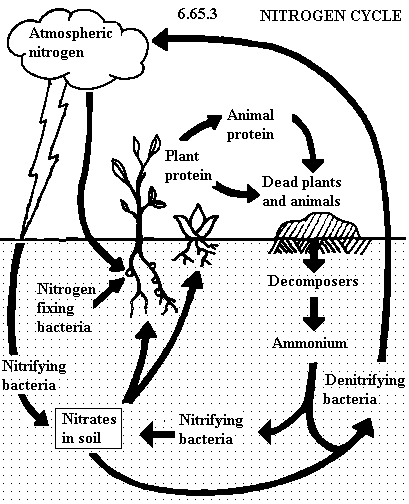
_______________________ converts nitrogen into a form that plants can absorb.
Denitrifying bacteria
Nitrogen fixing bacteria
Decomposers
Producers
How do animals obtain nitrogen stored in plants?
Denitrifying bacteria
Nitrogen fixing bacteria
Directly from the atmosphere
They eat the plants

What are chordates?
Chordates are members of the phylum Chordata
Chordates are unicellular
Chordates are multicellular
Chordates are not real
which is a Chordates
amphibians
People
water
all Chordates have a backbone
True
False
All Chordates have what three things?
A Notochord
A Nerve Cord
A Backbone
A throat pouches
What does the hole do in the backbone?
create a tunnel through which a bundle of nerve tissue or spinal cord passes.
Were they dispose their waste
A breathing Hole
There is a Hole in Every Backbone of a Vertebrate
True
False
What is an Endoskeleton?
The hard part which is the internal support of the structure
Just a regular Skeleton
Not a Thing
Something that is needed for EVERY animal to live
What is another word for Endoskeleton
cartilage
Bone
Back
Skin
What is an a endotherm
An endotherm is an animal that controls the internal heat it produces and regulates its own temperature
A Skeleton
another word for lungs that produce more air than normal
how does a ectotherm change its heat
Through change in it's environment
Its the same all the time

birds
they both have scales
Which body systems work together to allow the body to move?
nervous and skeletal
muscular and skeletal
nervous and circulatory
muscular and circulatory
Which is most directly connected to the circulatory system?
nose
lungs
mouth
trachea
Which body system is responsible for supplying the body with oxygen and removing carbon dioxide?
nervous
digestive
muscular
respiratory
Which best describes how the muscular system impacts movement of the human body?
When a muscle expands, it pulls on the bone it is connected to and the bone moves.
When a muscle contracts, it pulls on the bone it is connected to and the bone moves.
When a muscle contracts, it pushes on the bone it is connected to and the bone moves.
When a muscle expands, it pushes on the bone it is connected to and the bone moves.
What roles do the muscular and respiratory systems serve in the body when someone lifts weights?
The muscular system allows the person to lift the weights, while the respiratory system provides oxygen to the body.
The muscular system provides oxygen to the body, while the respiratory system allows the person to lift the weights.
The muscular system provides nutrients to the blood, while the respiratory system provides sweat to cool the body.
The muscular system provides sweat to cool the body, while the respiratory system provides nutrients to the blood.
Which is an example of a function the muscular system performs?
Voluntary muscles pump blood through the body.
Skeletal muscles keep a body’s joints working properly.
Cardiac muscles move bones and hold a body’s skeleton in place.
Smooth muscles help move food through the organs they surround.
Which best compares the respiratory system to the circulatory system?
The respiratory system transports oxygen to cells, while the circulatory system provides oxygen for cells.
The respiratory system provides oxygen for cells, while the circulatory system transports oxygen to cells.
The respiratory system breaks down food for cell energy, while the circulatory system rids the body of waste.
The respiratory system rids the body of waste, while the circulatory system breaks down food for cell energy.
The circulatory system transports waste through the bloodstream. Which is the best example of another system working to remove waste from the body?
The respiratory system releases carbon dioxide.
The skeletal system produces new red blood cells.
The digestive system breaks down food into nutrients.
The nervous system send signals from the brain to the muscles.
Which best describes the purpose of the cardiovascular system?
It delivers blood to the body’s tissues.
It supplies stability to the skeleton.
It delivers food to power the body.
It supplies oxygen to the body.
Which best describes the relationship between the skeletal system and the circulatory system?
The skeletal system transports red blood cells after the circulatory system produces them.
The skeletal system protects red blood cells and the circulatory system pumps those cells through veins and arteries.
The skeletal system produces red blood cells and the circulatory system transports those cells where they need to go.
The skeletal system helps put oxygen in red blood cells and the circulatory system helps those cells rid the body of carbon dioxide.
Which is responsible for providing oxygen to cells?
skeletal system
digestive system
muscular system
circulatory system
Which best describes the relationship between the cardiovascular system and the muscular system?
The cardiovascular system captures carbon dioxide from the air for muscle energy.
The cardiovascular system produces red blood cells to bring oxygen to muscles.
The cardiovascular system provides a framework for muscle movement.
The cardiovascular system delivers oxygen for muscle energy.
Which system is controlled by involuntary muscle movement in the diaphragm?
digestive
respiratory
cardiovascular
Which best describes a function of the circulatory system?
transport blood
provide oxygen
help the body move
Which body system’s main purpose is to help the body move?
digestive system
muscular system
respiratory system
In which system of the human body does the heart belong?
skeletal system
respiratory system
cardiovascular system
What is the main function of the skeletal system?
clean the body
support the body
deliver nutrients to the body
Which best explains how the muscular system relies on the respiratory system?
The respiratory system cools the muscular system.
The respiratory system acts as the support system for the muscular system.
The respiratory system brings oxygen into the body for the muscular system to use.

The table below describes some human body systems.
Which row provides correct information?
1
2
3
4
Which three systems help to eliminate waste?
excretory, digestive, skeletal
respiratory, digestive, circulatory
digestive, excretory, respiratory

