
 Worksheets
Anatomy and Physiology Final Exam
Total questions: 100
Worksheet time: 1hrs 5mins
Describes the front or direction toward the front of the body
Anterior
superior
posterior
Inferior
describes a position above or higher than another part of the body proper.
Anterior
Posterior
Superior
Inferior
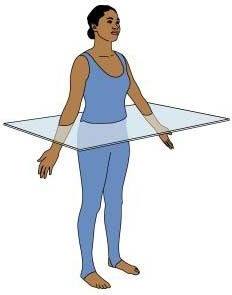
Divides body into top and bottom portions (superior-head; inferior-feet)
Medial Plane
Sagittal
Proximal
Transverse Plane
The carpal region is distal to the digital region.
True
False
Directional term that means toward the midline.
lateral
medial
occipital
femoral

The arrow is pointing to which side of the dog?
cranial
caudal
ventral
dorsal

The arrow is pointing to which side of the dog?
cranial
caudal
ventral
dorsal
Abdominal
Stomach
Digital
Finger/Toes
Patellar
Kneecap
Antecubital
Anterior forearm
Femoral
Thigh


Which of the following is the outermost layer of skin?
epidermis
dermis
hypodermis
hyperdermis
What is the dark pigment which gives skin its color?
melatonin
keratin
melanin
vitamin D
Nails are composed of a protein called
melanin
keratin
proline
cytosine

Identify structure number 2.
hypodermis
dermis
dermal papillae
epidermis

Identify structure 17
hyperdermis
hypodermis
epidermis
dermis


the elbow is _____ to the fingers
distal
superficial
deep
proximal
the knee is ____ to the thigh
proximal
distal
lateral
ventral
Actions of Muscle...lets see what we can figure out before we learn them officially (add to your notes when the question is over)
Flexion
Decrease the angle between bones
Extension
Increase the angle between bones
Rotation
Spinning a bone on an axis.
Abduction
Taking a bone away from the midline
Adduction
Moving a bone toward the midline
Where is oxytocin (aka the love hormone) produced?
Hyperthyroidism
Hypothalamus
hydrocortisone
Hypothyroidism
What do muscles use for energy?
Glucose
ATP
Carbohydrates
Cells
Which type of muscle is the weakest muscle tissue?
Skeletal
Cardiac
Smooth
What are some functions of skeletal muscles?
Flexes wrist and fingers
Pull limbs together
Roll wrist over
All of the above
What are the three primary functions of the nervous system?
Somatic, autonomic, voluntary
Sensory input, integration, motor output
Sugar, spice, everything nice
Send, interpret, action
What are the two subdivisions of the motor division of the PNS?
Brain & Spinal Cord
Ischemic & Hemorrhagic
White Matter & Gray Matter
Somatic & Autonomic
Which gland is ductless and its products travel in the blood to target cells or organs?
Endocrine
Exocrine
Which of the following bones forms the kneecap joint?
femur
patella
fibula
tibia


In negative feedback mechanisms, changes away from the normal state
stimulate changes in the same direction
inhibit all body reactions
stimulate changes in the opposite direction
stimulate a reduction in all requirements of the body


_____________ is the free movement of particles across the membrane with the concentration gradient
diffusion
facilitated diffusion
active transport
fusion
Passive Transport is the movement of particles across the membrane from an area of [ ___ ] to an area of [ ___ ]
high to low
low to high
low to low
high to high

Active Transport
Which body system uses acids to break down food into smaller molecules that your body can use?
cardiovascular
respiratory
digestive
nervous
The main function of which of these body systems is to create voluntary movement, such as walking, and involuntary movement, such as shivering?
digestice
excretory
cardiovascular
muscular
Your __________ is the central organ in your cardiovascular system.
brain
heart
spine
lung
Which function do the ribs have in the skeletal system?
Connect the skull and spinal column.
Allow easy movement of the upper body.
Protect the heart and lungs.
Support the head and neck.
Which of the following are fragments that help stop bleeding when a blood vessel is damaged?
Leukocytes
Platelets
Erythrocytes
Mast Cells
When you damage a blood vessel what is the first thing that happens?
Vasoconstriction
Platelet plug formation
Coagulation
Release of extra Leukocytes
What color is your blood without oxygen?
Dark Red
Blue
Scarlet Red
Magenta
Match the organelle with its correct function.

Stores and Protects DNA

Builds Proteins

Generates energy for the cell

Controls what enters and leaves the cell

Packages up proteins to be shipped out of the cell

Is this a prokaryotic or eukaryotic cell?
(a)

Is this a prokaryotic or eukaryotic cell?
(a)

Which of the following BEST describes the structure of the plasma membrane?
The plasma membrane is a phospholipid bilayer, with a hydrophobic interior and a hydrophilic exterior.
The plasma membrane is a protein bilayer, with a few lipids and carbohydrates scattered throughout.
The main component of the plasma membrane are protein channels, which control what goes in / out of the cell.
The plasma membrane is composed of several layers of carbohydrates, which control passive and active transport.
These tail-like structures aid in locomotion of some bacteria and some eukaryotic cells.
cytoskeleton
flagella
cilia
ribosomes
Which organelle in animals cells gets rid of worn-out cell parts?
Lysosomes
Vesicles
Cell Membrane
Nucleus
Which organelle contains DNA and controls the cell?
Endoplasmic Reticulum
Golgi Apparatus
Nucleus
Vesicles
The fluid that surrounds the organelles is...
chloroplast
cytoplasm
vacuole
cell wall
Which organelle is important for the production of proteins?
Nucleus
Ribosomes
Mitochondria
Vesicles
Which of the following are differences in the structure between RNA and DNA
DNA uses deoxyribose sugar, RNA uses sugar ribose
DNA pairs Adenine with Uracil, RNA pairs Adenine with Thymine
DNA is a double helix, RNA is a single helix
DNA pairs Adenine with Thymine, RNA pairs Adenine with Uracil
A string of nucleotides that contain the information to make a specific protein
Ribose
Amino Acids
tRNA
Gene
Proteins are important for all of the following except...
building structures like mucsles
helping the immune system
speeding up reactions
coding for your traits
GTAGTCA
Which of the following elements are found in all macromolecules? (Select all that apply).


Which macromolecule is used as our main source of energy?
Lipids/Fats
Nucleic Acids
Proteins
Carbohydrates

What COLOR is the "Enzyme" in this picture?
Green
Blue
Black

carbohydrate

lipid

protein
Match the MACROMOLECULES and their MONOMERS.
Hint: Monomer = a single unit
carbohydrate
monosaccharide
lipid
fatty acid & glycerol
protein
amino acid
nucleic acid
nucleotide
Match the following MONOMERS and MACROMOLECULES

Nucleic Acid

Protein

Lipid

Carbohydrate
An enzyme is a ______________.
carbohydrate
lipid
nucleic acid
protein
Which macromolecule gives LONG-TERM energy?
lipid
carbohydrate
nucleic acid

What tissue is this?
Muscle
Epithelial
Nervous
Connective

simple columnar
simple cuboidal
simple squamous
stratified cuboidal


What is the body's first line of defense against infection by foreign organisms?
antibodies
lymph nodes
white blood cells
the skin
This type of cell inspects cells for antigens and kills any cells that display the foreign antigens.
Macrophage
T Cells
B Cells
An increase in body temperature when sick.
infection
fever
skin
CARRY BLOOD AWAY FROM THE HEART:
VEINS
ARTERIES
CAPILLARIES
CARRY BLOOD TO THE HEART
VEINS
ARTERIES
CAPILLARIES
What is the main reproductive organ in females? What hormone does it secrete?
Testes: Oestrogen
Testes: Testosterone
Ovaries: Oestrogen
Ovaries: Testosterone
What is the function of the human male reproductive system?
grow and develop baby
produce egg and deliver egg to female
internal fertilization
produce sperm and deliver sperm to female
What is the main reproductive organ in males? What hormone does it secrete?
Testes: Oestrogen
Testes: Testosterone
Ovaries: Oestrogen
Ovaries: Testosterone
What is the periodic shedding of tissues and blood from the inner lining of the
uterus?
menopause
ovulation
pregnancy
menstruation

