
 Worksheets
final review
Total questions: 105
Worksheet time: 1hrs 18mins

The heart’s natural pacemaker is termed the:
sinoatrial node
atrioventricular node
bundle of His/atrioventricular bundle
left and right bundle branches
Purkinje fibers
The node of the heart’s electrical conduction network found within between the atria and ventricles is known as the:
sinoatrial node
atrioventricular node
bundle of His/atrioventricular bundle
left and right bundle branches
Purkinje fibers
Electrical impulse is initiated where?
AV node
SA node
After the impulse is conducted, where in the heart does it start?
Ventricles
Atriums
AV node delays the transmission of the signal to do what
Atrium need to contract
Ventricles are filling up with blood
Depolarization means
contracting
relaxing

P wave is result on EKG of
repolarization of the atrial
repolarization of the ventricles
depolarization of the ventricles
Depolarization of atrial
Only part of conduction system that connects atria to ventricles, what node?
SA node
AV node
These vessels carry blood away from the heart.
arteries
veins
capillaries
superior vena cava
The exchange of oxygen and carbon dioxide takes place in these vessels.
arteries
veins
inferior vena cava
lung capillaries
Brings blood to the heart from the upper portion of the body.
pulmonary artery
superior vena cava
pulmonary vein
inferior vena cava
Blood in the left ventricle:
Oxygenated
Deoxygenated
Blood in the pulmonary artery:
Oxygenated
Deoxygenated
An EKG tech is measuring blood pressure on a healthy adult patient. Which of the following blood pressure measurements is within the expected reference range?
85/55 mm Hg
100/62 mm Hg
110/56 mm Hg
122/84 mm Hg
What is the function of systemic circulation?
Delivers blood to all body cells
Delivers blood to the lungs
Oxygenates blood
Eliminates carbon dioxide
True or false. One who engages in regular cardio exercises are likely to have improved lung function, healthy sleep habits, and a stronger immune system.
true
false
True or false. An individual who may live a sedentary lifestyle is likely to have higher blood pressure and increased chances of heart diseases.
true
false
Which of the following can be benefits for you if you participate in aerobic exercise regularly? Mark all that apply
Can boost my mood when I'm feeling down
Can strengthen my immune system.
Improve my brain power!
Decreases my RHR
Will strengthen my heart and overall cardiovascular health.
What is the contraction phase of a hearbeat called?
diastole
sinoatrial
systole
atrioventricular
What are thick walled vessels that carry blood away from the heart?
Arteriols
venules
capillaries
Arteries
what carries blood to the heat?
blood
veins
venules
magic
I am the smallest blood vessels and exchange oxygen and nutrients between blood and body cells
intercapillary spaces
veins
red blood cells
capillaries

What is considered the QRS complex?
A, B, & C
C, D, & E
B, C, & D
D & E

Where is the P wave located?
A
B
C
D
E
What is a "normal" blood pressure
120/110 mmHg
120/80 mmHg
100/80 mmHg
140/80 mmHg
Highest pressure against blood vessels. Represented by first heat sound
diastolic pressure
systolic pressure
hypotension
hyperstension

Fill in the blank for the missing label
Bronchus
Bronchioles
Right Lung
Alveoli

Fill in the blank for the missing label
(a)
Which of the following is NOT a key structure in the respiratory system?
pharynx
larynx
diaphragm
esophagus
What is the name of the piece of cartilage that blocks the larynx when we swallow food?
epiglottis
trachea
bronchiole
pharynx
The bulk of gas exchange occurs in which structure?
trachea
larynx
bronchiole
alveoli
What is the name of the muscle that moves the lungs?
diaphragm
bronchiole
alveoli
biceps brachii
Air is drawn into the lungs when the diaphragm _____________.
relaxes
contracts
What is the common name for inspiration?
idea
exhale
inhale
contraction
What is the common name for expiration?
dead
exhalation
inhalation
date
What structure contains the vocal cords?
pharynx
larynx
nasal cavity
sinuses
What is the name of the compound on red blood cells that carries oxygen?
plasma
platelets
hemoglobin
white blood cells
Which part of the respiratory system is primarily responsible for voice production?
Trachea
Larynx
Pharynx
Alveoli
What is the primary function of the nasal cavity in the respiratory system?
Transporting oxygen to the lungs
Producing sound for speech
Filtering, warming, and moistening incoming air
Exchanging gases in the alveoli
Which of the following is NOT a function of the respiratory system?
Delivering oxygen to the body
Removing carbon dioxide from the body
Regulating blood pH
Producing digestive enzymes

the respiratory system is responsible for:
oxygen entering the body and carbon dioxide leaving the body
carbon dioxide entering the body and oxygen leaving the body.
nitrogen leaving the blood stream.
the regulation of nutrient absorption.

Which part of the respiratory system carries out gas exchange?
bronchus
lungs
larynx
nasal cavity

What diffuses from the air in the alveoli into the blood?
carbon dioxide
nitrogen
oxygen
water
What is the main job of the respiratory system?
Managing the sympathetic and parasympathetic responses
Taking in oxygen and removing carbon dioxide
Responding to external stimuli
Breathing
This is the site of gas exchange in the lungs.
Alveoli
Bronchus
Trachea
Pharynx
Which of these shows the correct order of the lung structures?
1. Bronchiole
2. Bronchus
3. Trachea
4. Alveolus
1. Trachea
2. Bronchiole
3. Bronchus
4. Alveolus
1. Trachea
2. Bronchus
3. Bronchiole
4. Alveolus
1. Alveolus
2. Bronchus
3. Bronchiole
4. Trachea
The left lung is smaller because
it makes room for the heart
the left side of the body needs less oxygen
it functions only with expiration, which requires less volume
the body doesn't need that much lung
Which structure keeps us from choking?
Epiglottis
Respiratory flap
Bronchiole
Glottis

What structure is circled?
Esophagus
Laryngopharynx
Bronchiole
Trachea
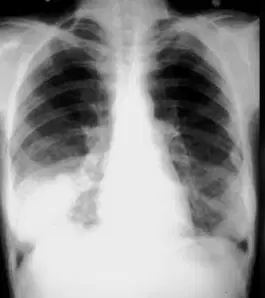
This patient has pneumonia. Which lung is affected?
Left
Right


What is Tidal volume
The volume of air breathed in and out during one breath
The maximal amount of air a person can expel
The amount of blood pumped from the heart
The additional air that can be forcibly inhaled after normal inspiration
The nervous system_________
receives information about what is going on in your body as well as what is going on around you.
tells your body how to react to the information it receives.
helps your body maintain homeostasis.
all of the above.
What is the fatty substance produced by glial cells that insulates the axons of some neurons?
refractory period
dopamine
Nodes of Ranvier
myelin

The lobe that receives sensory information from the skin and integrates it with other sensory information
frontal
parietal
temporal
occipital
The lobe that is responsible for visual information
frontal
parietal
temporal
occipital
The part in red that is resposible for repetitive motions and balance
frontal
parietal
temporal
cerebellum
The lobe that receives auditory information and has a memory center deep inside
frontal
parietal
temporal
occipital
The part of the brain responsible for survival functions like heart rate, breathing rate, sleep, thirst, and appetite
frontal
parietal
medulla oblongata
cerebellum
The speed of neural conduction between neurons will result in difficulties in speaking, vision, and balance if the ________________ insulating the axons is damaged or removed.
Axon
Myelin Sheath
Nucleus
Brain
Dr. Vazquez is examining a cell from the nervous system of an animal. He notices that at one end of the cell body is a long, fibrous strand of tissue. He immediately recognizes this as an axon that is responsible for
carrying signals away from the cell body
receiving signals from other cells and carrying them toward the cell body.
determining the speed at which an action potential will travel
determining whether the cell inhibits or excites neighboring neurons
Which of the following is regulated by the autonomic nervous system
Breathing
Kicking a soccer ball
Balancing on one foot
Raising your hand
What do the motor neurons do?
carry messages from the brain and spinal cord to muscles and glands
carry impulses from skin and sends to organs the to spinal cord and brain
carry impulses from sensory neurons to motor neurons
store messages
The medulla oblongata controls
vision and speech
hearing
heart rate and blood pressure
respiration
The brain is made up of ___________ of neurons
dozens
thousands
millions
billions
Functions: From the body’s organs, glands and muscles to the CNS, including information from the outside world (such as environmental temperature and sensation on the skin, via sensory neurons) and from the inside world (such as aches and pains) • From the CNS to the body’s organs, glands and muscles, via motor neurons.
Central Nervous System
Peripheral Nervous System
Nerves
Sympathetic Nervous System
The response to an infection. Causes the area to redden, swell, and feel warm.
Fever
Mucus
Dilation
Inflammation
Which is NOT considered FIRST line of defense?
Helper T-Cells
Skin
Hair
Mucous Membranes
The innate immune system is...
Always working and doesn't require any special preparation
Needs to be "primed" before it can work to its full effectiveness
Very specific and only defends against a specific pathogen
Not very effective at preventing intruders
This sticky fluid traps any pathogens that try and get in our body
Mucous Lining
Blood
Stomach Acid
Skin

What is the term for a strong response to a harmless antigen in the environment?
An allergy
Cell-mediated immunity
An autoimmune disease
Inflammatory response

An immune response that occurs in the human body is shown above. This activity helps to do which of the following?
Produce antibiotics to control disease
Provide protection against a specific pathogen
Provide protection against all types of pathogens
Eliminate harmful gene alterations
After an initial infection, B-cells recognize the measles virus. How is this helpful in human immune response?
The B-cells use this recognition to defend the body against other pathogens, such as bacteria.
The B-cells more quickly recognize and respond to any other virus that invades the body.
The B-cells produce antibodies more quickly if the measles virus is encountered again.
The B-cells transfer this recognition to T-cells, which will then devour the viruses.
Although vaccines cannot be used to treat a person who is sick, they can help to prevent infections. Vaccinations tell the body to create "memory cells", which will function later to create antibodies against certain pathogens. When a person is vaccinated, what are they injected with?
antibodies to a disease bacterium
live, inactive viruses
weakened viruses or antigens from the virus
blood from a person who has had the disease
What is the scientific name of the causes of infectious diseases?
Germ
Pathogen
Intruder
Disease
Which cells engulf the pathogens?
Macrophages
B Cells
White Blood Cells
Plasma Cells
What are memory T Cells?
The kills infected body cells
They help the immune system respond quicker if the same pathogen enters the body again
They signal B Cells
They cause Inflammation
A protein that attacks antigens is called:
Antibody
Immune response
Inflammatory Response
Vector
What is the main function of the immune system?
make red blood cells
Defend the body against infection
transport fluids through the body
help the body reproduce
Which of the following is not a part of the immune response?
Making pathogens
white blood cells attack
create antibodies
recognize and attack an antigen the next time it inters the body.
What is the purpose on an antibody?
to make lymph
to recognize an antigen
to create white blood cells
to transport immune cells
What type of immunity develops after an infection when the body remembers the antigen?
Adaptive
Passive
Innate
Developed
What is the meaning of autoimmune disease?
A condition where the immune system is suppressed.
A chronic, disabling disease where the body produces antibodies against its own tissues.
A disease of lymph glands (nodes).
Swelling of tissue due to accumulation of lymph fluid in intercellular spaces.
This allows us to develop an artificial immunity to a disease without ever getting sick from the disease.
antibiotics
vaccines
blood transfusions
How are vaccinations able to help us develop immunity?
Exposure to disease creates antibodies which make us immune
Exposure to antibodies which makes us the disease immune to us
Exposure to immunity's which make us antibodies to the disease

What do antibodies attach to on the pathogen?
Anti inflammatory
Antigens
Antiseptic
Antibodies
Immunity in which antibodies are given to a person rather than produced within the person's own body like with a baby and mother.
Passive Immunity
Active Immunity
Vaccination
Inflammatory response
Which of the following is a way to spread infectious diseases?
Touching contaminated objects
Not washing hands regularly
Being near infected people
All of these are ways
Immunity that occurs when a person's own immune system produces antibodies in response to the presence of a pathogen like with a vaccination.
Passive Immunity
Active Immunity
Inflammatory Response
Protective barrier like your skin
What function do memory cells have in our body?
They help our immune system remember pathogens
They store information in our short-term memory
They send chemical signals from our blood to the brain
All of the above

