
 Worksheets
Regents Review #2
Total questions: 171
Worksheet time: 3hrs 34mins
A student designed an experiment to determine if air temperature had an effect on the rate of photosynthesis in corn plants. The Independent variable (what "I" am testing) in this experiment is
the air temperature at which the corn plants were grown
amount of carbon dioxide used by the corn plants
volume of oxygen produced by the corn plants
number of corn plants used
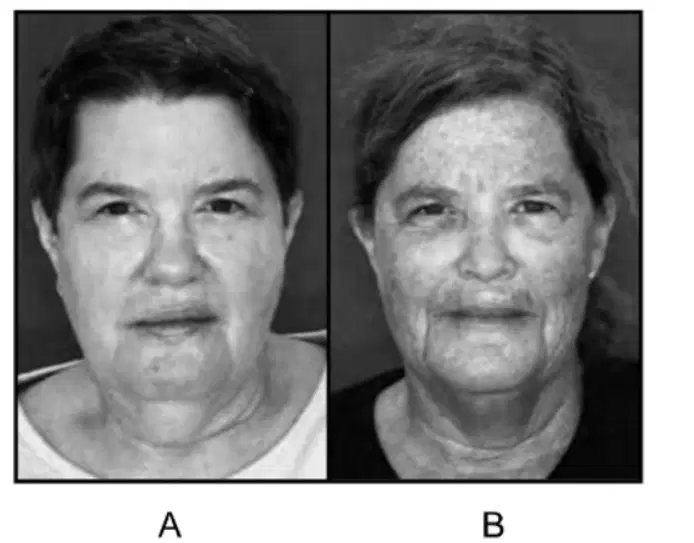
The photographs below are side-by-side images of twins A and B with identical genetic information. Twin A is a nonsmoker, while twin B is a longtime smoker. The best explanation for the differences in the appearance of the twins is that
the expression of genes is influenced by the environment
the twins have different genetic information
the twins have different diets
the twins have different exercise routines
A stable ecosystem can have high biodiversity because each species in that ecosystem
occupies a different niche (a niche is a special job)
inhabits a different environment
lives in a different biosphere
is part of a different community
Stability within an ecosystem is achieved partially by the presence of organisms that break down important molecules and make them available for other organisms to use. These organisms are
decomposers
plants
herbivores
scavengers
Which statement could account for the similarities between the woolly mammoth and present-day elephants?
Present-day species developed from earlier, different species
Both animals have identical genetic information
Selective breeding results in offspring better able to survive
Common gene mutations were caused by agents such as industrial chemicals and radiation
Single-celled organisms are able to maintain homeostasis, even though they lack higher levels of organization such as organs and organ systems because
cell structures work together to maintain homeostasis in single-celled organisms
multicellular organisms do not rely on tissues or organs to carry out life processes
single-celled organisms are able to coordinate organ functions to maintain homeostasis
single-celled organisms do not carry out the same life processes as multicellular organisms
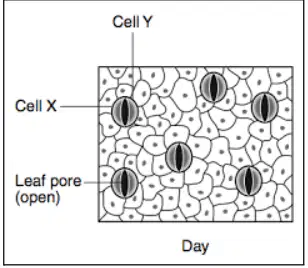
This is an image of a leaf. The leaf pore is known as a "Guard Cell" .... because they might ask this on the Regents, just remember that guard cells maintain homeostasis for plants by opening and closing
It's not this answer
It's not this one either
Don't pick this one
Guard cells open and close to control gas exchange and water loss
Fat molecules typically contain long chains of carbon atoms. Animals tend to store fats for use when food resources are scarce. This is an advantage to the animal because
fats give off carbon dioxide that can be used by the muscles
amino acids from fat synthesis are more easily digested than carbohydrates
energy can only be created by digesting fats
much energy can be gained by breaking the bonds between atoms in the fats
ATP molecules are used to
diffuse water across a membrane
move molecules from a high to a low concentration
balance the nutrients in an ecosystem
Actively transport molecules in an organism
Which system in a multicellular organism functions most like the cytoplasm in a single-celled organism?
Nervous
Reproductive
Immune
Circulatory
Which two factors could lead to the evolution of a species over time?
struggle for survival and fossilization
changes in the genes of body cells and extinction
overproduction of offspring and no variation
changes in the genes of the sex cells and survival of the fittest
Lobsters are crustaceans related to crayfish, crabs, and shrimp. Most lobsters are reddish-brown color, but on rare occasions, they can be orange, blue, or even multicolored. These color differences can be caused by
different numbers of offspring
overpopulation and excessive resources
the instability of the ecosystem
genetic variation
To clone a mammal, a cloned embryo is often put into an adult female of the same species to continue internal development. The structure in which the embryo will develop is the
ovary
placenta
egg
As human red blood cells mature, they lose their nuclei. As a result of this loss, which process would be impossible for mature red blood cells to carry out
reproduction
excretion
respiration
transport
The organic compounds that scientists use to cut, copy, and move segments of DNA are
enzymes
carbohydrates
hormones
starches
An immune response is primarily due to the body's white blood cells recognizing
foreign antigens
a hormone imbalance
known antibiotics
abiotic organisms
Which human activity most directly causes a significant increase in the amount of carbon dioxide in the atmosphere?
driving cars long distances
planting large numbers of trees
not using products containing plastics
growing corn for food
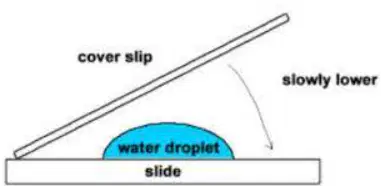
A coverslip should be slowly lowered from a 45 degree angle onto a slide in order to
reduce the formation of bubbles
prevent the slide from being scratched
stop the loss of water from under the coverslip
ensure that the specimen being viewed will stay alive
Over time, a tree that once had a total mass of 300g increased in mass (weight) to 3000kg. This increase in mass comes mostly from
carbon dioxide that enters through the leaf openings
oxygen that enters through the leaf openings
soil that all plants need to grow
chloroplasts that enter the roots and move to the leaves
Like most organisms, what does a fire need to keep it going, producing heat?
oxygen
helium
magnesium
nitrogen
Autotrophs might survive when heterotrophs cannot, because autotrophs are able to
make their own food
exist without respiration
become dormant
reproduce asexually
The inability of sperm cells to move normally could prevent the production of offspring by interfering with
fertilization
differentiation
meiosis
mitosis
Which type of pathogenic microbe causes AIDS?
a virus
a bacterium
a multicellular fungus
a single-celled algae
In order to enter cells and be useful to the body, starch must be
digested into simple sugars
converted to carbon dioxide and ATP
absorbed through the skin
broken down into fats and water
When using a compound light microscope, the most common reason for staining a specimen being observed is to
reveal details that are otherwise not easily seen
keep the organism from moving around
make the view more colorful
determine the effects of chemicals on the organism
A function of white blood cells is to
protect the body against pathogens
transport oxygen to body cells
carry glucose to body cells
produce hormones that regulate cell communication
In the human body, oxygen is absorbed by the lungs and nutrients are absorbed by the small intestine. In a single-celled organism, this absorption directly involves the
cell membrane
nucleus
chloroplasts
chromosomes
On hot, dry days, guard cells often close close microscopic openings in plant leaves, conserving water. This is an example of
a feedback mechanism for maintaining homeostasis
environmental factors causing gene mutation in plants
finite resources acting as selecting agents for evolution
differentiation in plants as a result of stimuli
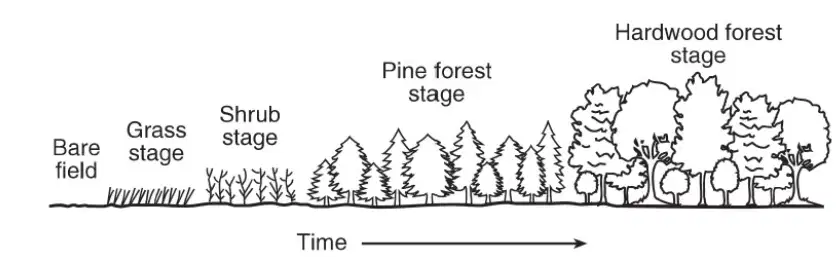
Which concept is best represented in the diagram below?
ecological succession
direct harvesting
random mutations
genetic engineering
A liver cell can make enzymes that a heart cell cannot make because liver cells
use different genes than heart cells
digest large, complex molecules
contain more DNA than heart cells
remove carbon dioxide from blood
The ability of estrogen to affect certain cells depends directly on
receptor molecules
gametes
nerve cells
amino acids
The diagnostic test for HIV, the virus that causes AIDS, involves testing the blood for antibodies associated with this pathogen. Antibodies are produced when the body
detects foreign antigens
stimulates enzyme production
secretes specific hormones
synthesizes microbes
In single-celled organisms, materials are stored primarily in
vacuoles
mitochondria
nuclei
ribosomes
Which system in a multicellular organism functions most like the cytoplasm in a single-celled organism?
circulatory
immune
reproductive
nervous
Which human activity most directly causes a significant increase in the amount of carbon dioxide in the atmosphere
driving cars long distances
not using products containing plastics
growing corn for food
planting large numbers of trees
An immune response is primarily due to the body's white blood cells recognizing
foreign antigens
known antibodies
abiotic organisms
a hormone imbalance
In the lab activity Making Connections, an experiment was designed to test the effect of exercise on the ability to squeeze a clothespin. The number of times the clothespin was squeezed served as the
dependent variable
independent variable
hypothesis
control
The human body has many cells that are deep inside the body. For this reason, the human body requires
a transport system and other organs
carbon dioxide from the air
the synthesis of many inorganic compounds
the breakdown of glucose by the digestive system
Two organisms of different species are not likely to compete for the same
mate
food
space
water
Mitochondria provide ribosomes with
ATP for protein synthesis
amino acids for protein synthesis
oxygen for respiration
carbon dioxide for the production of sugars
Animals and green plants are similar in that they
both use DNA to transmit hereditary information to offspring
all produce offspring through asexual reproduction
both carry out heterotrophic nutrition
all require oxygen to carry out photosynthesis
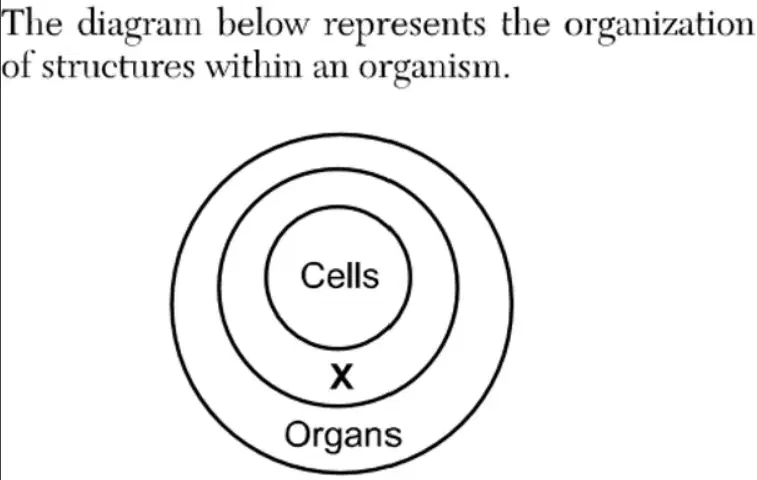
Which term best indicates the structures represented by the circle labeled X?
Tissues
Organ systems
Organelles
Chromosomes
Recently, a human trachea was produced by using a patient's own stem cells. The benefit of using the patient's own cells to produce a trachea instead of receiving one from a donor is that
there is less of a chance that the patient's immune system will attack the trachea
there will be an increase in the quantity of antibodies that the patient produces in response to the new trachea
there will be a greater response to any infectious agent that may enter the body
there will be more enzymes produced to help maintain homeostasis in the trachea
A substance is most likely to diffuse into a cell when
the concentration of the substance is greater outside the cell than inside
the concentration of the substance is greater outside the cell than inside
it is a large organic food molecule such as protein or starch
the pH of the substance is greater than the pH of the cell
it is enclosed in an organelle such as a vacuole
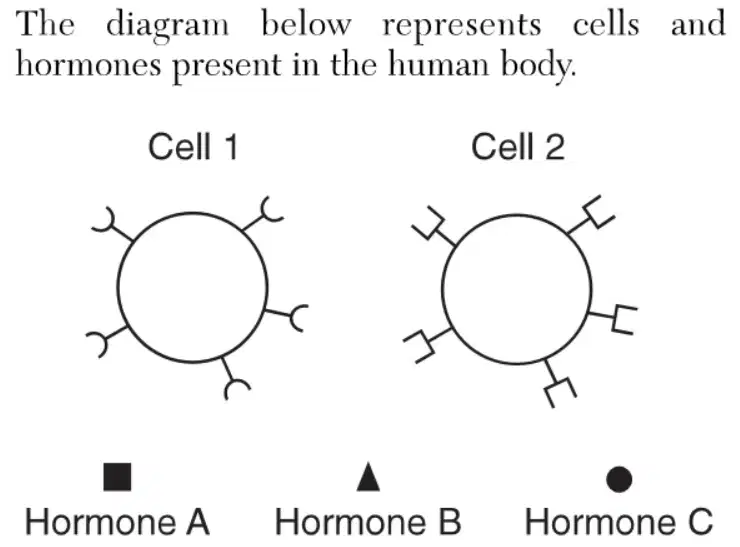
Which statement correctly describes an interaction between the hormones and the cells?
Specific reactions carried out by cell 1 are regulated by hormone C
Hormone A is synthesized by cell 2 and targets cell 1
Hormone B bonds with both cell 1 and cell 2
The specialized receptor molecules on cell 1 secrete hormone B
Which action by humans could improve the quality of the air?
buying cars that get more miles per gallon of gasoline
building homes that use only oil furnaces for heat
increasing the number of coal-burning power plants that generate electricity
cutting down forests to clear land for factories
Scientists have found that although plants require light to carry on photosynthesis, very high levels of sunlight can kill some plants. This illustrates that many biochemical processes may occur
within a specific range of conditions
more rapidly when temperatures are very high
best in the absence of abiotic factors
even if homeostasis is disrupted
The shape of a protein is originally determined by the
Arrangement of amino acids in the protein
Size of the protein molecule
Function the protein must carry out
Location of the protein within the cell
Plant cells can synthesize energy-rich organic molecules, and later break them down to extract the energy for life functions. These activities require direct interaction between the
Chloroplasts and mitochondria
Cell walls and ribosomes
Ribosomes and mitochondria
Chloroplasts and vacuoles
Homeostasis is maintained in a single-celled organism by the interaction of
Organelles
Organs
Tissues
Systems
The nucleus is responsible for
Storing DNA
Producing proteins
Producing ATP
Storing proteins
All cells are built by which nonliving structures?
Organelles
Organs
Tissue
Organ systems
All chemical reactions within an organism is know is
Metabolism
Reproduction
Evolution
Synthesis
The role of antibodies in the human body is to
Recognize foreign antigens and mark them for destruction
Stimulate pathogen reproduction to produce additional white blood cells
Increase the production of guard cells to defend against pathogens
Promote the production of antigens to stimulate an immune response
White blood cells are most closely associated with which two body systems?
immune and circulatory
circulatory and digestive
digestive and excretory
excretory and immune
Doctors sometimes use a vaccine to prepare the body to defend itself against future infections. These vaccines most often contain
weakened pathogens
antibodies
antibiotics
white blood cells
A student collected data from an experiment on muscle fatigue. In order to interpret these data, the student should
organize the data into a table or graph
recalculate the data so that the numbers are easier to work with
ignore the data because they do not support their hypothesis
share the data with a student who has none
A student lifted weights after school and found that his muscles started to burn. He couldn't continue to lift the weights after prolonged exercising. This muscle fatigue is most likely due to
lack of oxygen and build up of waste in the muscles
the heart beating too fast and tiring out
lack of carbon dioxide in the muscles
the lungs accumulating oxygen
During periods of vigorous physical activity, a person's breathing and heart rates increase. This enables the cells of the body to perform more efficiently because it helps the cells to
Remove waste products faster
Reduce the amount of ATP produced
Store excess glucose in muscles
Convert more oxygen to glucose
Which of the following is not a type a pathogen?
Cancer
Virus
Fungi
Bacteria
Alveoli in the lungs are surrounded by ____________________ for gas exchange
Cytoplasm
Water
Bronchi
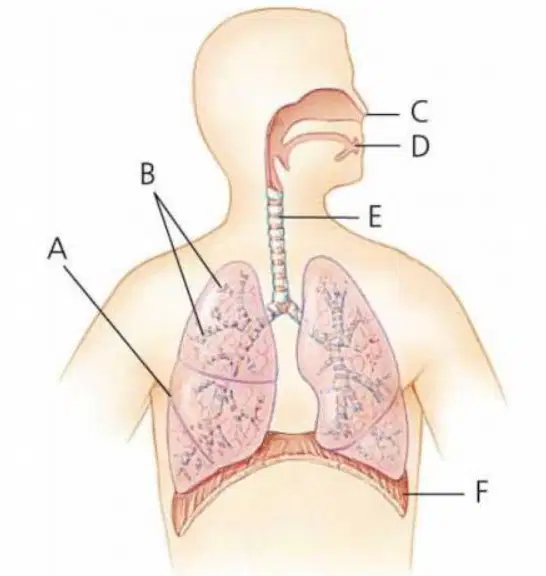
Which structure is labeled F
Diaphragm
Alveoli
Pharynx
Trachea
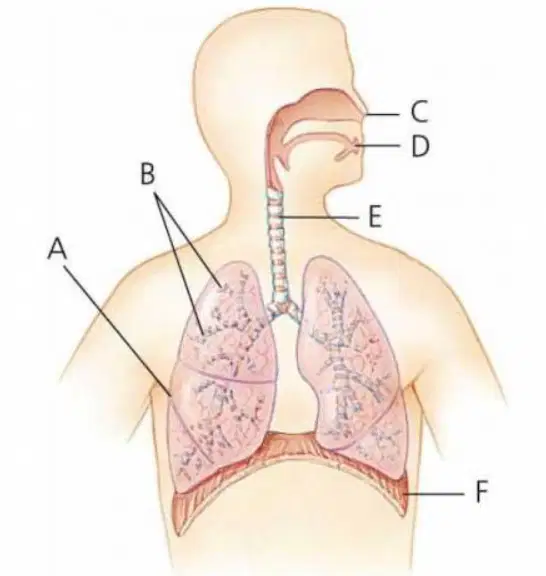
Which structure is labeled E
Trachea
Bronchi
Alveoli
Pharynx
Certain microbes, foreign tissues, and some cancerous cells can cause immune responses in the human body because all three contain
antigens
enzymes
fats
cytoplasm
Which activity is not a response of human white blood cells to pathogens?
Removing carbon dioxide
engulfing and destroying bacteria
Identifying invaders for destruction
producing antibodies
Which statement does not identify a characteristic of antibodies?
they are produced by the body in response to the presence of foreign substances
They may be produced in response to an antigen
They are nonspecific, acting against any foreign substance in the body
They may be produced by white blood cells
A six year old child ate a peanut butter sandwich at snack time in school. 5 minutes later, her throat became swollen and she collapsed. This allergic reaction occurred because her body
Recognized an antigen in peanut butter and produced antibiotics against it
Digested the white blood cells that can recognize an antigen in peanut butter
Did not recognize an antigen in peanut butter and could not produce antibodies against it
Recognized an antigen in peanut butter and produced an immune response
Allergic reactions usually occur when the immune system produces
Antibodies against usually harmless antigens
Antigens against usually harmless antibodies
Antibiotics against usually harmless antigens
Enzymes against usually harmless antibodies
After a kidney transplant, special medications are taken. Otherwise, the patient's immune system might react to the transplanted kidney by
Producing specialized proteins that help to attack the kidney
Signaling the body to synthesize new DNA molecules
Stimulating the circulatory system to attack red blood cells
Stimulating the kidney to produce reproductive hormones
Allergic reactions are most closely associated with
Immune responses to usually harmless substances
A low blood sugar level
The shape of red blood cells
The action of circulating hormones
Which statement best describes an immune response?
It usually involves the recognition and destruction of pathogens
It always produces antibiotics
It stimulates asexual reproduction and resistance in pathogens
It releases red blood cells that destroy pathogens
Which of the following are used to treat bacterial infections?
Antibiotics
Antibodies
Vaccines
Cold medication
Which phrase does not describe a way the human body responds to fight disease?
Production of pathogens by white blood cells
Production of antibodies by white blood cells
Increased production of white blood cells
Destruction of infectious agents by white blood cells
Drugs to reduce the risk of rejection are given to organ transplant patients because the donated organ contains
foreign antigens
foreign antibodies
DNA molecules
pathogenic microbes
To increase chances for a successful organ transplant, the person receiving the organ should be given special medications. The purpose of these medications is to
increase the immune response in the person receiving the transplant
decrease mutations in the person receiving the transplant
Increase mutations in the person receiving the transplant
decrease the immune response in the person receiving the transplant
The disease known as malaria may result in a fever, a decrease in red blood cells, and an enlarged liver and spleen. These symptoms are evidence of
a disruption of homeostasis
a decrease in allergic reactions
an increased number of cell organelles
hormone destruction
Which system is responsible for removing wastes such as carbon dioxide, sweat, urine, and heat?
Excretory
Immune
Digestive
Endocrine
Which organ system carries nutrients and oxygen to the cells of the body?
Circulatory
Nervous
Heart
Digestive
The small intestine absorbs nutrients into which system?
Circulatory
Endocrine
Excretory
Nervous
Many viruses infect only a certain type of cell because they bind to certain
Receptors on the surface of the cell
Mitochondria in the cell
Other viruses on the surface of the cell
Ribosomes in the cell
Glucose is a type of
Simple sugar
Amino acid
Nucleotide
Fat
Hormones are most closely associated with which organ system?
Endocrine
Excretory
Respiratory
Circulatory
A vaccine for the viral disease known as chicken pox would contain
A dead or weakened form of the pathogen
Several different antibiotics
A small number of white blood cells
A large amount of the virus
Corn, wheat, and rice are highest in which nutrient?
Carbohydrates
Proteins
Minerals
Water
Cytoplasm is mostly made of
Water
Cells
Energy
Oil
Which molecule is small enough to diffuse into the blood from the small intestine without needing to be digested?
Glucose
Protein
Starch
Fat
Which organ is responsible for reabsorbing water back into the bloodstream?
Large intestine
Stomach
Esophagus
Liver
Fruits, vegetables, and grains are made mostly of
Carbohydrates
Protein
Fatty acids
Calcium and iron
Metabolism is best described as
All chemical reactions in an organism
The creation of a new organism
The dividing of a cell
The release of acids and enzymes during digestion
Which of the following is a virus?
Influenza
COVID
AIDS
Cancer
Which of the following are structure B, responsible for filtering blood?
Kidneys
Ovaries
Lungs
Testes
Organs are just collections of similar ______ that work together
Organ systems
Organisms
Blood
Dynamic Equilibrium is a term most closely related to which other term?
Homeostasis
Respiration
Pathogen
Immunity
Microbes that enter the body, causing disease, are known as
Pathogens
Enzymes
Antibodies
Hosts
The failure of the human body to effectively maintain dynamic equilibrium can result in
Disease
Gene manipulation
Differentiation
Reproductive success
Viruses are made of which of the following?
Proteins and nucleic acids
Bacteria
Organelles
Cells
Which is used to describe a false or made up response created by the brain by some people participating in experiments?
Placebo
Bias
Trial
Variable
Which is NOT a function of proteins?
Storing information
Building and maintaining organisms
Helping to fight infections
Cell communication
Vacuoles are responsible for doing what inside of cells?
Storage
Photosynthesis
Building proteins
Creating ATP
Proteins are composed of what smaller building blocks?
amino acids
simple sugars
fatty acids
nucleotides

Based on the graph, what is the optimum temperature for this enzyme?
15 degrees
40 degrees
30 degrees
0 degrees
What happens when enzymes (or any proteins) are heated to a high temperature?
The enzymes die
The shapes of the enzyme are changed or "denatured"
The enzymes' amino acid sequence changes
The enzymes stay the same
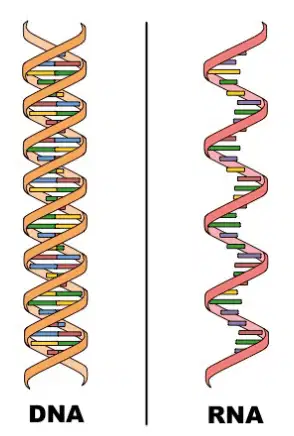
DNA and RNA are two types of
proteins
lipids
carbohydrates
nucleic acids
What is the initial color of starch indicator solution?
blue
orange
amber
blue-black
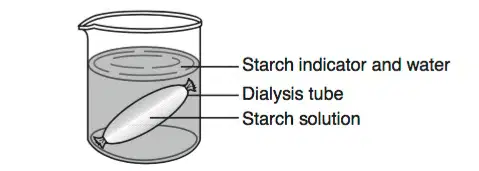
In our diffusion lab, what happened to the "cell" that contained starch solution after a period of time?
the contents of the dialysis tube turned blue-black
the liquid in the beaker turned blue-black
the dialysis tube expanded
nothing changed
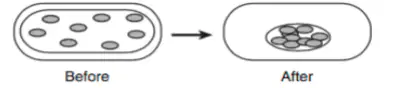
When a cell shrinks in size, what type of solution was added to it?
salt solution
tap water
distilled water
iodine solution
Cell membranes are said to be selectively permeable. Which statement best explains what selectively permeable means?
The cell membrane prevents any harmful substance from entering the cell.
The cell membrane lets certain substances enter the cell and keeps certain substances out of the cell.
The cell membrane allows only large molecules to diffuse into the cell.
The cell membrane has pores that let only water and glucose into the cell and carbon dioxide out.

Base your answer to the question on the diagram below and on your knowledge of biology. The diagram represents two solutions, A and B, separated by a selectively permeable membrane. Which statement best describes the outcome after 20 minutes?
Solution A will contain approximately the same number of glucose molecules as solution B.
Solution A will contain all of the water molecules.
Solution B will remain unchanged.
Solution B will lose all of the glucose molecules to solution A.

The diagram below represents a cell in water. Formulas of molecules that can move freely across the cell membrane are shown. Some molecules are located inside the cell and others are in the water outside the cell.
Based on the distribution of these molecules, what would most likely happen after a period of time?
The concentration of O2 will increase inside the cell.
The concentration of CO2 will remain the same inside the cell.
The concentration of O2 will remain the same outside the cell.
The concentration of CO2 will decrease outside the cell.
A substance is most likely to diffuse into a cell when
it is a large organic food molecule such as protein or starch
it is enclosed in an organelle such as a vacuole
the concentration of the substance is greater outside the cell than inside
the pH of the substance is greater than the pH of the cell

The diagram below shows the relative concentration of molecules inside and outside of a cell.
Which statement best describes the general direction of diffusion across the membrane of this cell?
Glucose would diffuse into the cell.
Protein would diffuse out of the cell.
Oxygen would diffuse into the cell.
Carbon dioxide would diffuse out of the cell.
If an DNA sequence reads AGGCTA then the mRNA sequence would read
TCCGAT
UGGCUA
UCCGAU
TCCGUT
What is the total magnifications of a microscope on high power (40x) if the eyepiece is 10x?
40x
400x
4000x
4x
What process requires energy?
active transport
osmosis
diffusion
passive transport
creating large, complex molecules by combining smaller molecules is referred to as ____
excretion
transport
synthesis
homeostasis
Organic compounds such as starch are too ___ to fit though the cell membrane. They must be digested into ___ before they can be absorbed
Big / simple sugars
Big / amino acids
Small / amino acids
Big / fatty acids
What term is used to describe the living components of an ecosystem?
abiotic
biotic
aerobic
anaerobic
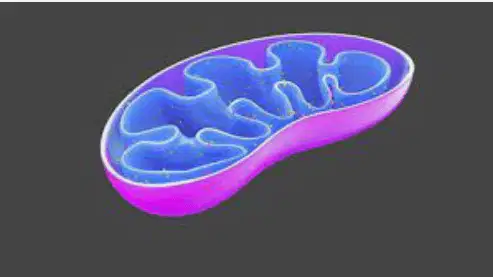
What occurs in the organelle that looks like this?
Break down excess or worn-out cell parts.
Helps process and package proteins and lipid molecules
Production of ribosomes
Production of Energy
Which is the most important inorganic compound to ALL living things…
Carbon Dioxide
Oxygen
Glucose
Water
The removal of mitochondria from a typical animal cell would have an immediate effect on the cell’s production of
DNA
proteins
ATP
carbon dioxide
Which factor would be an abiotic limiting factor for fish living in a lake in New York State?
amount of algae
amount of fisherman
amount of acid rain
amount of predators in the lake
A native species is competing for resources with a nonnative species that was accidentally introduced into the area. The nonnative species is more likely to survive than the native species when
the nonnative species have no competition
both eat the same food
the nonnative is immune to diseases
predators prey on both species
One result of the ability of organisms to detect and appropriately respond to stimuli is
an organ malfunction
dynamic equilibrium
gene manipulation
an allergic reaction
ATP is produced through which process?
photosynthesis
protein synthesis
cellular respiration
meiosis
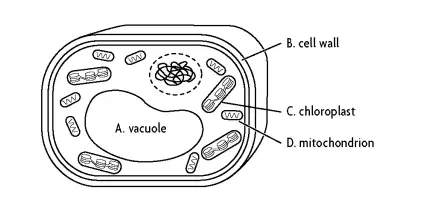
What plant organelle is used to make sugars?
Cell wall
mitochondria
chloroplast
vacuole
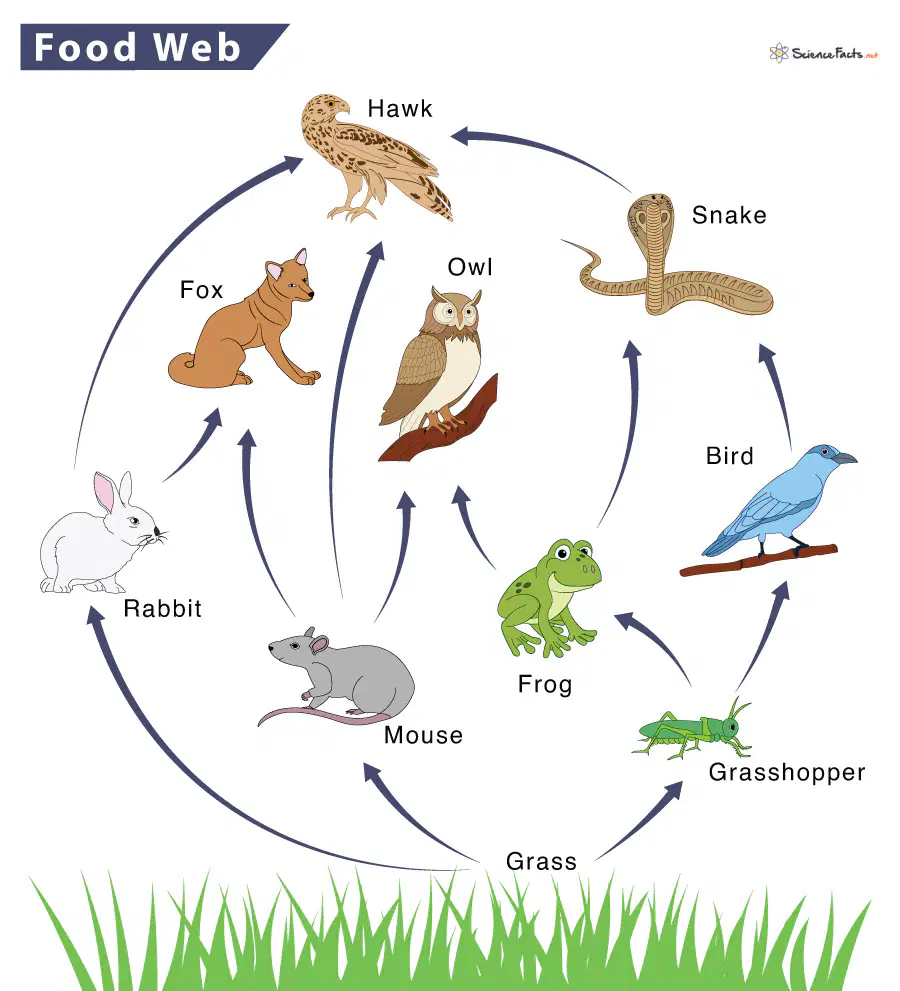
Which statement most accurately predicts the result of interfering with populations in this food web?
Removing all the mountain lions from the food web will benefit the ecosystem.
Removing the fox will affect the rabbit and mouse populations.
Removing the grasshopper will impact the fox population
Frogs are eaten by foxes
An autotroph can also be called
an animal
a consumer
a heterotroph
a producer
Which is found in plant cells but not in animal cells?
cytoplasm
mitochondria
cell wall
ribosomes
which is an organic molecule?
glucose
oxygen
water
carbon dioxide
Which is an inorganic molecule?
Water
Starch
DNA
Fat
What does photosynthesis produce?
glucose
protein
starch
water
Which organic compound is primarily used to make energy?
carbohydrates
protein
fats
nucleic acids
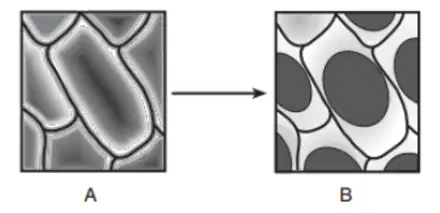
Red onion cells undergo the change represented in the picture below. This change is most likely caused by the cell being transferred from
distilled water to starch indicator
distilled water to salt water
salt water to tap water
salt water to distilled water
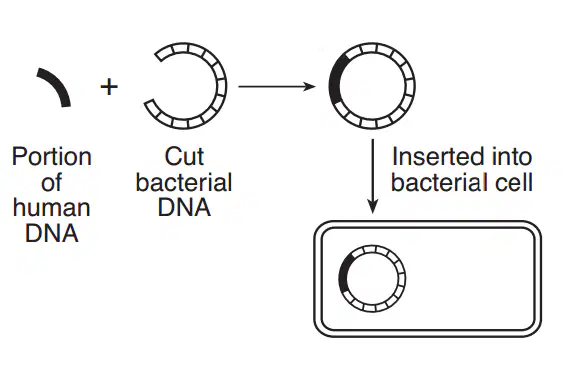
The diagram represents a technique used in some molecular biology laboratories
This technique is a type of
chromatography
gel electrophoresis
direct harvesting
genetic engineering
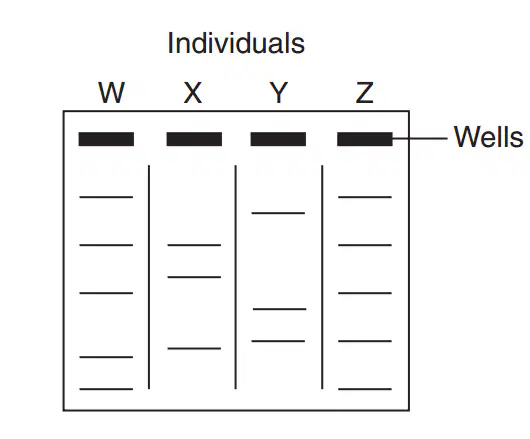
Samples of DNA from an eye-color gene of four individuals, W, X, Y, and Z, were cut into pieces using a type of chemical. The results of this procedure are shown in the diagram.
The diagram represents the results of the procedure known as
cloning
chromatography
gel electrophoresis
protein sequencing
Gel electrophoresis is used to separate DNA fragments based on their
size
color
functions
chromosomes
Which statement describes a failure of homeostasis in humans?
When activity in an individual increases, the body temperature rises and the individual sweats.
As the concentration of carbon dioxide increases in the human body, the lungs begin to expel more carbon dioxide.
A viral infection leads to a decrease in the number of white blood cells being produced in the body.
After an individual gets a cut, certain chemical changes begin the healing process.
Which lab procedure can be done to find molecular evidence for relationships between organisms?
setup and perform gel electrophoresis
compare slides of cell organelles
examine fossils and ocean sediments
use a dichotomous key and test for pH
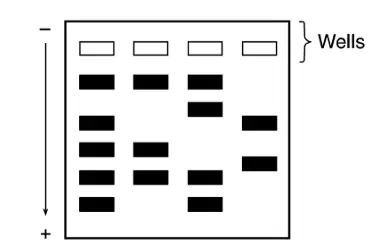
Which lab technique, used to compare DNA molecules, is shown in this image
Gel electrophoresis
Paper chromatography
Light spectrophotometry
Fossil comparison
What does an indicator do?
shows if something is there
breaks down proteins
improves cell functions
creates ATP
The process of active transport requires the most direct use of _______ to move things in or out of cells
ATP
Carbon dioxide
Amino acids
Glucose
Chloroplasts in plant cells are responsible for
photosynthesis
building proteins
storing proteins
storing water
Mitochondria are responsible for
Cellular respiration
Photosynthesis
Protein synthesis
DNA storage
Ribosomes are responsible for
Protein synthesis
Cellular respiration
Storage
Photosynthesis
Which is NOT a waste product that may be produced while creating ATP?
oxygen
acid
carbon dioxide
heat
Which of the following is an inorganic molecule?
water
glucose
amino acids
starch
Which molecules build carbohydrates
simple sugars
amino acids
nucleic acids
lipids
Oxygen, water, and carbon dioxide all pass through cell membranes through the process of
diffusion
inhalation
respiration
digestion
Which of the following is considered a pathogen?
HIV
cancer
diabetes
COVID
Blood type is determined by ________ found on a person's red blood cells
antigens
receptors
membranes
antibodies
Starch is a type of ______________ that plants use to store the glucose they produce during photosynthesis
carbohydrate
fat
amino acid
protein
The paramecium is a single-celled organism that reproduces asexually. The offspring of a paramecium usually contain
genetic material identical to that of the parent
fewer mutations than the parents
only half of the genes of the parent cells
more DNA than the parent cell
Mitosis in an organism with 50 chromosomes would create a
body cell with 50 chromosome
body cell with 25 chromosomes
gamete with 50 chromosomes
gamete with 25 chromosomes
Meiosis in an organism with 50 chromosomes would produce a
gamete with 25 chromosomes
body cell with 25 chromosomes
body cell with 50 chromosomes
gamete with 50 chromosomes
What does every food web start with?
the sun
decomposers
producers
consumers
Autotrophs are organisms that
can produce their own food
must eat other organisms
only eat meat
only eat plants
Consumers are organisms that
must eat other organisms
produce their own food
eat only meat
eat only plants
Heterotrophs are also known as
Consumers
Producers
Herbivores
Carnivores
Autotrophs are also known as
Producers
Consumers
Herbivores
Animals
All living things maintain a balance within their cells and with the environment through the process of
homeostasis
evolution
metabolism
growth and development
A catalyst is
another word for enzyme
an alteration in the sequence of DNA
a technique that compares organisms
where eggs are stored
Biotic means
the living parts of an ecosystem
the nonliving parts of an ecosystem
the specific role played by an organism in an ecosystem
the creation of an organism
The control group in an experiment is
the group that is the experiment is compared to, nothing is changed
the group that receives the test
A diabetic patient suffers from deficiency of which hormone?
insulin
estrogen
testosterone
progesterone
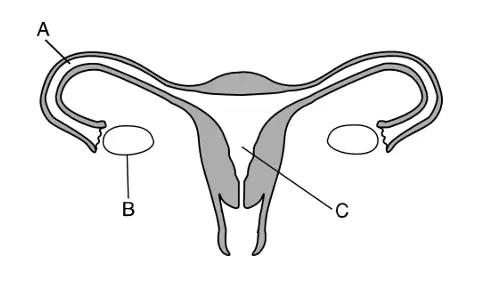
Structure B is responsible for producing
Eggs
Ovaries
Insulin
Blood cells
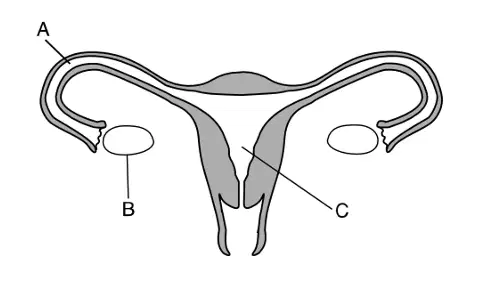
In which structure does a fertilized egg develop?
A
B
C
As blood glucose levels increase, hormones are released to return glucose levels to normal. This is an example of
a nervous system disorder
the synthesis of antibodies
a stimulus and a response
an antigen and antibody reaction
In humans, embryonic development during the first two months is more sensitive to environmental factors than during the remaining months. The best explanation for this statement is that
during the first two months, organs are being formed and any unusual change during cell division can interfere with normal development
the genes that control development function only during the first two months of development
no changes occur in a developing fetus after the second month
organ development is not affect by environmental factors after the second month
A decrease in the biodiversity of an ecosystem usually leads to
an increase in predator and prey populations
the elimination of material cycling
a decrease in stability
an increase in dynamic equiilibrium
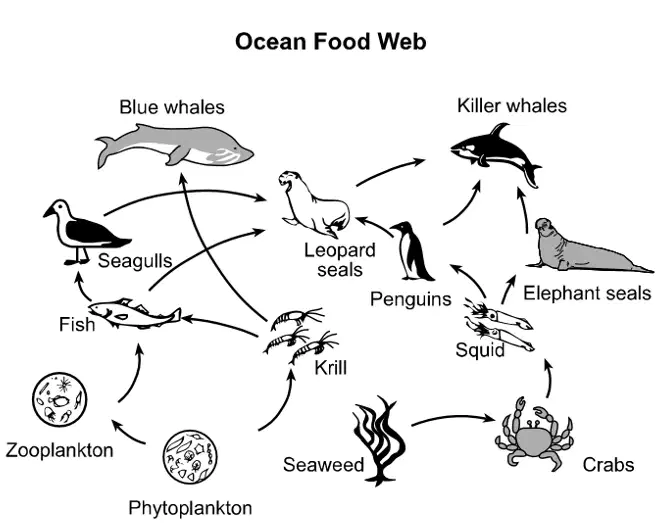
If the fish population decreases, what is the most direct effect this will have on the aquatic ecosystem?
the leopard seals will all die from lack of food
the krill population will only be consumed by seagulls
the zooplankton population will increase in size
the phytoplankton population will increase in size
Which group of organisms in an ecosystem fills the niche of recycling organism matter back to the environment
carnivores
decomposers
producers
predators

