
 Worksheets
AP Biology ALL Units Review
Total questions: 173
Worksheet time: 4hrs 3mins

The Oxygen atoms in the molecule shown have this charge:
Positive
Partial Positive
Negative
Partial Negative

Capillary action is in part the result of adhesion. Which aspect of water is responsible for this?
Nonpolar covalent bonds that enable water to dissolve other substances
Polar covalent bonds that join molecules of water to other substances
Hydrogen bonds between water and another substance
Ionic bonds that enable electrons to flow through water and into another substance

The ability of water molecules to stick to each other, creating surface tension is called:
Cohesion
Adhesion
Insulation
Ph

The fact that water can stick to other substances is called:
Ph
Adhesion
Cohesion
Insulation

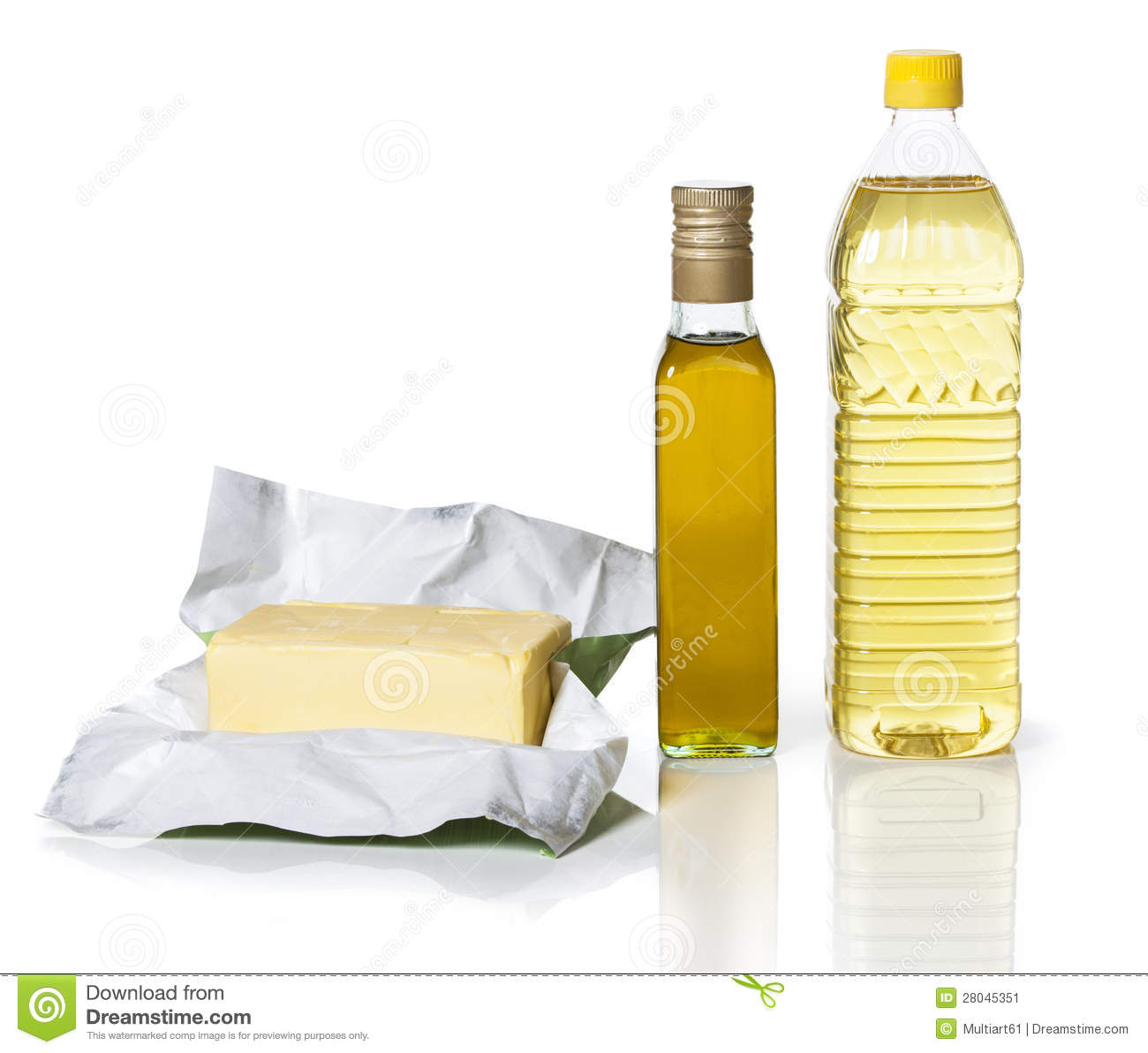
Storage of fat by the body is advantageous primarily because fats
are insoluble and chemically stable
can be digested with less energy and fewer enzymes than carbohydrates and proteins
yield, gram for gram, more than twice as much energy as complex carbohydrates and proteins
store almost all potential energy in chemical bonds
monosaccharides, fatty acid and glycerol, amino acids, and nucleotides are examples of _____________.
Elements
Compounds
Macromolecules
Monomers
What are the monomers that make up lipids?
monosaccharides
glycerols and fatty acids
amino acids
nucleotides
A polymer of glucose that serves as a storage macromolecule in animals is
chitin
cellulose
glycogen
amylase
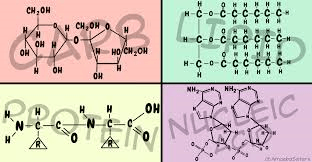
Carbohydrates are made of which elements?
Carbon (C)
Hydrogen (H)
Oxygen (O)
Nitrogen (N)
Phosphorus (P)
Lipids are made of which elements?
Carbon (C)
Hydrogen (H)
Oxygen (O)
Nitrogen (N)
Phosphorus (P)
Proteins are made of which elements?
Carbon (C)
Hydrogen (H)
Oxygen (O)
Nitrogen (N)
Phosphorus (P)
Nucleic Acids are made of which elements?
Carbon (C)
Hydrogen (H)
Oxygen (O)
Nitrogen (N)
Phosphorus (P)

What macromolecule is shown above?
Carbohydrate
Lipid
Protein
Nucleic Acid

Which biomolecule is this a picture of?
Protein
Nucleic Acid
Lipid
Carbohydrate

Which biomolecule is this a picture of?
Protein
Nucleic Acid
Lipid
Carbohydrate

Which of the following statements is/are true regarding the chemical reaction illustrated in Figure 5.5?
It is a hydrolysis reaction.
It is a hydrolysis reaction and it results in a peptide bond.
It results in a dehydration reaction that is breaking the two amino acids apart.
It is a dehydration reaction that is joining two amino acids together.
Polysaccharides are best described as:
a complex molecules such as starches that are composed of many chains of sugar monomers
chains of amino acids joined by peptide bonds
molecules made of glycerol and three fatty acid chains
a five- or six-carbon sugar molecule bonded to an aldehyde or ketone group.
Which macromolecule(s) have sulfur?
Carbohydrates
Proteins
Nucleic Acids
Fats
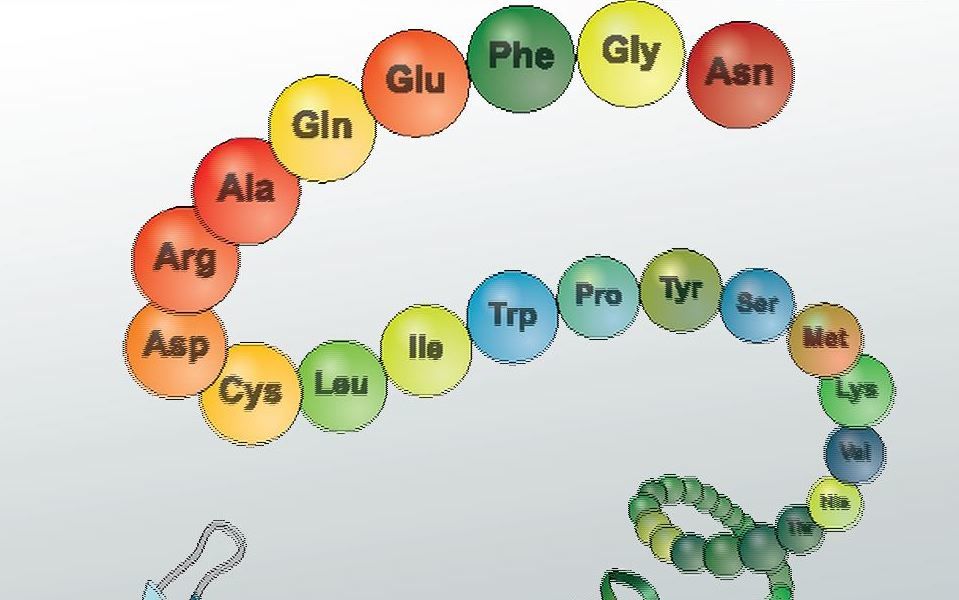
Which protein structure involves the peptide bonds between amino acids?
primary
secondary
tertiary
quaternary
Genetic information stored in DNA is coded in...
the directionality of the molecule
the complementary base pairs
the sugar phosphate backbone
the sequence of bases in a single strand
DNA and RNA nucleotides are added via dehydration synthesis forming ...
helical structure
ionic bonds
covalent bonds
hydrogen bonds
Substitution of amino acids in primary struture does not affect subsequent levels of protein folding.
True
False
DNA and RNA have the same 5-carbon sugar and the same nucleotides.
True
False
n the 1950s, the scientist Alfred Hershey and Marth Chase carried out an experiment using bacteriophages, which are viruese that infect bacteria. During the experiment, the scientists allowed bacteriophages that had been labeled with a radioactive element to infect the cells.
After carrying out their experiment, the scientists concluded that bacteriophages inject DAN, but not protein, into the host bacterial cell during infection.
To be able to reach this conclusion the scientists found which element inside the bacteria cells?
radioactive carbon
radioactive phosphorus
radioactive hydrogen
radioactive sulfur

A scientist grew Chlorella, a single-celled photosynthetic algae, for three weeks in a laboratory culture. The culture medium contained dissolved carbon and other nutrients.
Scientists measured the beginning and the end of the three week period. Based on the results of the graph which nutriets were absent from the culture medium?
phosphorus
nitrogen
oxygen
sulfur

A scientist grew Chlorella, a single-celled photosynthetic algae, for three weeks in a laboratory culture. The culture medium contained dissolved carbon and other nutrients.
Scientists measured the beginning and the end of the three week period. Based on the results of the graph which nutriets were absent from the culture medium?
phosphorus
nitrogen
oxygen
sulfur
1.) They act like gatekeepers, only let certain things in.
2.) Enzyme receptors embedded in the membrane.
when some molecules can cross the membrane while others cannot.


When particles move from low to high concentration
Passive Transport
Active Transport

Your gums are swollen. How will rinsing with warm salt water help the swelling?
swollen gums will absorb the salt
salt lowers the temp
salt goes against the concentration gradient
water in the gums will diffuse out of the cells




Where are lipids formed?
Rough ER
Smooth ER
Nucleus
Ribosomes

The difference in electric potential between the interior and the exterior of a cell is called:
Concentration Difference
Membrane Potential
Cotransport
Concentration Potential
The combination of an ion's concentration gradient and membrane potential is called
action potential
electrochemical potential
electrochemical gradient
action gradient
1.) They act like gatekeepers, only let certain things in.
2.) Enzyme receptors embedded in the membrane.
when some molecules can cross the membrane while others cannot.
When particles move from low to high concentration
Passive Transport
Active Transport
Your gums are swollen. How will rinsing with warm salt water help the swelling?
swollen gums will absorb the salt
salt lowers the temp
salt goes against the concentration gradient
water in the gums will diffuse out of the cells
Where are lipids formed?
Rough ER
Smooth ER
Nucleus
Ribosomes
The difference in electric potential between the interior and the exterior of a cell is called:
Concentration Difference
Membrane Potential
Cotransport
Concentration Potential
The combination of an ion's concentration gradient and membrane potential is called
action potential
electrochemical potential
electrochemical gradient
action gradient
Enzymes ___________________ activation energy to speed up chemical reactions.
increase
decrease
What is the relationship between an enzymes active site and its substrate?
The active site has the right polarity to interact with the substrate.
The active site is hydrophobic and interacts with other hydrophobic amino acids on the substrate
The active site has a specific shape that fits the shape of the substrate
The active site uses energy to form covalent bonds with the substrate
How does a competitive inhibitor affect an enzymes function?
It binds to an allosteric site that alters the shape of the enzyme
It changes the polarity of the enzyme, decreasing the rate of reaction
It denatures the enzyme which increases the activation energy for the reaction.
It binds to the active site, preventing the enzyme from catalyzing the reaction
Which of these factors can affect the initial rate of an enzyme reaction?
Enzyme concentration
Substrate concentration
Temperature
pH
All of the above
What effect does high temperature have on most enzymes reaction rates?
High temperatures will speed up the enzyme's reaction rate
High temperatures will stabilize the enzyme's reaction rate
High temperatures will decrease enzyme reaction rates due to denaturation
High temperatures do not affect enzyme reaction rates
How does initial substrate concentration affect enzyme reaction rates?
High concentration of substrates will inhibit enzyme reaction rates
Low concentration of substrate will increase enzyme reaction rates
High initial concentrations of substrate will increase the enzyme reaction rate
Enzyme reaction rates are independent of substrate concentration
In scientific experiments what is a control?
The variable that is manipulated by the researcher
A test that does not have the independent variable, to show a baseline with no reaction
A test where the researcher does not know which sample contains which variable
The variable that changes based on the experimental conditions
What is chemiosmosis?
The diffusion of electrons through the electron transport chain
The breakdown of a glucose molecule
The diffusion of protons down their concentration gradient
The active transport of NADH into the mitochondria
Why is chemiosmosis important to cellular respiration?
It provides the energy needed to catabolize glucose
It is the force that powers ATP synthase
It provides the energy needed to breakdown pyruvate into carbon dioxide
It generates the electrons needed for the electron transport chain
Why is the hydrolysis of ATP important to a cells function?
It provides a source of phosphate for the cell.
It releases energy that can be used to power cellular processes
It absorbs excess hydrogen ions in the cell to regulate the internal pH
It acts as a catalyst for chemical reactions in the cell.
Why do plants not store 100% of the light energy absorbed by chlorophyll in glucose molecules?
Most of the energy is used to power the reaction or is lost as heat
Plants do not have a high energy requirement, so they do not need to convert 100% of the energy
The energy is used to power ATP synthase proteins on the thylakoid membrane
The remaining energy is used actively transport oxygen out of the cell.
What is the best reason that plants do not perform photosynthesis at night?
They close their stomata at night to rest
They do not have an energy source to power the light reactions
Only a few types of plants are nocturnal
There is less carbon dioxide released into the air at night
What are the net products of photosynthesis?
6 CO2, 6 H2O, Energy
6 O2 and 6 H2O
C6H12O6 and 6 O2
6 CO2 and C6H12O6
What factors affect the rate of photosynthesis?
CO2 concentration
H2O available
Temperature
Light intensity
All of the above
What powers the rotation of ATP synthase enzymes in mitochondria and chloroplasts?
The energy absorbed during the light reactions.
The electronegativity of oxygen
Energy released by breaking the chemical bonds in glucose
The diffusion of hydrogen
How does a plant obtain the carbon necessary to form glucose?
Through the light reactions
From stored sugars in the roots of the plant
From the catabolic breakdown of water
Through CO2 absorbed from the atmosphere
What products of the light reaction are directly needed by the Calvin cycle in photosynthesis?
H ions and carbon dioxide
Photons absorbed by chlorophyll
FADH2 and Oxygen
ATP and NADPH
Which phase of photosynthesis produces organic sugars?
The light reactions
The Calvin cycle
The link reaction
Electron transport chain
What are the products of the Krebs Cycle?
Pyruvate, water, ATP, NADH
Acetyl CoA, NADH
NADH, FADH2, carbon dioxide, ATP
ATP, glucose
What are the products of glycolysis?
Pyruvate, ATP, water, NADH
Carbon dioxide, FADH2, NADH, ATP
32 ATP
NADPH and ATP
What are the products of the light reaction of photosynthesis?
Oxygen, NADPH, ATP
Glucose, NADP, ADP
Carbon dioxide, water, ATP
Oxygen, FADH2, ATP
What process creates the proton motive force in cellular respiration?
The electron transport chain
The hydrolysis of ATP
Chemiosmosis
The Citric Acid cycle
What is the function of NAD in cellular respiration?
It catalyzes the conversion of glucose into ATP
It provides inorganic phosphate needed by ATP synthase
It acts as an electron and proton acceptor to carry energy to the electron transport chain
It is the coenzyme needed to convert glucose into pyruvate
How are the ATP synthase enzymes in photosynthesis and cellular respiration similar?
They both rely on chemiosmosis of hydrogens down a gradient to power phosphorylation
They are both located in the cytoplasm of the cell
They both use oxygen to create a concentration gradient
They both receive hydrogen ions from FADH2
When will lactic acid build up in animal cells?
When there is excess carbon dioxide
When the cells produce too much ATP
When there is not enough oxygen to fuel the mitochondria
When the cells need to remove excess oxygen to avoid damaging their components.

Based on this graph, which enzyme would function best in a basic environment?
A
B
To prevent wasting energy and resources to create un-needed ATP, cellular respiration pathways can be shut down
Using positive feedback in the krebs cycle
Using positive feedback in glycolysis
Using negative feedback in glycolysis
Using negative feedback in krebs cycle
If ADP is phosphorylated in the presence of oxygen, this is known as
Substrate Level Phosphorylation
Oxidative Phosphorylation
Photophosphorylation
A. Photons excite the electrons of PS I
B. Photons excite the electrons of PSII
C. Electrons travel along the ETC, allowing for the pumping of a proton
D. NADP + is reduced to NADPH
What is correct sequence of events?
A, C, B, D
B, C, A, D
A, B, C, D
C, A, B, D
Photorespiration is a modification in
C3 plants
C4 plants
CAM plants
Spatial separation of steps of the calvin cycle is a modification of
C3 plants
C4 plants
CAM plants
Temporal separation of steps of the calvin cycle is a modification of
C3 plants
C4 plants
CAM plants
Cyclic photosynthesis occurs because
Temperature levels are too high in the environment.
Eukaryotes are only capable of cyclic photosynthesis.
As an evolutionary mechanism to prevent light damage.
All bacteria are only capable of cyclic photosynthesis.
Plants absorb many wavelengths of light to obtain energy. Some of these wavelengths that provide maximum energy transference include
Green and Red
Violet and Red
Blue and Green
Red and Orange
In a monohybrid cross of complete dominance, what is the phenotypic ratio?
1:2:1
3:1
9:3:3:1
12:4
In a monohybrid cross of incomplete dominance, what is the phenotypic ratio?
1:2:1
3:1
9:3:3:1
12:4
In a dihybrid cross of complete dominance, what is the phenotypic ratio?
1:2:1
3:1
9:3:3:1
12:4
In a population of 100 offspring, how many would you expect to be homozygous dominant in a cross between a homozygous dominant and a homozygous recessive parent?
0
25
50
75
100
In a population of 200 offspring, how many would you expect to be homozygous recessive in a cross between a heterozygous and a homozygous recessive parent?
0
50
100
150
200
In an incomplete dominance cross between a white flower and a red flower, what is the probability of a pink offspring?
0%
25%
50%
75%
100%
In a complete dominance cross between a white, terminal (recessive) and red, axial (dominant) flower, what is the probability of a red, axial offspring?
1/16
3/16
9/16
16/16
In a cross between an individual with type A blood and an individual with type B blood, what is the probability of an offspring with type O blood?
0/4
1/4
1/2
3/4
4/4
In a cross between two roan cows (codominant), what is the probability of a white cow?
0/4
1/4
2/4
3/4
4/4
Identify which of the following descriptions about dominance are correct
Incomplete dominance involves the homozygous dominant and heterozygous looking the same
Incomplete dominance involves the heterozygous offspring resulting in an intermediate between the two dominant traits
Codominance involves the heterozygous offspring resulting in an intermediate between the two dominant traits
Codominance involves the homozygous dominant and heterozygous looking the same

