
 Worksheets
Grade 7 Acid/Bases Review
Total questions: 70
Worksheet time: 46mins
A sugar solution has a pH of 7. This means the sugar solution is:
acidic
basic
neutral
Sodium Hydride
Sodium Chloride
Sodium Chlorine
Potassium Sulphur
Potassium Sulphuric
Potassium Sulphate
Which salt will be produced if magnesium react with hydrochloric acid?
Magnesium oxide
Magnesium sulfate
Magnesium chloride
What are the products formed when a metal oxide reacts with an acid?
salt and water
salt
hydrogen gas
salt and hydrogen gas
magnesium oxide + hydrochloric acid =
magnesium chloride and water
magnesium oxide and water
lead oxide + sulphuric acid
lead chloride and water
lead sulphate and hydrogen gas
lead sulphate and water
water
oxygen
___ + _____ -> sodium nitrate + water
Sodium oxide + nitric acid
Sodium oxide + sulphuric acid
Sodium oxide + hydrochloric acid
Metal oxide + acid -->
salt + water
salt + oxygen
salt + water + carbon dioxide
acid
Water
Hydrochloric acid + magnesium oxide -->
Magnesium chloride + water
Magnesium + water
Which Salt is form with the following acid- Hydrochloric Acid
Chloride
Sulfate
Nitrate
Which Salt is form with the following acid- Sulfuric Acid
Chloride
Sulfate
Nitrate
Which Salt is form with the following acid- Nitric Acid
Chloride
Sulfate
Nitrate
Chemical symbol for carbon
Ca
Cn
C
Cb
Chemical Symbol for lead
Pb
L
Ld
Le
Chemical symbol for magnesium
Mg
M
Ma
M
Chemical symbol for sodium
So
No
S
Na
Chemical symbol for oxygen
O
Ox
On
Oy
Name this compound MgCl2
magnesium chlorine
chlorine magnesium
magnesium chloride
magneium chlorate
Chemical formula for calcium nitrate
Ca(NO3)2
CaNO
CaNO2
C(NO3)2
Name the following compound: NaNO3
Sodium Nitrogen Oxide
Sodium nitrate
Sodium nitrite
Sodium nitride
What pH range would you get for an acid?
0-6
7
7-14
2-10

Evidence of a chemical reactions is anything that shows -
a new substance has formed
a solid dissolved in a liquid
interaction between 2 gases
a change in the state of matter

Which is NOT an indication of a chemical change?
temperature change
formation of a precipitate
shape change
production of light
A liquid has a pH of 1. What type of liquid is it?
Acid
Neutral
Alkaline


What might happen if you mixed a strong acid with an equally strong base?
You would see an explosive chemical reaction
The acid would destroy the base
The base would destroy the acid
You'd wind up with a pH-neutral substance

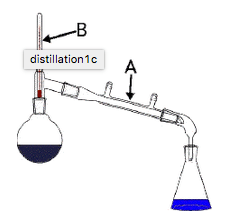
Name the separation technique
Centrifuge
Crystallisation
Distillation
Evaporation

Name the separation technique
Distillation
Crystallisation
Evaporation
Condensation

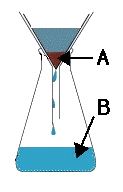
Name the separation technique
Filtration
Evaporation
Distillation
Separation
In a salt water solution ...
Salt is the solute and water is the solvent
Salt is the solvent and water is the solute
Identify which of the following can be separated by filtration.
Two liquids
Two solids
A solid and a liquid
A gas and a liquid
What method would you use to separate a mixture of salt and water so that you can get keep the salt AND the water?
sorting by hand
distillation
chromatography
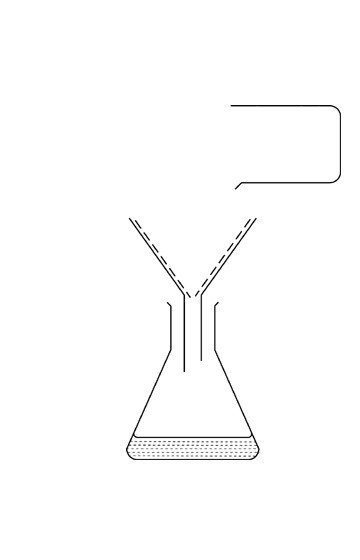
What is the name of this separation technique?
distillation
filtration
evaporation
chromatography
A lighted splint was held over a flask in which a gas was given off. The splint went out with a pop. Which gas was given off?
hydrogen
chlorine
oxygen
ammonia
When neutralization reaction happens, they form -
Salt and Sodium Chloride
Salt, Water and Heat
Heat and Sugar
Indicators are -
Substances which are nor Acidic or Basic
Substances that are used to test the Acidic or Basic nature of a substance
Substances which have both chemical and physical properties
None of the Above
Complete the following word equation:
Metalcarbonate + acid -->
Salt + Hydrogen
Salt + Water + Carbon Dioxide
Salt + Water
How do you remove the water to leave solid copper sulfate crystals?
Filter
Evaporate
Distill
What is the symbol for Copper?
C
co
Cu
CU
What does the word insoluble mean?
Does dissolve
Doesn't dissolve
Is part of a solid
How do you separate an excess insoluble reactant from a solution?
Filtration
Precipitation
Crystalisation
Evaporation
Complete the following word equation:
Metal + Acid -->
Salt + water
Salt + hydrogen
Salt + Water + Carbon dioxide
Crystallisation is used to separate ____ from a liquid.
undissolved liquid
dissolved liquid
undissolved solid
dissolved solid
When producing a soluble salt in a reaction between an acid and an alkali, how can you prepare dry solid crystals from the solution?
Filtration
Neutralisation
Condensation
Evaporation/crystallisation

This change is a
chemical reaction
physical change
musical change
all answers are correct
When energy like heat and light are given off in a chemical reaction it is called
exothermic
endothermic
eccentric
ectomorphic
Signs of a chemical change could be:
a change in energy (temperature, light, sound)
a precipitate forms (a solid forms from 2 liquids)
formation of gas (bubbles)
shocking change in color
all of these answers are signs of chemical change
Magnesium + hydrochloric acid-->
Magnesium chloride + water
Magnesium chloride + hydrogen
Magnesium hydrochloride + hydrogen
Magnesium chloride + water + carbon dioxide
Iron + hydrochloric acid -->
Iron chloride + hydrogen
Iron chloride + carbondioxide
Iron hydroxide + acid
Iron chloric + hydrogen
How do we test for hydrogen?
Squeaky pop test
Hydrogen extinguishes a lit splint
Bubbling through lime water
Hydrogen makes a glowing splint relight
The two tests for carbon dioxide are ...
It will extinguish a lit splint
It will cause a squeaky pop
It will explode
When bubbled through lime water it turns the water cloudy
Which salt will e produced if copper carbonate react with hydrochloric acid....
Copper carbonate
Copper chloride
Water
Carbon dioxide
What gas is always produced when a metal reacts with acid?
Oxygen
Hydrogen
Carbon dioxide
Nitrogen

