
 Worksheets
B5 OCR Combined
Total questions: 141
Worksheet time: 3hrs 33mins
The hardened remains of a living thing that died long ago.
fossil
extinct
endangered
minerals
Why are there more animal fossils than plant fossils?
Animals are smaller than plants.
Plants have harder bodies than animals.
Plans have softer bodies than animals.
Animals eat plants.
Which is an imprint fossil?
bone
a cast
a trace fossil
original remains
Which type of rock are most fossils found?
sedimentary rock
metamorphic rock
igneous rock
fossils
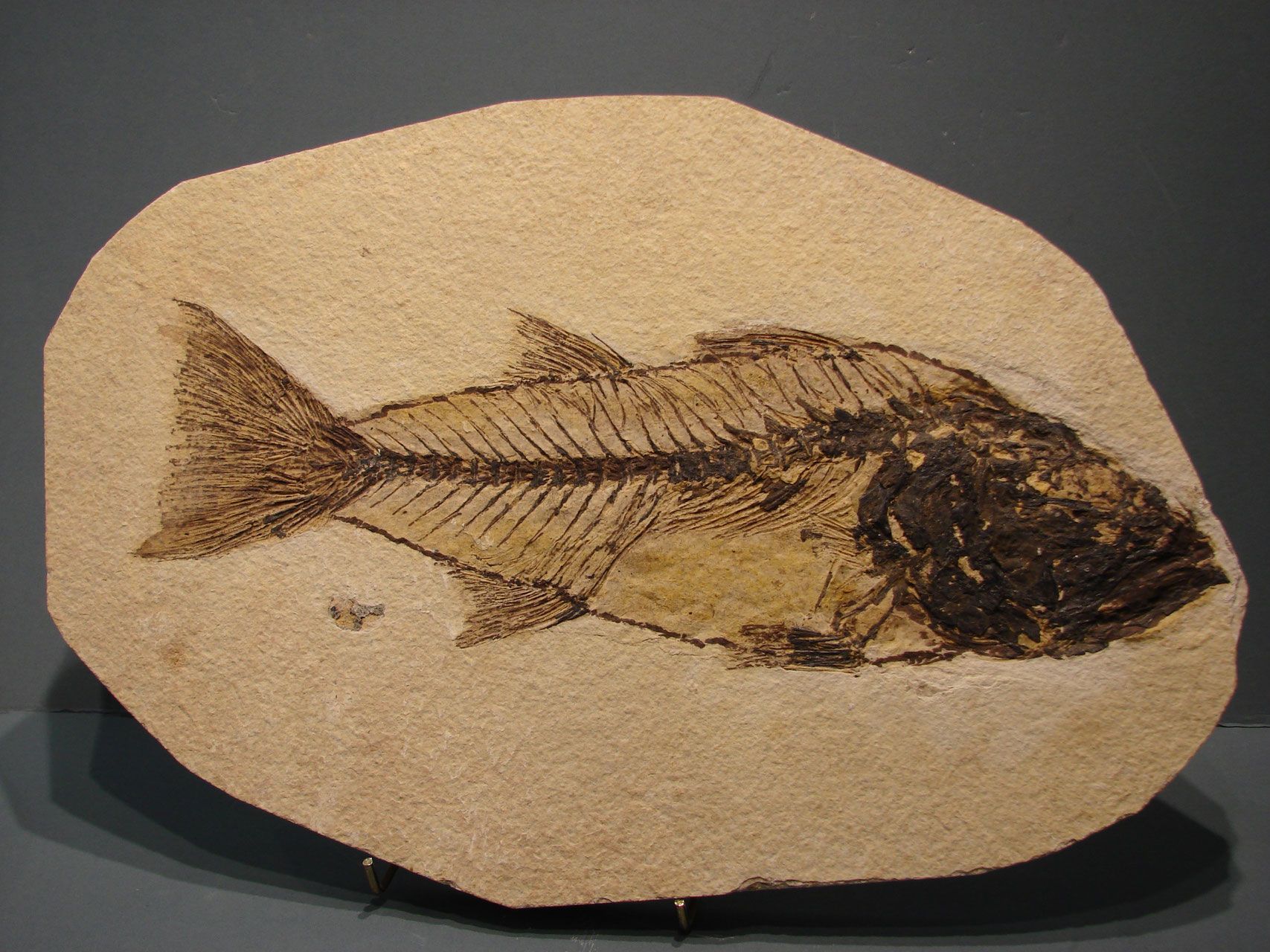
If a scientist found a fish fossil in the desert, what can they infer?
An animal ate the fish.
The water covered the area long ago.
Today's fish looks the same
The fish is endangered.
What replaces the wood of a once-living thing to form petrified wood?
amber
cast
mold
minerals

This type of fossil is tree sap hardened and replaced by minerals.
Petrified wood
Imprint
Amber
Mold

What type of fossil is pictured here?
Mold fossil
Trace fossil
Cast fossil
Body fossil

What type of fossil is pictured here?
Forest fossil
Trace fossil
Cast fossil
Body fossil

What type of fossil is pictured here?
Mold fossil
Trace fossil
Cast fossil
Body fossil
Which organism is most likely to become fossilized in the next million years?
a butterfly
a giraffe
an octopus
an earthworm
Which type of fossil preservation is a thin carbon silhouette of the original organism?
cast
carbon film
mold
petrified
A fossil formed when minerals replace all or part of an organism is called a
mold
petrified fossil
cast
trace fossil
What is a copy of a fossil produced by filling a mold with sediments or crystals?
mold
cast
petrified fossil
carbon film
change in the DNA sequence
protein
error
mutation
mutagen
one nucleotide is preplacced with a different nucleotide
addition
substitution(point)
deletion
inversion
when one or more nucleotides are deleted
substitution
addition
remake
deletion
when one or more nucleotides are inserted
addition
deletion
insertion
remake
when a portion of the DNA is shifted in one direction due to a deleition or insertion
frameshift
gene
deletion
substitution
T-G-A-C-C-A
T-G-A-G-C-A
The mutated DNA segment is TTCGCAAG. This is an example of ___ mutation.
When a nitrogen base (nucleotide) is removed from a gene, this is called a ________ mutation.
removal
deletion
substitution
insertion
In nitrogen base pairs, C always pairs with...
A
T
G
C
Each rung of the DNA ladder is made of
a pair of nitrogen bases
a single nitrogen base
a pair of carbon bases
a single carbon base
Which of the following best describes how genes influence an organism's traits?
Genes control the production of proteins, which affect the organism's traits.
DNA controls the production of lipids, which determine the organism's traits.
Carbohydrates control the production of genes, which affects the organism's traits.
Genes control the development of sister centrioles, which determine the organism's traits.
Genetic mutations can be...
beneficial, harmful, or neutral
beneficial only
harmful only
neutral only
In nitrogen base pairs, A pairs with...
A
T
G
C
Mutations always have a HUGE effect on our phenotype
True
False
The two kinds of frameshift mutations are:
Deletion and insertion
Substitution and silent

The change in strand 1 to form strand 2 is most similar to what type of mutation?
Insertion
Deletion
Substitution
Silent
What is the difference between sexual and asexual reproduction?
Asexual produces genetically different offspring. Sexual produces genetically identical.
Sexual produces offspring with fewer chromosomes. Asexual produces more.
Sexual produces genetically different offspring. Asexual produces genetically identical.
Sexual reproduction is quicker than asexual.
What is the purpose of meiosis?
To create daughter cells.
To create identical cells.
To create offspring that are genetically identical.
To create a faster process of reproduction.
Brain Check! What part of the plant travels from the parent plant to the other plant for fertilization?
Stamen
Pollen
Pistil
Style
The right sequence in sexual reproduction of plants is _______,______&_______.
Fertilization, pollination & germination.
pollination, germination & fertilization.
pollination, fertilization & germination.
Germination, pollination & fertilization.
The pollen tube contains two female nuclei.
True
False
The pollen tube extends till it reaches the ovule inside the ovary through the _______.
Zygote
Male nuclei
Micropyle
Style
The zygote undergoes successive divisions to form _____ which grows forming _____.
New plant _ embryo
Ovule _ new plant
Embryo _ zygote
Embryo _ new plant
The wall of the ovary develops to ______ while the ovule develops to _____.
Pericarp _ seed
Pericarp _ seed caot
Fruit _ seed
Seed coat _ fruit
All are natural vegetative reproduction except ______.
Rhizomes
Cutting
Tubers
Offshoits
The tuber is a horizontal root as potatoes or a terrestrial stem as sweet potatoes.
False
True
It's common for the cut to be a branch carrying many buds.
True
False
In grafting the ____ is attached to the _____ to feed on its juice.
Stock _ scion
Scion _ stock
Scion _ cut
Stock _ cut
The grafting can occurs between _____ & _____ .
Oranges & naring
Apples & apricots
Peaches & pears
Orange & apples
________ is considered from the important modern ways to increase crops.
Cutting
Grafting
Tissue culture
Layering
_____,_____& _______ are examples of artificial vegetative reproduction.
Cutting, layering & tissue culture
Grafting, rhizomes & tubers.
Offshoots, grafting & bulbs.
Cutting, layering & corms
Type of plant reproduction which the plant can reproduce without flowers.
Sexual reproduction
Fertilization
Pollination
A sexual reproduction
Natural Selection
Process where traits and organisms that are best adapted to the environment survive and reproduce.
Adaptation
A variation in a plant or animal that increases it chance of survival in its environment.
Development
The process by which animals and plants grow and develop.
Diversity
The variation of life forms present in different ecosystems.
Species
Organisms that can reproduce, have similar characteristics, and have a common gene pool.

Diversity

Natural Selection

Adaptation

Species

Development
A process in nature where traits and organisms that are best adapted to the environment survive and reproduce.
(a)
A variation in a plant or animal that increases it chance of survival in its environment.
(a)
The process by which animals and plants grow and develop.
(a)
The evolutionary tendency of organisms with a common ancestor to develop different adaptations or traits and become less related.
(a)
A taxonomic category referring to organisms that can reproduce with one another, have similar characteristics, and have a common gene pool.
(a)
Draw your own example of natural selection.

Draw an example of an adaptation.
Create a definition for diversity in your own words. Be sure to use a complete sentence.
(You can start with: Diversity is...)
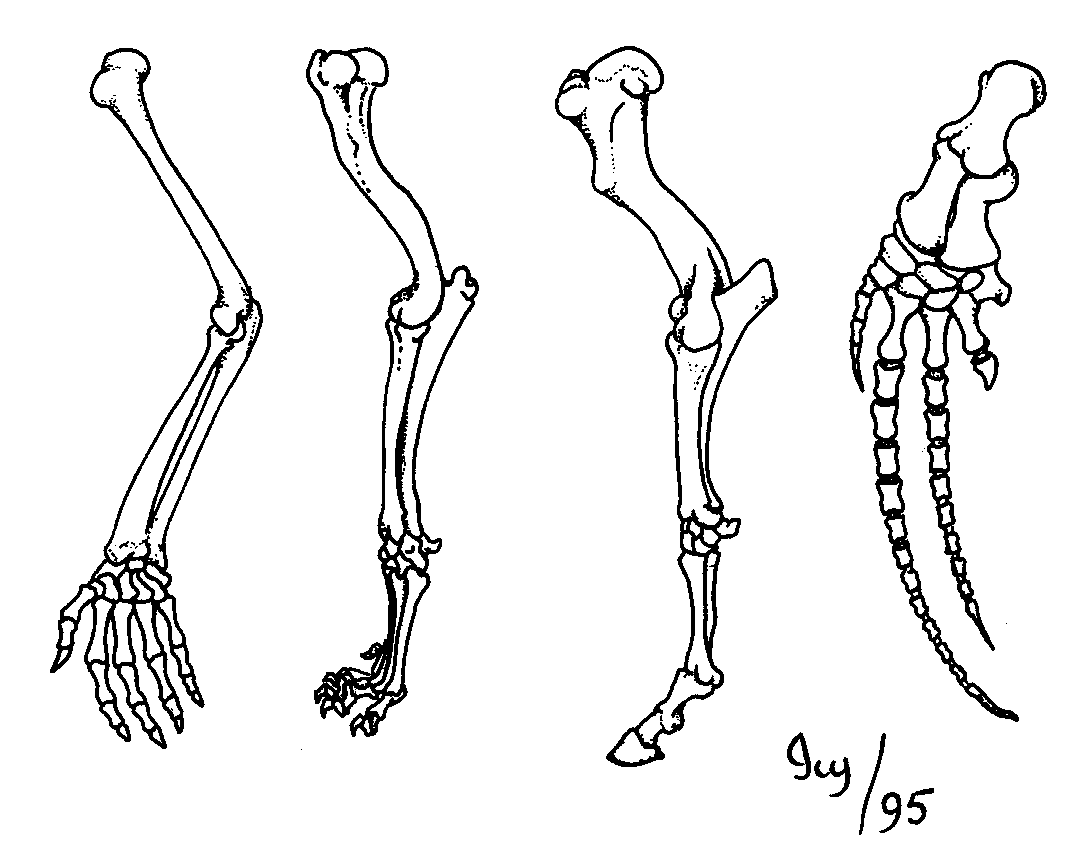


Generations of a species that are farther apart from each other look the most different.
An example of a physical/structural adaptation is...
a turtle hiding inside its shell
The spikes on a porcupine fish
a rabbit burrowing underground
a viper biting when threatened
A monkey has a long tail to help it swing from branch to branch.
Behavioral Adaptation
Physical/Structural Adaptation
A squid will squirt black ink (born with this instinct) at predators when frightened.
Behavioral Adaptation
Physical/Structural Adaptation
A lion has pointed teeth to help it tear meat off of the bone.
Behavioral Adaptation
Physical/Structural Adaptation
A black bear hibernates during the winter months.
Behavioral Adaptation
Physical/Structural Adaptation
A penguin is white on its belly and black on its back so it harder to see underwater from above and below.
Behavioral Adaptation
Physical/Structural Adaptation
An owl is mostly nocturnal meaning it hunts and is active at night.
Behavioral Adaptation
Physical/Structural Adaptation
Parrots have special feet, with two toes on the front and back to help them cling to branches.
Behavioral Adaptation
Physical/Structural Adaptation


Dogs pant when they are hot.

The ability of an organism to survive and reproduce.
fitness
energy
agility
instinct
Variations of traits within the same species, are caused by...
mutations in genes
dominant alleles
recessive alleles
random chance


if a body cell normally has 24 chromosomes how many will it have at the end of mitosis.
6
12
24
48
Chromosomes condense
Mitosis
Meiosis
Both
forms gametes
Mitosis
Meiosis
Both
for growth and repair
Mitosis
Meiosis
Both
produces non-identical cells
Mitosis
Meiosis
Both

The picture depicts what stage of meiosis?
(A) Prophase 1
(B) Anaphase 1
(C) Metaphase 2
(D) Metaphase 1
(E) Telophase 1

The picture depicts what phase of meiosis?
(A) Metaphase 2
(B) Prophase 1
(C) Metaphase 2
(D) Anaphase 2
(E) Prophase 2

What part of the cell cycle is considered interphase? Select all that apply.
G1
G2
S
M
Which statement is NOT true about interphase?
It's the longest phase of the cell cycle
During interphase organelles duplicate
During interphase, DNA replicates
During interphase, the chromatin condenses into chromosomes.
In this phase, the cell is preparing for the cell division in the mitotic stage.
Go
G1
G2
S
In the eukaryotic cell, it is the longest stage of the cell cycle and generally its function is to prepare the cell to division process.
Interphase
Mitotic phase
Synthesis Phase
All of the above
DNA replication occurs in what phase of cell cycle?
Interphase
Growth phase
Mitotic phase
Synthesis Phase
The correct sequence of mitosis:
metaphase, anaphase, telophase, prophase
prophase, metaphase, anaphase, telophase
prophase, anaphase, metaphase, telophase
telophase, metaphase, prophase, anaphase
Cells of organisms must go through cell division for?
growth
repair of damaged cells
replacement of dying cells.
All of these


rr-wrinkled
What is the phenotype for RR?
rr-wrinkled
What is the genotype for wrinkled?
The trait that will always be expressed if one copy of an allele is present.
recessive
dominant
co-dominant
The trait that will be expressed only if two copies of the allele are present.
recessive
dominant
co-dominant
Being able to roll the tongue is a dominant trait (T). Not being able to roll the tongue is a recessive trait (t). A persons genes are tt. Which trait would they have?
Able to roll the tongue
Not able to roll the tongue
Can't tell
Black hair (H) is a dominant gene in guinea pigs and black yellow (h) is recessive. What color hair would a guinea pig have if it got a recessive gene (h) from mom and a dominant gene (H) from dad?
Black hair
Yellow hair
Can't tell
Black hair (H) is a dominant gene in guinea pigs and black yellow (h) is recessive. What color hair would a guinea pig have if it got a recessive gene (h) from mom and a recessive gene (h) from dad?
Black hair
Yellow hair
Can't tell

