
Font size
 Worksheets
Exam S1 Practice Questionnaire
Total questions: 95
Worksheet time: 1hrs 19mins
How are natural resources related to science and engineering?
They are unrelated fields.
Science helps us understand natural resources, and engineering helps us use them efficiently.
Engineering is only concerned with building structures, not with natural resources.
Science and engineering both ignore the use of natural resources.
Which of the following best describes the use of natural resources?
Natural resources are unlimited and can be used without any concern.
Natural resources are finite and must be used wisely to avoid depletion.
Natural resources are only used in scientific experiments.
Natural resources are only important for engineers.
What is one impact of overusing natural resources?
Increased availability of resources.
Depletion of resources and environmental damage.
Improved quality of life for all.
No significant impact.
What is the first step in the engineering design process?
Building a prototype.
Identifying the problem.
Testing the solution.
Communicating the results.
How do engineers develop solutions to problems?
By guessing and checking.
By using the engineering design process.
By copying existing solutions.
By ignoring scientific principles.
Which of the following is a key difference between engineering and science practices?
Science focuses on understanding the natural world, while engineering focuses on solving practical problems.
Engineering is more theoretical than science.
Science does not use any form of experimentation.
Engineering does not require any scientific knowledge.
What is one way to describe the impacts of resource use?
Resource use has no impact on the environment.
Resource use can lead to pollution and habitat destruction.
Resource use always leads to positive outcomes.
Resource use is only a concern for scientists.
Why is it important to compare engineering and science practices?
To determine which field is more important.
To understand how they complement each other in solving real-world problems.
To show that engineering is superior to science.
To prove that science is unnecessary.
What role does science play in the use of natural resources?
Science has no role in the use of natural resources.
Science helps us understand the properties and limitations of natural resources.
Science only complicates the use of natural resources.
Science is only concerned with theoretical knowledge.
What is a prototype in the engineering design process?
A final product ready for mass production.
An initial model used to test and refine a solution.
A theoretical concept with no practical application.
A detailed report of the problem.
What is the first stage in the life cycle of a natural resource?
Recycling
Obtaining
Transporting
Using
Which of the following is an example of a natural resource being used to generate electrical energy?
Sand mining
Drinking water extraction
Solar energy collection
Vegetable farming
What happens to aluminum after it is mined?
It is thrown away
It is used to make products like soda cans and aluminum foil
It is left in the ground
Which of the following is NOT a way natural resources can be obtained?
Collecting
Mining
Harvesting
Manufacturing
What is the process of modifying a resource from its original state to make it usable called?
Distribution
Production
Consumption
Recycling
Which of the following is NOT a component of concrete?
Cement
Water
Sand
Plastic
What is the purpose of filtering and treating fresh water during production?
To add flavor
To remove harmful substances and microbes
To change its color
To increase its temperature
How does the human population increase affect the demand for natural resources?
It decreases the demand for food, water, and shelter.
It increases the demand for food, water, and shelter.
It has no effect on the demand for natural resources.
It only affects the demand for technology.
How do consumer preferences influence the life cycle of natural resources?
By reducing the need for technology.
By increasing the market for blemish-free fruits and vegetables.
By decreasing the construction of roads and bridges.
By eliminating the need for clean drinking water.
Which of the following is an example of consumer use of natural resources?
Using solar panels to reduce dependence on fossil fuels.
Building roads and bridges.
Increasing the population.
Reducing the need for technology.
What can be done with plastic bags from a grocery store after consumers use them?
They can only be thrown into the trash.
They can be reused by taking them back to the store.
They can be used to make concrete.
They can be used to make paper products.
How can concrete from an old building be reused?
To make new plastic products.
To make new concrete or other products.
To make paper towel rolls.
To make cereal boxes.
Much of the sand used to increase Singapore’s land area has been imported from other countries. Some sand has been dredged from the surrounding ocean floor, and some artificial sand has been made by crushing rock. Choose a scientific question regarding Singapore’s use of sand.
How does the import of sand affect Singapore's economy?
What are the environmental impacts of dredging sand from the ocean floor?
How does artificial sand compare to natural sand in terms of composition?
All of the above
What is the first stage in the life cycle of a natural resource?
Recycling
Obtaining
Transporting
Using
Which of the following is an example of a natural resource being used for food?
Sand mining
Drinking water extraction
Vegetable farming
Solar energy collection
What process is used to extract fresh water for drinking?
Sand mining
Drinking water extraction
Solar energy collection
Vegetable farming
Which of the following is NOT a way natural resources can be collected, mined, or harvested?
Drinking water extraction
Sand mining
Solar energy collection
Plastic production
What is the purpose of collecting the sun's energy in the context of natural resources?
To generate electrical energy
To grow food
To extract fresh water
To mine sand
What is the process of modifying a resource from its original state to make it usable called?
Distribution
Production
Consumption
Preservation
Which of the following is NOT a component of concrete?
Cement
Water
Sand
Plastic
What is the purpose of filtering and treating fresh water?
To make it taste better
To remove harmful substances and microbes
To change its color
To increase its temperature
What happens to a product after it is made?
It is discarded
It is distributed to the user or consumer
It is stored indefinitely
It is recycled immediately
What is one way that consumer use of technology impacts the demand for natural resources?
It decreases the need for food and water.
It increases the need for shelter.
It increases the need for roads, bridges, and buildings.
It decreases the need for clean drinking water.
Which of the following is an example of consumer use of natural resources?
Using plastic bags from a grocery store.
Drinking clean water.
Throwing away old concrete.
Using packaged foods.
How can solar panels on boats help reduce society's dependence on fossil fuels?
By providing clean drinking water.
By reducing the need for concrete.
By serving as an energy source.
By increasing the demand for fresh produce.
What is one way that products can be handled (DISPOSAL) after consumers use them?
They can only be thrown into the trash.
They can be reused or recycled.
They can be stored indefinitely.
They can be burned for energy.
Solids have a _____ ______ and __________.
volume
electrón
definite shape
gases
Liquids do NOT have a definite shape, but they do have a definite...
charge
volume
taste
color
Gases , do not have a definite...
shape
mass
volume
charge
Liquids take the shape of their_______.
atoms
space
container
matter
Mass is the amount of (a) an object has.
Volume is the amount of (a) that matter takes up.
All matter is made up of tiny particles called
mass
shape
container
atoms
Careful, trick question below.
The three basic properties of matter are:
solids gases liquids
volume mass shape


This state of matter has a constant volume, but fits the space of the container holding it.
Solid
Liquid
Gas
Plasma
This state of matter has a firm, unchanging physical structure.
Solid
Liquid
Gas
Plasma
Carbon dioxide, nitrogen, oxygen, and hydrogen are this state of matter at room temperature.
Solid
Liquid
Gas
Plasma
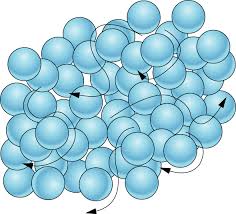
Which is not true about the liquid state of matter?
The liquid state has a definite volume and a definite shape.
The liquid state takes on the shape of its container.
The liquid state has a definite volume and an indefinite shape.
The particles in a liquid can easily move past each other.
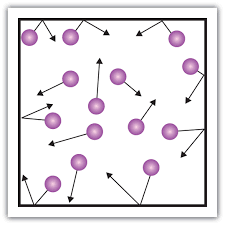
A gas typically consists of:
low energy particles that experience high attractive forces between them.
low energy particles that experience no attractive forces between them.
high energy particles that experience high attractive forces between them.
high energy particles that experience little attractive force between them
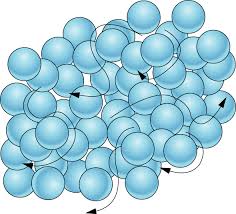
Which of the following statements is true regarding the particle structure of liquids? Particles of a liquid are:
very close together, so the liquid cannot easily change its shape.
fast-moving, so they fill the volume of their container.
relatively close together, so they cannot be easily compressed.
very far apart, so they have plenty of room to move around.
Which process could cause a material to change state from gas to liquid?
Adding heat
Adding energy
Removing particles
Removing energy
If I add heat to a solid, how will the motion of the particles be affected?
They will move slower
They will stop moving
They will move faster
They will move to a different container
What is the main purpose of analyzing and interpreting data in scientific investigations?
To communicate information clearly to others.
To develop explanations based on analyzed data.
To test proposed solutions and improve designs.
To forecast weather and climate changes accurately.
What is the purpose of communicating information in scientific investigations?
To analyze and interpret data accurately.
To argue based on reason and evidence.
To evaluate results and repeat the investigation.
To communicate design ideas and improve solutions.
What is the importance of planning in scientific investigations?
To analyze and interpret data accurately.
To communicate information clearly.
To ask questions and determine investigation methods.
To develop explanations based on analyzed data.
How are the results of tests and data analyzed in engineering?
By graphing data to compare measurements.
By developing explanations based on structure.
By engaging in arguments based on reason and evidence.
By clearly stating the results for other scientists and engineers.
What are models used for in scientific investigations?
To test proposed solutions.
To determine criteria and constraints.
To make predictions and account for variables.
To analyze and interpret data.
What is the main difference between how scientists and engineers approach problems?
Scientists ask questions, engineers seek solutions.
Scientists seek solutions, engineers define problem.
Scientists use models, engineers carry out investigations.
Scientists analyze data, engineers design solutions.


What is the first step of design thinking?
Ideate
Define
Empathise
Sympathise

The second phase of design thinking is...
Feel
Do
Share
Imagine
What step makes design thinking different than the engineering design process?
Define
Empathize
Research
Prototype
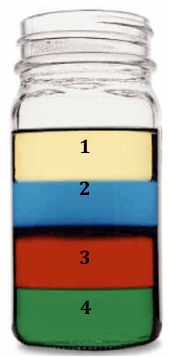
Ideate stage is :
Think of idea to make the project
What you can do to win the contest
Think of idea to fix the problem
What can you use to fix the problem
1. A tire company is creating a new tire for a motorcycle to drive off-road in sandy and rocky conditions as well as on roads. Engineers developed three different tread patterns. Based on the engineering design process, the next step the company should take is to:
Send out a questionnaire about tires to the public
Select which tread design will be best
Research the properties of rubber
See which tire is the most expensive
1. Rob and his team have been chosen to build a wind turbine at a local ski resort that needs to generate electrical energy and withstand the harsh environment of the mountains. Rob and his team have done their research on the problem. What would be the next step for the team?
Create a prototype of the wind turbine
Develop possible solutions(s) for the turbine and how it will fit the criteria needed
Test the wind turbine on the mountains during the harsh winter months
Redesign a new solution for this turbine
1. Students have a box of ice pops to take to their soccer game to sell on a hot day. The students know they need a device to keep the ice pops from melting for 3 hours. They have a $15 budget. Which step of the engineering design process does this demonstrate
Identify the problem
Test and evaluate
Redesign
Develop possible solutions

Which step does #3 represent
Evaluate the solution
Identify the problem
Construct and test Prototype
Develope a Solution

Which step is represented by # 5
Identify the problem
Present Solution
Answer if Technology Exists
Evaluate Solution
If we buy local, instead of to worldwide companies, that is an example of how to HELP sustainable development.
True
False
Sustainable development changes the past of the planet.
True
False
Donating what you DON'T use, helps the goal "No Poverty"
Yes
No
Children and teenagers are able to create a positive change in the world.
True
False

Number 14. on the picture represents which sustainable goal?
Gender Equality
Zero Hunger
Life Below Water
Life On Land

What's this goal?
Life below water
Clean water and sanitation
Decent work
Life on land

What's this goal?
Climate action
Life on land
Life below water
No porverty

What's the goal?
Resposible consuption and production
Decent work and economic growth
Partnerships for the goals
Gender eqaulity
By what year should these goals be achieved?
2020
2050
2030
2025

What's this goal?
No poverty
Zero hunger
Decent work and economic growth
Good health and well-being

What's this goal?
Sustainable cities and communities
Affordable and clean energy
Climate action
Life on land

How do you know if someone is living in poverty?
The person doesn’t have a cellphone.
The person is not well dressed.
The person doesn't have food, health care and education.

What is this goal about?
To ensure that industry is responsible in protecting
people and the environment
To ensure that cities, towns and villages have water & electricity, and are clean & safe
To ensure that everyone has access to reliable, sustainable energy
To ensure the reduction of waste, for example by recycling paper or glass

What is this Goal about?
To ensure the reduction of waste, for example by recycling paper or glass
To ensure that everyone has safe water and healthy hygiene
To ensure that industry is responsible in protecting
people and the environment
To ensure action to slow down the impact of global warming

What is this Goal about?
To ensure that everyone has access to reliable, sustainable energy
To ensure that industry is responsible in protecting
people and the environment
To ensure action to slow down the impact of global warming
To ensure action to protect oceans and seas

