
 Worksheets
U2 92 q
Total questions: 91
Worksheet time: 2hrs 34mins
A sample composed only of atoms having the same atomic number is classified as
compound
element
solution
isomer
4 students were tasked with classifying air as a whole sample, and then selecting one of its components to classify. Given the following, which student(s) is/are correct and why?
A sample of air was found to have:
78% N2
97% O2
.93% Ar
.04% CO2
Student A
Air: Heterogeneous mixture (different gases and different amounts of each gas)
N2 = element (2 identical atoms)
Student B
Air: Homogeneous mixture (different components/types of gas but uniform composition).
O2 = compound, 2 atoms chemically combined.
Student C
Air: Homogeneous mixture (different types of gas hard to detect and separate giving it a uniform consistency)
N2 = element (2 atoms of the same element combined diatomic element)
Student D
Air: Heterogeneous mixture (made of different components)
CO2 = compound (2 different elements chemically combined)
A dilute, aqueous potassium nitrate solution is best classified as a
homogeneous compound
homogeneous mixture
heterogeneous compound
heterogeneous mixture
At which Celsius temperature does lead change from a solid to a liquid?
Use Reference Table S & T
874°C
328°C
601°C
0°C
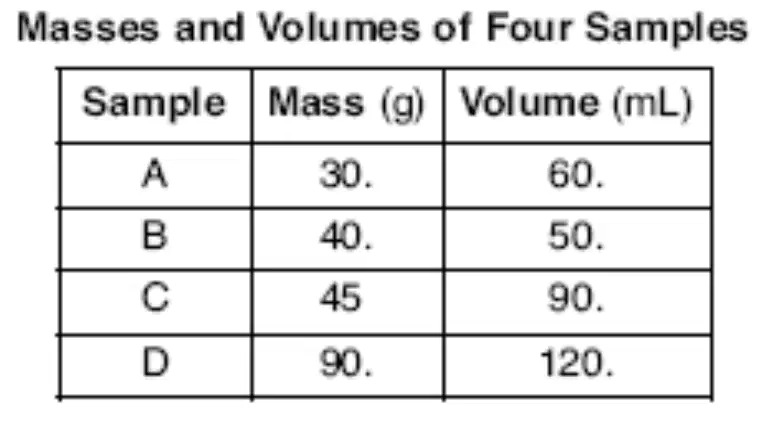
The table shows mass and volume data for four samples of substances at 298 K and
1 atmosphere.
Which two samples could consist of the same substance?
A & B
A & C
B & C
C & D
Which statement describes a chemical property of hydrogen gas?
Hydrogen gas burns in air.
Hydrogen gas is colorless.
Hydrogen gas has a density of 0.000 09 g/cm3 at STP.
Hydrogen gas has a boiling point of 20. K at standard pressure.
Which statement describes a chemical property of the element magnesium?
Magnesium is malleable (flexible/bendable).
Magnesium conducts electricity
Magnesium reacts with an acid
Magnesium has a high boiling point.
A 10.0-gram sample of which element has the smallest volume at STP?
Aluminum (Al)
Magnesium (Mg)
Titanium (Ti)
Zinc (Zn)
At room temperature, a mixture of sand and water can be separated by
ionization
combustion
filtration
sublimation

Which particle diagram represents a sample of one compound, only?
1
2
3
4

If two objects have different temperatures when they come in contact, heat will flow from the warmer object to the cooler one UNTIL ____________
one reaches a temperature of zero
they both have an equal temperature
one runs out of energy
When a bond is broken in compounds, energy is generally
During which phase change does a substance absorb energy?
freezing
condensation
evaporation
deposition
During which phase change does a substance release energy?
condensation
evaporation
melting
sublimation
Which phase change is endothermic?
condensation
deposition
melting
freezing

What is happening to the kinetic energy at interval AB?
increasing
decreasing
staying constant
What is happening to the potential energy at interval AB?
increasing
decreasing
staying constant
What is happening to the kinetic energy at interval BC?
increasing
decreasing
staying constant
Which particle diagram shows a solid?


When particles of a substance move faster, their kinetic energy...
increases
decreases
stays constant
When temperature increases, kinetic energy...
increases
decreases
stays constant
At what time interval is the substance melting?
AB
BC
CD
DE
At what time interval is the substance evaporating?
AB
BC
CD
DE
Which particle diagram shows a liquid?
Which particle diagram shows a gas?

The diagram represents the bright-line spectra of four elements and a bright-line spectrum produced by a mixture of three of these elements. Which element is not present in the mixture?
A
D
X
Z


How would you classify NaCl?
element
compound
heterogeneous mixture
homogeneous mixture
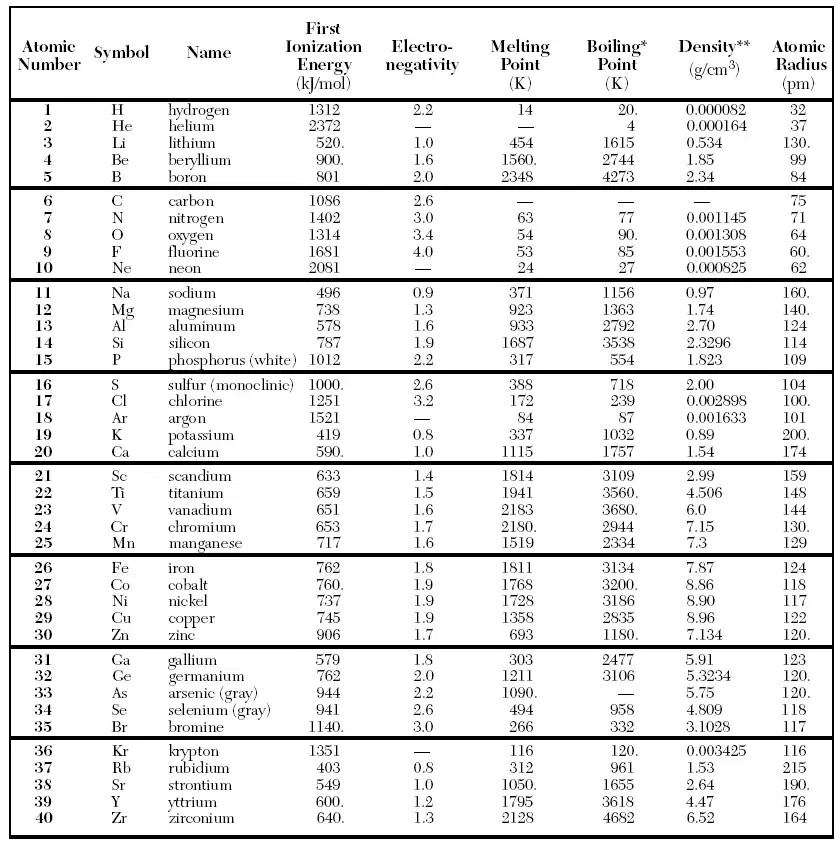
A student measures the mass and volume of a sample of aluminum at room temperature, and calculates the density of Al to be 2.85 grams per cubic centimeter. Based on Table S in the Chemistry Reference Table, what is the percent error for the student's calculated density of Al?
% Error = [(Measured - Real) / Real] x 100
2.7%
5.3%
5.6%
95%
A large sample of solid calcium sulfate is crushed into smaller pieces for testing. Which two physical properties are the same for both the large sample and one of the smaller pieces?
mass and density
mass and volume
solubility and density
solubility and volume
Which type of matter is composed of two or more elements that are chemically combined in a fixed proportion?
solution
compound
homogeneous mixture
heterogeneous mixture
Compared to a 26-gram sample of NaCl(s) at STP, a 52-gram sample of NaCl(s) at STP has
a different density
a same mass
the same chemical properties
the same volume
A mixture of crystals of salt and sugar is added to water and stirred until all solids have dissolved. Which statement best describes the resulting mixture?
The mixture is homogeneous and can be separated by filtration.
The mixture is homogeneous and cannot be separated by filtration.
The mixture is heterogeneous and can be separated by filtration.
The mixture is heterogeneous and cannot be separated by filtration.

Which statement describes the type of change and the chemical properties of the product and reactants?
The equation represents a physical change, with the product and reactants having different chemical properties.
The equation represents a physical change, with the product and reactants having identical chemical properties.
The equation represents a chemical change, with the product and reactants having different chemical properties.
The equation represents a chemical change, with the product and reactants having identical chemical properties.
Bronze contains 90 to 95 percent copper and 5 to 10 percent tin. Because these percentages can vary, bronze is classified as (Select ALL that apply)
Hint 1: We MOST COMMONLY describe solutions as homogeneous mixtures that are liquids- that's how we most commonly can distinguish between different types of mixtures and how we use it when working with solutes and solvents.
However, we actually can have other states of matter classified as solutions - if they fit the description of a homogeneous mixture.
Hint: 2: Which choices ALWAYS have a FIXED ratio of whatever makes it up AND, therefore, have the same composition in every sample no matter what?
Hint 3: Which ONE COULD have a VARIABLE composition?
a compound
an element
a mixture
a pure substance
a solid solution
Bronze contains 90 to 95 percent copper and 5 to 10 percent tin. Because these percentages can vary, bronze is classified as (Select ALL that apply)
Hint: 1: Which choices ALWAYS have a FIXED ratio of whatever makes it up AND, therefore, have the same composition in every sample no matter what?
Hint 2: Which ONE COULD have a VARIABLE composition?
a compound
an element
a mixture
a pure substance
Which sample of matter is a mixture?
(aq) = aqueous: generally refers to water as a solvent (something dissolved in water)
Spanish "agua" means water
Br2 (l)
K (s)
KBr (s)
KBr (aq)
Which statement describes H2O(l) and H2O2(l)?
Both are compounds that have the same properties.
Both are compounds that have different properties.
Both are mixtures that have the same properties.
Both are mixtures that have different properties.

Green bananas turning yellow on their own as they ripen. This is a:
chemical change.
physical change.
Sugar dissolving in water is an example of a:
chemical change.
physical change.
Which of the following is NOT an example of a physical change?
crumpled paper
pencil sharpening
glass breaking
mold growing on cheese
Bleaching your hair is an example of a:
physical change.
chemical change.
Hammering wood together to build a house is an example of a:
chemical change.
physical change.
Which of the following is a physical property?
Combustion
Electronegativity
Color
PH Level
Which of the following is a chemical property of water?
Reacts with pure sodium.
Boils at 100 oC.
Dissolves sugar easily.
Has a density of 1 gm/mL
Which of the following is a physical change?
Burning a match
Vinegar reacting with baking soda
Melting butter
Cooking an egg
Which of the following is an example of a chemical change?
Ripping paper in half
Boiling an egg
Cracking an egg
Dissolving sugar in water
Which of the following is NOT a sign that a chemical change has occurred?
Change in color
Change in shape
Formation of a gas
Change in odor
Which of the following is a physical property?
Heat of combustion
Boiling point
Flammability
Reactivity
Chicken noodle soup is an example of a(n):
Element
Compound
Homogeneous Mixture
Heterogeneous Mixture

Methane (CH4) is an example of a(n):
Element
Compound
Homogeneous Mixture
Heterogeneous Mixture
Tap water (water, salt & minerals) is an example of a(n):
Element
Compound
Homogeneous Mixture
Heterogeneous Mixture

How would you classify the matter in the picture above?
Element
Compound
Homogeneous Mixture
Heterogeneous Mixture

Does this image represent a chemical or physical change?
Chemical change
Physical change

Does this image represent a chemical or a physical change?
Chemical change
Physical change

Is this image showing a homogeneous or a heterogeneous mixture? Image: Milk
homogeneous
heterogeneous

Does this particle view show an element or a compound?
element
compound
What is an example of a chemical change?
Tearing paper
Dissolving salt in water
Melting ice
Burning wood
What is an example of a physical property?
Silver is shiny
Alcohols are flammable
Alkali metals are reactive with water
Acids are sometimes corrosive
What is the best classification of this substance? CO2 & H2S
An element
A compound
A mixture of 2 compounds
A mixture of many elements
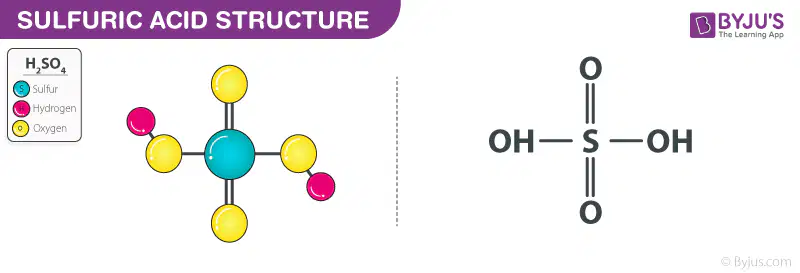
What is the best classification of this substance, sulfuric acid? H2SO4
An element
A compound
A mixture

What is the best classification of this substance?
An element
A compound
A mixture of 2 elements
A mixture of 2 compounds

Is this a pure substance?
Yes
No
What particle view below is a mixture?

A

B

C

D

How many TYPES of MOLECULES are in this image?
1
2
4
5
How many TOTAL MOLECULES in the sample in this image?
4
5
15
2
How can this sample be best classified?
Compound-
Pure Substance
Element-
Pure Substance
Mix of elements and compounds-
Homogeneous Mixture
Mix of compounds-
Heteroeneous Mixture
How many different TYPES of ATOMS are in this image?
1
2
3
4
Which below shows a CHEMICAL change?


Which form of energy is transferred when an ice cube at 0°C is placed in a beaker of water at 50°C?
chemical
electrical
nuclear
thermal
5 A beaker contains a dilute sodium chloride solution at 1 atmosphere. What happens to the number of solute particles in the solution and the boiling point of the solution, as more sodium chloride is dissolved?
The number of solute particles increases, and the boiling point increases.
The number of solute particles increases, and the boiling point decreases.
The number of solute particles decreases, and the boiling point increases.
The number of solute particles decreases, and the boiling point decreases.
The average kinetic energy of the particles in a sample of matter is expressed as
density
volume
pressure
temperature
Given the equation: I2(s) → I2(g)
Which phrase describes this change?
endothermic chemical change
exothermic chemical change
endothermic physical change
exothermic physical change
Which term identifies a factor that will shift a chemical equilibrium?
atomic radius
catalyst
decay mode
temperature
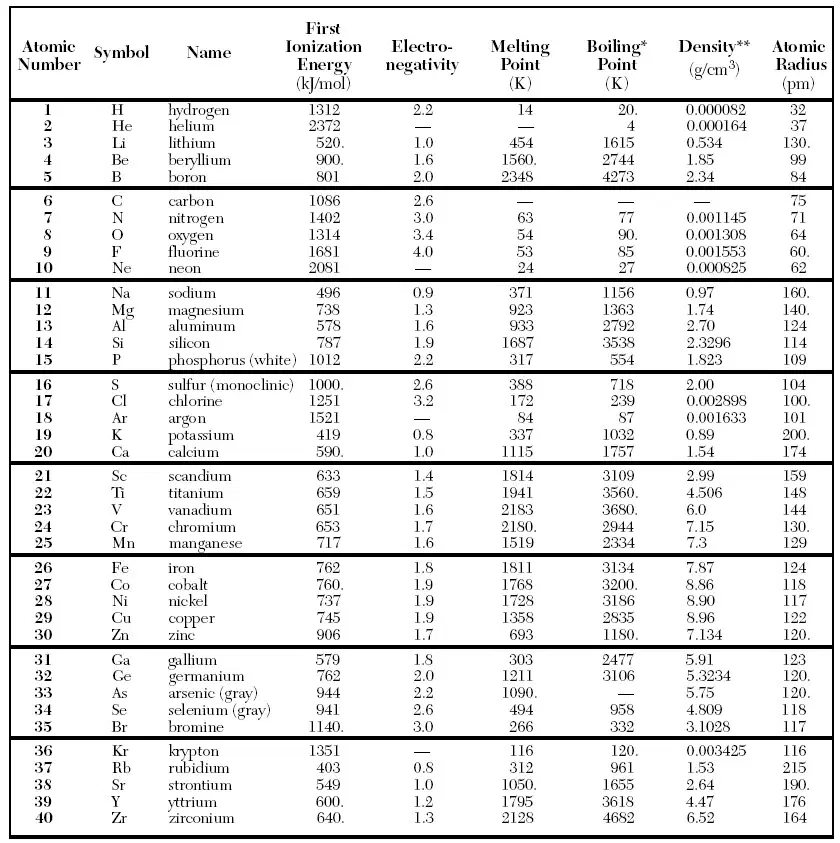
At room temperature, a student determines the density of a sample of nickel to be 9.79 g/cm3. Based on Table S, what is the student’s percent error for the density of nickel?
% Error = [(Measured Value - Real Value)/Real Value ] x 100
0.091%
0.10%
9.1%
10.%

