
 Worksheets
Anatomy & Physiology Chapter One
Total questions: 47
Worksheet time: 34mins
The correct sequence of levels forming the structural hierarchy is:
Organ, Organ System, Cellular, Chemical, Tissue, Organismal
Chemical, Cellular, Tissue, Organismal, Organ, Organ system
Chemical, Cellular, Tissue, Organ, Organ system, organismal
Organismal, Organ System, Organ, Tissue, Cellular, Chemical
The structural and functional unit of life is:
Cell
Organ
Organism
Molecule
Which of the following is a MAJOR functional characteristic of all organisms?
Movement
Growth
Metabolism
Responsiveness
All of the above
TWO of these organ systems bear the MAJOR responsibility for ensuring homeostasis of the internal environment. Which TWO?
Digestive System
Cardiovascular System
Endocrine System
Reproductive System
Nervous system
In (a)-(e), a directional term [e.g., distal in (a)] is followed by terms indicating different body structures or locations (e.g., the elbow/the wrist). In each case, choose the structure or organ that matches the given directional term.
(a) Distal: The elbow/ the wrist
(b) Lateral: The hip bone/the umbilicus
(c) Superior: The nose/the chin
(d) anterior: The toes/the heel
(e) superficial: The scalp/ the skull
Which ventral cavity subdivision has no bony protection?
Thoracic Cavity
Abdominal Cavity
Pelvic Cavity
Terms that apply to the backside of the body in the anatomical position include:
Posterior
Dorsal
Medial
Lateral
According to the principle of complementarity, how does anatomy relate to physiology?
(a)
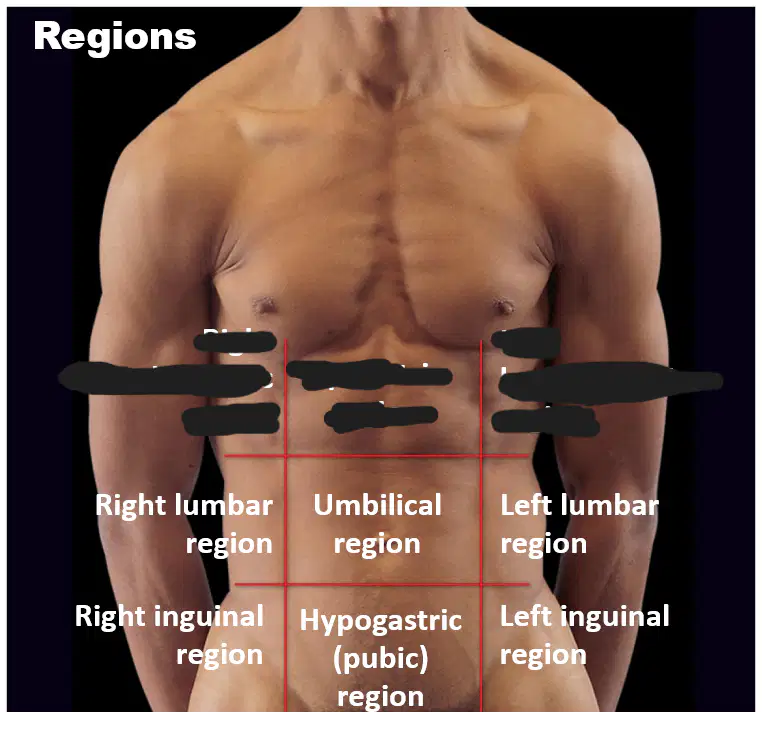
Name the three sections in the upper region
Right Lumbar, Epigastric, Left Lumbar
Right Hypochondriac, hypogastric, Left Hypochondriac,
Right Hypochondriac, Epigastric, Left Hypochondriac,
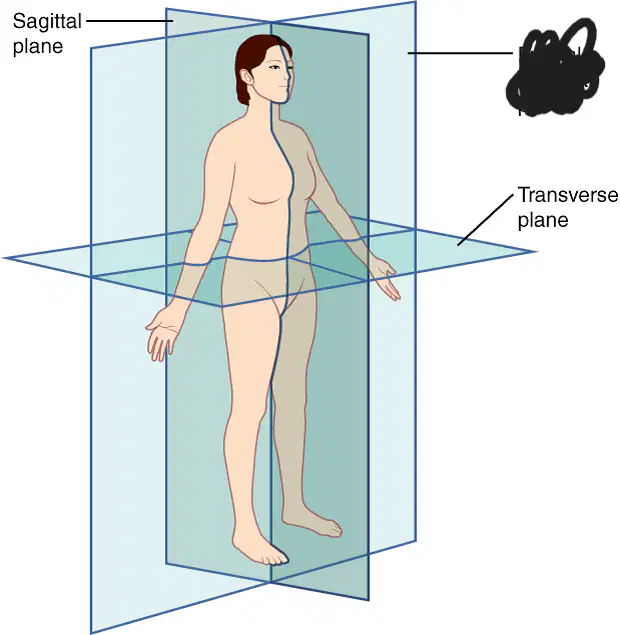
Name the plane
Sagittal Plane
Front (Coronal) Plane
Transversal Plane
Define Homeostasis
Self regulating process by which biological systems maintain stability while adjusting to optimal conditions for survival
Self regulating process by which biological systems maintain stability while adjusting to optimal conditions for life
Self regulating process by which biological systems maintain stability while adjusting to optimal conditions for death
Describe Microscopic Anatomy
Examines structures that cannot be observed by the unaided eye
Specimens examined under microscope
Investigates structures visible to the unaided eye
Specimens dissected for examination
Gross Anatomy considers what?
Large structures of the body
Small structures of the body
TRUE OR FALSE: Anatomy is a dynamic, changing science
TRUE
FALSE
Describe pathologic anatomy
Investigates internal structures visualized by scanning procedures
Examines anatomic changes resulting from disease
Considers anatomic and microscopic changes
Describe Radiographic anatomy
Examines anatomic changes resulting from disease
considers anatomic and microscopic changes
Investigates internal structures visualized by scanning procedures
Physiologists focus on....
a particular body system
the molecular or cellular level
Subdisciplines focus on....
Molecular or cellular level
Particular body stem
Define Neurophysiology
The functioning of nerves and nervous system organs
Functioning of the heart, blood vessels, and blood
Functioning of respiratory organs
Define Cardiovascular physiology
Functioning of the heart, blood vessels, and blood
Functioning of nerves and nervous system
Functioning of respiratory organs
Define Respiratory Physiology
Functioning of the heart, blood vessels, and blood
Functioning of nerves and nervous system
Functioning of respiratory physiology
Define Reproductive physiology
The relationship between the function of an organ system and disease or injury to the system
The functioning of reproductive hormones and the reproductive cycle
Define Pathophyiology
The relationship between the function of an organ system and disease or injury to the system
The functioning of reproductive hormones and the reproductive cycle
What does the integumentary system do?
Forms the external body covering and protects deeper tissues from injury
Synthesizes vitamin D
Houses cutaneous (pain, pressure etc)
All of the above
The structure that prevents backflow of blood is the
trabeculae carnae.
superior vena cava.
papillary muscle.
valve
Which heart chamber delivers oxygenated blood to the entire body?
Right atrium
Right ventricle
Left atrium
Left ventricle


This is the structural formula of a
amino acid
DNA molecule
lipid
sugar
The term "physiology" is related to
the Latin for "physical shape."
the structure of internal organs.
the Greek for "cutting up."
the Greek for "relationship to nature."

Which type of feedback tries to cancel out the stimulus?
(a)
Which type of feedback accentuates the stimulus to move the body further away from homeostasis?
(a)
What is the primary function of red blood cells?
Transport oxygen
Fight infections
Clot blood
Regulate body temperature
Which organ is responsible for filtering blood and producing urine?
Liver
Kidney
Heart
Lungs
What is the main function of the small intestine?
Absorption of nutrients
Absorption of water
Production of bile
Storage of waste

