
Font size
 Worksheets
Review Quizizz
Total questions: 125
Worksheet time: 2hrs 37mins
What are the four biomolecules? (Select four answers below)
Lipids
Carbohydrates (Carbs)
Calories
Nucleic Acids
Proteins
True or False: ALL cells have a cell membrane
True!
False, Prokaryotes do not have a cell membrane
False, Eukaryotes do not have a cell membrane
What biomolecule forms the waterproof barrier that regulates passage into and out of the cell?
Nucleic Acids
Proteins
Carbohydrates (Carbs)
Lipids
DNA is an example of which biomolecule?
Proteins
Nucleic Acids
Carbohydrates (Carbs)
Lipids
What is the function of DNA?
To provide long-term energy storage
To allow the cell to interact with its environment
To carry and transmit the genetic information of organisms
To speed up chemical reactions
Both Carbohydrates (Carbs) and Lipids provide energy storage. Which of the following is a true statement about Carbs and Lipids?
Both Carbs and Lipids provide long-term energy storage
Carbs, Lipids, and Proteins can all provide energy storage
Both Carbs and Lipids work to build lean muscle.
Carbs provide "quick energy," while Lipids provide long-term energy storage
Enzymes are:
Proteins
Nucleic Acids
Lipids
Carbohydrates (Carbs)
What is the function of enzymes?
To maintain chemical reactions
To speed up chemical reactions
To slow down chemical reactions
To inhibit chemical reactions
Which biomolecule produces traits?
Protein
Lipids
Nucleic Acids
Carbohydrates (Carbs)

Which arrow is pointing to the part of the graph that shows where the enzyme is functioning the best?
Arrow 1
Arrow 2
Arrow 3
The graph does not provide enough information to know the optimum temperature of the enzyme.

At what pH does the enzyme function the best?
pH of 9.0
pH of 13.0
pH of 5.0
pH of 7.0

How well does this enzyme function at a pH of 11.0?
This enzyme functions the highest at 11.0
This enzyme's function is decreasing at a pH of 11.0
This enzyme's function is increasing at a pH of 11.0
This enzyme does not function at all at a pH of 11.0

At what pH does this enzyme function the best?
pH of 4.2
pH of 3.0
pH of 12.0
pH of 6.0
If an enzyme has denatured, what does that mean?
It can now effectively speed up chemical reactions
Its function is increasing dramatically
It no longer functions
It can bind to any type of substrate
Enzymes act to speed up chemical reactions
True
False

True or False: Enzymes can bind to many different types of substrates.
True
False
Which cell is larger?
Prokaryotic
Eukaryotic
Which cell is more complex?
Prokaryotic
Eukaryotic

This cell is a ...
Prokaryotic Cell
Eukaryotic Cell

This cell has a nucleus, that means it is ...
Prokaryotic
Eukaryotic

This is a __________________cell.
Prokaryotic
Eukaryotic

This is a _________________ cell.
Prokaryotic
Eukaryotic
Which is a true statement?
Prokaryotic cells are larger than eukaryotic cells.
Eukaryotic cells do NOT have nuclei, and prokaryotic cells do have nuclei.
Prokaryotic cells do NOT have membrane-bound organelles.
Eukaryotic cells are more simple than prokaryotic cells.

These are simple, small cells that do not have a nucleus. They are also bacteria. What are they?
Prokaryotic
Eukaryotic
This cell has a nucleus.
Prokaryotic
Eukaryotic
Which cell has the presence of membrane bound organelles, such as chloroplast or mitochondria?
Prokaryotic
Eukaryotic
Which trait do both prokaryotic and eukaryotic cells share?
Select TWO answers that apply.
Membrane bound organelles
A nucleus
DNA/RNA
Very complex
Cell membrane
One main difference between prokaryotic and eukaryotic cells is that...
only prokaryotic cells have cell walls
only eukaryotic cells have a nucleus
only prokaryotic cells have ribosomes
only eukaryotic cells have DNA
Prokaryotic cells and Eukaryotic cells differ in that:
Eukaryotic cells have free floating DNA but have membrane bound organelles. Prokaryotes have encapsulated DNA in a Nucleus.
Eukaryotic cells tend to infect host cells due to their composition. Prokaryotic cells also infect hosts but not as deadly.
Eukaryotic cells have membrane bound organelles that include a nucleus. Prokaryotic cells do not have membrane bound organelles and have free DNA in the cytoplasm.
Eukaryotic cells refer to Eurasian Prisons, the cells located in the symbiotic continent of Europe and Asia. Prokaryotic cells refer to the Protalitariats that support prison systems.
Enzymes act to slow down chemical reactions
True
False
Bread is a food that is high in carbohydrates
True
False
Eukaryotic cells do NOT have a nucleus
True
False
The two biomolecules that can store energy are carbs and lipids
True
False
When an enzyme denatures it can no longer function
True
False

Molecules moving from high concentration areas to low concentration areas is -
active transport
passive transport
What does a salty solution do to cells?
Puncture holes in their cell membranes
Cause water to flow into the cells
Removes water from the cells
Makes the cells burst

Based on this image, what is happening?
Osmosis
Diffusion
Facilitated Diffusion
Active transport

What is shown in this image?
Active transport
Facilitated Diffusion
Osmosis
Diffusion
Which of the following is a function of the cell membrane?
breaks down lipids, carbohydrates, and proteins from foods
stores water, salt, proteins, and carbohydrates
regulates the movement of materials into and out of the cell
short-term energy storage
The ability to allow only certain molecules into or out of the cell.
Semipermeability
Permeability
Impermeability
Unpermeability
Solutes move AGAINST the concentration gradient.
Passive Transport
Active Transport
Type of cellular transport that uses ATP (energy).
Passive Transport
Active Transport

What will happen to a red blood cell if it is placed into a hypotonic solution?
It will swell and burst open.
It will shrink and shrivel.
Nothing will occur.

What will happen to a red blood cell if it is placed into a hypertonic solution?
It will swell and burst open.
It will shrink and shrivel.
Nothing will occur.

Osmosis is the movement of _____ across a membrane.
food
water
oxygen

Which is true about active transport?
(check all that apply)
It requires energy
it does not require energy
It moves substances from low to high concentration
it moves material from high to low concentration

What part of the cell regulates the passage into and out of the cell?
What cell structure is in charge of what comes in and out of the cell?
Cell wall
Endoplasmic reticulum
Cell membrane
Nucleus
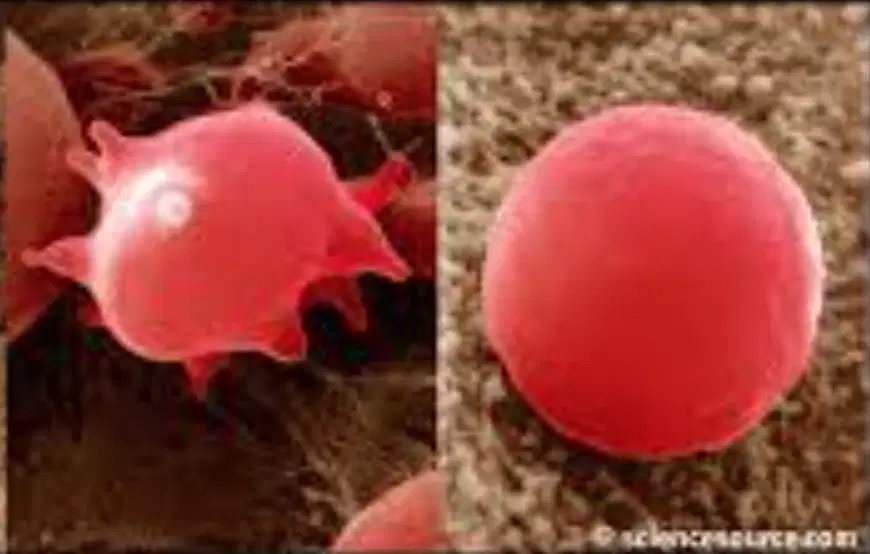
The image shows two red blood cells that have been placed in different solutions, which answer choice shows the correct solution each red blood cell was placed in?
Left: hypotonic
Right: monotonic
Left: hypotonic
Right: isotonic
Left: hypertonic
Right: monotonic
Left: hypertonic
Right: hypotonic
If a red blood cell is placed in a hypotonic solution, which way will the water flow?
Inside the cell
Outside the cell
Both inside and outside the cell
At first it will flow inside the cell, then after a little while it will flow outside the cell
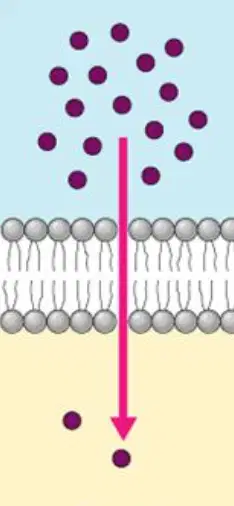
What type of cell transport is shown in the picture?
Facilitated diffusion
Active transport
Diffusion
Osmosis
Which cell is larger?
Prokaryotic
Eukaryotic
Which cell is more complex?
Prokaryotic
Eukaryotic
This cell is a ...
Prokaryotic Cell
Eukaryotic Cell
This cell has a nucleus, that means it is ...
Prokaryotic
Eukaryotic
This is a __________________cell.
Prokaryotic
Eukaryotic
This is a _________________ cell.
Prokaryotic
Eukaryotic
These are simple, small cells that do not have a nucleus. They are also bacteria. What are they?
Prokaryotic
Eukaryotic
Which best describes the Endosymbiotic Theory?
Organelles in eukaryotic cells originated from a large prokaryotic cell engulfing a small prokaryotic cell. This offers an explanation for eukaryotic complexity.
All cells arise from preexisting cells
Organelles in eukaryotic cells did not originate from a large prokaryotic cell engulfing a small prokaryotic cell. They evolved on their own some years later.
all living organisms are made of one or more cells
This cell has a nucleus.
Prokaryotic
Eukaryotic
Which cell has the presence of membrane bound organelles, such as chloroplast or mitochondria?
Prokaryotic
Eukaryotic
Which trait do both prokaryotic and eukaryotic cells share?
Select TWO answers that apply.
Membrane bound organelles
A nucleus
DNA/RNA
Very complex
Cell membrane
One main difference between prokaryotic and eukaryotic cells is that...
only prokaryotic cells have cell walls
only eukaryotic cells have a nucleus
only prokaryotic cells have ribosomes
only eukaryotic cells have DNA
Prokaryotic cells and Eukaryotic cells differ in that:
Eukaryotic cells have free-floating DNA and NO membrane-bound organelles. Prokaryotes have DNA enclosed by the nucleus and membrane-bound organelles.
Eukaryotic cells have DNA enclosed by the nucleus and membrane-bound organelles. Prokaryotes have free-floating DNA and NO membrane-bound organelles.
Eukaryotic cells have free-floating DNA and membrane-bound organelles. Prokaryotes have DNA enclosed by the nucleus and NO membrane-bound organelles
Eukaryotic cells have DNA enclosed by the nucleus and NO membrane-bound organelles. Prokaryotes have free-floating DNA and membrane-bound organelles.
Molecules moving from high concentration areas to low concentration areas is -
active transport
passive transport
What does a salty solution do to cells?
Puncture holes in their cell membranes
Cause water to flow into the cells
Removes water from the cells
Makes the cells burst
Based on this image, if no energy is involved, what is happening?
Osmosis
Diffusion
Facilitated Diffusion
Active transport
What is shown in this image?
Active transport
Facilitated Diffusion
Osmosis
Diffusion
Which of the following is a function of the cell membrane?
breaks down lipids, carbohydrates, and proteins from foods
stores water, salt, proteins, and carbohydrates
regulates the movement of materials into and out of the cell
The ability to allow only certain molecules into or out of the cell.
Semipermeability
Permeability
Impermeability
Unpermeability
Solutes move AGAINST the concentration gradient, therefore energy IS needed.
Passive Transport
Active Transport
Type of cellular transport that uses ATP (energy).
Passive Transport
Active Transport
What will happen to a red blood cell if it is placed into a hypotonic solution?
It will swell and burst open.
It will shrink and shrivel.
Nothing will occur.
What will happen to a red blood cell if it is placed into a hypertonic solution?
It will swell and burst open.
It will shrink and shrivel.
Nothing will occur.
Osmosis is the movement of _____ across a membrane.
food
water
oxygen
Which is true about active transport?
(check all that apply)
It requires energy
it does not require energy
It moves substances from low to high concentration
it moves material from high to low concentration
What part of the cell regulates what can enter and leave the cell?
What cell structure is in charge of what comes in and out of the cell?
Cell wall
Endoplasmic reticulum
Cell membrane
Nucleus
The image shows two red blood cells that have been placed in different solutions, which answer choice shows the correct solution each red blood cell was placed in?
Left: hypotonic
Right: monotonic
Left: hypotonic
Right: isotonic
Left: hypertonic
Right: monotonic
Left: hypertonic
Right: hypotonic
If a red blood cell is placed in a hypotonic solution, which way will the water flow?
Inside the cell
Outside the cell
Both inside and outside the cell
At first it will flow inside the cell, then after a little while it will flow outside the cell
What type of cell transport is shown in the picture?
Facilitated diffusion
Active transport
Diffusion
Osmosis
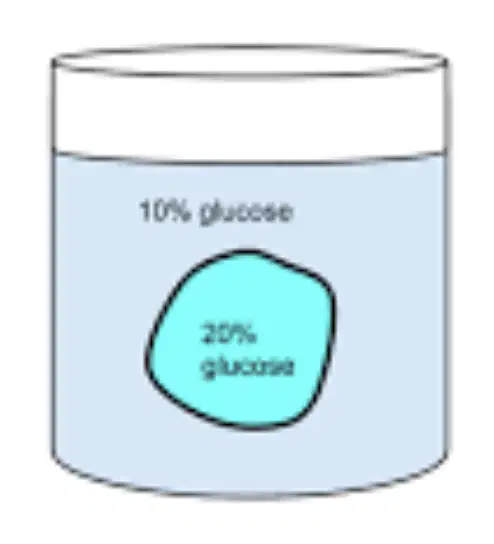
What type of solution is shown in the picture?
hypertonic
hypotonic
monotonic
isotonic
Prokaryotes lack a nucleus.
True
False
Eukaryotes lack a nucleus.
True
False
What does the word "lack" mean? Example: I lack athletic ability.
It means you don't have something. So the example means I do not have athletic ability.
It means you have a lot of something. So the example means you have a lot of athletic ability.
It means you like something. So the example means you like athletic ability.
The function of DNA is to carry and transmit genetic information.
True
False
Lipids provide the body with quick energy, while carbohydrate provide long-term energy
True
False
Carbohydrates provide the body with quick energy, while lipids provide long-term energy
True
False
Lipids are the majority component of the cell membrane
True
False
Carbohydrates are the majority component of the cell membrane
True
False
Proteins provide a quick source of energy for a cell to produce ATP
True
False
Carbohydrates provide a quick source of energy for a cell to produce ATP
True
False
Enzymes act to slow down chemical reactions
True
False
Enzymes act to speed up chemical reactions
True
False
Nucleic acids are made up of fatty acids that store energy in the cell
True
False
Lipids are made up of fatty acids that store energy in the cell
True
False
Carbohydrates are components of the cell wall of an organism
True
False
Lipids are components of the cell wall of an organism
True
False
Bread is a food that is high in lipids
True
False
Bread is a food that is high in carbohydrates
True
False
Eukaryotic cells do NOT have a nucleus
True
False
Prokaryotic cells do NOT have a nucleus
True
False
The two biomolecules that can store energy are carbs and lipids
True
False
The two biomolecules that can store energy are proteins and nucleic acids
True
False
Lipids provide the structural support of cell walls
True
False
Carbohydrates provide the structural support of cell walls
True
False

Lipids provide insulation to animals that live in cold environments
True
False
Carbohydrates provide insulation to animals that live in cold environments
True
False
When an enzyme denatures it can no longer function
True
False
When an enzyme denatures it can still function just as well as it did before
True
False
The thing that is produced in a chemical reaction is called the reactant
True
False
The thing that is produced in a chemical reaction is called the product
True
False
Proteins build lean muscle
True
False
Carbohydrates build lean muscle
True
False
Carbohydrates store genetic information
True
False
Nucleic Acids store genetic information
True
False
Proteins provide structure in hair, skin, and nails
True
False
Lipids provide structure in hair, skin, and nails
True
False
Lipids give quick energy
True
False
Carbohydrates give quick energy
True
False
Eukaryotic cells have no nucleus or other membrane-bound organelles
True
False
Prokaryotic cells have no nucleus or other membrane-bound organelles
True
False

