
Font size
 Worksheets
What is science
Total questions: 104
Worksheet time: 3hrs 45mins
conclusion
What's the dependent variable?

What is the DEPENDENT variable (effect) in this experiment?
"Does eating breakfast improve test score?"
eating breakfast or not
the grade you got on the test
what time you get up in the morning
how tasty the breakfast is

"Which type of medium is best for plant growth?"

"Do tall people jump further than short people?"

"Which type of metal, copper or aluminum, conducts heat faster?"

"Will fish school more if a predator is present?"
What is the independent variable?
What is the dependent variable?
Diego wants to know how drinking milk affects how tall Dora grows. Which is the independent variable?
Drinking milk.
Diego's growth.
Dora's growth.
Chocolate or plain milk.
What would the independent variable be in an experiment testing which type of paper airplane goes the furthest?
the type of paper used.
the distance each plane flies.
how hard the plane is thrown.
the type of paper airplane.
An experiment is performed on plants to see how different liquids affect plant growth. Each plant in the experiment is given a different liquid. Each plant has the same amount of sunlight, soil and listens to the same music. What is the independent variable?
the type of plant
the type of liquid
the type of music
the amount of liquid

Based on the image, the statement "It must be summer time" is an _________________.
Observation
Inference

The table top is black.
Qualitative Observation
Quantitative Observation

The penguin got pushed in the water.
Observation
Inference

The penguins are black and white.
Qualitative Observation
Inference
Quantitative Observation

These kind of observations are made using numbers by measuring with instruments such as rulers, scales and thermometers.
Qualitative Observations
Quantitative Observations

There are 29 students in the classroom.
quantitative observation
qualitative observation

The speed of the car is 55 mph.
Qualitative Observation
Quantitative Observation

The boy is sad...
Observation
Inference

Which statement is an inference about this picture?
The color of the van is tan (beige).
The sign on the wall says KFC.
The van is halfway inside the KFC
Someone has already called 911.
Using observations to make a logical theory or conclusion is called a(n) ______
Observation
Inference
Measuring
Qualitative Observation
Using any of your 5 senses to state facts about the world around you is a(n) ______
Observation
Inference
"They see the leaves on the plant are turning brown" is an example of a
Qualitative observation
Quantitative observation
inference

Observation or Inference: The weather is cold.
Observation
Inference
Observation or Inference: There is a tree by the pond has no leaves on it.
Observation
Inference
Observation or Inference: The boy fell off the branch.
Observation
Inference
Observation or Inference: There is a small sailboat in the water.
Observation
Inference
Observation or Inference: The goat pushed the boy into the pond.
Observation
Inference
This leads to that.
Observations lead to an inference
Inferences lead to an observation
What would be a positive reason to genetically alter Fraser Fir trees in North Carolina to make them more resistant to rot?
By producing crops that are frost resistant
By making robots to replace large farm machines
The population of fir trees would increase and grow healthier.
By increasing the use of wind farms that produce electricity
In what way is biotechnology useful to law enforcement agencies such as the police or FBI?
It can help identify who was present at the scene of a crime.
It can help undercover officers disguise themselves.
It might help determine who might be the victime of a future crime.
It can help determine who is most likely to become a criminal in the future.
How can agricultural biotechnology have a positive impact on the environment?
By developing crops that are pest resistant requiring fewer pesticides to be used.
planting crops in shaded areas.
Harvesting crops that have thick stems and leaves.
water crops with a recycled irrigation system.
How can using genetically engineered crops impact North Carolina’s economy?
Improve quality of farm equipment.
Decreased availability of productive land.
Decreased food production and more debt for farmers.
Increased food production and income for the farmers.
What would be an economic benefit of bioremediation in a coastal town that just experienced an oil spill?
The cost of purified water will increase resulting in more revenue for the town.
Water and land areas will be cleaned of oil, encouraging more tourists to visit the town and spend money there.
The oil from the spill will be recovered from bioremediation and used as fuel in future.
What type of job would a person who studied biotechnology in college be likely to have?
A job making medicines
A job studying stars.
A job studying the physical features on Earth.
Scientists implant a gene into a species of tomato plant that makes them ripen faster and stay firm as they are transported to stores. What is the benefit of this technology?
Increased toxins in the food.
Increase shelf life and availablity.
Decreased size of tomatoes.
Increased seed production
What are some examples of biotechnology being used in agriculture?
Crop irrigation
DNA fingerprinting
Gentically modified crops
Crop rotation
How does the biotechnology industry benefit North Carolina?
Many new, high paying jobs are created
The average salary of the worker in NC decreased.
New technologies being developed are too expensive for people here to afford.
State budget increases from the construction of new facilities.
What would be a negative side of genetically modified foods?
Lower cost of production.
Long-term health effects, such as possible allergies to proteins not found in foods before GMO’s.
Ability to produce more food in less time.
Ability to grow more nutritious food in less time.
What would increase the money made by farmers in North Carolina through biotechnology?
Tomatoes that are different in color.
Tomatoes that are smaller.
Tomatoes that taste the same.
Tomatoes that are resistant to disease.
Rice does not provide enough of certain vitamins. How could biotechnology be used to change this?
Using a high nitrogen fertilzer.
Using herbicide to get rid of weeds.
Genetic modification of rice plants that are pest resistant and to produce vitamins they cannot make without biotechnology
Using pesticide to get rid of pests that can harm the crop.
What would be a direct benefit of biotechnology to agriculture in a time of severe drought?
Planting crops in shaded areas.
Genetically modifying crops to be resistant to changes in weather
Harvesting crops to have thick stems and leaves.
In the United States, there has been relatively little experimentation involving the insertion of genes from other species into human DNA. What is one reason for the limitations of these experiments?
The subunits of human DNA are different from the DNA subunits of other species.
Inserting foreign DNA into human DNA would require using completely new techniques.
Human DNA always promotes human survival, so there is no need to insert foreign genes into it.
There are many ethical questions to be answered before inserting foreign genes into human DNA.
A farmer is considering the advantages of cloning a herd of cattle from a single cow. What is one advantage of a cloned herd?
All cattle in the herd would have the most desired traits.
All cattle in the herd would have more genetic variation.
All cattle in the herd would have more resistance to diseases.
All cattle in the herd would have much longer life spans.
Scientists have produced a genetically modified orange tree that is resistant to disease. Which of the following is the best example of a potential benefit to society that could result from this biotechnology?
reduction in orange crops produced
increase in orange crops produced
increase in the cost of orange crop
a change in the distribution of insects that pollinate orange flowers
A great deal of information can now be obtained about the future health of individuals by examining the genetic makeup of their cells. There are concerns that this information could be used to deny an individual health insurance or employment. What do these concerns best illustrate?
Scientific explanations are based on evidence collected mainly from a single source.
Scientific inquiry involves the collection of information from a large number of sources.
Acquiring too much knowledge about human genetics will discourage future research in this area of science.
Values are essential to making ethical decisions when applying new research that adds to existing knowledge.
It has been argued that the cases of seasonal infectious diseases such as malaria are higher in tropical countries that are subject to El Niño Southern Oscillation (ENSO) events. Which factor supports this argument?
El Niño disrupts breeding cycles for mosquito predators.
El Niño often brings excessive rainfall to warm tropical latitudes.
El Niño makes it more difficult to provide medicine to disease stricken countries.
El Niño causes excessive dry weather in northern latitudes forcing disease-carrying insects to travel south.
Many species of bacteria have become resistant to antibiotics because antibiotics have been so widely used. Now, bacteria that used to be killed by antibiotics are more difficult to treat. What is the best way to proceed in dealing with this public health problem?
Antibiotics should no longer be used.
Antibiotics should be made available to anyone without a prescription.
Antibiotics should only be prescribed to people with bacterial infections
Anti-viral medications should now be used instead of antibiotics.

Over you will see a diagram of an energy pyramid.
The energy pyramid is demonstrating what happens when chemicals are leaked into ecosystems. As you look at the energy pyramid what do you notice about the amount toxic chemicals in the food chain shown?
the amount of DDT increase as you move up the energy pyramid
the amount of DDT decrease as you move down the energy pyramid
the amount of DDT varies within this energy pyramid
the amount of DDT stays the same throughout the energy pyramid

Mammoths pictured here are an extinct relative of the current elephants that are known today. Mammoth DNA has been discovered frozen in time with little breakdown of the DNA sequence. Recently scientists have been able to use gene sequencing to piece together fragments of extinct mammoth DNA and elephant DNA. Their work will be used to create a complete sequence of DNA that could be used in the cloning of a mammoth. In order to complete this task, researchers would need to insert the DNA into an embryo and place that embryo inside an Asian elephant in order to grow and develop. What would be an ethical concern associated with using an endangered Asian elephant to grow the embryo containing the cloned mammoth DNA?
Cloning is a technology that is too new to be used in action without further research on the topic.
The introduction of a new mammoth species would increase biodiversity for the already declining elephant population.
Using gene sequencing to alter the DNA of an extinct organism could produce a new species of elephant completely different from the mammoth.
Since the Asian elephant is already at risk for extinction, using this elephant to grow a mammoth instead of its own species could further lead to the decrease in the Asian elephant population.
Scientists have inserted a gene that codes for resistance to a biodegradable weedkiller into a certain plant. Which of the following is most likely to occur when this gene is inserted?
The plant will become able to produce chemicals to kill weeds around it.
The plant will become able to produce chemicals to kill weeds around it.
The plant will become able to convert the weedkiller into fertilizer.
The plant is more likely to survive when exposed to the weedkiller.
An estimated 73,000 cases of infection from E. coli bacteria in food are reported in the United States each year. Heat treatment has been the preferred way to kill the bacteria, which are often found in beef products. Recently, irradiation using electron beam technology has been used to treat ground beef. The irradiation process disrupts the genetic structure of the bacteria, either killing them or leaving them unable to reproduce.
What is one potential danger of irradiating food?
The dead bacteria might remain in the food and cause illnesses.
The nutrients in the foods might also be destroyed by the irradiation.
The bacteria might grow stronger and become more toxic to humans.
The food might heat up to unsafe levels during the irradiation process.
Animal pharming is becoming more popular as the demand for human proteins and vaccines continues to grow. Animal pharming is the process of using transgenic animals to produce human drugs such as insulin and human growth hormone. Transgenic animals are animals which have been genetically transformed by splicing and inserting foreign genes into their chromosomes. If successful, the inserted gene can enable an animal to make certain proteins in its milk, blood, sperm, or eggs. Which of the following is NOT true about transgenic animals?
Transgene DNA may insert itself into the genome in a way that disrupts the animal’s normal gene function.
Transgenic animals cannot pass their ability to produce the desired drug to its offspring.
Transgenic animals can produce the desired drug at high levels without endangering its own health.
Transgenic animals can be easily tested for the new gene.
What prevents scientists from cloning humans despite the fact that other mammals such as sheep have been cloned?
Cloning humans would take too much time to reproduce.
There are many ethical problems involved in cloning humans.
The technology to clone humans has not been explored.
Human reproduction is very different from that of other mammals.
GMO crops are regularly met with opposition, Golden Rice is grown and distributed in regions where rice consumption is high and variety in diet is low. Which of the following explains a benefit of using Golden rice in these areas?
Golden Rice is bio-engineered and is yellow as a result.
Golden Rice allows regions with a low variety of food to receive necessary nutrients.
Beta-carotene is a lab-created nutrient that has unknown effects.
Producing Golden Rice will result less variety of food grown.
What is Biotechnology?
destroy microorganism
purpose especially the genetic manipulation of microorganism
infections disease
medicine that help
Ethic is...
genetically modified organismo
that haploid set of chromosomes
the characteristics of an organismo
a set of moral obligation that define right and wrong in our practices and decisions.
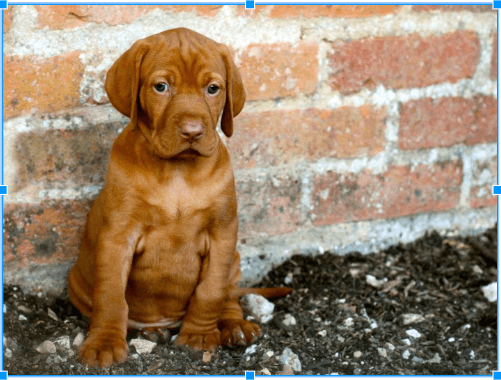
Observation or inference: This is a brown puppy.
Observation
Inference
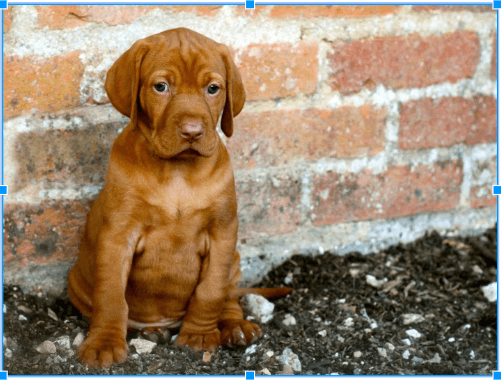
Observation or Inference: This puppy was abandoned
Observation
Inference

Which of the following is an observation about this picture?
The boy is next to a bike.
The boy is in a lot of pain.
The boy has injuries to his knees
The boy learned his lesson about wheelies
Using any of your 5 senses to describe the world around you.
Observation
Inference
Quantitative Observation
Logical Theory
Using observations to make a logical theory or good guess.
Observation
Inference
Measuring
Qualitative Observation


Scenario: You are shopping at tops. You hear glass breaking, a person cursing, and the sharp smell of pickle juice coming from the next aisle. Based on the scenario, what do you infer (inference)?
Red skies at night, sailors delight
observation
inference
Suppose your friends went to the beach at noon on a warm day. They saw some black and white birds. As you are talking to you friend you think "This happen during summertime". Is this an observation or an inference?
observation
inference
Suppose your friends went to the beach at noon on a warm day. They saw some black and white birds. As you are talking to you friend you think "It was during the day". Is this an observation or an inference?
observation
inference
Suppose your friends went to the beach at noon on a warm day. They saw some black and white birds. As you are talking to you friend you think "They saw a bird". Is this an observation or an inference?
observation
inference
Suppose your friends went to the beach at noon on a warm day. They saw some black and white birds. As you are talking to you friend you think "They saw seagulls". Is this an observation or an inference?
observation
inference
Suppose your friends went to the beach at noon on a warm day. They saw some black and white birds. As you are talking to you friend you think "They went swimming.". Is this an observation or an inference?
observation
inference
Suppose your friends went to the beach at noon on a warm day. They saw some black and white birds. As you are talking to you friend you think "One friend’s name was Bob.". Is this an observation or an inference?
observation
inference
Suppose your friends went to the beach at noon on a warm day. They saw some black and white birds. As you are talking to you friend you think "One friend’s name was Bob.". Is this an observation or an inference?
observation
inference
Suppose your friends went to the beach at noon on a warm day. They saw some black and white birds. As you are talking to you friend you think " It was a warm day.". Is this an observation or an inference?
observation
inference
Suppose your friends went to the beach at noon on a warm day. They saw some black and white birds. As you are talking to you friend you think " The birds were black and white". Is this an observation or an inference?
observation
inference
Suppose your friends went to the beach at noon on a warm day. They saw some black and white birds. As you are talking to you friend you think " They ate lunch and drank Coke.". Is this an observation or an inference?
observation
inference
Suppose your friends went to the beach at noon on a warm day. They saw some black and white birds. As you are talking to you friend you think "They are friends.". Is this an observation or an inference?
observation
inference

