Wayground logo

Free Printable Worksheets

Font size

S
M
L
XL
Worksheets

9s Chem Topics 1 2

Total questions: 66

Worksheet time: 54mins

Name
Class
Date
1.

What does WHMIS stand for?

a)

Workplace Hazardous Materials Information System

b)

Workplace and Household Materials Information System

c)

Worker Hazardous Materials Information System

d)

White House Materials Information System

2.

What does MSDS stand for?

a)

Material Safety Data Sheet

b)

Modern Safety Data Sheet

c)

Material Safety Details and Symbols

d)

Made Something Doing Something

3.

Identify the WHMIS symbol by choosing the description of the hazard.

a)

organisms or toxins that can cause disease in people or animals

b)

gases under pressure

c)

may cause or suspected of causing serious health effects

d)

can cause death or toxicity with short exposure to small amounts

4.

Identify the WHMIS symbol by choosing the description of the hazard.

a)

oxidizing hazards

b)

fire hazards

c)

corrosive damage to metals, as well as skin, eyes

d)

explosion or reactivity hazards

5.

Identify the WHMIS symbol by choosing the description of the hazard.

a)

oxidizing hazards

b)

fire hazards

c)

corrosive damage to metals, as well as skin, eyes

d)

explosion or reactivity hazards

6.

Identify the WHMIS symbol by choosing the letter of the matching description.

a)

gases under pressure

b)

organisms or toxins that can cause diseases in people or animals

c)

may cause or suspected of causing serious health effects

d)

can cause death or toxicity with short exposure to small amounts

7.

Identify the WHMIS symbol by choosing the description of the hazard.

a)

gases under pressure

b)

organisms or toxins that can cause diseases in people or animals

c)

repeated exposure can lead to serious health effects

d)

can cause death or toxicity with short exposure to small amounts

8.

Identify the WHMIS symbol by choosing the description of the hazard.

a)

gases under pressure

b)

organisms or toxins that can cause diseases in people or animals

c)

fire hazards

d)

explosion or reactivity hazards

9.

Identify the WHMIS symbol by choosing the description of the hazard.

a)

oxidizing hazards

b)

fire hazards

c)

corrosive damage to metals, as well as skin, eyes

d)

explosion or reactivity hazards

10.

Identify the WHMIS symbol by choosing the description of the hazard.

a)

organisms or toxins that can cause diseases in people or animals

b)

corrosive damage to metals, as well as skin, eyes

c)

oxidizing hazards

d)

explosion or reactivity hazards

11.

Identify the WHMIS symbol by choosing the description of the hazard.

a)

fire hazards

b)

may cause less serious health effects or damage the ozone layer

c)

may cause or suspected of causing serious health effects

d)

may cause damage to the aquatic environment

12.

Workplace Hazardous Materials Information System (WHMIS) provides information through

a)

labels

b)

Material Safety Data Sheets (MSDS)

c)

education and training

d)

all of the above

13.

Which of the following IS true?

a)

dazzling, dangling jewelry is OK in the lab, as long as care is taken

b)

earphones are acceptable, provided you are careful when doing a lab

c)

put your contact lenses in your eyes as soon as you enter the lab

d)

contact lenses should not be worn, especially when working with chemicals

14.
When is it OK to eat or drink in the lab?
a)
Always
b)
Never
15.
If you are not sure what to do during a lab activity:
a)
guess
b)
change lab partners
c)
ask a teacher
d)
just sit quietly and do nothing
16.
Keeping your work area neat and clean is important because:
a)
My teacher is a neat-freak
b)
I won't lose my supplies in the clutter.
c)
It keeps the room from looking messy.
d)
It helps prevent accidents.
17.
Disrupting other students in the laboratory with horseplay in the lab is:
a)
helpful.
b)
allowed
c)
dangerous.
d)
the quickest way to do a job.
18.
What is the CORRECT procedure for students to follow if a chemical is spilled?
a)
Stand back and advise the teacher of the spill.
b)
Run madly out of the room.
c)
Splash large amounts of water onto the spill.
d)
Immediately ask to go to the restroom.
19.
When in the lab you should wear...
a)
open-toed shoes.
b)
sandals.
c)
closed-toes shoes.
d)
no shoes.
20.
Which of the following IS considered safety equipment in our classroom?
a)
Eyewash Station
b)
Emergency Shower
c)
Fire Extinguisher
d)
All of the Above.
21.
When should you look over the experiment instructions? 
a)
After starting the lab
b)
When your teacher tells you to
c)
Before starting the lab
d)
It doesn't really matter.  Instructions are silly!
22.
Why are approved eye protection devices (such as goggles) are worn in the lab?
a)
A. To improve your vision
b)
B. To make you look like a bug
c)
 C. To give you headaches
d)
 D. To protect eyes around chemicals, heat, or glassware
23.

The simplest particles are called

a)

Elements

b)

Atoms

c)

Compounds

d)

Mixtures

24.

The simplest particles are called

a)

Elements

b)

Atoms

c)

Compounds

d)

Mixtures

25.

A pure substance which cannot be split into simpler substances is a

a)

Mixture

b)

Atom

c)

Element

d)

Compound

26.

This is an example of a

a)

Atom

b)

Solid

c)

Crystal

d)

Salt

27.

What are the three states of matter

a)

solid, water, gas

b)

hydrogen, atoms, elements

c)

solid, liquid,gas

d)

air, water, rock

28.

Which of the following elements is an example of a gas

a)

Cerium

b)

Lithium

c)

Helium

d)

Boron

29.

Which of the following elements is a solid

a)

Helium

b)

Hydrogen

c)

Calcium

d)

Oxygen

30.
Something that takes up space and has mass.
a)
volume
b)
matter
c)
mass
d)
density
31.
The amount of space something takes up
a)
density
b)
volume
c)
mass
d)
matter
32.
__________ are the building blocks of life.
a)
solids
b)
gases
c)
atoms
d)
nutrients
33.
I am two or more atoms chemically bonded.
a)
atom
b)
compound
c)
molecule
d)
mixture
34.
I am 2 or more elements chemically bonded.
a)
atom
b)
molecule
c)
compound
d)
mixture
35.
A pure substance that cannot be broken down into any other substance by chemical or physical means. There are about 100 of us shown in the Periodic Table
a)
compound
b)
mixture
c)
molecule
d)
element
36.
Type of matter made of two or more elements...
a)
element
b)
mixture
c)
compound
37.
a type of matter that can be found on earth as a solid, liquid, and gas
a)
gold
b)
water
c)
oxygen
d)
rock
38.
If you saw a glass of water and later the water was gone what happened to the water? Remember that your in the science lab.
a)

Mr. Bonnah

was very thirsty and drank the water.
b)
evaporation
c)
precipitation
d)
solubility
39.
Which change can occur when  you add heat energy to water?
a)
The water can change from a liquid to a solid
b)
The water can change from a gas to a liquid
c)
The water can change from a liquid to a gas
d)
The water can change from a solid to a liquid
40.
What causes a change in the state of matter?
a)
physical properties
b)
chemical energy
c)
temperature
41.
Solids have a definite _______________.
a)
smell
b)
shape
c)
picture
d)
sound
42.
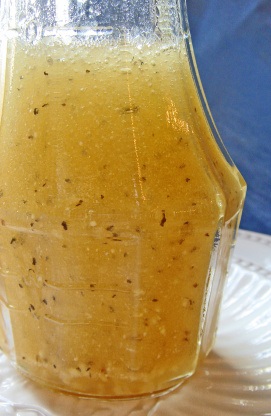
Italian Salad Dressing is a . . .
a)
heterogeneous mixture
b)
homogeneous mixture
c)
Pure Substance
d)
Compound
43.

Are made from a combination of 2 or more different elements...

a)

Molecules

b)

Compounds

44.
A combination that can be separated by physical processes is a .....
a)
Pure Substance
b)
Glucose
c)
Element
d)
Mixture
45.
A mixture that is NOT evenly distributed is called ....
a)
Compounded
b)
Homogenous
c)
Heterogenous
d)
Salty
46.
Mixture, such as mixed nuts or dry soup mix, in which different materials are unevenly distributed and are easily identified.
a)
suspension
b)
homogeneous mixture
c)
heterogeneous mixture
d)
colloid
47.
Substance with atoms that are all alike.
a)
element
b)
compound
c)
homogeneous mixture
d)
heterogeneous mixture
48.
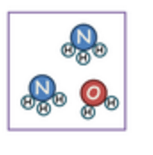
This picture represents: 
a)
Element
b)
Compound
c)
Mixture of Elements
d)
Mixture of Compounds
49.
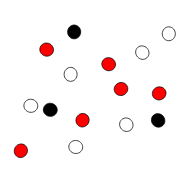
This picture represents: 
a)
Element
b)
Compound
c)
Mixture of Elements
d)
Mixture of Compounds
50.
This picture represents: 
a)
Element
b)
Compound
c)
Mixture of Elements
d)
Mixture of Compounds
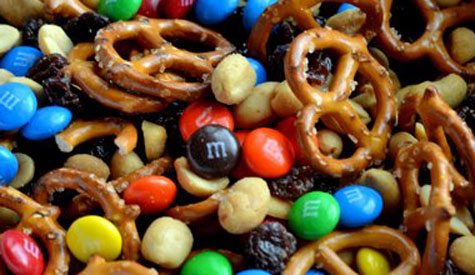
51.
What type of mixture is this?
a)
homogenous mixture
b)
chemical
c)
heterogeneous mixture 
d)
solid mix
52.
All matter is made up of .....
a)
Compounds
b)
Atoms
c)
Molecules
d)
Sunshine
53.
Which of the following would you use to separate sand from iron?
a)
a bar magnet
b)
paper
c)
hot plate
54.
A homogeneous mixture of particles so small that they can not be seen with a microscope and that will never settle to the bottom of their container
a)
colloid
b)
solution
c)
suspension
d)
tyndall effect
55.
Which of the following is an element?
a)
Sugar
b)
Salt
c)
Water
d)
Oxygen
56.

A clear mixture that is so evenly mixed you can't see the parts.  Such as Kool-Aid

a)
Homogeneous Mixture
b)
Heterogeneous Mixture
c)
Pure Substance
57.
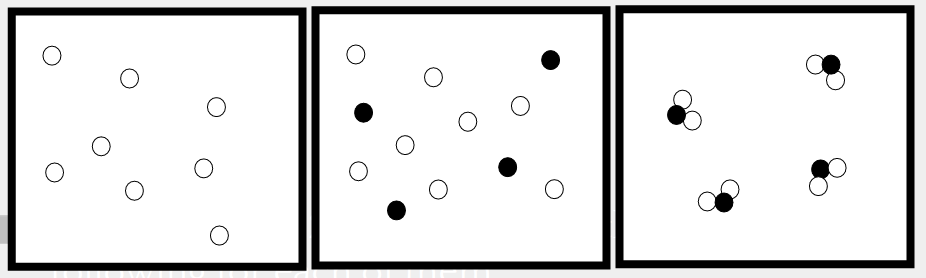
Which one of these pictures represents a pure substance? 
a)
1 and 2
b)
1 and 3
c)
2 and 3
d)
1, 2 and 3
58.
Which one of these pictures represents a mixture? 
a)
1
b)
2
c)
3
d)
1, 2 and 3
59.
A gold coin is an example of a.....
a)
pure element
b)
pure compound
c)
heterogeneous mixture
d)
homogeneous mixture
60.
Sugar water is a 
a)
solution
b)
suspension
c)
colloid
61.
What type of mixture separates upon standing?
a)
Solution
b)
Alloy
c)
Colloid
d)
Suspension
62.
type of mixture that doesn't separate on its own but still contains undissolved particles
a)
solution
b)
colloid
c)
suspension
63.

A type of mixture where the particles are larger than those in a solution but not heavy enough to settle out.

a)

Homogeneous mixture

b)

Colloid

c)

Suspension

d)

Compound

64.

The Tyndall Effect is not visible in which of the following?

a)

Solution

b)

Suspension

c)

Colloid

d)

Heterogeneous Mixture

65.

Which has the largest particles?

a)

Solution

b)

Colloids

c)

Suspension

d)

None of the above

66.

mayo

a)

solution

b)

suspension

c)

colloid

d)

alloy