
Font size
 Worksheets
Unit 1 Practice Quizizz
Total questions: 60
Worksheet time: 55mins
What is the definition of a dependent variable?
A variable that depends on another variable
A variable that is manipulated or changed by the researcher
A variable that is measured or observed in an experiment
A variable that remains constant throughout an experiment
Research question: How does the amount of sunlight affect the growth of a plant? Which of the following is an example of a dependent variable for this research question?
The hours of sunlight
The height of a plant
The type of plant
The amount of darkness
In experimental design, the independent variable is...
The variable that is measured or observed
The variable that is manipulated or changed by the researcher
The variable that remains constant throughout the experiment
The variable that depends on another variable
Testing a hypothesis and gathering data under controlled conditions is called a(n)
Qualitative data
Prediction
Experiment
Variable
The one variable in an experiment that is purposely changed by the scientist is the________________.
dependent variable
independent variable
data
control group
Research Question: Does the type of gasoline put in a car affect how fast the car can drive.
What is the independent variable?
Type of gasoline
which car the gas is put into
how fast the car can drive
how much gas is put into the car
How many independent variables should you have in an experiment?
two
as many as possible
four
one
This part of the experiment serves as a basis of comparison; the group that does not receive the independent variable.
constant
control group
experimental group
hypothesis

An experiment is performed on plants to see how different liquids affect plant growth. Each plant in the experiment is given a different liquid: water, apple juice, or milk. What should be kept constant?
type of plant, flower pot, soil, and amount of sunlight and amount of liquid
only the amounts of water, apple juice, milk
Information and measurements collected during an experiment.
controlled variable
independent variable
predictions
data

HYPOTHESIS: Does study time affect the student's score on an test?
Suppose you collected this data from students in your school. What is the independent variable in the study?
The Students
The Study Time
The Grade on the Quiz


Which liquid had the highest molecular mass?
Hexane
Petroleum Ether
Ethanol
H20

Which pigment had the highest absorption rate at 500 nm wavelength?
Chlorophyll A
Chlorophyll B
Carotenoids
All the same

Which day of the week had the lowest temperature?
Monday
Thursday
Tuesday
Wednesday
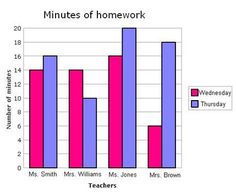
Which day had more minutes of homework?
Wednesday
Thursday
Friday


The combination of chemical reactions through
which an organism builds up or breaks down
materials as it carries out its life processes is called ...
absorption
metabolism
digestion
consumption
Maintaining a stable internal
environment is called
homeostasis
equilibrium
balance
evenness
Identify the characteristic: when you step out into the cold, your body shivers in order to keep its temperature at 98.6oF.
All living things use energy
All living things contain cells
All living things maintain homeostasis
All living things grow and develop
Basic unit of life
Cell
Tissue
Organ
Organ System
___________a molecule that is present in all living cells and that contains the information that determines the traits a living thing inherits and needs to live.
Cell
Stimulus
Homeostasis
DNA
All living things grow and develop.
Autotrophs
Make their own food
Get their food from others
are Fungi
are none of the above
Heterotrophs
make their own food
get their food from others
are fungi
none of the above
Bacteria and archaea are similar because both _________________.
are eukaryotes
are prokaryotes
have the same kind of cell wall
store their DNA in a nucleus
I have many organisms that cause diseases. What Domain am I in?
Bacteria
Archaebacteria
Fungi
Eukarya

MUSHROOMS ARE IN WHAT KINGDOM
PLANT
ANIMAL
FUNGI
PROTIST
I have no nucleus and live in very hot liquids. Which Kingdom am I in?
Fungi
Protist
Eubacteria
Archaebacteria
I am prokaryotic
I am found in extreme ecosystems
What kingdom do I belong to?
Which taxa are used in a scientific name?
Domain
Genus
Phylum
Species
Class
What is the smallest taxa?
Domain
Kingdom
Genus
Species
How many different organisms belong to a species?
10
5
2
1

Use the table to determine the scientific name of a rattlesnake written in the correct scientific format.
Crotalus Viridis
Crotalus Viridis
Crotalus viridis
Crotalus viridis
Viperidae viridis
Organisms in the same Order are more similar than organisms in the same Species
True
False
Which of these big cats are most closely related to each other?
A. Lions (Panthera leo)
B. Cheetahs (Acinonyx jubatus)
C. Snow leopards (Panthera uncia)
D. Puma (Puma concolor)
Lions and Cheetahs
Snow leopards and Pumas
Lions and Snow leopards
Cheetahs and Pumas
In which part of the taxonomic classification triangle are organisms most similar?
Kingdom
Phylum
Genus
Species
Which of the following characteristics is NOT one of the seven characteristics required to be present in all living beings?
Take and use energy
The ability to maintain homeostasis
Have a heart
Composed of one or more cells
Which of these bears are most closely related to each other?
Polar Bear (Ursus maritimus)
Panda (Ailuropoda melanoleuca)
Spectacled Bear (Tremarctos ornatus)
Brown Bear (Ursus arctos)
Polar Bear and Panda
Spectacled Bear and Brown Bear
Brown Bear and Polar Bear
Polar Bear and Spectacled Bear



