
 Worksheets
Life Science Q1 Review for Benchmark
Total questions: 122
Worksheet time: 2hrs 43mins
The cell membrane is a flexible covering that...
creates structure and support for plant cells
protects the cell from the environment outside of the cell
directs the cells activities
How is a cell membrane like a mesh screen?
it is metal and has holes in it
it allows big things to come through but keeps small things out
it allows small things to come through but keeps big things out
This is the fluid inside a cell that contains salts and other molecules.
cell membrane
chloroplasts
mitochondria
cytoplasm
Which type of cell has a cell wall?
plant cell
animal cell
both plant and animal cells
A cell wall helps the cell to keep its _____and gives it _____.
shape, support
fluid, nutrients
structure, nutrients
Which part of the cell directs cell activities?
cytoplasm
mitochondria
cell membrane
nucleus
Which organelle makes proteins?
chloroplasts
golgi bodies
ribosomes
endoplasmic reticulum
Which organelle turns food energy into ATP energy?
mitochondria
chloroplast
ribosomes
nucleus
Which organelle converts sunlight into glucose?
mitochondria
chloroplast
nucleus
golgi body
Where are proteins packaged in a cell?
ribosomes
lysosomes
nucleus
golgi bodies
Which organelle breaks down food and waste in animal cells?
golgi body
ribosomes
lysosomes
mitochondrias
Which two organelles are found ONLY in plant cells?
chloroplast and mitochondria
chloroplast and cell wall
cell wall and mitochondria
cell wall and lysosomes
Which organelle is found ONLY in an animal cell?
chloroplast
cell wall
cytoplasm
flagella

In the animal cell shown, structure A is the site where glucose is turned into ATP energy. What is this organelle called?
chloroplast
mitochondria
nucleus
Golgi Body

In the animal cell shown, structure C is the ________________, the organelle that directs the cells activities.
nucleus
endoplasmic reticulum
cell membrane
ribosomes

In the animal cell shown, structure E is the __________, which controls what enters and leaves the cell.
nucleus
cell wall
endoplasmic reticulum
cell membrane
Which organelle stores water and waste?
golgi body
vacuole
lysosome
cytoplasm

In the plant cell diagram, the part labeled "5" offers structure and support. What is it called?
cell membrane
cell wall
cytoplasm
mitochondria

In plant cells, there are green structures (labeled 7) that capture sunlight energy and convert it to glucose. What are they?
mitochondria
cell membranes
ribosomes
chloroplasts

Which cellular structure is represented by the number 1 on this diagram?
cytoplasm
ribosomes
cell membranes
cell wall
This structure of the cell regulates what goes into and out of the cell through its bilipid layer.
cell wall
gel-like capsule
nucleus
cell membrane
This part of the cell is where most of life's processes take place and contains both the cytoskeleton and organelles.
endoplasmic reticulum
mitochondria
cytoplasm
nucleolus
The command center of the cell which contains DNA/chromosomes, as well as the nucleolus.
ribosomes
cell membrane
nucleus
endoplasmic reticulum
A series of folded membranes from the nucleus to the cell membrane that produce, package and transport proteins through the cell; may or may not have ribosomes on its surface.
Golgi bodies
endoplasmic reticulum
lysosomes
vacuoles
Make proteins; found in nucleolus, in the cytoplasm or on rough ER
lysosomes
mitochondria
chloroplasts
ribosomes
A series of pancake-like folded membranes that gather simple molecules and make into more complex substances; packages and transports
endoplasmic reticulum
Golgi bodies
vacuoles
lysosomes
Structures which tend to be much larger in plant cells to hold larger amounts of water
cell wall
chloroplasts
vacuoles
lysosomes
Contains enzymes used to digest and recycle food/substances in the cell
vacuole
lysosomes
mitochondria
ribosomes
where cellular respiration takes place giving cells much needed energy
chloroplasts
mitochondria
nucleus
endoplasmic reticulum
Which parts are found in plant cells? Choose ALL that apply.
cell membrane
cell wall
chloroplasts
mitochondria
The rigid outer covering of plant cells containing cellulose to give shape and support
gel-like coating
chitin
cell wall
cytoskeleton
Organelle that captures light energy from the sun to make glucose sugar through photosynthesis
mitochondria
cell wall
chloroplast
Golgi bodies
the structure found in the nucleus that makes the ribosomes
chromosomes
ER
nucleolus
vacuole
the "power plant" of the cell; energy!
chloroplast
mitochondria
ER
ribosomes
The "gate-keeper"
cell wall
cell membrane
nucleus
cytoplasm
can be rough or smooth
Golgi bodies
ER
ribosomes
lysosomes

The yellow represents the....
nucleus
cytoplasm
vacuole
endoplasmic reticulum
The purple represents the ......
nucleus
cytoplasm
vacuole
endoplasmic reticulum
What type of cell is this?
plant cell
animal cell
bacterial cell
virus
The organelle colored orange represents the.....
chloroplast
mitochondria
Golgi bodies
lysosome

Why are diffusion and osmosis important to cells?
It allows them to take in materials/substances without using energy.
It allows them to reproduce.
It allows them to absorb sunlight.
It allows cells to use all energy.

What does selectively-permeable mean?
Allow certain things to enter and leave the cell
Nothing gets through
The cell lets only large substances through

Passive transport requires ________________
concentration gradients
no energy
motion
energy
Active / passive transport requires energy in the form of ATP.
Active
Passive
Endocytosis / exocytosis is when vesicles release material from the cell.
Endocytosis
Exocytosis
All of the following apply to the cell membrane EXCEPT -
Allows things to enter/leave the cell
Are present in ALL cells
Contains the DNA in eukaryotes
Helps to maintain balance in the cell
ALl of the following are types of passive transport EXCEPT -
Simple Diffusion
Osmosis
Endocytosis
Facilitated Diffustion
Which type of transport is the movement of molecules AGAINST the concentration gradient?
Active Transport
Passive Transport
Osmosis
Facilitated Diffusion
What type of transport is the movement of molecules from a higher concentration to low concentration?
Active Transport
Passive Transport
Endocytosis
Exocytosis
Facilitated diffusion is the passive transport of molecules using a -
Water
Channel Protein
Smaller Molecules
Large Molecules
Which of the following is the BEST definition for passive transport?
Movement of substances through a cell membrane from a high to low concentration without the use of energy
Movement of substances through a cell membrane from a low to high concentration requiring the use of energy
Movement of substances through a cell membrane from a low to high concentration without the use of energy
Movement of substance through a cell membrane from a high to low concentration requiring the use of energy
Which of the following IS NOT an example of passive transport?
Diffusion
Facilitated Diffusion
Osmosis
Endocytosis
What is the main difference between passive and active transport?
Passive transport requires energy; active transport does not require energy.
Active transport requires energy; passive transport does not require energy.
Both passive and active transport require energy
Neither passive or active transport require energy.
Which of the following transport methods moves substances from a low to high concentration?
Endocytosis
Diffusion
Osmosis
Passive Transport
Which cell organelle/structure is responsible for allowing materials in and out of the cell?
nucleus
cytoplasm
cell wall
cell membrane
These terms can be used to describe how the cell membrane allow some materials through, but not others. (Select all that apply.)
semipermeable
permeable
impermeable
selectively permeable
Which of the following pictures shows a higher concentration?


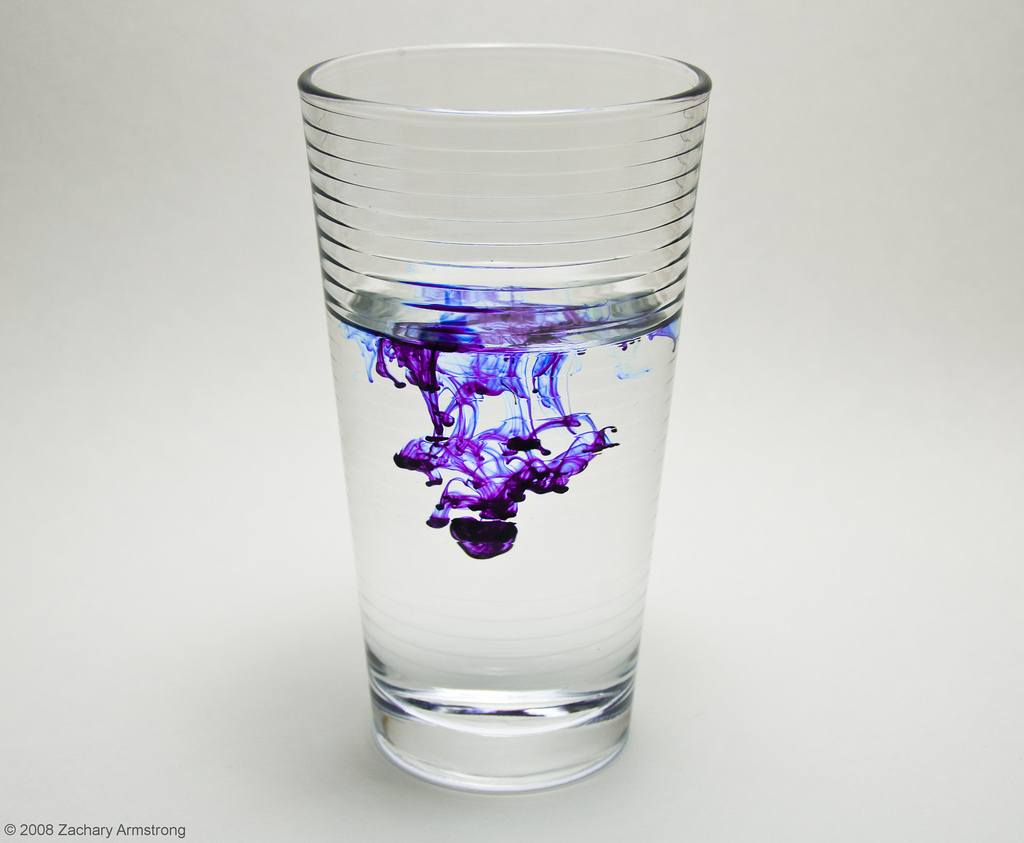
Where is there a low concentration of dye?
at the bottom of cup
in the color
at the top of cup
no concenteraion gradient
Which of the following are types of passive transport? (Select all that apply.)
Diffusion
Osmosis
Endocytosis
Exocytosis
Which of the following are types of active transport? (Select all that apply.)
Diffusion
Osmosis
Endocytosis
Exocytosis
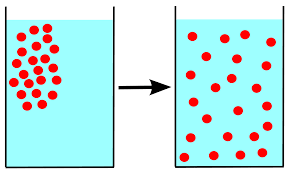
The picture below is an example of _________________.
osmosis
isotonic
diffusion
active transport
What is DIFFUSION?


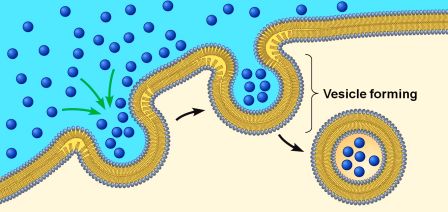
What type of transport is this?
Endocytosis
Exocytosis
Active Transport
Diffusion

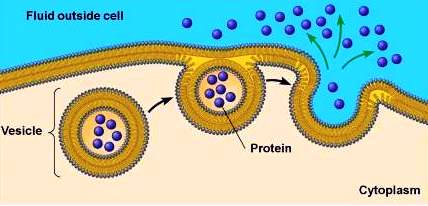
What type of transport is this?
Diffusion
Facilitated Diffusion
Active Transport
Osmosis

Why are many plants green?
plant cells are green
plants absorb green light
chlorophyll reflects green light
rigid cell walls are green
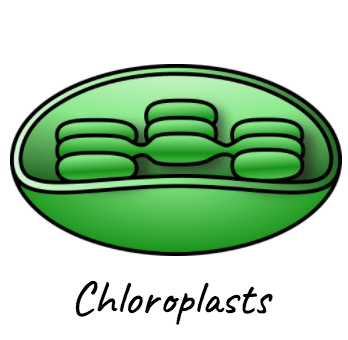
Identify the function of chloroplasts.
A type of pigment used for photosynthesis.
The location inside a plant cell where photosynthesis happens.
The location where cellular respiration happens.
A vascular system used by plants to transport nutrients.
Which of the following formulas represents photosynthesis?
6 H2O + 6 O2 --> C6H12O6 + 6 CO2
6 H2O + 6 CO2 --> C6H12O6 + 6 O2
C6H12O6 + + 6 O2 -->6 H2O + 6 CO2
H2O + CH4 ---> CO2+ CH8
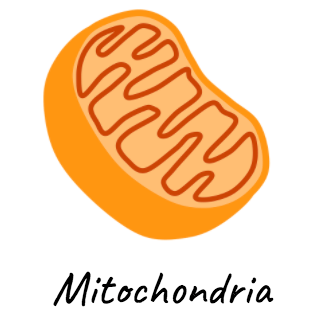
Identify from the following a statement that is true about mitochondria.
The location in cells where photosynthesis occurs.
A holding cell for water to be used by plants.
The location in cells where cellular respiration occurs.
A type of pigment used for cellular respiration.
Which of the following is true regarding plants?
Plants only use photosynthesis.
Plants only use cellular respiration.
Plants use photosynthesis and cellular respiration.
Plants only do photosynthesis during the night.
What is Chlorophyll?
The location where cellular respiration occurs.
A green pigment responsible for the absorption of light to provide energy for photosynthesis.
A stage of mitosis that occurs near the end of cellular division.
The part of the plant that transports water.


In what part of the plant does photosynthesis occur?
Xylem
Root
Stem
Leaf
The reactants in photosynthesis are ____________
Sunlight, Water, and Carbon Dioxide
Glucose and Water
Carbon Dioxide and Water
Oxygen and Glucose
Which best describes the relationship between the chemical equations for photosynthesis and cellular respiration?
They are similar.
They are exactly the same.
They are opposites.
They are unrelated to each other.

Select the correct term for the following definition:
"The water transport system in plants."
Villi
Bronchi
Bolus
Xylem

Select the correct term for the following definition:
"The sugar transport system in plants."
Enzyme
Guard cells
Phloem
Proteins
Which of the following is a usable form of energy produced during cellular respiration?
ADP
ATP
AEP
AHP

How much time did you devote to mastering this unit?
1 hour
2 hours
3 hours
4 hours
What is the process in which plants capture the energy in sunlight and use it to make food? (a)
What is the process in which energy is broken down to release energy? (a)
Plants make their own food called (a)
Where does photosynthesis occur? (a)
Where does cellular respiration take place? (a)
What role does sunlight play in photosynthesis? (a)
What are the inputs (reactants) of photosynthesis? (a)

Cellular Respiration's goal is to (a)
Cellular Respiration involves the chemical breakdown of (a) to form ATP Energy
Which of the following is the best description of the process photosynthesis?
Water, oxygen, and light are inputs while carbon dioxide and glucose are outputs
Water, oxygen, carbon dioxide, and light are inputs and glucose is the output.
Water, carbon dioxide, and light are inputs while oxygen and glucose are outputs.
Glucose, oxygen, and light are inputs while carbon dioxide and water are outputs.
This is given off by plants during photosynthesis as a waste product. (a)
What chemical pigment absorbs sunlight for photosynthesis? (a)
True of False, Plants can perform Cellular Respiration and Photosynthesis (a)
Which of the following is the correct reaction for photosynthesis?
sunlight + carbon dioxide + water --> glucose + oxygen
glucose + oxygen --> carbon dioxide + water + ATP
oxygen + water --> carbon dioxide + glucose
If carbon dioxide is removed from a plant’s environment, what would you expect to happen to its production
of high-energy sugars?
More sugars will be produced.
No sugars will be produced.
The same number of sugars will be produced but without carbon dioxide.
Carbon dioxide does not affect the production of high-energy sugars in plants.

