wayground logo

Free Printable Worksheets

Font size

S
M
L
XL
Worksheets

Massive Physical Science B Review

Total questions: 182

Worksheet time: 28hrs 8mins

Name
Class
Date
1.
Isotopes are elements with a different amount of
a)
protons
b)
neutrons
c)
electrons
d)
atoms
2.
Which particle does not contribute mass to the atom?
a)
Proton
b)
Neutron
c)
Electron
d)
Nucleus
3.
an element will always have the same number of 
a)
neutrons
b)
protons
c)
isotopes
d)
atoms
4.
Which particle does not contribute mass to the atom?
a)
Proton
b)
Neutron
c)
Electron
d)
Nucleus
5.
an element will always have the same number of 
a)
neutrons
b)
protons
c)
isotopes
d)
atoms
6.
An ______________ is the same element, with the same number of protons, but different numbers of neutrons
a)
Atom
b)
Isotope
c)
Atomic Number
d)
Mass Number
7.
The smallest particle into which an element can be divided and still be the same substance
a)
neutron
b)
atom
c)
electron
8.
How many protons are in this element?
a)
79
b)
196
c)
117
d)
Cannot be determined
9.
What is the atomic mass (rounded to the nearest whole number) of this element
a)
196
b)
196.95
c)
197
d)
79
10.
Because atoms are neutral, the number of protons will be equal to the number of __________ in an atom.
a)
Positrons
b)
Neutrons
c)
Electrons
d)
Nuclei
11.
The three main subatomic particles are electrons, protons and ____________.
a)
photons
b)
neurons
c)
neutrons
d)
quarks
12.
What are the two main parts of the atom?
a)
nucleus and cytoplasm
b)
nucleus and electron cloud
c)
core and electron cloud
d)
protons and neutrons
13.
Identify letter A
a)
Nucleus
b)
Neutrons
c)
Protons
d)
Electrons
14.
Identify letter B
a)
Nucleus
b)
Neutrons
c)
Protons
d)
Electrons
15.
Identify letter C
a)
Nucleus
b)
Neutrons
c)
Protons
d)
Electrons
16.
Identify letter D
a)
Nucleus
b)
Neutrons
c)
Protons
d)
Electrons
17.
What does the nucleus of an atom contain?
a)
Electrons and neutrons
b)
Protons and neutrons
c)
Neutrinos and positrons
d)
DNA and RN
18.

Negatively charged particles within the electron cloud outside the nucleus.

a)

neutrons

b)

protons

c)

electrons

d)

isotopes

19.

If the number of protons equals the number of electrons in the atom the electrical charge is-

a)

negative

b)

neutral

c)

positive

20.

The total number of protons and neutrons in the nucleus of an atom

a)

Atomic Number

b)

Mass Number

c)

Atomic Theory

d)

Electron Cloud

21.

The particles in the nucleus of an atom that do not have a charge (neutral)

a)

Proton

b)

Electron

c)

Neutron

d)

Ion

22.

The region inside an atom where electrons are likely to be found

a)

Proton

b)

Atom

c)

Electron Cloud

d)

Neutron

23.

Identifies the number of protons in an atoms nucleus.

a)

Electron Cloud

b)

Atomic Theory

c)

Atomic Number

d)

Mass Number

24.

The smallest part of any element. Made up of protons, neutrons and electrons.

a)

Atom

b)

AMU

c)

Ion

d)

Isotope

25.
In the modern periodic table elements are arranged by:
a)
atomic mass
b)
atomic number
c)
valence electrons
d)
number of isotopes
26.
An atom is made up of protons, neutrons, and electrons.  Which is the smallest subatomic particle?
a)
Proton
b)
Neutron
c)
Electron
d)
Idontknowatron
27.
The mass of one proton is greater than the mass of one...
a)
neutron
b)
electron
28.
What type of subatomic particles are found in the cloud?
a)
neutrons
b)
electrons
c)
protons
d)
reactions
29.

Subatomic particle found in the nucleus, has a mass of 1 amu and a neutral charge

a)

Proton

b)

Neutron

c)

Electron

d)

Positron

30.

What are the green particles?

a)

Neutrons

b)

Electrons

c)

Protons

d)

Atoms

31.

Which subatomic particle tells the identity of an element?

a)

Electron

b)

Proton

c)

Neutron

d)

Nucleus

32.

Which 3 things are always equal for an atom?

a)

Electrons, protons, and neutrons

b)

Atomic number, protons, electrons

c)

Mass number, atomic number, protons

d)

Atomic number, neutrons, electrons

33.

What is the Atomic number for Oxygen, O?

a)

2

b)

5

c)

14

d)

8

34.

How many protons does Oxygen, O, have?

a)

8

b)

5

c)

14

d)

2

35.

What is the name of this element?

a)

Hydrogen

b)

Helium

c)

Lithium

d)

Beryllium

36.

How many protons are in this element?

a)

12

b)

8

c)

7

d)

6

37.

What is the mass number for this element?

a)

12

b)

8

c)

7

d)

6

38.

How many electrons are in this element?

a)

39

b)

19

c)

20

d)

21

39.

Cations have what charge?

a)

+

b)

-

40.

Valence electrons means..

a)

Electrons inside the atoms

b)

Electrons on the outer most energy level

c)

Electrons with no charge

d)

Electrons that are stable

41.

Element Chlorine [Cl] at group #17 have how many valence electrons?

a)

6

b)

7

c)

17

d)

5

42.

Cations have what charge?

a)

+

b)

-

43.

Valence electrons means..

a)

Electrons inside the atoms

b)

Electrons on the outer most energy level

c)

Electrons with no charge

d)

Electrons that are stable

44.

Element Chlorine [Cl] at group #17 have how many valence electrons?

a)

6

b)

7

c)

17

d)

5

45.

This isotope have how many neutrons?

a)

26

b)

12

c)

14

d)

16

46.

Protons are...

a)

Positive charge

b)

Negative charge

c)

Neutral/No charge

47.

What is the planetary model also known as?

a)

Thomson model

b)

Plum pudding model

c)

Bohr model

d)

Nuclear model

48.

Which particles are NOT inside the nucleus of atoms?

a)

Protons

b)

Electrons

c)

Neutrons

49.

Atoms with the same number of protons but different numbers of neutrons (Carbon 14 and Carbon 12) are called ___________.

a)

Anion

b)

Cation

c)

Isotope

50.

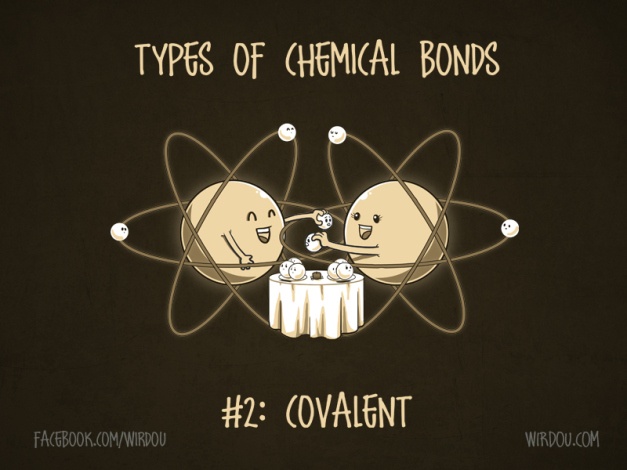
____________ bonds form when they share electrons.

a)

Ionic

b)

Covalent

c)

Isotope

51.

What happened to this Magnesium atom to make it an ion?

a)

It LOST electrons

b)

It GAINED electrons

c)

It GAINED protons

d)

It LOST protons

52.

An atom with the same number of protons and electrons (no charge) and the expected atomic mass or number of neutrons from the periodic table.

a)

Neutral/Normal Atom

b)

Ion

c)

Isotope

53.

An atom that has gained or lost electrons in an attempt to become stable/bond with another atom.

a)

Normal/Neutral Atom

b)

Ion

c)

Isotope

54.

A negatively charged ion that has gained electrons to satisfy the octet rule (metals do this)

a)

Anion

b)

Cation

c)

Neutral Atom

d)

Isotope

55.

A positively charged ion that has lost electrons to satisfy the octet rule (non-metals do this)

a)

Anion

b)

Cation

c)

Neutral Atom

d)

Isotope

56.

Atoms of the same element that have different mass than expected because they have a different number of neutrons.

a)

Neutral Atom

b)

Ion

c)

Isotope

d)

Cation

57.

If an atom has 9 protons and 10 electrons it has a charge of ____.

a)

0

b)

-1

c)

+1

d)

-2

58.

If an atom has 4 protons and 2 electrons it has a charge of ____.

a)

0

b)

-2

c)

+2

d)

+1

59.

If an atom has a charge of +3 and an atomic number of 5 it should have _______ electrons.

a)

1

b)

2

c)

3

d)

4

60.

If an atom has a charge of -2 and an atomic number of 16 it should have _______ electrons.

a)

14

b)

16

c)

18

d)

20

61.

If an atom has a charge of 0 (neutral) and an atomic number of 8 it should have ____ electrons.

a)

0

b)

8

c)

7

d)

9

62.
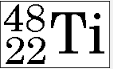
How many protons does this isotope of titanium have?
a)
48
b)
22
c)
26
d)
70
63.
How many neutrons does the isotope of lithium have?
a)
8
b)
3
c)
4
d)
5
64.

What is the mass number of bromine?

a)

35

b)

45

c)

80

d)

79.904

65.

How many neutrons does this bromine atom have?

a)

35

b)

45

c)

80

66.

What type of atom is this?

a)

Neutral atom

b)

Cation

c)

Anion

d)

Isotope

67.

How many electrons does this magnesium ion have?

a)

24

b)

12

c)

10

d)

14

68.

How many neutrons does this Neon atom have?

a)

21

b)

11

c)

10

d)

12

69.

What is the atomic number of this element?

a)

12

b)

24

c)

23

70.

What is the mass number of this element?

a)

12

b)

24

c)

23

d)

11

71.

IN AN ION THE NUMBER OF PROTONS_________ THE NUMBER OF ELECTRONS. 

a)

>

b)

<

c)

=

d)

72.

IN A POSITIVE ION, THE # OF ELECTRONS _____ # PROTONS

a)

>

b)

<

c)

=

73.

IN A NEGATIVE ION, THE # OF ELECTRONS _____ # PROTONS 

a)

>

b)

<

c)

=

74.

How many ELECTRONS does copper have if it has the following charge: Cu2+ ?

a)

64

b)

35

c)

27

d)

29

75.

If an atom has 9 protons 10 electrons and 10 Neutrons. What is the Charge of the Atom?

(a)  

76.
A ________is the force of attraction between atoms sharing electrons.
a)
Synthetic Bond
b)
Ionic Bond
c)
Molecular Bond
d)
Covalent Bond
77.
An ionic compound is held together by the _______--the force of attraction between opposite charges of the atoms.
a)
Covalent Bond
b)
Ionic Bond
c)
Synthetic Bond
d)
Molecular Bond
78.

Atoms of the an element that contain different numbers of Neutrons are know as...

a)

Ions

b)

Protons

c)

Isotopes

d)

Carbon

79.

Contains two or more atoms chemically combined Ex. O

a)

Molecule

b)

Atom

c)

Compound

d)

Electron

80.

Contains two or more different elements chemically combined Ex. NaCl or H₂O

a)

Molecule

b)

Atom

c)

Compound

d)

Electron

81.

CO₂ is a compound.

a)

True

b)

False

82.

CO₂ is a Molecule.

a)

True

b)

False

83.

N2 is a Molecule.

a)

True

b)

False

84.

N2 is a Compound.

a)

True

b)

False

85.

Which of the following are molecules?

a)

N2

b)

CO2

c)

H2O

d)

C₆H₁₂O₆

86.

Which of the following are compounds?

a)

N2

b)

CO2

c)

H2O

d)

C₆H₁₂O₆

87.

An atom that has gained or lost an electron is known as a ...

a)

Proton

b)

Isotope

c)

Ion

d)

Carbon

88.
Why do elements bond?
a)
To be friends
b)
To create a new element
c)
To become stable
89.
What is a valence electron?
a)
The sum of neutrons and protons.
b)
The # of electrons in the last shell.
c)
A type of bond.
d)
A popular compound.
90.
How are covalent bonds formed?
a)
Sharing of electrons
b)
Transfer of electrons
91.
A ________is the force of attraction between atoms sharing electrons.
a)
Synthetic Bond
b)
Ionic Bond
c)
Molecular Bond
d)
Covalent Bond
92.
The atomic number is equal to _.
a)
the number of protons and electrons
b)
the number of neutrons only
c)
the total number of protons and neutrons
d)
the number of protons neutrons and electrons
93.
Is the element shown in this image an ion, isotope or normal atom?
a)
atom
b)
isotope
c)
cation (+ ion)
d)
anion (- ion)
94.
Helium (He atomic number 2) has 2 protons, 2 neutrons, and 2 electrons) is the He element shown above an atom, an element, or an isotope?
a)
atom
b)
cation  (+ ion)
c)
isotope
d)
anion (-)
95.
The atomic mass is equal to _.
a)
the number of protons only
b)
the number of neutrons only
c)
the total number of protons and neutrons
d)
the number of protons, neutrons, and electrons.
96.
When forming an ionic bond, a metal atom
a)
Gains electrons to form a cation
b)
Loses electrons to form a cation
c)
Gains electrons to form an anion
d)
Loses electrons to form an anion
97.
What elements generally make an ionic bond?
a)
metal and nonmetal
b)
2 or more nonmetals
c)
metal
d)
none of the above
98.
What elements generally make a covalent bond?
a)
metal and nonmetal
b)
2 or more nonmetals
c)
metal
d)
none of the above
99.
In chemical compounds, covalent bonds form when
a)
the electronegativity difference between two atoms is very large.
b)
electrons are completely transferred between two metals.
c)
pairs of electrons are shared between two nonmetal atoms.
d)
two nonmetal atoms are attracted to each other by opposite charges.
100.
An ionic bond forms when 
a)
Valence electrons are shared
b)
a sea of mobile electrons surround the cations
c)
valence electrons are transferred between atoms
d)
none of the above
101.
Predict the bond that will form between Be and F.
a)
Ionic
b)
Covalent
102.
Predict the bond that will form between Se and Cl.
a)
Ionic
b)
Covalent
103.
Predict the bond that will form between Sr and S.
a)
Ionic
b)
Covalent
104.
What is a valence electron?
a)
an electron that is found in the outermost shell of an atom. 
b)
an electron found in the innermost shell of an atom.
c)
an electron found in the middle shell.
105.
What type of diagram is this?
a)

Lewis Dot Diagram, similar to Bohr

b)
Bohr Model
c)
Alkali Diagram
d)
Chemical Diagram
106.
How many valence electrons in this structure?
a)
6
b)
5
c)
4
d)
7
107.
A positively or negatively charged particle.
a)
covalent bond
b)
compound
c)
ion
d)
chemical bond
108.
A chemical bond between oppositely charged ions.
a)
compound
b)
ion
c)
covalent bond
d)
ionic bond
109.
Shows an element's combining ability or how many electrons has been gained or lost.
a)
ionic bond
b)
superscript or oxidation number
c)
chemical bond
d)
chemical formula
110.
A chemical bond formed between shared atoms.
a)
chemical bond
b)
covalent bond
c)
oxidation #
d)
ionic bond
111.
Substance made from two or more combined atoms. 
a)
ion
b)
covalent bond
c)
ionic bond
d)
compound
112.
Tells what elements a compound contains and the number of those atoms.
a)
compound
b)
ion
c)
chemical formula
d)
ionic bond
113.
Force that holds together atoms in a substance.
a)
compound
b)
ion
c)
chemical bond
d)
ionic bond
114.
How many atoms of Oxygen are in this compound?
a)
4
b)
1
c)
12
d)
7
115.
How many elements make up this compound?
a)
6
b)
4
c)
2
d)
3
116.

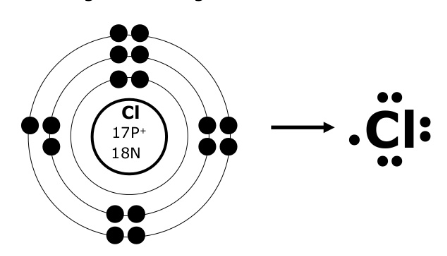
On the left is the Bohr Model of Chlorine. On the right is the Lewis Dot structure. Select the Lewis Dot for Oxygen

a)

b)

117.

In the process of ionic bonding, ions come together because

a)

opposite charges repel

b)

positive and negative ions attract

c)

salt is magnetic

d)

like charges attract each other

118.
What is the name for an ion with a positive charge?
a)
cation
b)
anion
c)
onion
d)
union
119.
What is the name for an ion with a negative charge?
a)
cation
b)
anion
c)
onion
d)
union
120.

Ionic bonds form between two ions that have

a)

negative charges

b)

positive charges

c)

opposite charges

121.
A(n) _____________ is an atom or group of atoms that has an electric charge. 
a)
ion
b)
electron
122.

Calcium LOSES electrons. Calcium is now more ______ that it was before.

a)

positive

b)

negative

123.

What are ions?

a)
Molecules with balanced electrons
b)
Protons and neutrons combined
c)
Atoms with only one electron
d)
Atoms or molecules that have gained or lost electrons
124.

Which type of bond would be most common between a metal and a nonmetal?

a)

Covalent bond

b)

Ionic bond

c)

Metallic bond

d)

Polar covalent bond

125.
Which of these is a property of metals?
a)
It's malleable
b)
It can't conduct electricity
c)
They are used in food
d)
It's very brittle
126.
Which of these is a property of metals?
a)
It's malleable
b)
It can't conduct electricity
c)
They are used in food
d)
It's very brittle
127.
Which of these grouping of elements could have the characteristic of brittle?
a)
Metal
b)
Nonmetal
128.
Which of the following is a good conductor of heat?
a)
Metal
b)
Nonmetal
c)
Metalloid
129.
Some characteristics of a metal are that it is malleable and ductile.
a)
TRUE
b)
FALSE
130.
Iron is a good conductor, malleable and magnetic. What type of element is Iron? 
a)
Metal
b)
Nonmetal
c)
Metalloid
d)
Pretty
131.
Which elements are found on the left to middle of The Periodic Table? 
a)
Metals
b)
Nonmetals
c)
Metalloids
d)
Candles
132.
Silicon is a semiconductor and has properties of both metals and nonmetals. What type of element is Silicon? 
a)
Metal
b)
Nonmetal
c)
Metalloid
d)
Pretty
133.
Which elements are found on the right side of The Periodic Table?
a)
Metals
b)
Nonmetals
c)
Metalloids
d)
Water
134.
Which element is a metalloid?
a)
Titanium
b)
Selenium
c)
Potassium
d)
Polonium
135.
Anytime you see the word SEMICONDUCTOR - what substance do you have?
a)
Metal
b)
Nonmetal
c)
Metalloid
136.

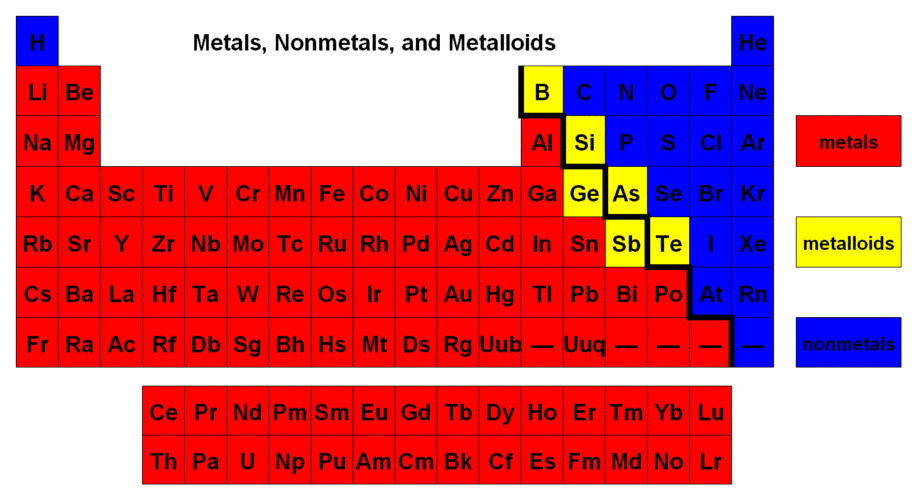
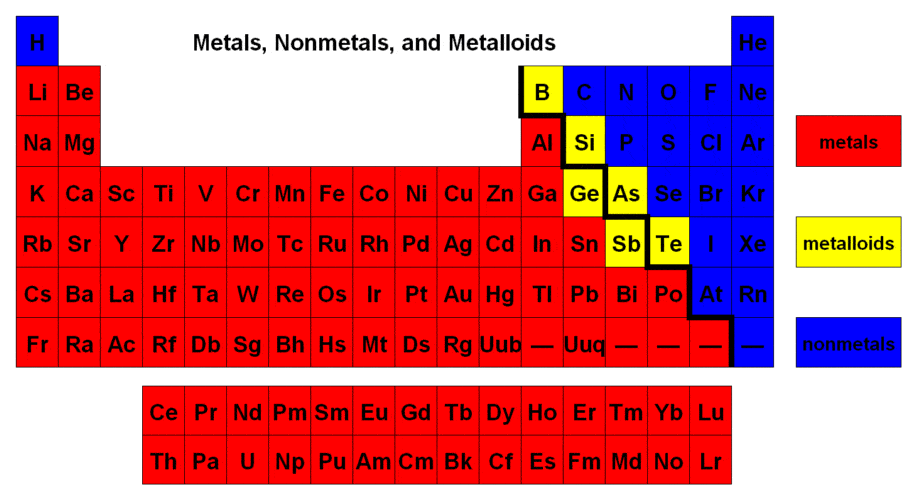
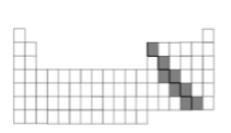
Elements in the shaded area can best be described as -

a)

Malleable

b)

Brittle

c)

Dull

d)

Insulators

137.

Elements in the shaded area can best be described as -

a)

Shiny and brittle

b)

Insulators

c)

Good conductors

138.
Look at the periodic table that is provided. Where would nonmetals be located? 
a)
to the left of the table 
b)
to the right of the table 
c)
in the zigzag line 
139.
Look at the periodic table that is provided. Where would metals be located? 
a)
to the left of the table 
b)
to the right of the table 
c)
in the zigzag line 
140.

Fill in the blank: Nonmetals have a ___________ surface, and they do not conduct heat or electricity.

a)

electricity

b)

dull

c)

changed

d)

luster

e)

metals

141.

Which elements are shiny?

a)

metals only

b)

nonmetals only

c)

metals and nonmetals

d)

metals and MAYBE metalloids

142.

Which elements are to the right of the zig zag?

a)

metals

b)

nonmetals

c)

metalloids

143.

How did you find out if an element is a good conductor?

a)

it lit up a light bulb

b)

hit it with a hammer

c)

bubbled in the presence of acid

d)

turned black

144.

ductile means...

a)

can be made into wire

b)

can be bent or hammered

c)

can light up a light bulb

d)

it's shiny

145.

copper can be used to make statues like the statue of liberty

a)

therefore copper is malleable

b)

therefore copper is ductile

c)

therefore copper is shiny

d)

therefore copper is a conductor

146.

Substances that can be hammered into thin sheets are:

a)

metals

b)

nonmetals

c)

both metals and nonmetals

147.

Which three groups of the Periodic Table contain the most elements classified as metalloids (semimetals)?

a)

1, 2, and 13

b)

14, 15, and 16

c)

2, 13, and 14

d)

16, 17, and 18

148.

The metalloids that are included in Group 15 are antimony and

a)

N

b)

P

c)

As

d)

Bi

149.

Which property is most associated with nonmetals?

a)

Malleability

b)

Ductility

c)

Brittleness

d)

Conductivity

150.

Which of the following elements is a nonmetal?

a)

Iron

b)

Oxygen

c)

Aluminum

d)

Magnesium

151.

You know that 12 inches = 1 foot.  60 inches is (a)   feet.

Choose from the below words
720 feet
5 feet
5 inches
72 feet
152.
You know 1000 mg = 1 g.  Convert 2.5 grams into milligrams.
a)
25 mg
b)
25,000 mg
c)
250 mg
d)
2500 mg
153.
You know that 12 inches = 1 foot.  Convert 60 inches to feet.
a)
720 feet
b)
5 feet
c)
5 inches
d)
72 feet
154.
You know 1000 mg = 1 g.  Convert 2.5 grams into milligrams.
a)
25 mg
b)
25,000 mg
c)
250 mg
d)
2500 mg
155.

How many inches are in 1 mile? (5280ft = 1mi; 12in = 1ft)

a)

66330in

b)

63360in

c)

63660in

d)

63066in

156.
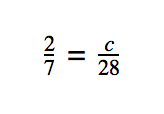
Solve the proportion:
a)
4
b)
8
c)
14
d)
10
157.
Solve the proportion.
a)
1
b)
3
c)
6
d)
5
158.
A 12-ounce bottle of shampoo lasts Enrique 16 weeks. How long would you expect an 18-ounce bottle of the same brand to last him?
a)
24 Weeks
b)
24-ounce bottle
c)
10.6 Weeks
d)
10.6-ounce bottle
159.
The class has 12 girls and 16 boys. What is the ratio of total students to boys? (simplest form)
a)
28/16
b)
7/4
c)
16/28
d)
12/16
160.

The Olympic record for the high jump is just over 2.6 yards. What is that distance in feet? (3 ft = 1 yd)

a)

0.867 ft

b)

7.8 ft

c)

8.07 ft

d)

8.27 ft

161.

The waiting time to ride a roller coaster is 20 minutes when 150 people are in line. How long is the waiting time when 240 people are in line?

a)

32 people

b)

32 minutes

c)

12.5 minutes

d)

12.5 people

162.

Convert 62 miles/hour to feet/second. (5,280 ft = 1 mi)

a)

5,456 ft/s

b)

.003 ft/s

c)

91 ft/s

d)

909 ft/s

163.
Gas costs $3.05 a gallon, and your car travels at 27 miles for each gallon of gas. How far can you travel in your car with $95 in your pocket?
a)
11 miles
b)
840 miles
c)
7800 miles
d)
870 miles
164.

Complete the statement:
5.0 cm/min = ______ m/day

a)

72

b)

840

c)

7.2

d)

5,040,000

165.
A passenger jet has a speed of 900 km/h.
What is its speed in m/s?
(1 km = 1000 m)
a)
250 m/s
b)
324 m/s
c)
1,500 m/s
d)
2,500 m/s
166.
A bicycle has a speed of 6 m/s. What is its speed in km/h?  (1 km=1000 m)
a)
21.6 km/h
b)
16.67 km/h
c)
2.16 km/h
d)
1.67 km/h
167.
5 gallons to ? L 
1gal = 3.785 L
a)
18.95
b)
.1895
c)
1895
d)
1895000
168.
How many inches are in 1 mile?
(Hint:  5280 ft = 1 mi)
a)
66,330 in
b)
63,360 in
c)
63,660 in
d)
63,066 in
169.

Choose the best buy (lowest cost per bottle)

a)

6 bottles for $3.79

b)

9 bottles for $4.50

c)

12 bottles for $6.89

170.
You know 1000 mg = 1 g.  Convert 2.5 grams into milligrams.
a)
25 mg
b)
25,000 mg
c)
250 mg
d)
2500 mg
171.

The space station is under attack and crew needs to evacuate.

Data shows that 2 space capsules together can hold 8 people. How many capsules do you need for the whole crew of 47 people?

a)
10
b)
12
c)
15
d)
20
172.

Convert 45 kilometers to meters. (1 km = 1000 m)

a)

450 m

b)

4500 m

c)

45000 m

d)

450000 m

173.

If 1 liter of water weighs 1 kilogram, how much does 3.5 liters of water weigh?

a)

3.5 kg

b)

35 kg

c)

0.35 kg

d)

350 kg

174.
__Na + __Cl2 --> __NaCl
a)
1,1,2
b)
2,1,2
c)
2,1,1
d)
already balanced
175.
Is the following equation balanced?
4Fe + 3O2 --> 2Fe2O3
a)
yes
b)
no
176.
Is the following reaction balanced?
NaHCO3 --> Na2CO3 + H2O + CO2
a)
yes
b)
no
177.
Is the following reaction balanced?
2CH3OH + 3O2 --> 2CO2 + 4H2O
a)
yes
b)
no
178.
What is the right part of a chemical equation called...
2H2 + O2 --> 2H2O
a)
Reactants
b)
Products 
c)
Yields 
d)
Chemical Equation 
179.
What is the left part of a chemical equation called?
2H2 + O2 --> 2H2O
a)
Reactants
b)
Products 
c)
Yields 
d)
Chemical Equation 
180.

The Law of Conservation of Matter

a)

tells how many atoms of an element are contained in one molecule or formula unit.

b)

the starting materials in a chemical reaction

c)

the new substances that are formed in a chemical reaction

d)

A law stating that atoms are not created or destroyed during a chemical reaction.

181.
What is a coefficient?
a)
The small number on the right of the chemical symbol.
b)
The large number to the left of a formula.
182.
What is the little number after an element in a chemical equation called.
Example: H2
a)
Coefficient 
b)
Subscript
c)
Atom
d)
Equation