
 Worksheets
Unit 2 Test Prep
Total questions: 156
Worksheet time: 2hrs 23mins

Which type of rock is formed from the solidification of magma or lava?
igneous
sedimentary
metamorphic
bioclastic

Where is magma located?
above ground
below ground
in the stratosphere
in the thermosphere

Where is lava located?
above ground
below ground
in the core
in the mantle

Describe the texture of the following igneous rock.
smooth
coarse
vesicular
glassy

Describe the texture of the following igneous rock.
glassy
rough
vesicular
coarse

Describe the texture of the following igneous rock (grain size 1-10 mm).
vesicular
glassy
fine
coarse

Describe the texture of the following igneous rock (grain size < 1mm).
glassy
fine
coarse
vesicular

Describe the mineral composition of the following igneous rock.
felsic
mafic

Describe the mineral composition of the following igneous rock.
felsic
mafic

Describe the environment of formation for the following igneous rock (grain size > 10 mm).
intrusive
extrusive

Describe the environment of formation for the following igneous rock.
intrusive
extrusive

Describe the rate of cooling for the following igneous rock (grain size 1-10 mm).
slow cooling
rapid cooling

Describe the rate of cooling for the following igneous rock.
slow cooling
rapid cooling

Describe the environment of formation for the following igneous rock (grain size 1-10 mm).
above ground
below ground

Describe the environment of formation for the following igneous rock (grain size < 1 mm).
above ground
below ground
What is the primary characteristic of igneous rocks?
Layered appearance
Formed from magma or lava
Contains fossils
Formed by heat and pressure
Which type of igneous rock forms slowly?
Extrusive
Intrusive
Sedimentary
Metamorphic
What is the primary characteristic of igneous rocks?
Layered appearance
Formed from magma or lava
Contains fossils
Formed by heat and pressure
What is the primary focus when examining the texture of igneous rocks?
The color of the rock
The size, shape, and arrangement of crystals
The weight of the rock
The age of the rock
How does the rate of cooling influence igneous rocks?
It changes the color
It affects the texture
It alters the weight
It determines the age
What texture results from minerals crystallizing at different rates?
Glassy texture
Porphyritic texture
Vesicular texture
Granular texture
What type of composition do rocks with many dark silicate minerals and plagioclase feldspar have?
Granite composition
Basaltic composition
Sedimentary composition
Metamorphic composition
Which rocks have a composition between granitic and basaltic?
Ultramafic
Andesitic
Sedimentary
Metamorphic
Imagine you're a geologist like Mr. Manfra, exploring the mysteries of igneous rocks. How does the rate of cooling affect the crystal size in these rocks?
Faster cooling forms larger crystals
Slower cooling forms larger crystals
Cooling rate does not affect crystal size
Faster cooling forms smaller crystals, and slower cooling has no effect
Imagine you're a scientist with Ms. Romer and Mrs. Magna, and you're observing magma cooling at an incredibly fast rate. What do you predict will happen to the rock formation?
The rock will have very large crystals
The rock will be completely smooth with no crystals
The rock will have a mixed texture with some areas smooth and some crystalline
The rock will have a uniform medium-sized crystalline structure

Diorite is an intrusive igneous rock. What does this tell you about it?
it was formed from lava that erupted onto Earth's surface
it was formed from magma that hardened beneath Earth's surface
it was formed from rapidly cooling lava
3 characteristucs that are unique for igneous ricks
intrusive/extrusive
vesicular/non vesicular
crystal sizes
color
hardness
streak
amount
volume
density

Match the following types of rocks with their descriptions.
Basalt
A fine-grained volcanic rock
Pegmatite
A very coarse-grained plutonic rock
Granite
A coarse-grained, intrusive igneous rock
Rhyolite
A fine-grained, extrusive volcanic rock
What the name of an extrusive rock that has a glassy, vesicular texture and is felsic with low density?
____ are intrusive igneous rocks.
basalt, gabbro, peridotite


Is this igneous rock, porphyry, fine-grained or coarse-grained?
fine-grained
coarse-grained

Is this igneous rock, obsidian, fine-grained or coarse-grained?
fine-grained
coarse-grained

Rhyolite is a fine-grained, extrusive, igneous rock. How did it form?
rapidly cooling lava
slowly cooling magma

The size of crystals in Igneous Rocks depends upon
pressure
the presence of air
the presence of water
cooling rate

All igneous rocks are formed from
cementing and compacting of rocks
heat and pressure within the Earth
the remains of ancient organisms
magma and lava
What the name of a rock composed of K feldspar, quartz, plagioclase feldspar, biotite, and amphobole with glassy texture?
What does the term "metamorphism" mean?
To change form
To break down
To dissolve
To evaporate
What conditions are necessary for most metamorphic changes to occur?
Low temperatures and pressures
Elevated temperatures and pressures
High humidity and low pressure
Low temperatures and high humidity
What is the primary factor causing pressure in metamorphic rock formation?
Wind
Weight of overlying rocks
Ocean currents
Earth's rotation
What conditions are rocks subjected to during regional metamorphism?
Low pressures and temperatures
Extreme pressures and temperatures
High humidity and rainfall
Low sunlight and wind
What type of metamorphism results in large-scale deformation?
Contact metamorphism
Regional metamorphism
Dynamic metamorphism
Hydrothermal metamorphism
Which of the following is NOT a characteristic of regional metamorphism?
Occurs during mountain building
Involves extreme pressures
Results in high-grade metamorphism
Occurs at low temperatures
Which of the following is NOT an agent of metamorphism?
Heat
Pressure
Hydrothermal solutions
Erosion
What is the result of the combined effect of heat, pressure, and hydrothermal solutions on rocks?
Erosion
Metamorphism
Sedimentation
Weathering
What is the role of hydrothermal solutions in metamorphism?
They cool the rocks
They dissolve the rocks
They aid in the transformation of rocks
They erode the rocks
What can some chemical reactions cause minerals to do?
Evaporate
Recrystallize
Dissolve
Melt
What is another source of heat for metamorphism besides magma?
Friction
Change in temperature with depth
Solar radiation
Chemical reactions

True or False: A metamorphic rock that has grains arranged in bands is said to be nonfoliated.
True
False

The formation of metamorphic rocks involves all of the following processes except __________.
the realignment of minerals so that they develop a preferred orientation
the movement of minerals into layers of different compositions
the rearrangement of ions to create new minerals
complete remelting of the rock, followed by solidification to form a new rock

Follow the arrow from sedimentary to metamorphic rock. What process is necessary to change a sedimentary to a metamorphic rock?
Deposition, compaction and cementation
Heat and/or pressure
Melting to magma, then solidification
Weathering and erosion
One cause of metamorphism in rocks is:
sedimentation
pressure
cold temperatures
weathering
Describe the process of metamorphism in the rock cycle.
Metamorphism is the process of rocks turning into liquid form.
Metamorphism occurs due to the presence of wind erosion.
Metamorphism is the process where rocks undergo changes in mineral composition, texture, or structure due to heat, pressure, or chemical reactions.
Metamorphism is a result of rocks being exposed to extreme cold temperatures.
Which rock was formed by intense heat and pressure


Metamorphism caused by being close to a magma body is called (a) . Large scale metamorphism caused by tectonic activity is called (b) (c) metamorphism is caused by super heated water.
Match the following metamorphic rocks with their protolith (parent rock)
slate
shale
marble
limestone
gneiss
granite
anthracite
coal
quartzite
sandstone
List the three agents of metamorphism
Which type of metamorphism occurs due to the heat from nearby magma?
hydrothermal metamorphism
dynamic metamorphism
regional metamorphism
contact metamorphism
What is the main factor responsible for regional metamorphism?
Heat and pressure
Weathering and erosion
Volcanic activity
Tectonic forces

Which texture best describes this rock?
porphyritic
nonfoliated
foliated
clastic

It is very important to know the parent rocks of metamorphic rocks. What does Limestone metamorphose into?
Anthracite Coal
Quartzite
Marble
Slate

This sample of marble is illustration foliation.
True
False
What process involves the breakdown of rocks at the Earth's surface?
Weathering
Transportation
Burial
Sedimentation
Which type of rock is formed through burial and sedimentation?
Igneous rocks
Metamorphic rocks
Sedimentary rocks
Magma rocks
What do rocks produce when they are physically and chemically broken down?
Magma
Sediment
Fossils
Crystals
What is the term used to describe the process of sediments turning into rock?
Evaporation
Melting
Lithification
Dissolution
What is compaction in the context of sedimentary rock formation?
A process that melts sediment
A process that squeezes or compacts sediment
A process that dissolves sediment
A process that evaporates sediment
What happens to water in the sediment during compaction?
It freezes
It is driven out
It evaporates
It remains unchanged
What characterizes clastic sedimentary rocks?
Formed from lava
Weathered bits of rocks and minerals
Composed of organic material
Made from cooled magma
What are chemical sedimentary rocks?
Rocks formed from volcanic activity
Rocks formed from the cooling of magma
Rocks formed when substances dissolved in water precipitate
Rocks formed from the accumulation of plant material
What process leads to the formation of chemical sedimentary rocks?
Melting of ice
Precipitation from water solutions
Erosion by wind
Compression of sand
What is the role of water in the formation of chemical sedimentary rocks?
It dissolves substances
It provides heat
It adds color
It creates pressure
What is a common feature of chemical sedimentary rocks?
They are formed from volcanic eruptions
They are formed from the cooling of magma
They are formed from the precipitation of minerals
They are formed from the compression of sand

The process when rocks break into smaller pieces due to exposure to natural elements is called
erosion
weathering
sediments

The breaking of rock is called (a.) ____________. This will form smaller rocks called (b.) ___________. (Words used in forming sedimentary rock)
(a.) weathering
(b.) sediment
(a.) erosion
(b.) sediment
(a.) deposition
(b.) sediment
What is the difference between weathering and erosion?
Weathering breaks down rocks, while erosion transports the weathered materials.
Weathering only occurs in deserts, while erosion only occurs near water.
Weathering and erosion are the same process.
Weathering creates new rocks, while erosion destroys rocks.

What are the steps involved in the formation of sedimentary rocks?
Melting, crystallization, and cooling
Folding, faulting, and uplift
Volcanic eruption, lava flow, and solidification
Weathering, erosion, deposition, compaction, and cementation

How are sedimentary rocks, such as shale and sandstone, formed?
Particles are changed into liquids.
Particles are compressed into layers.
Particles are melted together by magma.
Particles are heated by the Sun.
Which of the following is a characteristic feature of sedimentary rocks?
They often contain fossils.
They are primarily composed of quartz.
They are formed from the cooling of magma.
They are the hardest type of rocks.
A student uses a candle to model the process of an existing rock becoming an sedimentary rock. Which procedure best demonstrates the formation of an sedimentary rock?
Melt the candle in a dish on a hotplate and keep it in liquid form.
Break the candle into small pieces and crush the small pieces until they stick together.
Place books on top of the candle to apply pressure, and then heat it so its composition changes.
Hold the lit candle over a small dish, and then let the melted candle wax that drops into the dish cool and harden.


Which causes rocks to physically weather in to sediments?
Water
Ice
Wind
All of the above


How would you classify the grain size of this rock?
Fine
Visible
Course
Very Coarse
What does it mean for a mineral to be inorganic?
It is made by humans
It is non-living
It is a liquid
It has a variable chemical formula
What does it mean for a mineral to have a fixed chemical formula?
It can change its chemical composition
It has a consistent chemical composition
It is always a liquid
It is always man-made
What is a gem?
A common rock
A highly prized mineral because it is rare, durable, and beautiful
A type of metal
A synthetic material
Which elements are contained in silicates?
Carbon and Hydrogen
Silicon and Oxygen
Iron and Magnesium
Calcium and Sodium
What elements are present in oxides?
Oxygen and hydrogen
Oxygen and a metal
Carbon and a metal
Nitrogen and a metal
Minerals that are classified in the halides group have elements from which column?
1
17
18
10
What elements are present in carbonates
Oxygen and hydrogen
Oxygen and a metal
Carbon and a Oxgyen
Nitrogen and a metal
What elements are contained in sulfates?
Carbon and Hydrogen
Sulfur and Oxygen
Nitrogen and Oxygen
Hydrogen and Sulfur
Which element is not present in sulfides?
Sulfur
Metal
Oxygen
Hydrogen
A student rubs a mineral across an unglazed porcelain plate. What mineral property is the student testing?
hardness
color
luster
streak
minerals that break into jagged or rough edges are said to ____.
cleave
streak
fracture
hardness
___ is a measure of how easily a mineral can be scratched.
luster
fracture
streak
hardness
_____ is the way a mineral reflects light
luster
streak
harness
cleavage
dull, silky, waxy and pearly are descriptive terms that best describe what property of minerals?
color
luster
streak
cleavage
What is a stalactite?
A mineral formation on the floor of a cave
A mineral formation on the ceiling of a cave
A type of rock found in rivers
A type of plant found in caves
What happens to existing minerals when they are subjected to changes in pressure and temperature?
They expand and become less dense.
They tend to form more compact minerals.
They dissolve in water.
They change color.
Which of the following is NOT mentioned as an example of a mineral affected by pressure and temperature?
Mica
Talc
Quartz
Feldspar
What is the result of minerals being subjected to pressure and temperature changes?
They become more colorful.
They form more compact minerals.
They become magnetic.
They lose their hardness.
Which mineral is an example of one that forms under pressure and temperature changes?
Mica
Sandstone
Limestone
Granite
What do hydrothermal solutions often form?
New gases
New minerals
New metals
New rocks
Where are hydrothermal solutions often found?
In the ocean
In the atmosphere
In veins in rock
In deserts
The type of chemical composition that minerals have
non-fixed
fixed
A mineral such as Silver would be classified into which mineral group?
Silicates
Carbonates
Oxides
Native
How many protons does Cesium have?
(a)
Which state of matter contains definite shape and volume?
Solid
Liquid
Gas
Plasma
What is the chemical composition of an element?
A mixture of compounds
A single type of atom
A blend of gases
A combination of liquids
What is the central part of an atom called?
Electron cloud
Nucleus
Proton center
Neutron hub
What determines the atomic number of an element?
Number of electrons
Number of protons
Number of neutrons
Number of atoms
What is the smallest unit of an element that retains the properties of that element?
Molecule
Atom
Compound
Cell
Where are protons located in an atom?
Outside the nucleus
Inside the nucleus
In the electron cloud
In the outer shell
Which of the following is NOT a characteristic of protons?
Positive charge
Located in the nucleus
Equals atomic number
Negative charge
What happens to an element when it gains protons?
It becomes a new element
It becomes an isotope
It becomes an ion
It becomes a molecule
What type of ion is formed when an atom gains an electron?
Positive ion
Neutral ion
Negative ion
No ion
Where are neutrons located in an atom?
In the electron cloud
Inside the nucleus
In the outer shell
Between protons and electrons
What is a stable isotope?
An element with fewer protons
An element with more electrons
An element with a higher atomic mass than average
An element with a lower atomic mass than average
What does the atomic mass represent?
Number of protons
Number of electrons
Total number of protons and neutrons
Total number of electrons and neutrons
How many neutrons does silver have?
(a)
If you were told something has 2 extra electrons what would it be classified as?
isotope
negative ion
positive ion
normal
How many electrons can the first shell hold?
two
eight
nine
none
How many electron can the second shell hold?
Eight
Two
None
All of them
how do you get the total number of neutrons about an element from the periodic table?
atomic mass
guess
Atomic mass minus the atomic number
you can't
Given the following. The weight of the mineral in the water was 149.23 gram and the weight in the air was 189.34, what is the specific gravity?
3.72
0.78
4.72
-148.23
SrSO4, would be classified into what mineral group?
Sulfate
Sulfide
Oxides
Native
CaF2, would be classified into what mineral group?
Carbonate
Oxide
Sulfate
Halide
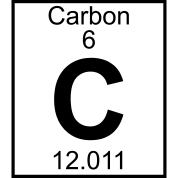
the basic structural unit of matter
atom
matter
element
nucleus
a collection of atoms of one type that cannot be broken down into simpler substances by ordinary chemical or physical means
element
subatomic particle
electron
matter
the positively charged subatomic particle contained in the nucleus of an atom
proton
neutron
electron
matter
a subatomic particle, contained in the nucleus of an atom, having the same mass as a proton but no electrical charge
proton
neutron
electron
matter
a negatively charged subatomic particle that orbits the nucleus of an atom
proton
neutron
electron
matter
a unique number for each element that equals the number of protons in an atom of that element
element name
element symbol
atomic number
atomic mass
the mass of an atom, calculated by adding the number of protons and neutrons in the nucleus of the atom
element name
element symbol
atomic number
atomic mass


What is the difference between Neon-20 and Neon-22?
They have different numbers of electrons.
They have different numbers of neutrons.
Only 1 is radioactive.
No difference.

How many neutrons are in 1 atom of Carbon-13?
6
13
7
20

How many protons are in an atom of Nitrogen-16?
7
9
16
If a proton is added or removed from an atom, what happens?
It becomes a different element.
It becomes a different isotope.
Nothing happens.

