
 Worksheets
ADV9: Test 2 Review (Water, Chem., Characteristics of LIfe)
Total questions: 155
Worksheet time: 2hrs 2mins
Which of the following is a term used to describe all the chemical reactions that take place in a living thing?
A plant growing towards a light source is an example of which of the following?
attracting a mate
destroying infectious germs
responding to a stimuli
obtaining moisture from the air
Infants will often smile when they hear a parent’s voice. In this situation, the parent’s voice is considered
stimulus
response
adaptation
resource
Identify all of the following that are living.
Volcano
Tree
Sun
Fungus
Identify all of the following that are nonliving.
Rock
Oxygen
Bacteria
Battery

Which characteristic of living things is represented in the picture?
Share similar chemicals
Grows and develops
Responds to stimuli
Evolves (as a population)

Which characteristic of living things is represented in the picture?
Respond to stimuli
Grow and develop
Evolution
Made of cells

The combination of chemical reactions through
which an organism builds up or breaks down
materials as it carries out its life processes is called ...
absorption
metabolism
digestion
consumption
Maintaining a stable internal
environment is called
homeostasis
equilibrium
balance
evenness

Completes all 8 characteristics of life
nonliving
living
dormant
dead
Once performed all 8 characteristics of life, but no longer does
nonliving
living
dormant
dead
Never did and never will perform the 8 characteristics of life.
living
nonliving
dead
dormant
Organism is living, but in a resting or inactive state. It will perform the 8 characteristics of life under the right conditions.
living
nonliving
dead
dormant
Make more of the same kind of organism.
reproduce
move
grow
consume nutrients
Organism goes through changes/phases/stages as they age.
grow
develop
span of life
eliminate waste
Define organism.
person
a living thing that show all 8 characteristics of life
something that lives in the sea
something that shows some characteristics of life
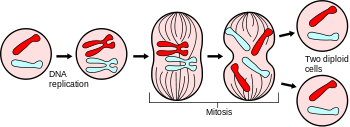
When cells are damaged, new cells are created by cell a process called cell division. How does the cell theory support this fact?
It states that all cells have a nucleus which divides.
It states that all living things are made up of one or more cells.
It states that cells come from previously existing cells.
It states that the basic units of structure and function are cells.
A/an ___________________ is a group os tissues that work together to perform a specific job.
organ
cell
organ system
organism
A collection of similar cell types that work together
Organelle
Tissue
Organ system
Cells
Which of the following is an example of a population?
All of the trees in a given area
All of the trees and soil in a given area
The trees together with the organisms that live in them
All of the blue jays living in a given area
An ecosystem is made up of biotic and abiotic factors. Biotic factors are known as _______________ organisms.
dead
living
nonliving
microscopic
What differentiates one community from another community?
weather
temperature
species
landscape
Which of the following is an example of an abiotic factor?
air
grass
bacteria
dead log

The community of a pond is made up of all the
resources organisms need.
habitats in and around the water.
populations of fish, insects, and other living organisms
Which of the following describes soil and temperature in a ecosystem?
abiotic factors
biotic factors
unneeded factors
Which of the following best describes a population?
members of the same species living in the same place at the same time
all the red birds in the an area
all types of organisms living in the same place
Which of the following components of an ecosystem are not abiotic factors?
wind
sunlight
tree branches

cell
tissue
organ
organ system

frogs, deer, birds, fish, and plants
organism
population
community
ecosystem

frogs, fish, insects, deer, birds, plants, plus water, rocks, soil, and air
organism
population
community
ecosystem
anything that can independently carry out life processes
organism
population
community
ecosystem
a community of organisms and their nonliving environment
organism
population
community
ecosystem
a combination of two or more tissues that work together to perform a specific function in the body
cell
tissue
organ
organ system
a group of similar cells that work together to perform a specific job in the body
cell
tissue
organ
organ system
a group of individuals of the same species that live together in the same area at the same time
organism
population
community
ecosystem
all of the populations of different species that live and interact in an area
organism
population
community
ecosystem
What is a molecule?
two elements bonded together (sharing electrons)
a mixture of different substances
smallest individual particles
salt mixed in water
What two subatomic particles are found in the nucleus?
proton and electron
electron and neutron
neutron and proton
neutron and electron
Which of the following is a chemical symbol?
H2O
O
NaCl
FeO
What is an ion?
a charged atom
an atom with different neutrons
atoms with no protons
atoms with no electrons
Where are electrons found?
the nucleus
next to the neutrons
the proton
orbiting the nucleus
Which correctly describes the smallest amount of an element?
Atom
Molecule
Compound
Proton
How would O2 be qualified. Check all answers that apply.
Atom
Molecule
Compound

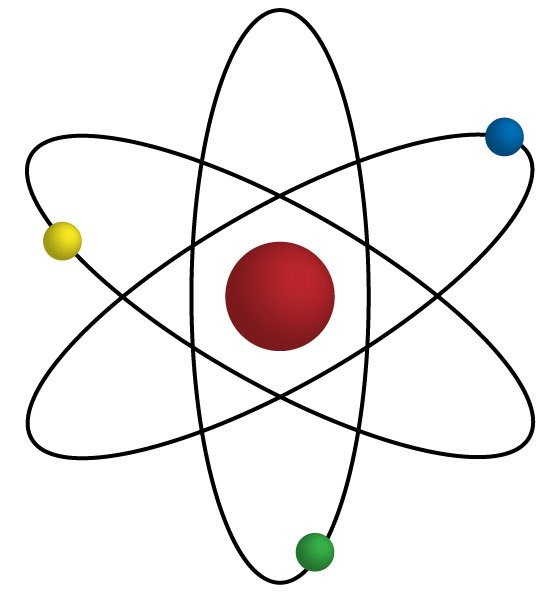

Which correctly describes the smallest amount of an element?
Atom
Molecule
Compound
Proton
Animals take in energy as __________ and convert it to ________, the energy cells can use.
Fat, ADP
Fat, ATP
Glucose, ADP
Glucose, ATP
When an atom loses an electron, it becomes a(n) _____________ ion.
positive
negative
neutral
polyatomic
Most of the mass of an atom is found in the ______.
nucleus
proton
electron cloud
isotope

How many electrons does silicon have?
28
14
0
10

Using the diagram as a reference, how many electrons does lithium have in its OUTER shell?
1
3
8
2

Using the diagram as a reference, how electrons does neon have in its OUTER shell?
10
8
2
6
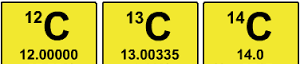
How do you calculate mass number?
Mass x percent
Protons + Electrons
Protons + Neutrons
Neutrons + Protons + Electrons
Which of these determines the identity of an atom?
proton
neutron
valence electron
protons and neutrons

_______ are atoms with the same number of protons but varying numbers of neutrons.
ions
elements
allotropes
isotopes
An atom with 3 valence electrons "wants" a full shell, so it can either gain 5 or lose 3. Which is more likely to occur?
Gain 5 valence electrons
Lose 3 valence electrons
Nothing, it is fine with 3 valence electrons
How do covalent bonds form?
By donating and receiving valence electrons between atoms.
Scientists still aren't sure.
Opposite slight charges attract each atom in the compound.
Sharing valence electrons between atoms
When an atom loses an electron, it becomes a
positive ion
negative ion
neutral ion
neutral atom
What type of bond involves the sharing of electrons between atoms?
covalent bond
ionic bond
metallic bond
transfer bond
What is a positive ion called?
anion
cation
isotope
covalent
What is a negative ion called?
anion
cation
covalent
isotope

Which particles change the charge in atoms when ions are formed?
Protons
Electrons
Neutrons
Cations are ions with _________ charge.
positive
negative
gains
loses
Atoms form compounds to become more ---
reactive
stable
explosive
toxic
According to the Octet Rule, atoms of elements react with each other in order to attain ____ electrons in their outermost energy level or shell.
2
4
8
10
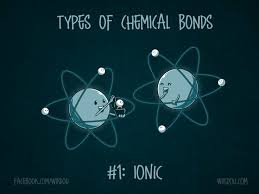

How many valence electrons are shown in the diagram?
16
7
6
2
The type of covalent bond that shares two electrons
single bond
double bond
triple bond
This refers to the tendency of atoms to prefer to have eight electrons in the valence shell
Octet rule
Valence electron
Electronegativity
Lewis symbol
Why do elements bond?
To be friends
To create a new element
To become stable
To get bigger
Triple covalent bonds occur when two atoms share____
one electrons
two electrons
three electrons
three protons

Is the molecule overall polar or nonpolar?
Polar
Nonpolar

Is the molecule overall polar or nonpolar?
Polar
Nonpolar

Is the molecule overall polar or nonpolar?
Polar
Nonpolar

Is the molecule overall polar or nonpolar?
Polar
Nonpolar

Is the molecule overall polar or nonpolar?
Polar
Nonpolar

Is the molecule overall polar or nonpolar?
Polar
Nonpolar

Is the molecule overall polar or nonpolar?
Polar
Nonpolar

Classify the following molecule.
polar covalent
nonpolar covalent
ionic

Is the following molecule polar or nonpolar?
polar covalent
nonpolar covalent
Ionic
Does "partially positive and negative charges" explain Polar or Nonpolar molecules?
Polar covalent
Nonpolar covalent
Both


Water is a polar molecule, which means it has a positive and a negative side. Hydrogen bonds form when:
The positive end of one water molecule bonds to the positive end of another water molecule.
The negative end of one water molecule bonds to the negative end of another water molecule.
The positive end of one water molecule bonds to the negative end of another water molecule.

The ability of water molecules to stick to each other, creating surface tension is called:
Cohesion
Adhesion
Insulation
Ph

The fact that water can stick to other substances is called:
Ph
Adhesion
Cohesion
Insulation

A insect like a water strider can skate along the top of a pond because:
covalent bonds result in water cohesion
hydrogen bonds result in water cohesion (surface tension)
low surface tension of water


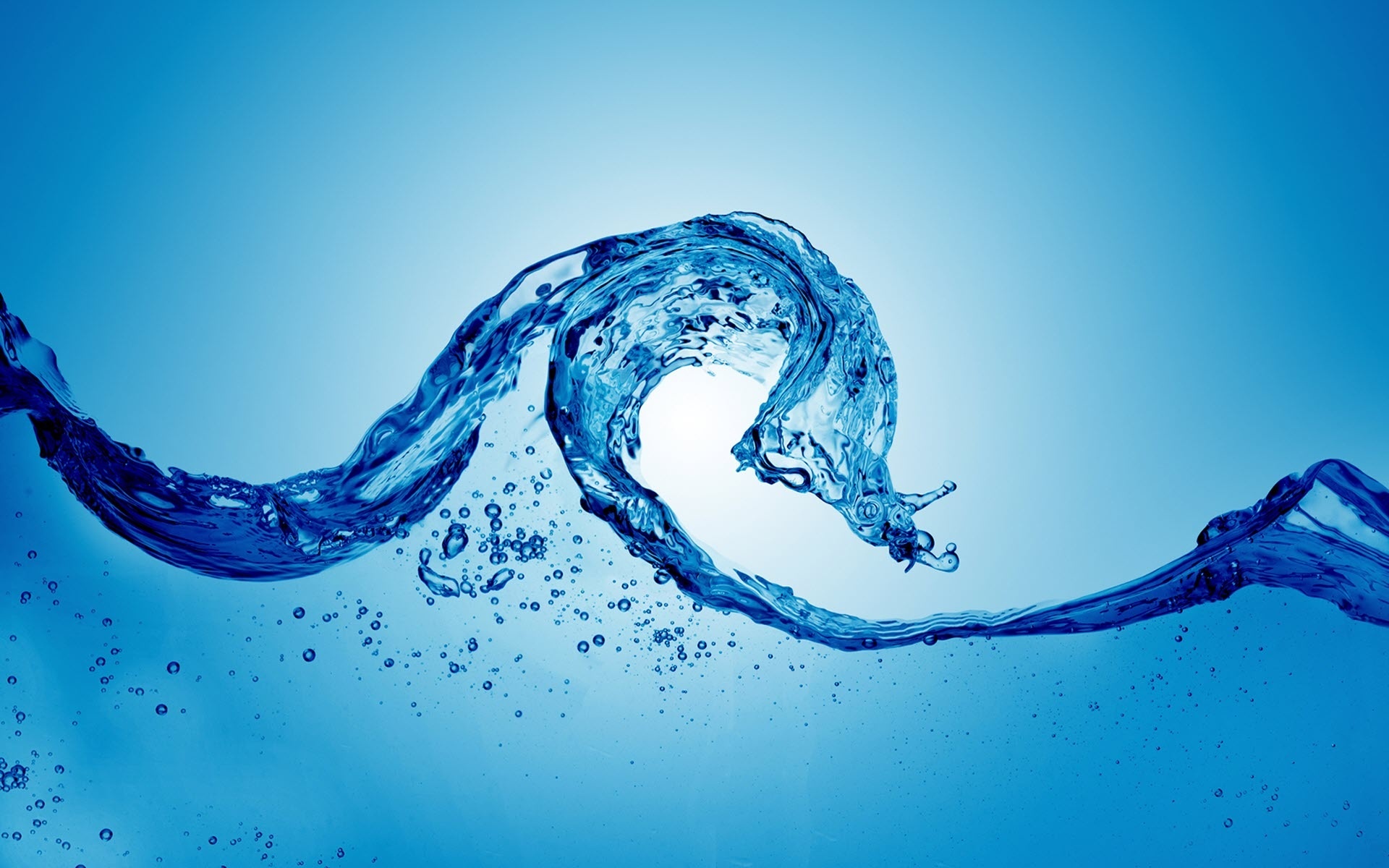
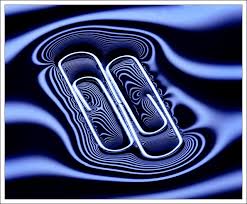

Capillary Action
The property of water that allows ice to float on the surface of liquid water
The property of water that allows it to dissolve polar substances
When water molecules stick to other surfaces
The property of water that allows water to move up a thin tube (or the stem of a plant) by itself

What property of water allows water to flow against gravity?
Polarity
Cohesion
Capillary Action
Adhesion
Water is a polar molecule. Which portion of water has a negative charge?
the hydrogens
the oxygen
both
neither
Which portion of a water molecule has a positive charge?
none of it
the hydrogens
the oxygen
all of it


Which side of the water molecule has a slightly positive charge?
Oxygen
Hydrogen
It's all positive
It's all negative

Which side of the water molecule has a slightly negative charge?
It's all negative
It's all positive
Hydrogen
Oxygen

True or False: Ice is Less Dense than Water
True
False

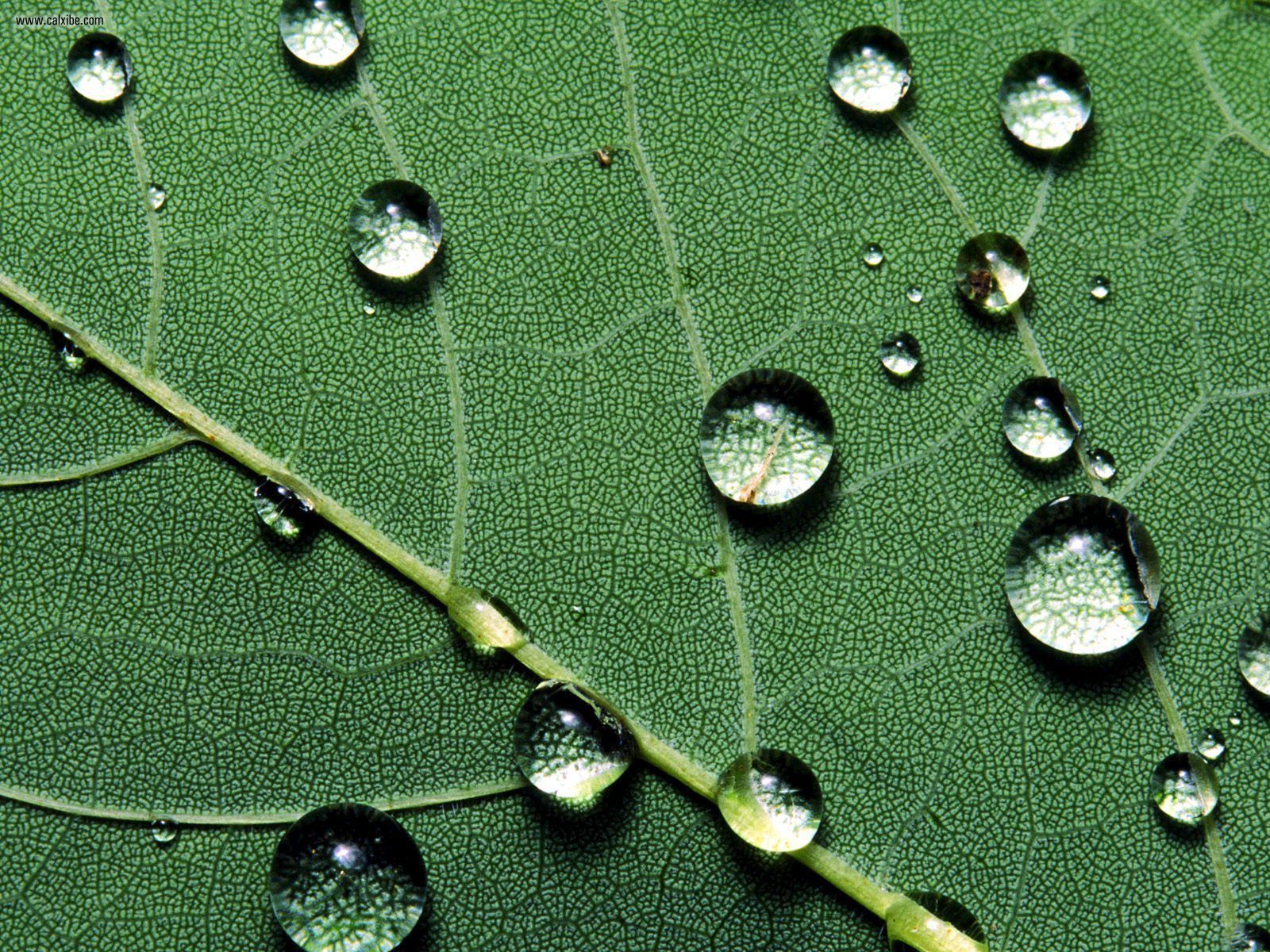
What water phenomenon can be observed in this photo?
Water dissolving
Capillary Action
Chemical Reaction
Photosynthesis

What characteristic is shown in the image?
Polarity
Hydrogen Bonds
Cohesion
Adhesion
Why can fish survive winters in a pond?
ice is less dense than liquid water so it will be on the top of a lake or pond allowing fish to swim beneath it
water is available in all 3 phases so ice will be on the top of a lake or pond allowing fish to swim beneath it
water is polar so ice will be on the top of a lake or pond allowing fish to swim beneath it
Adhesion so ice will be on the top of a lake or pond allowing fish to swim beneath it

Which letter represents hydrogen?
A
B
C
D
Water in its gas form is called ____________________,
water vapor
precipitation
ice
air
Water is polar. What does that mean?
it is a molecule with opposite charges on opposite ends
it is a molecule with no charge
it is a molecule with identical charges on opposite ends
it is a molecule with too many protons
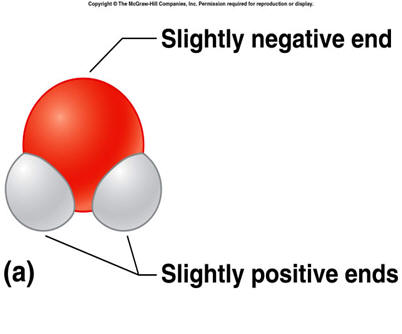
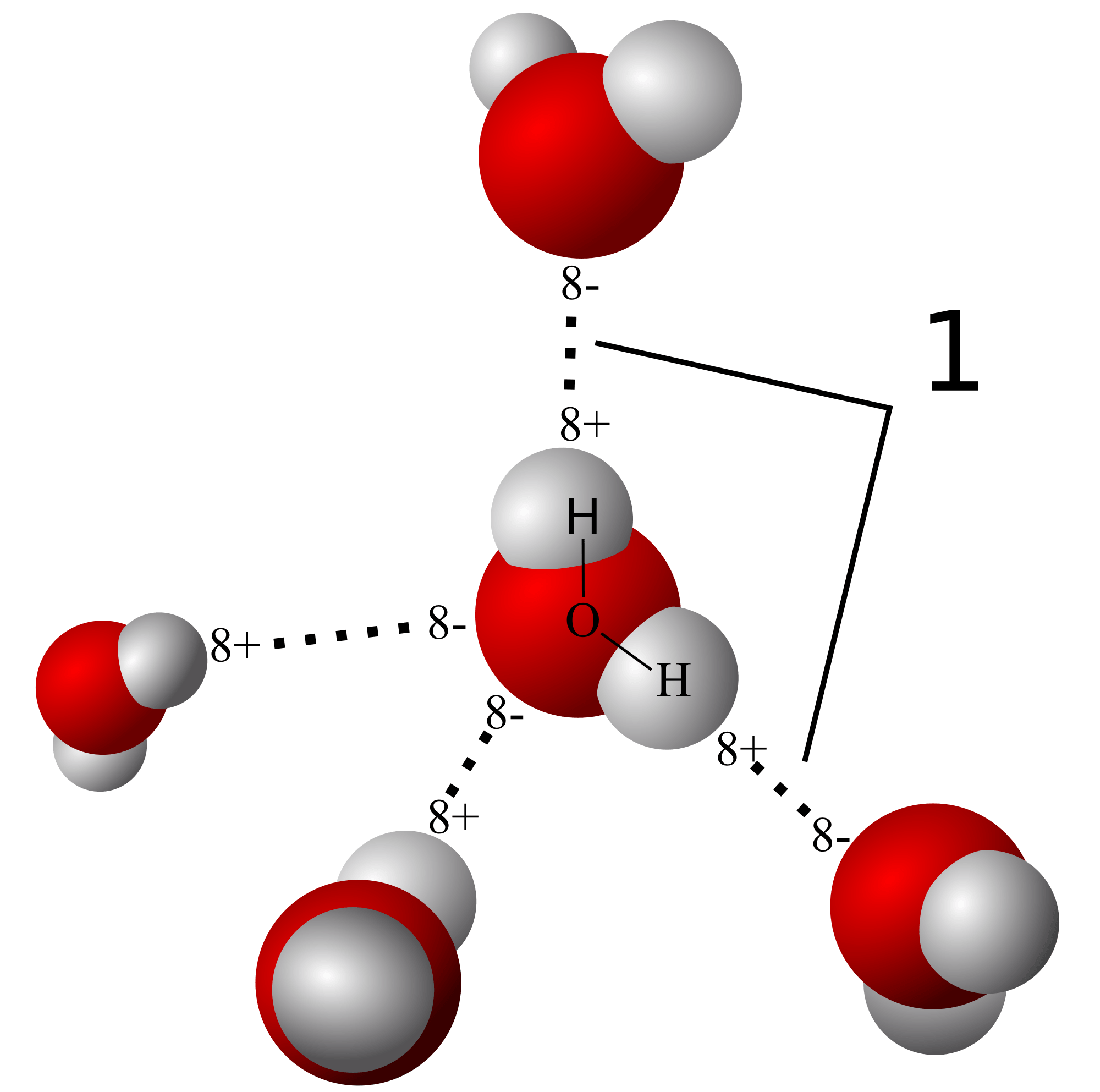
Which of the following can water NOT dissolve?
Salt
Sugar
Oil
Baking Soda
Which of the following can water NOT dissolve?
Ionic Compounds
Polar Compounds
Nonpolar Compounds
polar molecule means the molecule's charge is _________________.
neutral
the same as a non-polar molecule.
unevenly distributed
evenly distributed
What type of bond is between the one oxygen atom and the two hydrogen atoms in a water molecule?
ionic
dipole
hydrogen
covalent
The oxygen and hydrogen atoms share electrons but they do not share the electrons evenly.
True
False
Sometime True
Depends on the temperature
Why do the electrons spend a greater amount of time on the oxygen side of the molecule?
Because oxygen has 8 proton and hydrogen only has 1 proton.
Because oxygen and hydrogen form an ionic bond
Because hydrogen does not like electrons.
Electrons actually spend more time with the hydrogen than the oxygen.
What type of bonding gives water it's cohesion property?
covalent bonding
ionic bonding
hydrogen bonding
metallic bonding

