wayground logo

Free Printable Worksheets

Font size

S
M
L
XL
Worksheets

REVIEW: Biomolecules, DNA, Transport & Celle Cycle

Total questions: 65

Worksheet time: 2hrs 39mins

Name
Class
Date
1.
Which biomolecule is a main source of quick energy?
a)
Nucleic Acid
b)
Protein
c)
Lipid
d)
Carbohydrate
2.
Which biomolecule is found in fats, oils, and waxes and is a source of long-term energy
a)
Proteins
b)
Nucleic Acid
c)
Lipids
d)
Carbohydrate
3.
What is the function of a nucleic acid?
a)
Stores genetic information
b)
Stores energy
c)
Quick source of energy
d)
Builds structures
4.
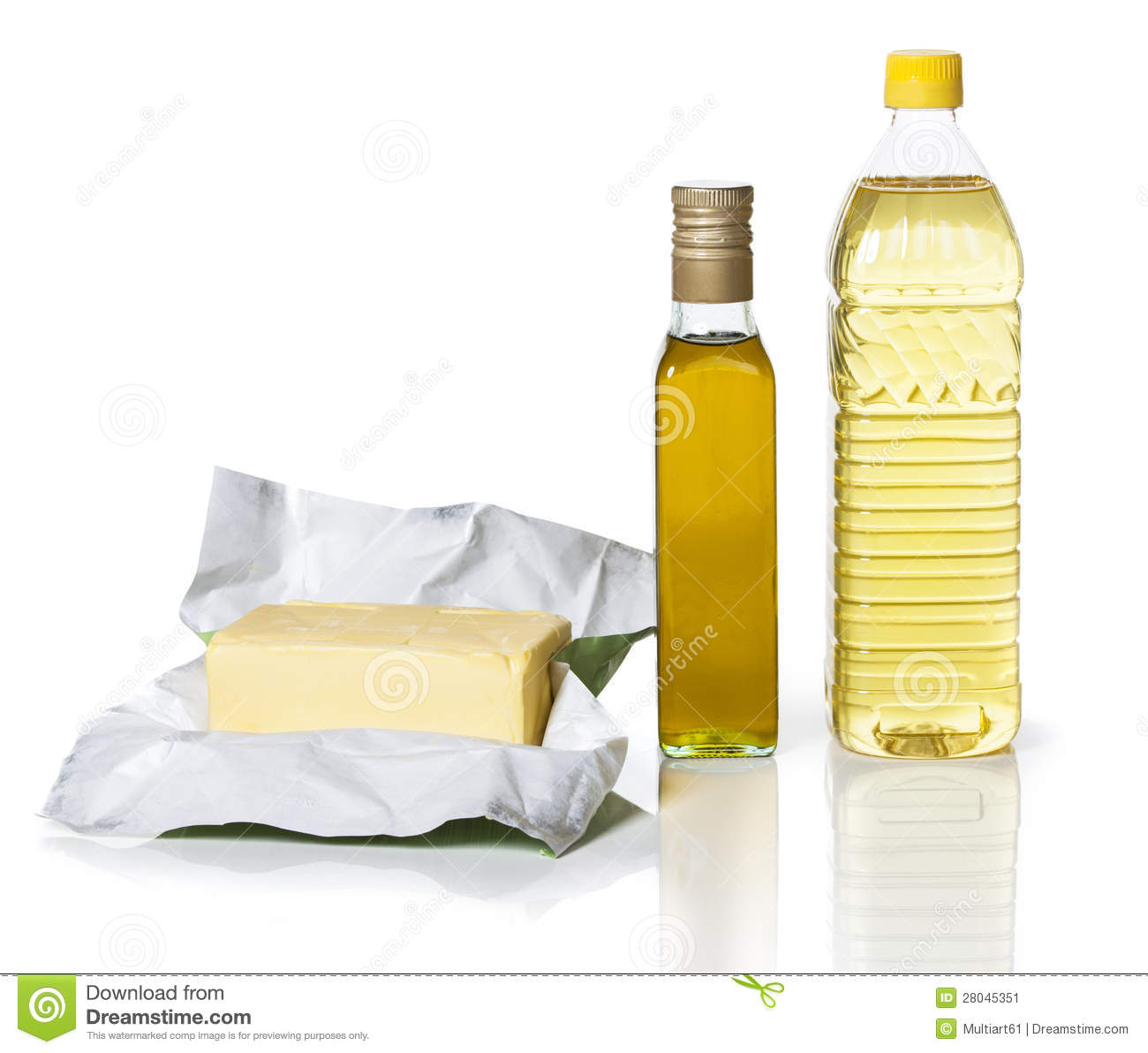
Which biomolecule is this a picture of?
a)
Protein
b)
Nucleic Acid
c)
Lipid
d)
Carbohydrate
5.
Nucleotides are monomer for
a)
Nucleic Acids
b)
Proteins
c)
Carbohydrates
d)
Lipids
6.
What is the functions of lipids?
a)
Quick source of energy
b)
Builds muscles, skin, enzymes
c)
Stores genetic information
d)
Stores energy, insulation, protection
7.
What is the monomer for a protein?
a)
Monosaccharide
b)
Triglyceride
c)
Amino Acid
d)
Nucleotide
8.

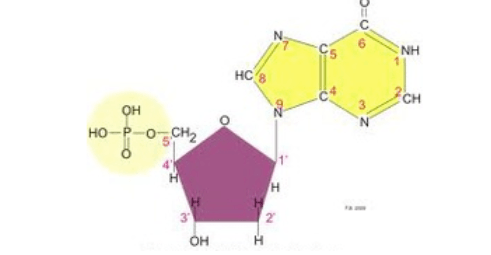
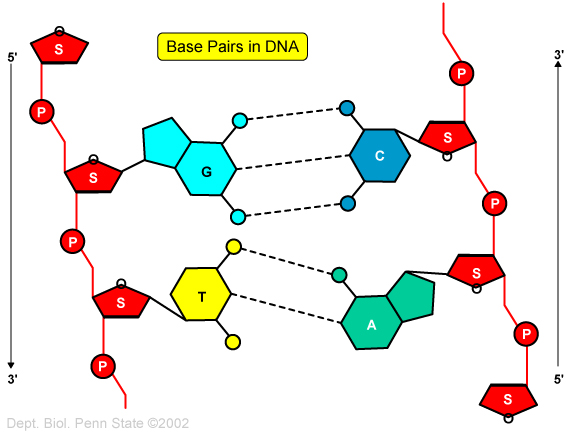
What are the three parts of the nucleotide shown here?

a)

Phosphate, sugar, base

b)

hydrocarbon chain, phosphate, sugar

c)

hydrocarbon chain, sugar, base

d)

hydrocarbon chain, magnesium, base

9.

Which biomolecule includes fats, such as triglycerides, oils, phospholipids, or cholesterol; insoluble in water; provides energy storage, insulation, part of cell membrane, and hormones

a)

Nucleic Acid

b)

Lipids

c)

Carbohydrate

d)

Protein

10.

What is the correct equation for photosynthesis?

a)

6CO2 (carbon dioxide) + 6H2O (water) + light energy = C6H12O6 (glucose) + 6O2 (oxygen)

b)

6O2 (oxygen) + C6H12O6 (glucose) + light energy = 6CO2 (carbon dioxide) + 6H2O (water)

11.

What is the relationship between respiration and photosynthesis?

a)

Respiration uses oxygen and produces carbon dioxide, while photosynthesis uses carbon dioxide and produces oxygen.

b)

Respiration occurs only in animals, while photosynthesis occurs only in plants.

12.
What are the reactants of photosynthesis?
a)
carbon dioxide and oxygen
b)
water and oxygen
c)
carbon dioxide and water
d)
water and glucose
13.
What are the products of photosynthesis?
a)
water and carbon dioxide
b)
oxygen and glucose
c)
oxygen and carbon dioxide
d)
oxygen and water
14.
Which organelle performs PHOTOSYNTHESIS?
a)
Chloroplast
b)
Mitochondria
15.
What are the two products of photosynthesis?
a)
Oxygen and Carbon Dioxide
b)

Oxygen and Sugar

c)
Sunlight and Sugar
16.
Where does photosynthesis take place in the plant cell?
a)
Nucleus
b)
Cytoplasm
c)

Chloroplast

d)
Mitochondria
17.
Movement of particles from high to low concentration. 
a)
Passive Transport
b)
Active Transport
18.
Osmosis is a form of ______________. 
a)
Passive Transport
b)
Active Transport
19.

Students are observing particles moving against the concentration gradient in a lab investigation. Which type of transport are they observing?

a)

osmosis

b)

active Transport

c)

facilitated diffusion

d)

diffusion

20.

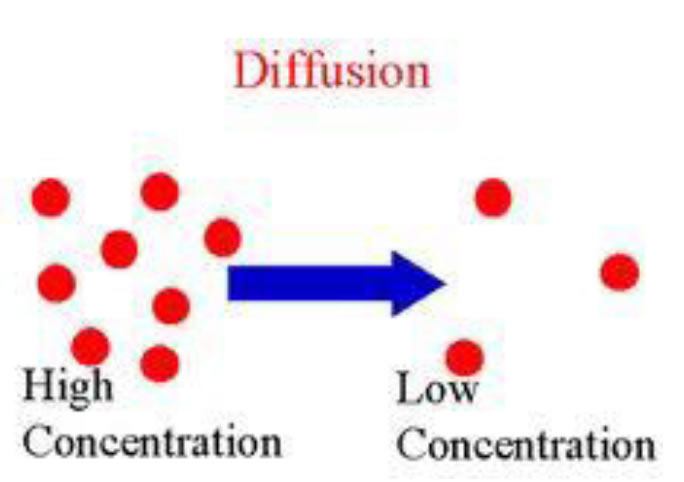
This picture shows molecules of red dye that have moved. What is this type of movement called?

a)

Osmosis; the water molecules are moving from high concentration to low

b)

Diffusion; the dye molecules are moving from low to high concentration

c)

Diffusion; the dye molecules are moving from high to low concentration.

d)

Facilitated diffusion; because the molecules are moving through a protein channel.

21.

Passive transport is when molecules move ________ the concentration gradient.

a)

against

b)

up

c)

down

d)

with

22.

Active transport is when molecules move ________ the concentration gradient.

a)

against

b)

up

c)

down

d)

with

23.

This picture is a representation of what type of transport?

a)

Osmosis because it is diffusing through a protein from an area of high concentration to low concentration.

b)

Facilitated diffusion because it is diffusing through a protein from an area of high concentration to low concentration.

c)

Facilitated diffusion because it is diffusing through a protein from an area of low concentration to high concentration.

d)

Simple diffusion because it is diffusing through a protein from an area of high concentration to low concentration.

24.

This a picture of an animal and plant cell placed in a solution. Describe the solution?

a)

Isotonic

b)

Hypotonic

c)

Hypertonic

25.

This a picture of an animal and plant cell placed in a solution. Describe the solution?

a)

Isotonic

b)

Hypotonic

c)

Hypertonic

26.

What type of solution was this plant placed in?

a)

hypertonic

b)

isotonic

c)

hypotonic

27.

The cell shrunk in size, which means it was placed in a ____ solution.

a)

Isotonic

b)

Hypertonic

c)

Hypotonic

28.

What part of the cell regulates what can enter and leave the cell?  

a)
Cell Membrane
b)
Nucleus
c)
Mitochondria
d)
Cytoplasm
29.
What type of transport is this?
a)
Endocytosis
b)
Diffusion
c)
Exocytosis
d)
Osmosis
30.
What type of transport is this?
a)
Endocytosis
b)
Facilitated Diffusion
c)
Active Transport Pump
d)
Osmosis
31.
What is the significance of the sequence (order) of the Nitrogen Bases in DNA?
a)
The order of the Nitrogen Bases determines the number of chromosomes present in an organism.
b)
The order of the Nitrogen Bases determines the traits that an organism will possess (have).
c)
The order of the Nitrogen Bases determines the gender of an organism.
d)
The order of the Nitrogen Bases determines whether an organism is abiotic biotic.
32.
What is meant by the phrase "DNA is universal"?
a)

All organisms possess DNA made up of the same 3 components.

b)
All organisms share the exact same DNA
c)
DNA can be found throughout the universe
d)

DNA is found in all living and nonliving things

33.
Which answer choice would by complementary (match up) with the DNA strand   
ATGCATTCGA
a)
ATGCATTCGA
b)
TACGTAAGCT
c)
TACCTAAGGA
d)
ATGCCATGAA
34.
What is a gene?
a)

histone proteins wrapped with long strands of deoxyribose

b)

chromatin inside the nucleus

c)

a piece of DNA that codes for a protein

d)

a chromosome of DNA

35.

The building blocks of DNA that consist of a phosphate-sugar backbone and a single nitrogenous base.

a)

Nucleotides

b)

Ribosomes

c)

Translation

d)

Replication

36.
What are the nucleotides made of?
a)
Sugar, Phosphate, nitrogen base
b)
Phosphate, Adenine, nitrogen base
c)
Thymine, Adenine, Cytomine
d)
Phosphate, Nitrogen, Adenine
37.
Which 2 molecules forms the sides (backbone) of the DNA ladder?
a)
deoxyribose and adenine
b)
deoxyribose and a hydrogen bond
c)
sugar and the nucleus
d)
deoxyribose (sugar) and phosphate
38.

Which of the following base pairings is correct?

a)

T-T, C-A

b)

A-T, C-C

c)

A-T, C-G

d)

C-G, C-C

39.
Which sequence of DNA bases would pair with this partial strand
ATG TGA CAG
a)
ATG TGA CAG
b)
TAC ACT GTC
c)
GTA AGT GAC
d)
CAT TCA CTG
40.
Nitrogenous bases are joined by which type of bond?
a)
polar bonds
b)
ionic bonds
c)
covalent bonds
d)
hydrogen bonds
41.
In what phase of the cell cycle does DNA replication take place?
a)
G1
b)
S
c)
G2
d)
M
42.
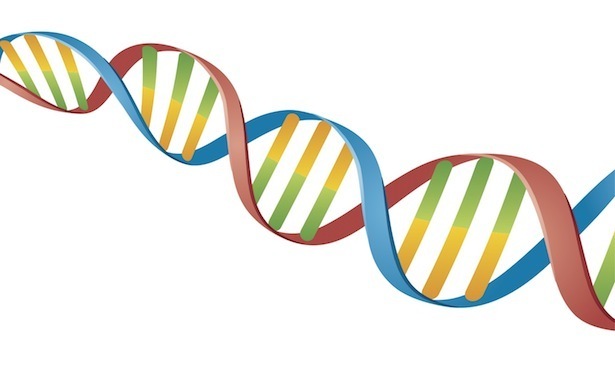
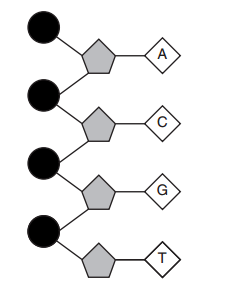
The diagram below represents a portion of a DNA molecule. The letters represent different types of 
a)

sugars

b)
nitrogen bases
c)

nucleic acids

d)
proteins
43.
During which phase of the cell cycle does the cell spend the most time?
a)
Mitosis
b)
Cytokinesis
c)
Interphase
44.
During which part of the cell cycle is DNA copied?
a)
Mitosis
b)
Cytokinesis
c)
S phase
45.
Which phase of mitosis is shown in the picture?
a)
Prophase
b)
Anaphase
c)
Telophase
46.
Which phase of mitosis is shown in the picture?
a)
Interphase
b)
Metaphase
c)
Telophase
47.
Which phase of mitosis is shown in the picture?
a)
Prophase
b)
Metaphase
c)
Anaphase
48.
Which phase of mitosis is shown in the picture?
a)
Prophase
b)
Telophase
c)
Metaphase
49.
What is shown in the picture?
a)
Mitosis
b)
Interphase
c)
Cytokinesis
50.

Uncontrolled cell division which usually leads to tumors and disease is called:

a)

Metaphase

b)

Cytokinesis

c)

Cancer

d)

Diabetes

51.

What happens during interphase?

a)

Cell growth, DNA replication, and preparation for cell division

b)

Cell death, DNA replication, and preparation for cell division

c)

Cell growth, DNA repair, and preparation for cell division

d)

Cell division, DNA replication, and preparation for cell growth

52.

What is the purpose of cytokinesis?

a)

The purpose of cytokinesis is to divide the cytoplasm of a cell into two daughter cells.

b)

The purpose of cytokinesis is to regulate cell division.

c)

The purpose of cytokinesis is to transport nutrients within a cell.

d)

The purpose of cytokinesis is to replicate the DNA of a cell.

53.

What are the consequences of uncontrolled cell division?

a)

Inflammation

b)

Tumors or cancer

c)

Hair loss

d)

Weight gain

54.

What is the purpose of the S phase in the cell cycle?

a)

Cell division

b)

Protein synthesis

c)

Cell differentiation

d)

DNA replication

55.

What are the different phases of mitosis?

a)

prophase, metaphase, telophase, cytokinesis

b)

interphase, prophase, metaphase, anaphase

c)

prophase, metaphase, anaphase, interphase

d)

prophase, metaphase, anaphase, telophase

56.

What is the role of the spindle fibers in mitosis?

a)

Spindle fibers play no role in mitosis.

b)

Spindle fibers separate the chromosomes during mitosis.

c)

Spindle fibers assist in the formation of the cell plate during mitosis.

d)

Spindle fibers help to hold the chromosomes together during mitosis.

57.
What stage is this?
a)
Prophase
b)
Metaphase
c)
Anaphase
d)
Telophase
58.
What stage is this?
a)
Prophase
b)
Metaphase
c)
Anaphase
d)
Telophase
59.
What is the result of mitosis?
a)
1 cell
b)
2 genetically identical cells
c)
2 genetically different cells
d)
4 genetically identical cells
60.

Reorder the following stages of mitosis in order from start to finish.

a)

Prophase

b)

Metaphase

c)

Anaphase

d)

Telophase

1)
2)
3)
4)
61.

What stage of the cell cycle is this?

a)

Prophase

b)

Metaphase

c)

Telophase

d)

Anaphase

62.
Which sequence of DNA bases would pair with this partial strand
ATG TGA CAG
a)
ATG TGA CAG
b)
TAC ACT GTC
c)
GTA AGT GAC
d)
CAT TCA CTG
63.
order of replication
a)
3, 2, 1, 4
b)
2, 1, 4, 3
c)
2, 3, 1, 4
d)
3, 4, 1, 2
64.
During osmosis
a)
water moves from high to low concentration
b)
large or oddly shaped molecules move across a cell membrane
c)
water moves when energy is used
d)
proteins are built
65.
Passive transport requires no
a)
concentration gradients
b)
osmosis
c)
motion
d)
energy