
 Worksheets
Practice for October Assessments Part 1
Total questions: 124
Worksheet time: 1hrs 21mins
Uses sunlight to create glucose sugar
Chloroplast
Breaks down waste using Digestive Enzymes
Lysosome
Converts glucose into usable energy
Mitochondria
Modifies, sorts, and packages proteins
Golgi Apparatus Body
The smallest unit of an organism, it is enclosed by a membrane and performs life functions
cell
nucleus
mitochondria
cytoplasm
Offers Support and structure to the cell
Cell Wall
Controls what may enter or leave the cell
Cell Membrane
Storage site of water and nutrients
Vacuole
A gel-like fluid that fills empty space in the cell
Cytoplasm
They actually do not have an important role
They protect the cell
They are the brain of the cell
storage area for cells; water storage in plants; stores waste
Which one of these is not a part of an animal cell?
Nucleus
Cytoplasm
Cell wall
Cell membrane
Which part helps plants with the process of photosynthesis?
Vacuole
Nucleus
Cytoplasm
Chloroplast
What is the job of a cell membrane?
To give them a strong shape
To make food
To control the entry and exit of substances
To release energy
Respiration is a vital function that all living things carry out.
True
False
Respiration takes place in
the cells
the lungs
the heart
the brain
Respiration is a chemical reaction.
True
False

For respiration to take place glucose needs to react with substance A. Select substance A.
Carbon dioxide
Water
Oxygen
Ozone

When respiration takes place, energy is produced along with another two substances B and C. Select substances B and C.
Carbon dioxide
Water
Oxygen
Hydrogen
The glucose used during respiration is provided by our
digestive system
respiratory system
circulatory system
The oxygen used during respiration is provided by our
digestive system
respiratory system
circulatory system

During exercise our body needs to produce more energy by respiration thus it needs
less oxygen
more oxygen
During exercise our body needs to produce more energy by respiration thus it needs more oxygen. Our breathing rate
increases
decreases
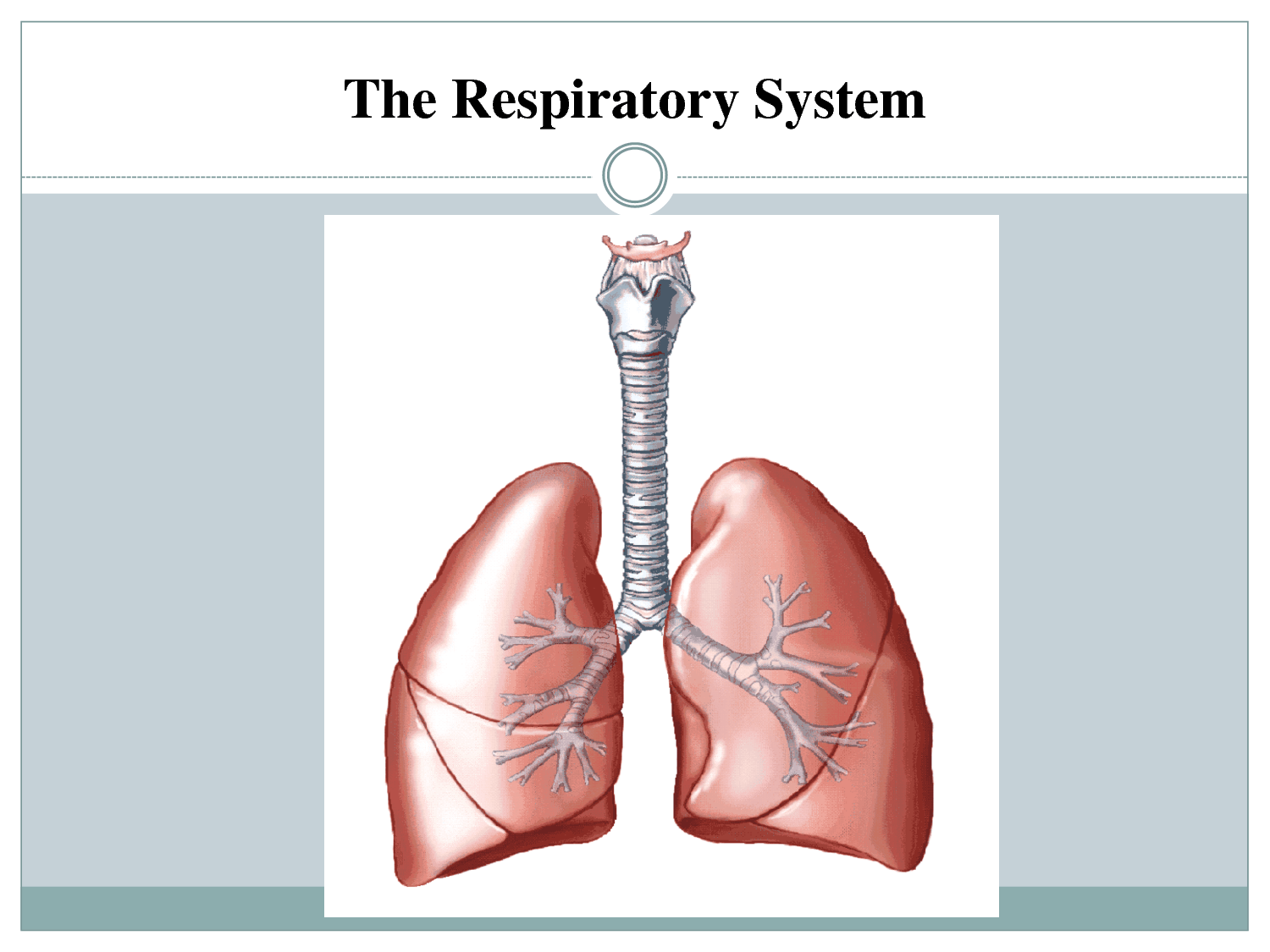
What is the main function of the respiratory system?
to provide oxygen and remove carbon dioxide from the body
o break down food and absorb nutrients
to remove oxygen from the body and deliver carbon dioxide
Which of the following represents the process of cellular respiration?
Glucose + water + oxygen --> carbon dioxide + energy
Carbon dioxide + water + energy --> glucose + oxygen
Glucose + oxygen --> carbon dioxide + water + energy
Glucose + water + carbon dioxide --> oxygen + energy

Where does cellular respiration take place?
Mitochondria
Cell Membrane
Nucleus
Ribosomes
Where do plants get the energy for photosynthesis to take place?
nutrients in the soil
the sun
chlorophyll
bee pollination
True or False: Plants make their own food and use the energy from the food that is made.
True
False
Plant cells make their own food by taking in
oxygen and water.
oxygen and hydrogen.
carbon dioxide and water.
carbon dioxide and oxygen.
In what organelle does photosynthesis take place?
chlorophyll
chloroplast
mitochondria
nucleus
What do plants need to perform photosynthesis?
Love
Soil with a high nitrogen (N) content
Water (H2O) + Carbon Dioxide (CO2) and Sunlight Energy
Pollinators such as bees and hummingbirds
Photosynthesis is a biological process that occurs in autotrophs. Which of the following is produced as a result of photosynthesis?
Water and light
Glucose and chlorophyll
Glucose and oxygen
Carbon dioxide and water
Which pH value indicates the most basic solution?
7
8
3
11
Which is the most likely pH for a solution of a weak acid?
1
5
11
14
If a solution is acidic, it can be neutralized by adding
a stronger acid
heat
a base
a weaker acid
When the pH of a solution becomes more basic, the number on the pH scale
decreases
increases
stays the same
triples
What is the pH of a solution that results from the complete neutralization of an HCl solution with a KOH solution?
1
7
10
4
Which solution reacts with LiOH to produce a salt and water?
KCl
CaO
NaOH
H2SO4
When an acid and a base are mixed, what is the reaction called?
Neutralization
Hydrolyzed
Hydro Ionization
A salt and a water reaction

What base has a pH of 8.5?
Blood
Soap
Baking Soda
Drain Cleaner

Lemons would be classified as a
Strong base
Weak Base
Strong Acid
Weak Acid
In a water solution, how do acids differ from bases?
Acids form salts, but bases do not
Acids turn litmus blue, while bases turn litmus red
Acids form hydrogen ions (H+), while bases form hydroxide ions (OH-)
Bases form salts, but acids do not
Marti took a balloon and filled it with 14 grams of baking soda. She then put 40 mL of vinegar into an empty water bottle. Marti stretched the balloon onto the top of the bottle and recorded the mass. She then flipped the balloon up so the baking soda fell into the vinegar. She observed it bubbling and could hear it fizzing. Marti laughed as the balloon filled with the carbon dioxide that was given off. After the reaction stopped, on the bottom of the bottle, Marti notices a white and clear substance. She remembers that she had learned that when you mix an acid (Vinegar) and a base (baking soda), you create
acid and metal
acid and base
base and water
salt and water
Which pH value indicates the most basic solution?
7
8
3
11
Which is the most likely pH for a solution of a weak acid?
1
5
11
14
If a solution is acidic, it can be neutralized by adding
a stronger acid
heat
a base
a weaker acid
When the pH of a solution becomes more basic, the number on the pH scale
decreases
increases
stays the same
triples
What is the pH of a solution that results from the complete neutralization of an HCl solution with a KOH solution?
1
7
10
4
Which solution reacts with LiOH to produce a salt and water?
KCl
CaO
NaOH
H2SO4
When an acid and a base are mixed, what is the reaction called?
Neutralization
Hydrolyzed
Hydro Ionization
A salt and a water reaction
What base has a pH of 8.5?
Blood
Soap
Baking Soda
Drain Cleaner
Lemons would be classified as a
Strong base
Weak Base
Strong Acid
Weak Acid
In a water solution, how do acids differ from bases?
Acids form salts, but bases do not
Acids turn litmus blue, while bases turn litmus red
Acids form hydrogen ions (H+), while bases form hydroxide ions (OH-)
Bases form salts, but acids do not
Marti took a balloon and filled it with 14 grams of baking soda. She then put 40 mL of vinegar into an empty water bottle. Marti stretched the balloon onto the top of the bottle and recorded the mass. She then flipped the balloon up so the baking soda fell into the vinegar. She observed it bubbling and could hear it fizzing. Marti laughed as the balloon filled with the carbon dioxide that was given off. After the reaction stopped, on the bottom of the bottle, Marti notices a white and clear substance. She remembers that she had learned that when you mix an acid (Vinegar) and a base (baking soda), you create
acid and metal
acid and base
base and water
salt and water
What pH is the strongest base?
1
7
4
14

What test can the students perform to correctly and safely identify acids and bases? They used litmus paper. The blue litmus turned red which indicates.......?
Base
Neutral
alkaline
acid

A student uses litmus to test an unknown substance. The red litmus turns blue which indicates. the solution is .......?
Base
Neutral
Acid
positive hydrogen

Which of the following would increase the rate of a chemical reaction?
Freezing the chemicals
Increasing the temperature of the reagents
Removing a catalyst
Using less chemicals

Which of the following would increase the rate of a chemical reaction?
Removing a catalyst
Diluting the chemicals
Decreasing the temperature
Adding a catalyst

Which colour on the graph would represent the solution with the higher temperature?
Red
Blue
None
Both

Which colour on the graph would represent the solution with a catalyst?
Red
Blue
Both
None

Which of the following would increase the rate of CO2 made using marble chips and HCl?
Lowering the temperature
Crushing the marble chips
Using less acid
Using bigger marble chips

Which of the following lines represents the chemical with the lower concentration?
Red
Blue
Both
None
A chemical reaction in which energy is absorbed is ______________.
an endothermic reaction
an exothermic reaction
a single replacement reaction
a double replacement reaction
A chemical reaction in which energy is released or removed is ______________.
endothermic
exothermic

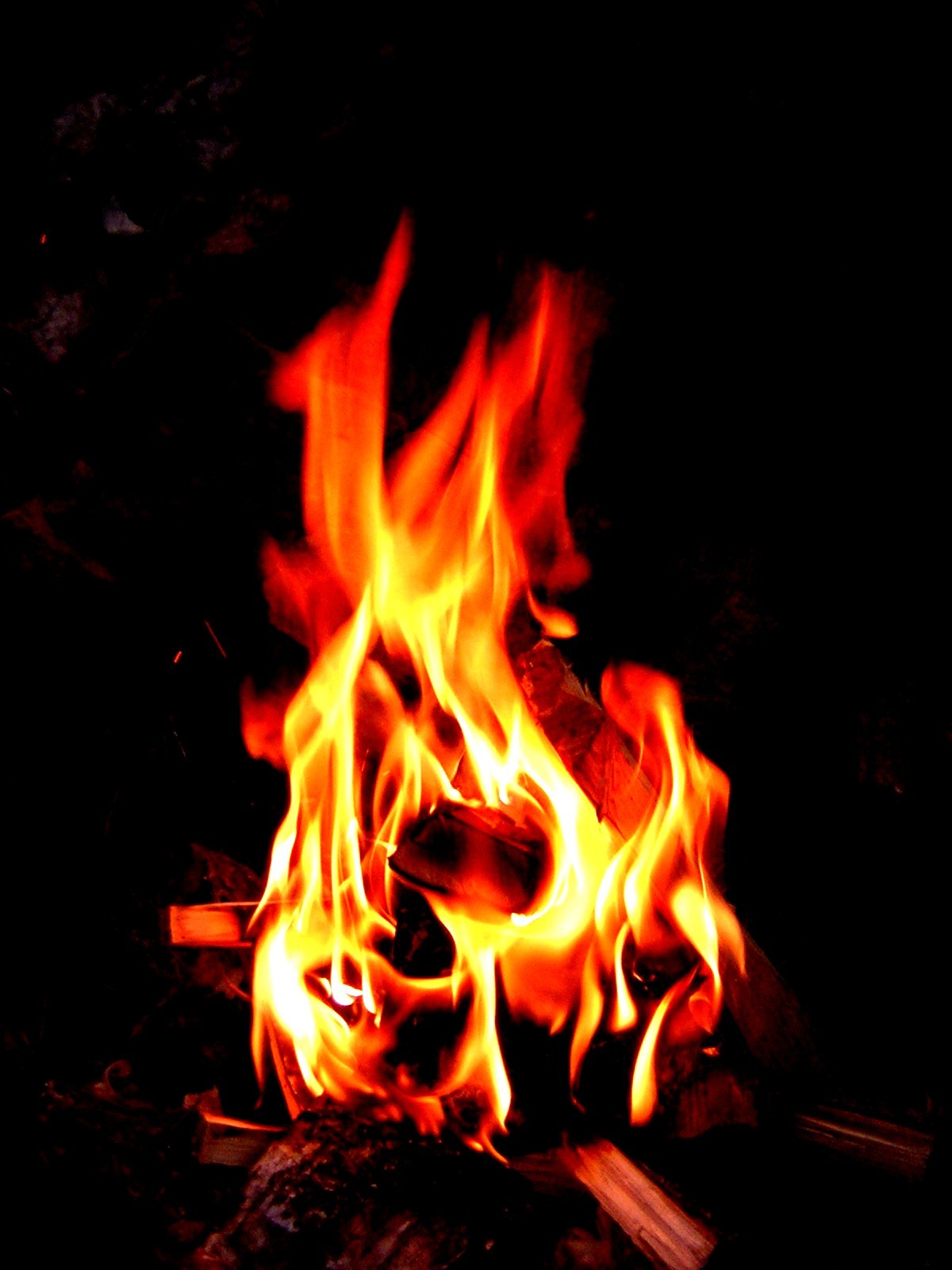
_____ reactions usually feel hot!
endothermic
exothermic
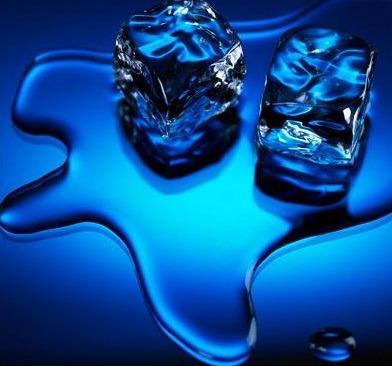
____ reactions usually feel cold.
endothermic
exothermic

The graph above is from which type of reaction?
Endothermic reaction
Exothermic Reaction

The graph above is from which type of reaction?
Endothermic reaction
Exothermic reaction
Solid --> liquid --> gas is what type of reaction?
endothermic
exothermic
catalytic
inhibited
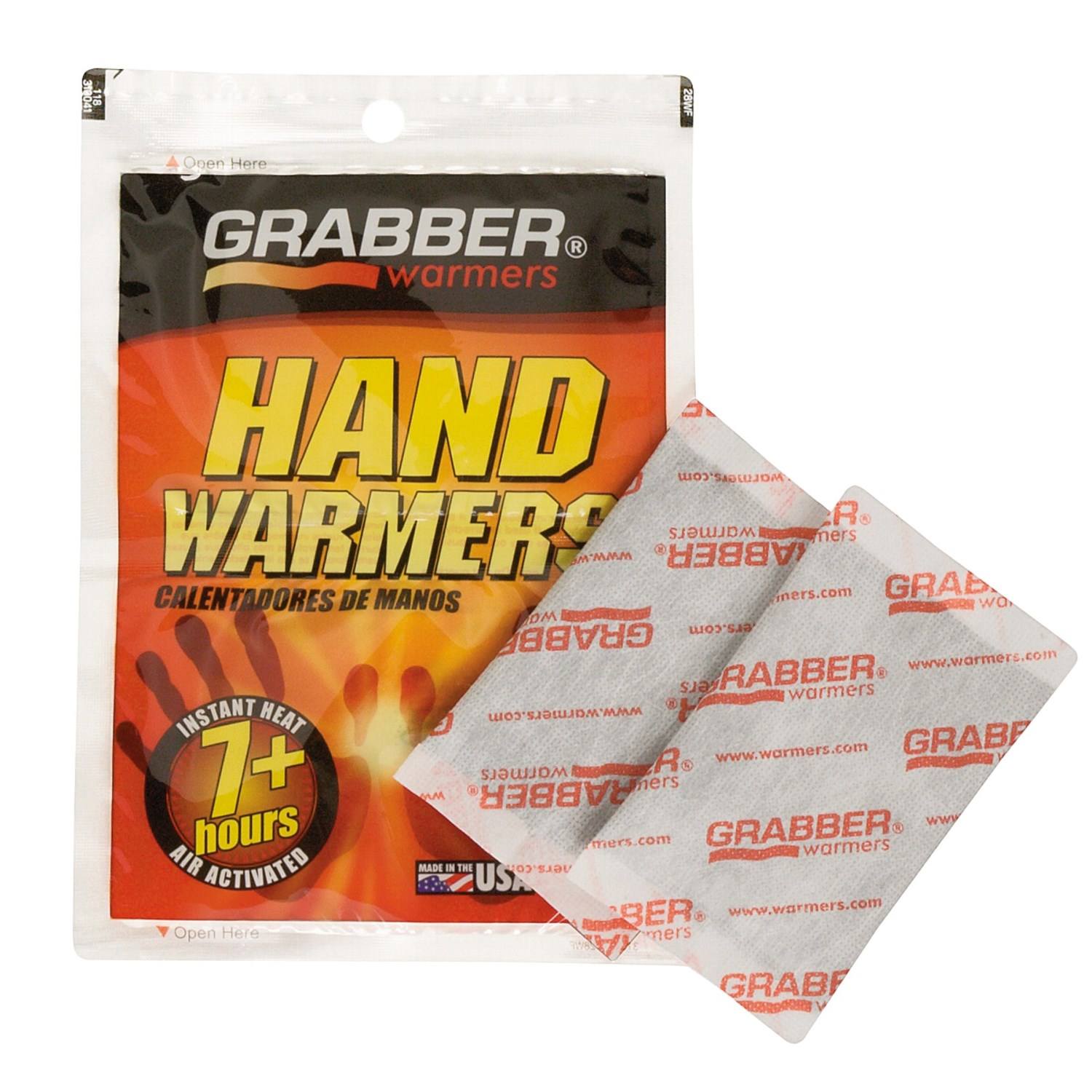
What does a catalyst do in a chemical reaction?
Increases the activation energy
Decreases the activation energy
Increases the temperature
Decreases the temperature
What is the energy that the reactants need in order to collide successfully called?
Activation energy
Kinetic energy
Chemical energy
Potential energy
What factor can be used to control the rate of a reaction by increasing the surface area of a solid reactant?
Increasing the concentration of a reactant in solution
Increasing the surface area of a solid reactant
Increasing the energy (heat)
Increasing the pressure of a gaseous reactant
What is the concept of energy as the ability to do work?
Ability to do work over time
Ability to do work over distance
Ability to do work over area
Ability to do work over volume
What factor affects the rate of a reaction by changing the concentration of a reactant in solution?
Increasing the temperature
Increasing the pressure of a gaseous reactant
Increasing the surface area of a solid reactant
Increasing the concentration of a reactant in solution
What is the concept of activation energy in a chemical reaction?
Energy released during a reaction
Energy absorbed during a reaction
Energy required to initiate a reaction
Energy stored in the reactants
A temperature increase causes the particles ......
to slow down
move faster
collide higher
in the right order
How does a catalyst work in speeding up a reaction?
By lowering the activation energy or reaction
by giving them more energy
by making them more available

The ______________is required to break the bonds of the reactants.
Carbonic energy
Activation energy
Plutonic energy
Energi Gaib

Which of the following would increase the rate of CO2 made using marble chips and HCl?
Lowering the temperature
Crushing the marble chips
Using less acid
Using bigger marble chips
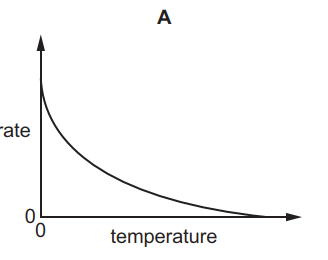
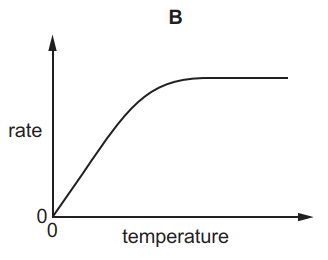
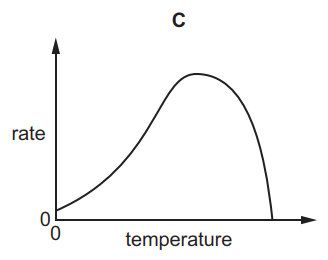
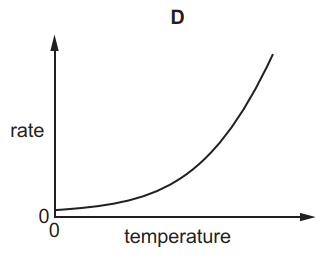
Which graph shows the effect of increasing temperature on the rate of reaction of calcium carbonate with dilute hydrochloric acid?

Which of the following would increase the rate of a chemical reaction?
Freezing the chemicals
Increasing the temperature of the reagents
Removing a catalyst
Using less chemicals
Which of the following would increase the rate of a chemical reaction?
Removing a catalyst
Diluting the chemicals
Decreasing the temperature
Adding a catalyst
Which colour on the graph would represent the solution with the higher temperature?
Red
Blue
None
Both
Which colour on the graph would represent the solution with a catalyst?
Red
Blue
Both
None
Which of the following would increase the rate of CO2 made using marble chips and HCl?
Lowering the temperature
Crushing the marble chips
Using less acid
Using bigger marble chips
Which of the following lines represents the chemical with the lower concentration?
Red
Blue
Both
None
A chemical reaction in which energy is absorbed is ______________.
an endothermic reaction
an exothermic reaction
a single replacement reaction
a double replacement reaction
A chemical reaction in which energy is released or removed is ______________.
endothermic
exothermic
_____ reactions usually feel hot!
endothermic
exothermic
____ reactions usually feel cold.
endothermic
exothermic
The graph above is from which type of reaction?
Endothermic reaction
Exothermic Reaction
The graph above is from which type of reaction?
Endothermic reaction
Exothermic reaction
Solid --> liquid --> gas is what type of reaction?
endothermic
exothermic
catalytic
inhibited
What does a catalyst do in a chemical reaction?
Increases the activation energy
Decreases the activation energy
Increases the temperature
Decreases the temperature
What is the energy that the reactants need in order to collide successfully called?
Activation energy
Kinetic energy
Chemical energy
Potential energy
What factor can be used to control the rate of a reaction by increasing the surface area of a solid reactant?
Increasing the concentration of a reactant in solution
Increasing the surface area of a solid reactant
Increasing the energy (heat)
Increasing the pressure of a gaseous reactant
What is the concept of energy as the ability to do work?
Ability to do work over time
Ability to do work over distance
Ability to do work over area
Ability to do work over volume
What factor affects the rate of a reaction by changing the concentration of a reactant in solution?
Increasing the temperature
Increasing the pressure of a gaseous reactant
Increasing the surface area of a solid reactant
Increasing the concentration of a reactant in solution
What is the concept of activation energy in a chemical reaction?
Energy released during a reaction
Energy absorbed during a reaction
Energy required to initiate a reaction
Energy stored in the reactants
A temperature increase causes the particles ......
to slow down
move faster
collide higher
in the right order
How does a catalyst work in speeding up a reaction?
By lowering the activation energy or reaction
by giving them more energy
by making them more available
The ______________is required to break the bonds of the reactants.
Carbonic energy
Activation energy
Plutonic energy
Energi Gaib
Which of the following would increase the rate of CO2 made using marble chips and HCl?
Lowering the temperature
Crushing the marble chips
Using less acid
Using bigger marble chips
Which graph shows the effect of increasing temperature on the rate of reaction of calcium carbonate with dilute hydrochloric acid?

