
 Worksheets
Biology Check-In / Midterm Review 1
Total questions: 145
Worksheet time: 5hrs 6mins
A scientist has discovered an unidentified organism. Cell theory states that which of the following must be true about this new living thing?
It cells come from preexisting cells.
All its cells have different functions.
It will not be made up of cells.
All its cells are considered nonliving.
Many scientists, including Matthias Schleiden and Theodor Schwann, contributed to cell theory. Which of the following is NOT one of the basic tenets of cell theory?
Cells are basic units of organisms.
All living things are composed of cells.
Cells can only arise from other cells.
All cells must eventually die.
What sort of evidence would support at least one of the components of cell theory?
Rocks and other nonliving things are not composed of cells.
Cells are observed converting one form of energy into another.
A microscope is necessary to make observations of nearly all cells.
The origin of all cells observed can be traced to previous cells.
Between 15,000 and 18,000 new species of organisms are discovered each year. Cell theory states that which of the following must be true about each new kind of organism?
It must be made up of one or more cells.
It cells must be able to make their own food.
All its cells must perform the same function.
Some of its cells must include a cell wall.

What can be concluded regarding the relationship between temperature and enzyme activity?
Temperature changes the kind of enzyme required for a reaction.
Enzymes function best in a small range of temperatures.
Increasing temperature causes a decrease in enzyme activity.
Enzymes will catalyze any reaction at any temperature.
Enzymes are biological substances, known as catalytic proteins. Which of the following is NOT a characteristic of enzymes?
Enzymes catalyze reactions by lowering the activation energy
Enzymes can react with any reactant.
The structure of the enzyme determines the chemical reaction.
The enzymes bind to the active site of the substrate.
Which graph below correctly represents the effect of an enzyme on the minimum amount of energy needed to start the chemical reaction in which it is involved?

Graph A

Graph B

Graph C

Graph D
The reactants that enzymes act upon are called substrates. Which of the following is true of enzymes and substrates?
Activation energy increases with the use of an enzyme.
Any location on the substrate works as a binding site.
The shape of an enzyme allows it to bind with specific substrates.
Enzymes can only be used once per substrate.
Which characteristic explains the similarity between proteins and lipids?
Contain nitrogen as part of their structure
Are composed of fatty acid chains
Are made up of chains of smaller subunits
Act as enzymes and contain peptide bonds

The table shown here describes the characteristics of a biomolecule. What biomolecule is described by these characteristics?
Protein
Carbohydrate
Nucleic acid
Lipid

This illustration provided here shows the components and structure of a biomolecule. What information shown in the diagram provides the best evidence that his biomolecule is a nucleic acid?
The numbers of hydrogen, carbon, and oxygen are in a 1:2:1 ratio
The presence of a phosphate, sugar, and nitrogenous base
The number of hydrogen ions relative to the amount of carbon
The presence of amine, carboxyl, and side chain groups
Which of the following matches the correct biomolecule with its function?
Lipids: molecules that build the genetic code
Carbohydrates: used as the primary source of energy
Proteins: help grow and repair tissue
Nucleic acids: move substances into and out of the cell

The diagram shown is of a biomolecule. Biomolecules can be identified by their components and structure. What information provided by the diagram indicates that his biomolecule is a protein?
The shape of the molecule allowing the side chain group on top
The amount of carbon relative to the amount of hydrogen
The presence of amine, carboxyl, and side chain groups
The double-bonded carbon and oxygen in the carboxyl group
Which of the following are the molecules that make up muscles and organs, transmit signals between cells, and constitute immune molecules?
Nucleic acids
Fatty acids
Carbohydrates
Proteins

Biomolecules are molecules, often macromolecules, that perform specialized functions within cells. Which of the following is the correct biomolecule and function of this image?
Lipids; move substances into and out of the cell
Carbohydrates; help grow and repair tissue
Proteins; used as the primary source of energy
Cholesterol; molecules that build the genetic code
A dissection microscope provides a three-dimensional image, due to what feature?
A fixed objective lens
A mirror light source
A larger stage
Two ocular lenses
How is the image provided by a scanning electron microscope (SEM) different from the image provided by a compound microscope?
The image provided by an SEM is at a higher resolution.
The image provided by a compound microscope is three-dimensional.
The image provided by an SEM is at a lower magnification.
The image provided by a compound microscope is black-and-white.
Specimens prepared for viewing must be coated in a reflective metal, such as gold, when which kind of microscope is used?
Dissecting microscope
Compound light microscope
Scanning electron microscope
Stereo microscope
Scientists must make informed choices about which tools to use for various tasks, including which kind of microscope is best suited to a particular investigation. Which of the following is NOT important to know in determining which kind of microscope should be used to view a particular specimen?
The type of material the specimen is made of
The age of the particular specimen
The size of the specimen being observed
The magnification required to view the specimen clearly
The magnification of a sample is controlled by changing the objective lenses in which of the following types of microscopes?
Compound microscope
Dissection microscope
Scanning electron microscope
Transmission electron microscope
Which of the following is not one of the 4 major macromolecules of living things?
amino acid
nucleic acid
lipid
protein
When 2 water molecules are attracted to each other due to polarity.
molarity
ionic bonding
adhesion
cohesion
A substrate bind to the __________ of an enzyme.
product
reactants
antigen
active site
Which is true about unsaturated fats?
made of nucelotides
are a solid at room temperature
they have a double bond
they do not have a double bond
There are ______ different amino acids.
10
20
100
200
A change in temperature or pH can cause an enzyme to change shape. An enzyme is said to be _____________ if it shape changes.
activated
denatured
produced
functional
A monosaccharide is a monomer (building block) of ______
lipids
carbohydrates
fatty acids
nucleotides
Which polymer can store energy for a long time?
nucleic acids
carbohydrates
glucose
lipids
Which of the following are examples of Nucleic acids?
DNA and RNA
glycerol and fatty acids
glucose and fructose
amino acids and fatty acids
What does a catalyst do?
turn on an enzyme
turn off an enzyme
increase or decrease pH
lowers the activation energy of a chemical reaction
Which lipid is a liquid (oil) at room temperature?
saturated fats
unsaturated fats
coagulated fats
congealed fats
Why does ice float?
It's cold
It has a higher polarity than water
It's less dense than liquid water
It's more dense than liquid water
What element makes macromolecules organic?
carbon
oxygen
hydrogen
nitrogen
Proteins are composed of smaller parts called
fatty acids
nucleic acids
oleic acids
amino acids
Which of the following is made of mostly protein?
saliva
bone
muscle
ear wax
What is activation energy?
energy stored in molecules
energy inside of enzymes
energy released from a chemical reaction
energy needed to start a chemical reaction
How do enzyme affect activation energy?
increase the amount of energy needed
lower the amount of energy needed
increase or lower, depends on the pH
no effect on activation energy
Which of the following do not mix or bond to water?
carbohydrates
lipids
proteins
nucleic acids
Sucrose (disaccharide) can be broken into 2 simple sugars (glucose & fructose) with the help of an enzyme. Sucrose is the ____________ in this interaction.
enzyme
product
substrate
catalyst

What is this?
fatty acid
amino acid
monosaccharide (glucose)
nucleic acid
if you consume more carbohydrates than you use for energy in a day, you will store the excess as________
protein
lipids
nucleic acids
amino acids
When water clings to other things such as paper towels or the inside of a plant stem as it "climbs" up.
adhesion
cohesion
diffusion
osmosis
cofactors and coenzymes
turn on enzymes
turn off enzymes
change an enzymes shape
denature enzymes

What is this?
an enzyme
amino acid
nucleotide
lipid
Many monosaccharides joined together
disaccharide
polysaccharide
nucleotide
phospholipid
In what type of cell would you find a chloroplast?
Prokaryotic
Animal
Plant
Fungus
When placed in a hypertonic solution, a cell will
Diffuse
Shrink
Swell
Stay the same
Eukaryotic cells
Have a nucleus and organelles
Do not have a nucleus and organelles
Divide very quickly
Make up only single celled organisms
Facilitated diffusion is a type of active transport.
True
False
Uncontrolled division of cells may result in
Cancer
Tumors
Masses of cells
All of these
Moving materials from an area of lower concentration to an area of higher concentration is
Diffusion
Osmosis
Active transport
Facilitated diffusion
Structures that make the spindle fibers during mitosis are called
Centromeres
Centrioles
Sister chromatids
Nucleus
The cell membrane is made of nonpolar, fatty acid heads and polar, phosphate tails.
True
False

What phase of mitosis is Cell #5 in?
Prophase
Metaphase
Anaphase
Telophase

The lines spanning all the way across Cell #3 represent what structure?
Centrioles
Centromeres
Sister chromatids
Spindle fibers

What phase of mitosis is Cell #4 in?
Prophase
Metaphase
Anaphase
Telophase

Which of these cells is NOT in a phase of mitosis?
Cell #1
Cell #2
Cell #3
Cell #4
Cell #5

What phase of mitosis is Cell #3 in?
Prophase
Metaphase
Anaphase
Telophase

What happens in the S phase of interphase?
Chromosomes are copied
Cell growth
Protein production
Organelle production

What does Step 5 represent in this diagram?
Interphase
Prophase
Telophase
Cytokinesis

The cell spends the majority of its life in
Interphase
Mitosis
Cytokinesis
None of these
Cell theory states that
Organisms are the basic unit of life
Both cells and organisms are the basic units of life
The questions of the basic unit of life are too abstract to answer
None of the above
Plants have a large ______________ for storing water.
mitochondria
nucleus
vacuole
golgi body

Cell B, because it contains genetic material

What does a Lysosome do
Destroy old organelles that no longer carry out their function
Recycle old organelles
Gives old organelles water
Makes new organelles
The Mitochondria can be called the "__________" of the cell.
Leader
Powerhouse
Producer
Energy
The cell membrane can also be called the "____________"
Jelly Membrane
Cell Wall
Plasma Membrane
Permeable Membrane
Which Endoplasmic Reticulum has Ribosomes.
Both Endoplasmic Reticulums
None of the Endoplasmic Reticulums
Smooth Endoplasmic Reticulum
Rough Endoplasmic Reticulum
Protist Are ________________
Eukaryote Cells
Prokaryote Cells
Both
None
Cells come from:
Oxygen
Carbon
The Nucleus
Existing Cells
Cell Membranes Are:
Non-Permeable
Selectively Permeable/Semi-Permeable
Permeable
Transparent
The nucleus is like the "Control Center" of the cell. It also contains most of the cells _______.
Proteins
RNA
Chromosomes
DNA
All the proteins of a cell are made by the:
Ribosomes
Homeostasis
Lysosomes
Chromoplasts
The cells wall is more likely to be found in:
Both
Animal Cells
Plant Cells
None

What is E pointing to?
a protein channel
a protein pump
a carbohydrate chain
the fatty end of a phospholipid molecule

Large molecules would travel through which portion of this diagram?
A
B
C
E

Water cannot fit through the phospholipid membrane because...
water molecules are way too big
water molecules are way too small
water molecules are non-polar (not charged)
water molecules are polar (charged)
What happens to an animal cell that is placed in very salty (hypertonic) solution?
nothing
the cell will swell up with water
the cell will shrink just a little
the cell will crenate (shrink completely, losing all water)
What happens to a plant cell placed in distilled water (hypotonic solution)
nothing
the plant cell will swell and burst
the plant cell will swell but only stiffen
the plant cell will crenate (shrivel up)
Bacteria are...
prokaryote cells
eukaryote cells
plant cells are...
prokaryote cells
eukaryote cells
The key difference between a prokaryote and eukaryote cell is...
one has a cell membrane, the other does not
one has a nucleus, the other does not
one has DNA, the other does not
one has ribosomes, the other does not
Ribosomes are produced by the nucleus. What is the function of a ribosome once it is finished?
to create DNA
to transport water molecules
to power the protein pumps
to assemble protein molecules
Cells that need a lot of energy need more of which organelle?
nucleus
golgi body
mitochondria
vacuoles
How many water molecules are absorbed during photosynthesis and are never released as-is back into the environment?
12
6
1

The reaction pictured here is most like:
cellular respiration
photosynthesis
A key difference between respiration and photosynthesis is...
respiration produces sugar, photosynthesis uses it
photosynthesis produces sugar, respiration uses it
Energy is stored in what 2 part(s) of the glucose molecule?
the carbon bonds
the hydrogen atoms
the water groups
the phosphate groups

What is the name of this molecule?
water
carbon dioxide
chlorophyll
glucose
Substances that are absorbed to do a reaction are called reactants. Which 2 substances are reactants for photosynthesis?
water
oxygen
carbon dioxide
glucose
Which substances are reactants for cellular respiration?
glucose
water
oxygen
carbon dioxide
Products are substances that are released or produced by a chemical reaction. Which 3 are products of photosynthesis
oxygen
glucose
water
carbon dioxide
Which 3 are products of cellular respiration?
glucose
carbon dioxide
ATP
water
Which organelle would NOT be found in a bacterial cell?
mitochondria
cell membrane
ribosome
Bacteria function on energy made in which step of cellular respiration?
glycolysis
citric acid cycle
kreb's cycle
electron transport
Which organelle would be like the power plant of the cell?
golgi body
endoplasmic reticulum
nucleus
mitochondria
Which organelle holds water for the cell?
golgi body
endoplasmic reticulum
vacuole
mitochondria
Which organelle breaks down toxins that enter the cell?
rough endoplasmic reticulum
smooth endoplasmic reticulum
vacuole
mitochondria
Sodium (Na+) and potassium (K+) ions are pumped in and out of nerve cells through the process of...
osmosis
simple diffusion
facilitated diffusion
active transport
Glucose, a large molecule, enters a cell through the process of...
osmosis
simple diffusion
facilitated diffusion
active transport
Which of these are differences between plant and animal cells? (choose all that are right)
centrioles verses microtubules
nucleus verses no nucleus
chloroplasts in one but not the other
cell wall plus membrane verses membrane only

The cell pictured here must be a...
bacterial cell
plant cell
animal cell
human cell
Photosynthesis happens in which organelle?
mitochondria
chloroplast
nucleus
cytoplasm
The first step of cellular respiration happens where in the cell?
mitochondria
chloroplast
nucleus
cytoplasm
The 2nd and 3rd steps of cellular respiration happens where in the cell?
mitochondria
chloroplast
nucleus
cytoplasm
Which step of cellular respiration provides the most energy (ATP) for the cell?
glycolysis
kreb's cycle
citric acid cycle
electron transport
Which molecule below has been "loaded" or filled up with energy?
ADP
ATP
Which molecule below is carrying a hydrogen atom (H)?
NADP
NADPH
Energy is stored in an "empty" ADP molecule, turning it into an ATP. When the cell uses the energy from ATP, it turns back into ADP. A cell that is full of ADP molecules is a cell that...
has just stored a ton of energy
has just used up a ton of its energy
The cell wall provides a plant with protection, structure, and...
helps prevent the cell from bursting
helps prevent the cell from wilting (shrinking)
The function of the golgi body (apparatus) is to...
break down toxins
build ribosomes
build proteins
package lipids & proteins to send out of the cell
Which process happens spontaneously (without requiring effort or work) because it relies on kinetic energy of the molecules themselves?
active transport
diffusion (in general)

The red molecule shown in the diagram is going to diffuse in which direction, based on the concentration gradient?
into the cell
out of the cell

Which process would be needed to pump the remaining red molecules (shown in the diagram) out of the cell?
osmosis
simple diffusion
facilitated diffusion
active transport
A (Adenine)
G (Guanine)
T (Thymine)
C (Cytosine)
U (Uracil)
are called
Phosphate Bases
Hydrogen Bases
Nitrogen Bases
What parts make up a nucleotide?
Phosphate Group
Hydrogen Base
Sugar
Nitrogen Base
What makes up the backbone of DNA?
Phosphate group and Nitrogen Base
Phosphate group and sugar
Sugar and Nitrogen Base
In DNA, A pairs with
(a)
In DNA, G pairs with
T
A
C
U
In RNA, A pairs with
T
U
C
G
DNA sequence is TCA
What is the mRNA sequence?
CAT
GAT
AGT
AGU
The process of DNA to mRNA is
Transcription
Translation
Relocation
The process of mRNA to a Protein
(a)
Transcription and Translation takes place in what parts of the cell?
Nucleus and Golgi Apparatus
Nucleus and Ribosomes in the cytoplasm
Ribosomes in the cytoplasm and Golgi Apparatus
Ribosomes in the cytoplasm and Nucleus
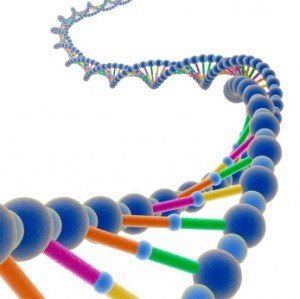

Adenine
Guanine
Cytosine
Thymine
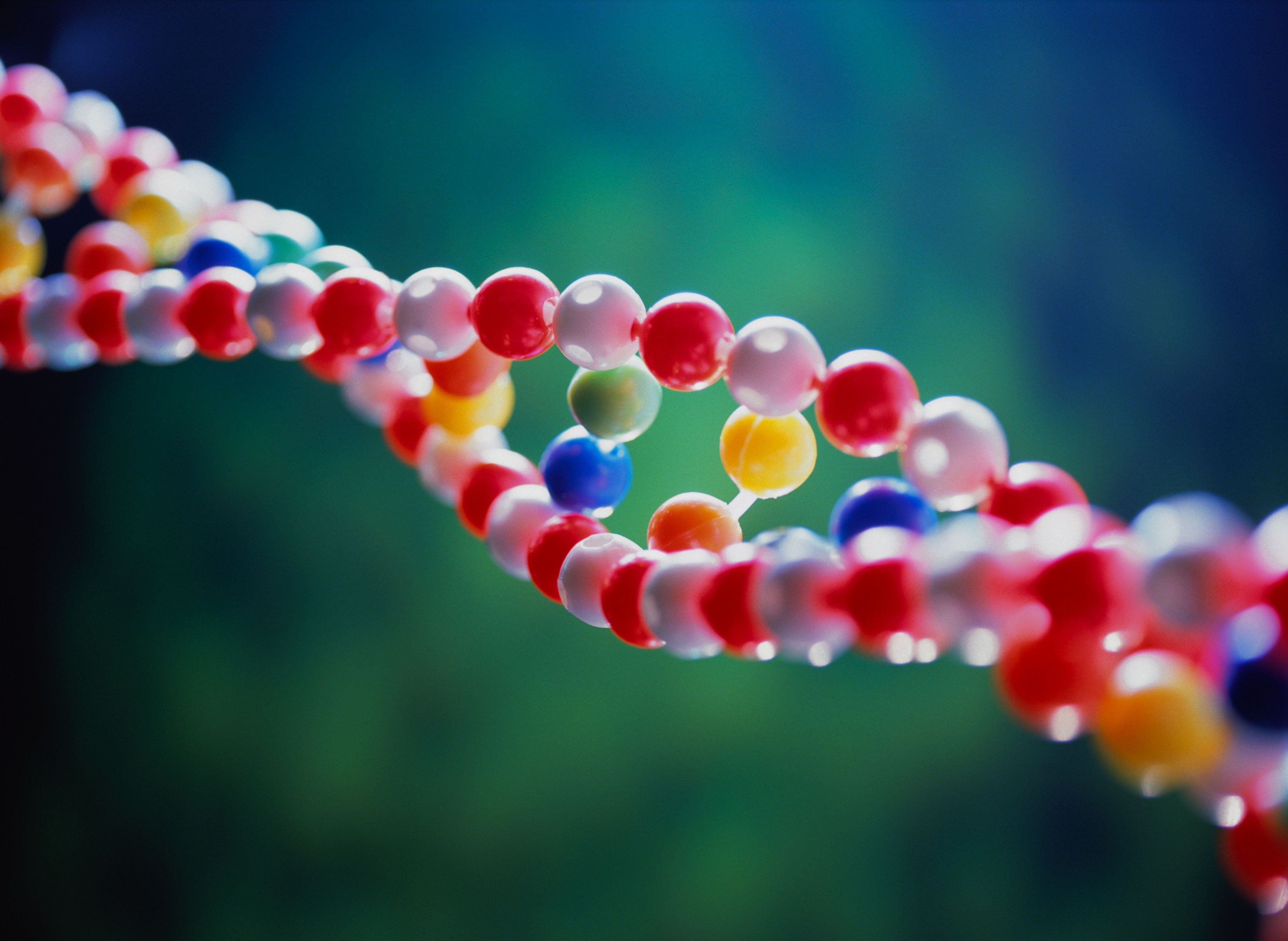

deoxyribose sugar and adenine
deoxyribose sugar and a hydrogen bond
deoxyribose sugar and the nucleus
deoxyribose sugar and phosphate
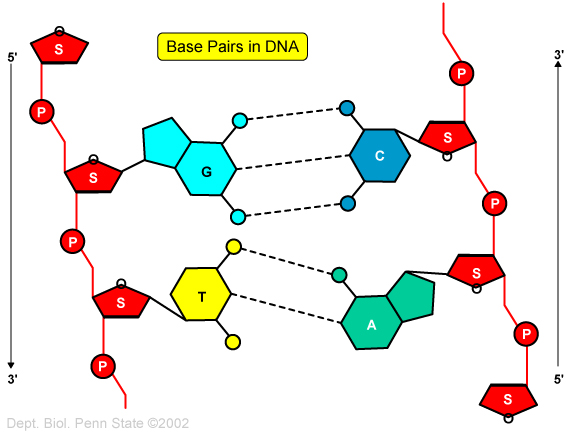


What determines the type of protein produced by a ribosome
amount of sugar
sequence of DNA nucleotides
sequence of phosphates
amount of nitrogen

What is the correct sequence?
DNA -> RNA -> protein
Protein -> DNA - > RNA
DNA -> Protein -> RNA
DNA -> RNA -> DNA -> Protein

You use the codon chart to find the correct _______
sugar
nitrogen base
phosphate
amino acid
Where does transcription take place?
cell membrane
nucleus
cytoplasm
ribosome
What does tRNA do during translation?
it brings a specific segment of DNA to the ribosome for transcription
it brings any amino acid to the ribosome
it brings a specific amino acid (decided by the DNA) to the ribosome for translation
it brings a specific amino acid (decided by the codon) to the ribosome for translation

