
 Worksheets
Unit 1 Earth Science (24-25) - OL
Total questions: 109
Worksheet time: 19hrs 41mins

Rocks and soil are weakened by weathering and move very quickly downhill.
Landslide
Tornado
Earthquake
Volcano
Flood

Tectonic plates build up energy as they try to move past each other. When that energy is released suddenly, it causes ________.
Hurricanes
Landslides
Earthquakes
Tornadoes

Too much rain can cause rivers and lakes to overflow. This causes:
Hurricanes
Floods
Earthquakes
Tornadoes
Droughts

A _____ is fast moving, column of swirling wind that forms during severe thunderstorms.
Hurricane
Earthquake
Tornado
Flood
Blizzard

Very large storms with strong wind and rain that form over warm ocean waters.
Hurricane
Tornado
Landslide
Tsunami
Flash Flood
A natural hazard can be _______ by humans.
Eliminated
Mitigated
Reorder the following Natural Hazards from most predictable (1) to most UNpredictable (4).
Drought
Hurricane
Tsunami
Earthquake

What do you call a tool that measure earthquakes?
scale
seismograph
earthquake monitor
Richter scale

Too much rain forces streams, rivers, and lakes to overflow
Floods
Magma beneath the Earth's is forced up to the surface
Volcanoes
Moving Plates get stuck and build up energy that is released quickly
Earthquakes
Huge spinning storms with high winds and heavy rains that form over warm ocean waters
Hurricanes
Fast spinnng columns of air that form in severe thunderstorms on land
Tornadoes
Of the natural hazards we've studied, which is the hardest to predict when it will occur?
Tsunamis
Volcanoes
Hurricanes
Earthquakes
Wild Fire
Why is it beneficial to be able to predict when and where natural hazards will occur as much as possible?
So we can know when to take shelter or evacuate
So that we can stop them from happening again
So that scientists know where to go in order to study them up close
So that we can harness their power for renewable energy
Most natural hazards can be prevented.
It is impossible to prepare for a natural hazard.
Most natural hazards take place where there are no people
Many natural hazards are caused by weather.
Which of natural these hazards are caused by the movements of tectonic plates?
Earthquakes
Tornadoes
Volcanoes
Tsunamis
Droughts
Which of natural these hazards are caused by the weather?
Hurricanes
Tornadoes
Volcanoes
Floods
Earthquakes
Match the following terms to their descriptions
Geology
The study of earth
Hydrology
The study of water
Climate
The patterns of temperature and precipitation in an area over time
Weather
The temperature and precipitation right now
Biology
The study of living things
What natural hazards are most common where you live?
Tornadoes
Earthquakes
Hurricanes
Blizzards
Scientists who study the weather are called _______.
Meteorologists
Geologists
Biologists
Hydrologists
Scientists and engineers work together to try to reduce the damage from natural hazards. Which term is used to describe this process?
mitigation
technology
scientific method
controlling variables
Which of the following is NOT a natural hazard?
Hurricane
Tornado
House Fire
Earthquake
This type of natural hazard only forms over the ocean.
Tornado
Blizzard
Thunderstorm
Hurricane
Flood
Move away from each other
Move toward each other
Slide past each other
Move down into the mantle
A convergent boundary occurs when plates ....
Move away from each other
Move toward each other
Slide past each other
Move down into the mantle
A fault is formed by the movement of a __________ plate boundary
Transform
Convergent
Divergent
Volcanic island Arcs form near __________ plate boundaries between two oceanic plates.
Divergent
Convergent
Transform

Two continental plates collide at a convergent boundary
Two oceanic plates pull apart at a divergent boundary
An oceanic plate subducts under a continental plate at a convergent boundary
Two continental plates pull apart at a divergent boundary
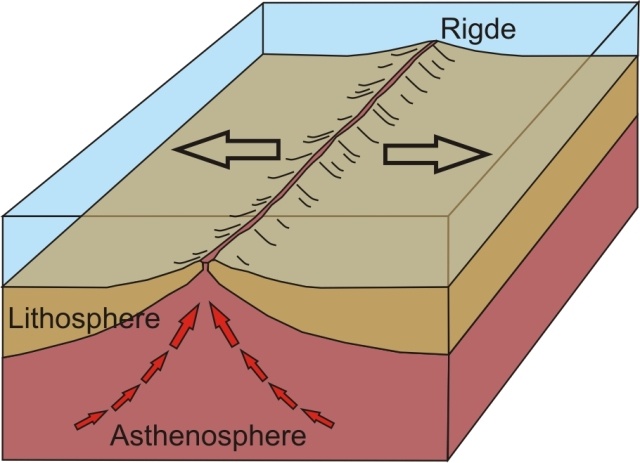
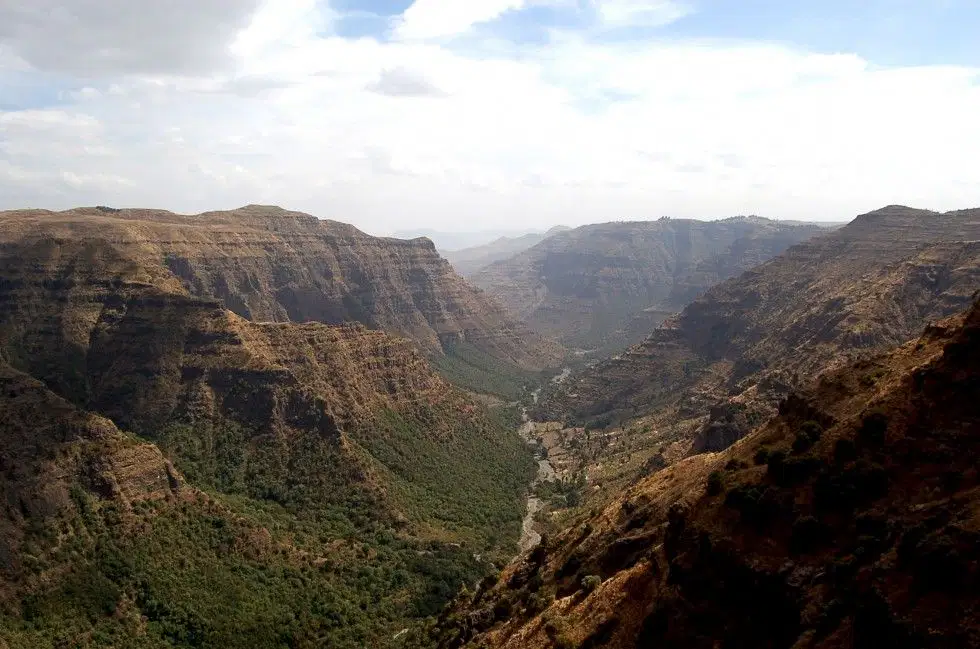
What geologic feature/event would you most likely find at a divergent boundary between two pieces of continental crust?
Mid-Ocean Ridge
Mountain range
Rift Valley
Volcanic Islands

What geologic feature/event would you most likely to find at a convergent boundary between two pieces of continental crust?
Volcanic mountain
Mountain range
Rift valley
Volcanic Island
Old crust is destroyed at what type of boundary?
convergent
divergent
transform
New crust is created at what type of boundary?
convergent
divergent
transform
Plates slide past one another at _______ boundaries.

This picture shows a volcano being formed due to the subduction of oceanic crust under continental crust.
Which picture has the arrows drawn correctly to show the direction the plates are moving?


A trench is formed at a convergent boundary when one plate slides under another. This is called subduction.
Which picture shows the convection currents moving the correct directions to create a convergent boundary?


What two types of crust are shown here?
Oceanic and Oceanic
Oceanic and Continental
Continental and Continental
Which TWO geologic features are formed at this type of boundary?
Trench
Volcanic Mountain Chain
Volcanic Island Arc
Rift Valley
Mid-Ocean Ridge
Which diagram shows the movement at a plate boundary that would form a mid-ocean ridge?


What type of geologic feature would form here?
Trench
Mountain Range
Fault
Mid-Ocean Ridge

What geologic feature would form here?
Mountain Range
Rift Valley
Volcano
Fault Line
Match the plate boundary to its diagram.

New crust is created

Old crust is destroyed

Crust is cracked but not destroyed

The Appalachian Mountain Range formed when Pangaea came together at a (a) plate boundary.
When two continental plates converge (collide) what type of feature is formed?
Mid-Ocean Ridge
Subduction Zone
Rift Valley
Mountain Range
While exploring the Atlantic Ocean, scientists observe a geological feature at the sea floor where the tectonic plates are moving apart. What is this feature commonly called?
Volcanoes
Earthquakes
Mid-Ocean Ridges
Deep Ocean Trenches
What would you be most likely to find at a convergent boundary between a continental and oceanic plate?
Mountain Range
Volcanic Mountain Chain
Rift Valley
Select the location(s) on the map where you would find a volcanic island arc.
Select the location(s) on the map where you would find a trench.
Wegener's idea of Continental Drift was rejected by geologists because _________.
He used too many pieces of evidence to support the idea.
It is impossible to predict what Earth looked like millions of years ago.
He couldn't explain HOW or WHY the continents moved.
They were afraid of the new idea.
Underwater mountain ranges are called ____________.
deep sea trenches
mid-ocean ridges
seafloor spreading
continental drift
The OLDEST rocks on the seafloor are located?
Closest to the mid-ocean ridge
Farthest from the mid-ocean ridge
The YOUNGEST rocks on the seafloor are located?
Closest to the mid-ocean ridge
Farthest from the mid-ocean ridge
What theory states that the continents were once part of a super continent called Pangaea and have moved slowly to their current locations over hundreds of millions of years.
Oceanic wandering
Land-form Evidence
Continental Drift
Fossil Distribution
What types of evidence did Wegener use to support the theory of Continental Drift? (Select ALL answer that are correct)
evidence from land features
evidence from animal fossils
evidence from ancient climates
evidence from plant fossils
evidence from human remains
Who suggested the theory of seafloor spreading?
Harry Hess
Alfred Wegner
Mrs. Bratton
Albert Einstein
According to Wegener, the continents used to be joined together as one supercontinent known as:
South Africa
Eurasia
Pangaea
Potlopia
How long did it take the continents to move from Pangaea into their current position?
Hundreds of years
Thousands of years
Millions of years
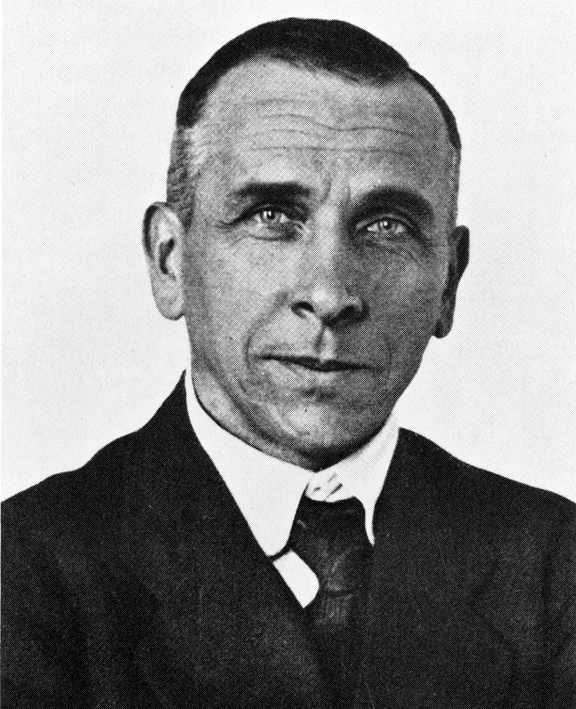
Who is the person credited with developing the theory of continental drift?
Harry Hess
Albert Einstein
Alfred Wegener
Isaac Newton
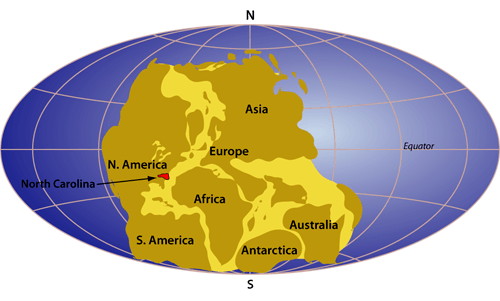
What is this a picture of?
Eurasia
Laurasia
Pangaea
Cornucopia
The youngest seafloor crust is located...
Farthest from the mid-ocean ridges
Closest to the mid ocean ridges
Nearest the continents
On the land
The process of new seafloor forming when magma rises at the mid-ocean ridges and solidifies, pushing older rock away is called _____.
Seafloor Spreading
Continental Drift
Hot magma (melted rock) is ______ dense than the solid crust.
more
Select all the TRUE statements about seafloor spreading
The oldest rocks are located closest to the mid-ocean ridges.
Seafloor spreading explains how mid-ocean ridges are formed.
Seafloor spreading explains how the continents moved apart.
New seafloor is formed at mid-ocean ridges.
What are TWO pieces of evidence for Seafloor Spreading
Youngest rocks are located closest to mid-ocean ridges
Reversals of Earth's magnetic field are recorded by rocks in strips parallel to ridges.
Similar animal fossils are found on continents separated by oceans.
It is very hot in the United States in the summer.

At the Mid-Ocean Ridges you can find:
underwater trees and bushes
deep sea trenches
the oldest crust
the newest crust
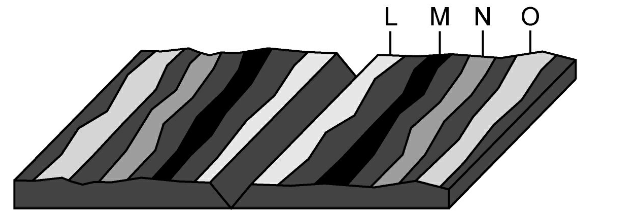
The image shows a diagram of the ocean floor near a mid-ocean ridge. Where would the oldest rock be found?
True or false: The tectonic plates will never stop moving
True
False
Put the repeating steps of seafloor spreading in order.
Magma MOVES to the SURFACE
Magma FLOWS from the CRACKS
Magma COOLS to form new SEAFLOOR
Convection currents in the _________ pull the seafloor apart.
Crust
Mantle
Core

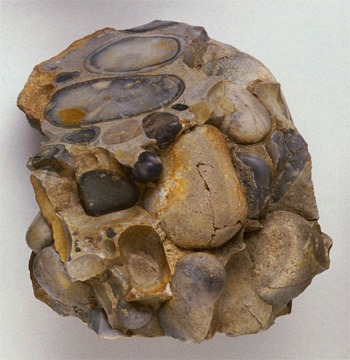
Which type of rock is made by small bits of rock, mud, or sand compacted and cemented together?
Sedimentary Rock
Igneous Rock
Metamorphic Rock

Which type of rock is made from a rock being changed by heat and pressure?
Sedimentary Rock
Igneous Rock
Metamorphic Rock

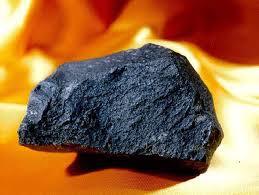
This is a piece of granite. It was formed from magma cooling inside the Earth.
What type of rock is granite?
Sedimentary Rock
Igneous Rock
Metamorphic Rock

Which type of rock is changed by heat and pressure but does NOT melt?
igneous rock
sedimentary rock
metamorphic rock

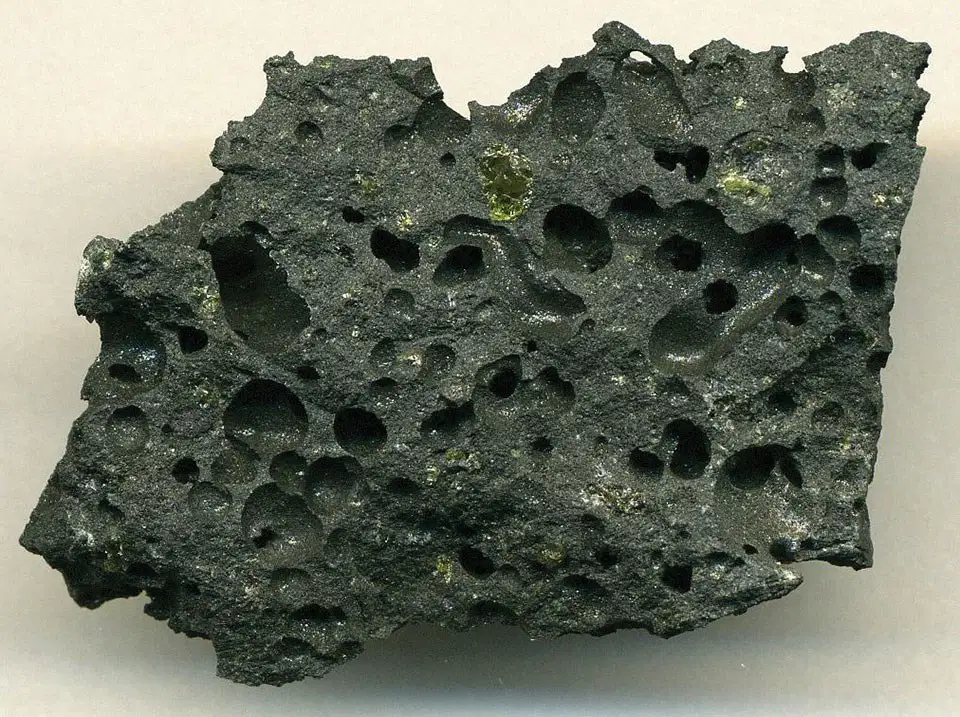
Rocks must go through _________________ to become Igneous rock.

___________ rocks are formed from layers of sediments.
Metamorphic
Igneous
Sedimentary

Obsidian forms from lava that cools on Earth's surface. It is an extrusive ____________.
metamorphic rock
sedimentary rock
igneous rock

Fossils are found in ____________.
metamorphic rocks
magma
igneous rocks
sedimentary rocks
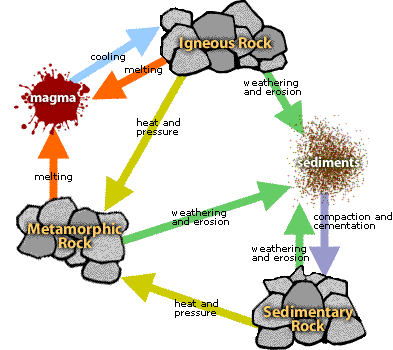
This type of rock is formed by compaction & cementation of sediments
Sedimentary
Metamorphic
Igneous

These small bits of rock are formed by weathering
magma
sediments
sedimentary rock
igneous rock
metamorphic rock
This liquid form of rock is formed when rocks get extremely hot and melt.
magma
sediments
sedimentary rock
metamorphic rock

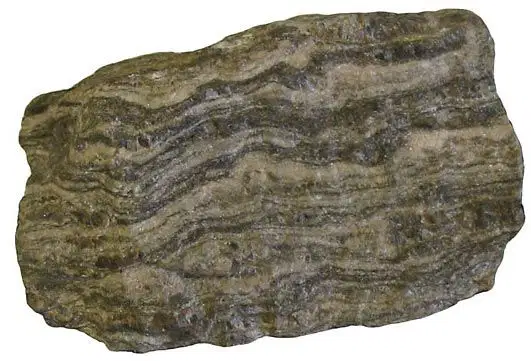
This type of rock has been deformed by intense heat and pressure causing ribbonlike layers to form.
sedimentary rock
metamorphic rock
igneous rock
Put the steps of forming sedimentary rock in the correct order.
Weathering
Erosion
Deposition
Compaction & Cementation
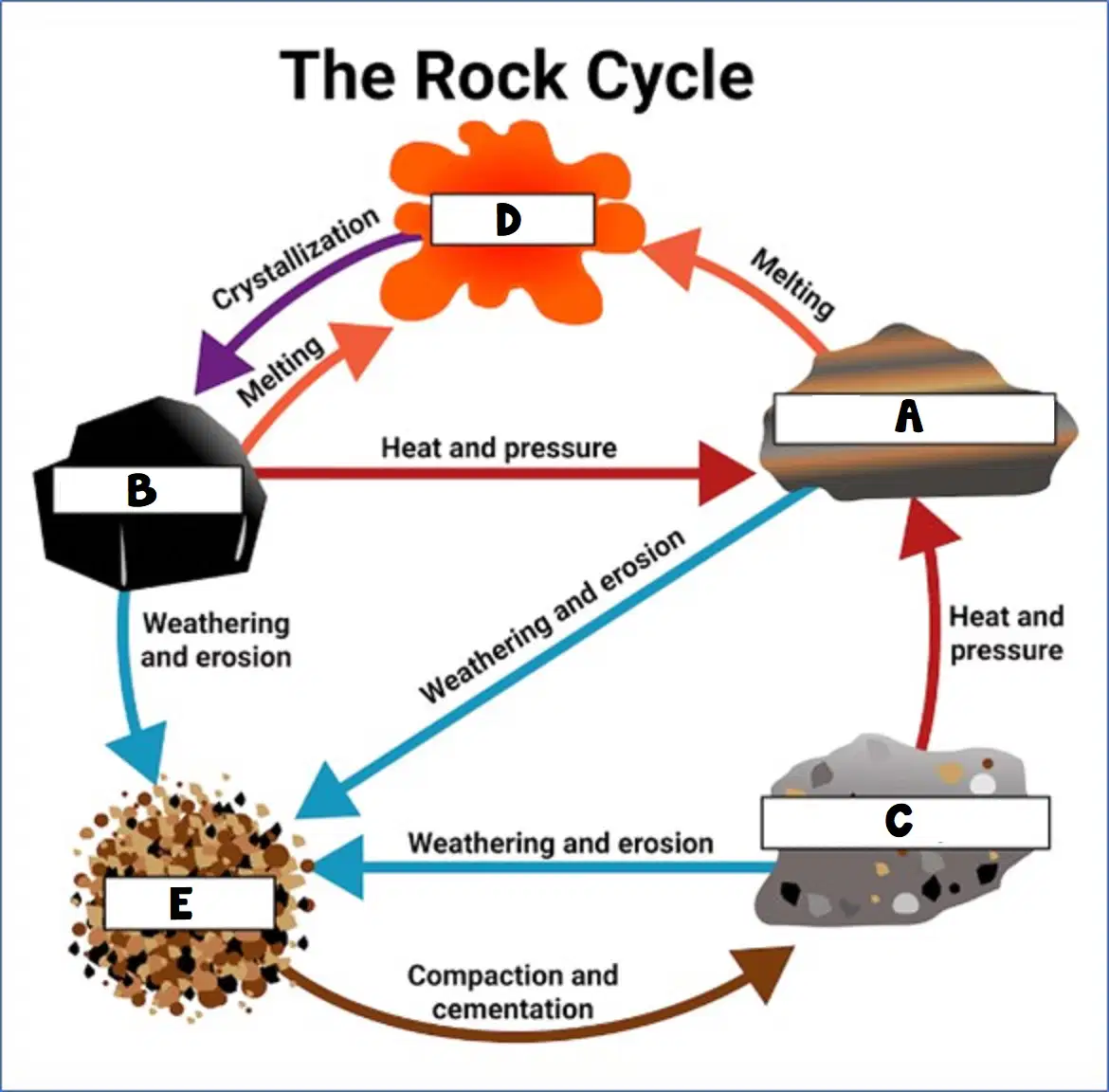
What is represented by the image labeled with the Letter D?
Sedimentary Rock
Metamorphic Rock
Igneous Rock
Magma
Sediments
What is represented by the image labeled with the Letter A?
Sedimentary Rock
Metamorphic Rock
Igneous Rock
Magma
Sediments

What process is labeled with the number 2?
Cooling and Hardening
Melting
Compacting and Cementing
Weathering and Erosion
What process is labeled with the number 5?
Cooling and Hardening
Melting
Compacting and Cementing
Weathering and Erosion

The process of breaking down rocks.
Weathering
Deposition
Erosion

Wind, water, ice, or gravity transporting rock fragments from one location to another
Weathering
Deposition
Erosion

Sediment building up at the mouth of a river forming a river delta
Weathering
Erosion
Deposition

Small pieces of weathered rocks are called ____.
sediments
deposits
erosions
weathers

The breaking down of rocks into smaller pieces by physical processes.
Mechanical weathering
Chemical weathering

The breakdown of rocks by chemical reactions to form new types of minerals
Mechanical weathering
Chemical weathering

Water gradually wearing down and smoothing rocks over a long period of time is an example of...
weathering
erosion
deposition

When iron in rocks reacts with oxygen, it forms a new substance, iron oxide (rust), which weakens rocks and causes them to break apart. This is an example of...
Mechanical weathering
Chemical weathering

Rain washing away soil from a hillside is an example of...
weathering
erosion
deposition

Waves dropping sand onto land until a beach is formed is an example of...
weathering
erosion
deposition

Acid rain slowly dissolving and wearing away rock over time is an example of...
weathering
deposition
erosion

Water getting into cracks, freezing, and breaking rocks or pavement apart is an example of...
erosion
weathering
deposition

A fast-moving river carrying mud and dirt is an example of...
deposition
weathering
erosion

The roots of plant can get into cracks and as they grow bigger they expand breaking the rock.
Weathering
Erosion
Deposition

A river physically wearing down canyon walls over time is an example of...
Mechanical weathering
chemical weathering

Wind blowing sand away from from a sand dune...
erosion
weathering
deposition
Weathering
Breaking down
Erosion
Transporting
Deposition
Building up
Water getting into cracks, freezing, and breaking a rock apart
Weathering
Muddy water being carried away by a fast-moving river
Erosion
Deltas forming at the mouths of rivers
Depositions

An avalanche is an example of...
weathering
sediments
erosion
deposition

Over long periods of time, the process of _______ may change the Earth's surface by forming new land features
deposition
erosion
weathering
sediments

The small particles of sand on a beach is an example of ______.
sediments
weathering
erosion
deposition

