
 Worksheets
Physics Revision (Theme 2: Thermal Physics)
Total questions: 55
Worksheet time: 2hrs 50mins

A cup contains hot liquid. Some of the liquid evaporates.
What happens to the mass and what happens to the weight of the liquid in the cup?
A
B
C
D
Which statement about evaporation is correct?
Evaporation causes the temperature of the remaining liquid to decrease.
Evaporation does not occur from a cold liquid near its freezing point.
Evaporation does not occur from a dense liquid, such as mercury.
Evaporation occurs from all parts of a liquid.
A gas is stored in a sealed container of constant volume. The temperature of the gas increases.
This causes the pressure of the gas to increase.
What happens to the gas molecules during this pressure increase?
The average kinetic energy of the molecules increases.
The average separation of the molecules decreases.
The average separation of the molecules increases.
The volume of each molecule increases.
A liquid is evaporating. The liquid is not boiling.
Which statement about the liquid is correct?
Any molecule can escape, and from any part of the liquid.
Any molecule can escape, but only from the liquid surface.
Only molecules with enough energy can escape, and only from the liquid surface.
Only molecules with enough energy can escape, but from any part of the liquid.
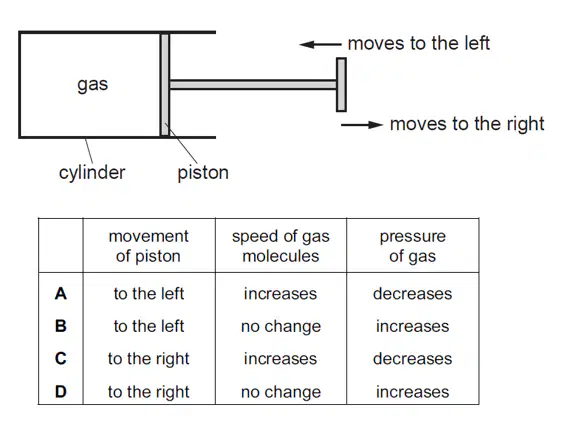
The diagram shows a quantity of gas enclosed in a cylinder by a piston. The piston is moved to the left or to the right. The temperature of the gas is kept constant.
Which row describes the effect of moving the piston slowly in the direction shown in the table?
A
B
C
D
What causes the random, zig-zag movement (Brownian motion) of smoke particles suspended in
air?
air molecules colliding with smoke particles
convection currents as the hot smoke rises
smoke particles colliding with each other
smoke particles reacting with oxygen molecules in the air
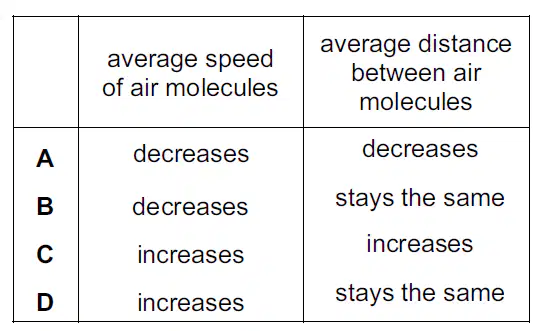
The air in the bottle is heated by the Sun.
What is the effect on the average speed of the air molecules in the bottle, and the average distance between them?
A
B
C
D
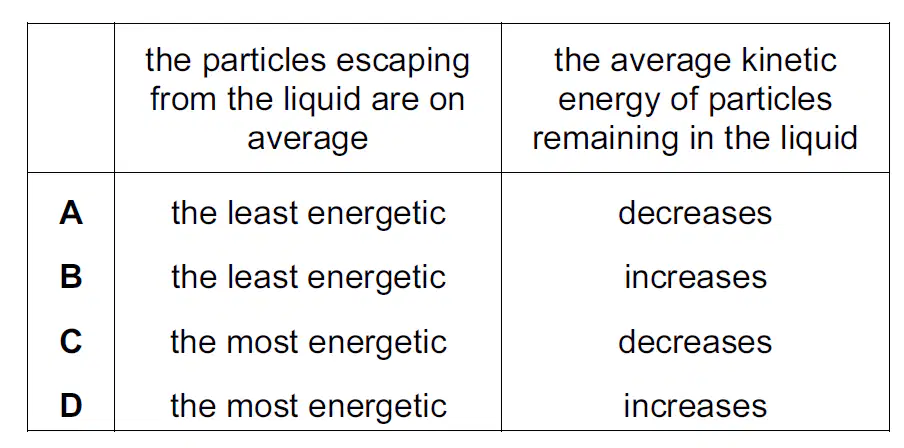
Which row is correct for the evaporation of a liquid?
A
B
C
D
A swimmer feels cold after leaving warm water on a warm, windy day.
Why does she feel cold even though the air is warm?
The less energetic water molecules on her skin escape quickly.
The more energetic water molecules on her skin do not escape quickly.
The water on her skin does not evaporate quickly enough to keep her warm.
The water on her skin evaporates quickly and cools her skin.
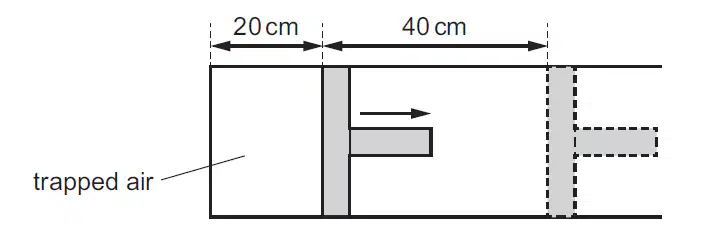
Air is trapped in a cylinder by a piston. The pressure of the air is p and the length of the air column is 20 cm.
The piston is moved outwards until the length of the air column has increased by 40 cm. The temperature of the air remains constant.
What is the new air pressure?
P/2
P/3
2P
3P
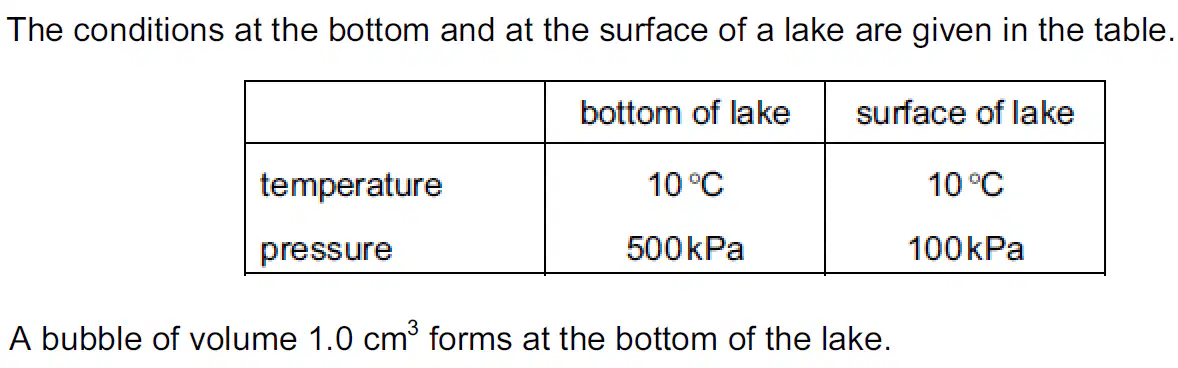
What is the volume of the bubble as it reaches the surface?
0.2 cm3
0.25 cm3
4 cm3
5 cm3
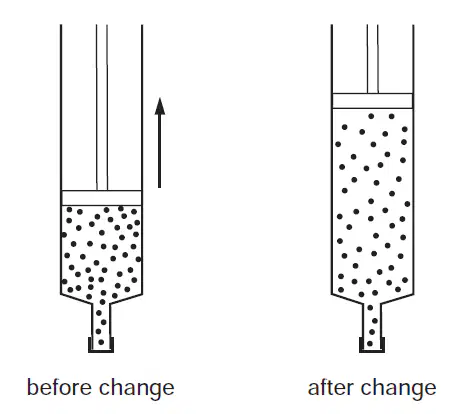
The volume of a gas in a sealed syringe is increased. The temperature of the gas does not change. After this change is made, what has happened to the gas molecules in the syringe?
They move more quickly.
They move more slowly.
They hit the syringe walls less often.
They hit the syringe walls more often.
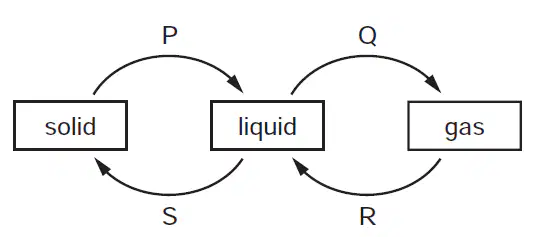
The diagram shows four labelled changes of state between solid, liquid and gas. Which changes need an energy input?
P and Q
Q and R
R and S
S and P

A gas storage tank has a fixed volume. The graph shows how the temperature of the gas in the tank varies with time.
At time Y, the gas molecules are...
A closer together than at time X.
hitting the sides of the tank harder than at time X.
larger in size than at time X.
moving more slowly than at time X.
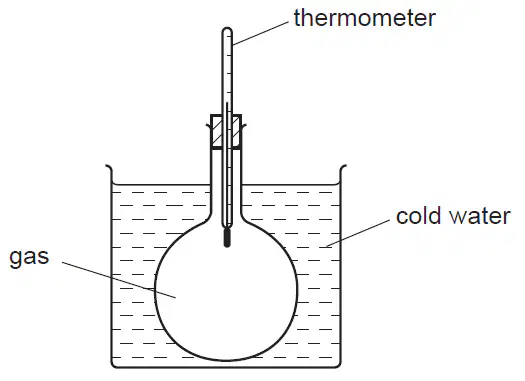
A closed flask of gas is placed in a cold-water bath.
As the flask cools, the temperature of the gas decreases.
What happens to the molecules of the gas?
They contract.
They expand.
They move more quickly.
They move more slowly.
The molecules of a substance become more closely packed and move more quickly.
What is happening to the substance?
A gas is being heated and compressed.
A gas is being heated and is expanding.
A liquid is boiling.
A liquid is evaporating at room temperature.
Gases can be compressed, but liquids cannot.
Which statement explains this difference?
Each molecule in a gas is more compressible than each molecule in a liquid.
Molecules in a gas are further apart than molecules in a liquid.
Molecules in a gas attract each other more strongly than molecules in a liquid.
Molecules in a gas move more slowly than molecules in a liquid.
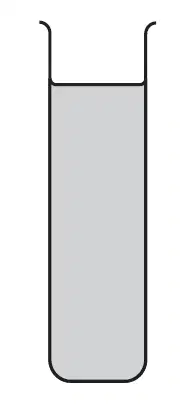
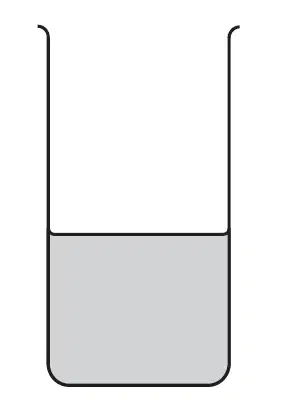
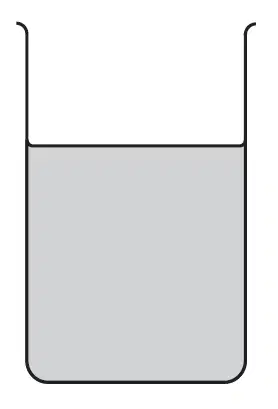
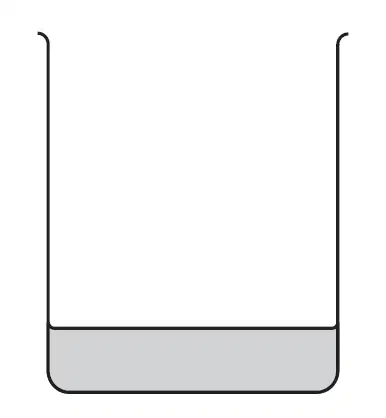
The diagram shows four beakers A, B, C and D. The beakers contain different amounts of the
same liquid at the same temperature. The beakers are left next to each other on a laboratory
bench overnight. The diagrams are all drawn to the same scale.
From which beaker does the largest quantity of liquid evaporate?
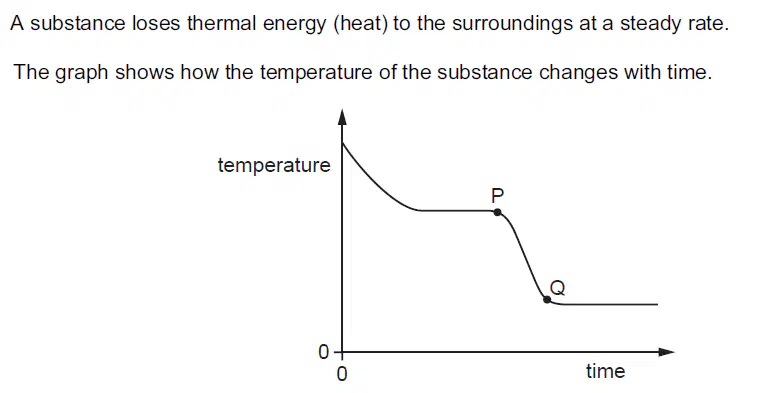
What could the portion PQ of the graph represent?
gas condensing
gas cooling
liquid cooling
liquid solidifying
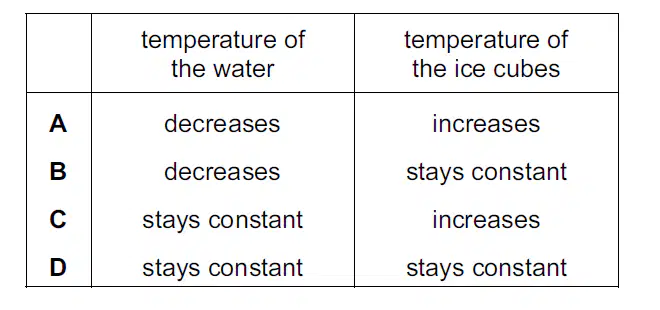
A jug of water is at room temperature. Several ice cubes at a temperature of 0 °C are dropped into the water and they begin to melt immediately.
What happens to the temperature of the water and what happens to the temperature of the ice cubes while they are melting?
A
B
C
D
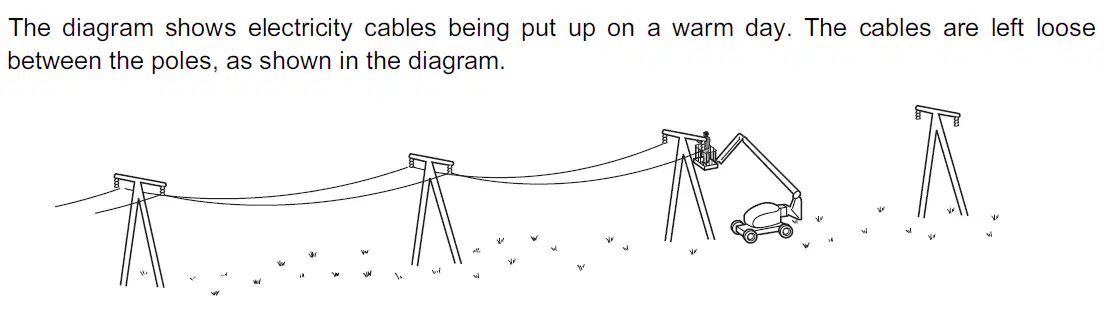
Why are the cables left loose?
They will contract on cold days.
They will contract on very warm days.
They will expand on cold days.
They will expand on very warm days.
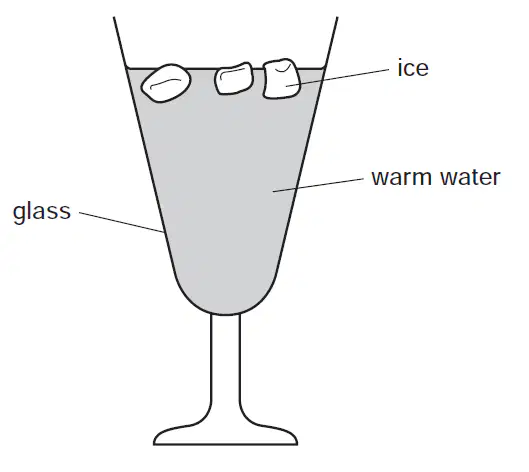
The diagram shows some ice being used to lower the temperature of some warm water.
What is the main process by which the water at the bottom of the glass becomes cool?
condensation
conduction
convection
radiation
The pressure of a fixed mass of gas in a cylinder is measured. The temperature of the gas in the
cylinder is then slowly increased. The volume of the cylinder does not change.
Which graph shows the pressure of the gas during this process?
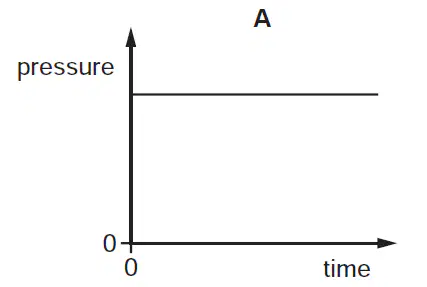
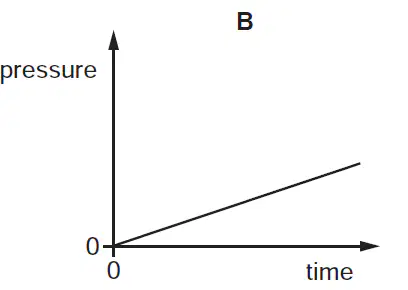
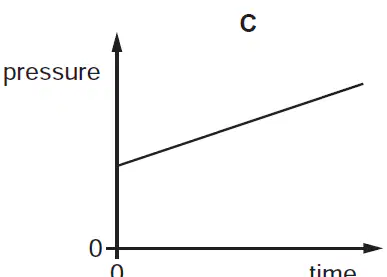
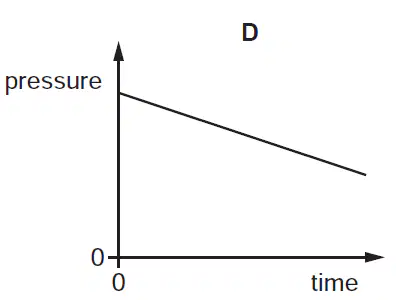
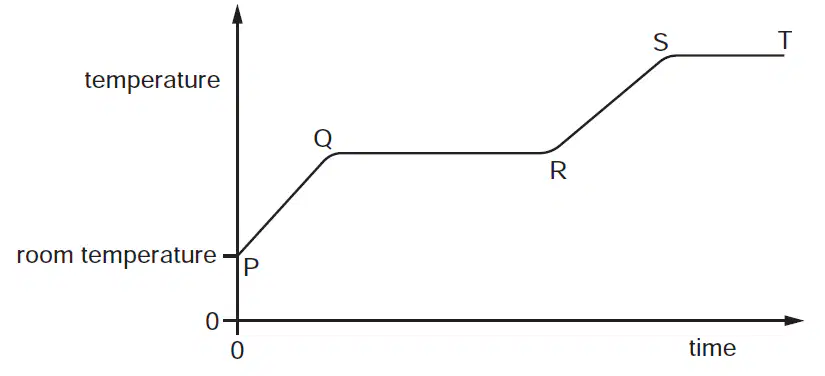
A solid is heated from room temperature. The graph shows how its temperature changes with time as it is heated constantly.
Between which labelled points on the graph is the substance partly solid and partly liquid?
between P and Q
between Q and R
between R and S
between S and T
Which statement describes what happens as ice at 0 °C starts to melt to become water?
Energy is absorbed and the temperature remains constant.
Energy is absorbed and the temperature rises.
Energy is released and the temperature remains constant.
Energy is released and the temperature rises.
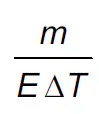
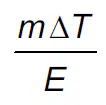
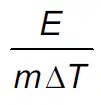
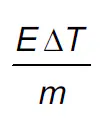
In an experiment to measure specific heat capacity, a block of aluminium is heated and its rise in
temperature is measured. The amount of energy gained by the block is E. The mass of the block is m. The rise in temperature of the block is ΔT.
Which expression gives the specific heat capacity of aluminium?
In an experiment, a liquid is heated at a constant rate.
The temperature of the liquid increases and eventually becomes constant.
Which statement about the experiment is correct?
Boiling occurs at all temperatures but only on the liquid surface.
Boiling occurs throughout the liquid but only at the constant temperature.
Evaporation occurs throughout the liquid and at all temperatures.
Evaporation occurs only at the constant temperature and only on the liquid surface
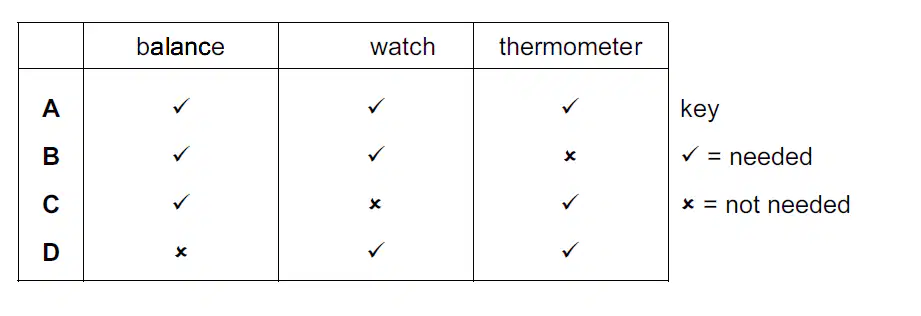
A student wishes to calculate the specific heat capacity of copper.
He has a block of copper and an electrical heater. He knows the power of the heater.
Which other apparatus does he need?
A
B
C
D
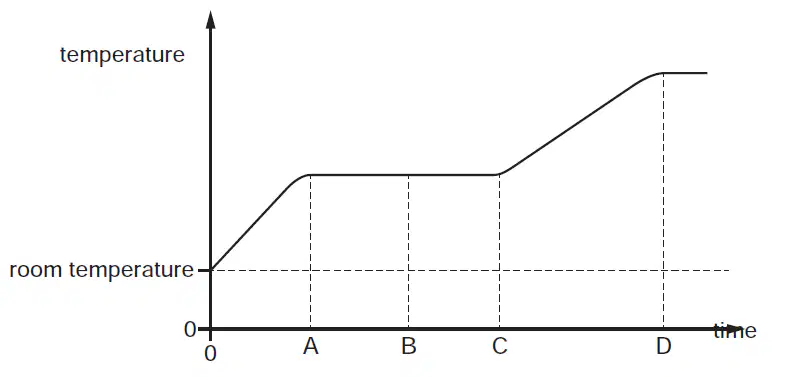
A solid is heated from room temperature.
The graph shows how its temperature changes with time as it is heated constantly.
At which time has it just become completely liquid?
A
B
C
D
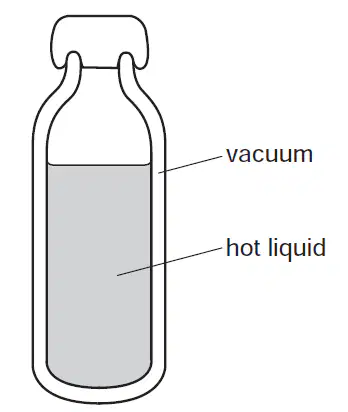
The diagram shows a vacuum flask used to keep liquid hot.
How does thermal energy pass through the vacuum?
conduction only
convection only
radiation
conduction and convection
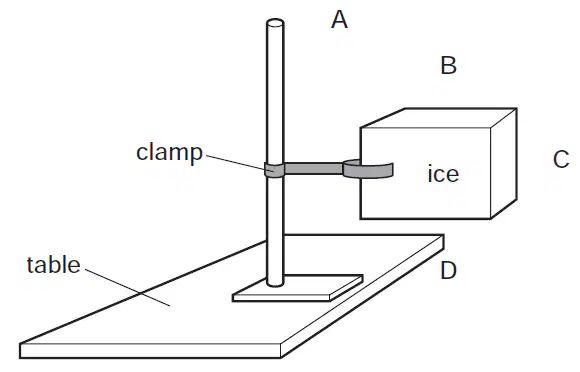
The diagram shows a block of ice placed in a warm room.
At which point is the temperature the lowest?
A
B
C
D
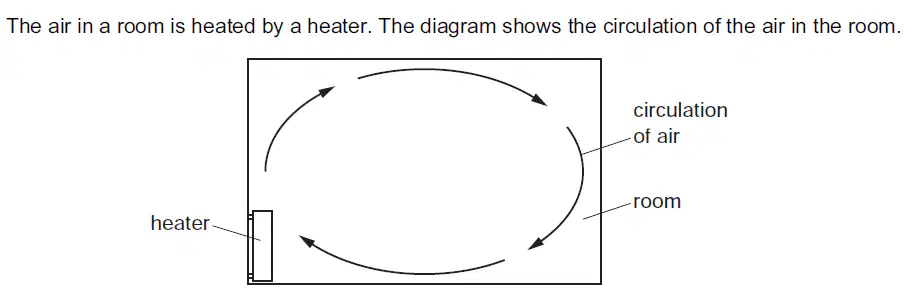
Which statement about the air that is heated is correct?
The air contracts and becomes less dense.
The air contracts and becomes more dense.
The air expands and becomes less dense.
The air expands and becomes more dense
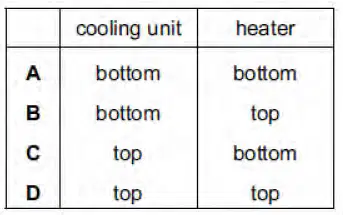
In a refrigerator, the cooling unit can be fitted either at the top or at the bottom. In an oven, the heater can be fitted either at the top or at the bottom.
Which row shows the best position for the cooling unit and the best position for the heater?
A
B
C
D
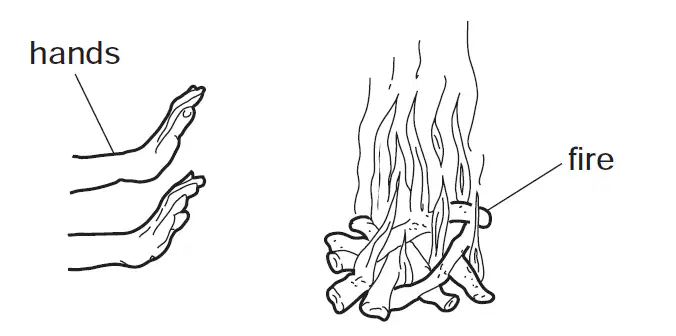
A girl is outdoors. She warms her hands by holding them near a fire, as shown. How does the heat from the fire reach her hands?
conduction only
convection and conduction
convection and radiation
radiation only
A heating engineer fits a heater to the ceiling of an office so that workers in the office are kept
warm. How does thermal energy reach the workers below the heater?
conduction and convection
convection and radiation
convection only
radiation only
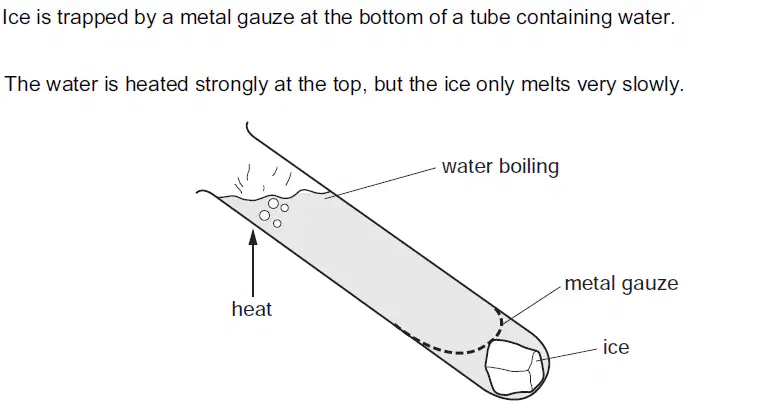
Why does the ice melt so slowly?
Heat energy always travels upwards.
Hot water is more dense than cold water.
Metal gauze does not allow heat to pass through.
Water is a poor conductor of heat
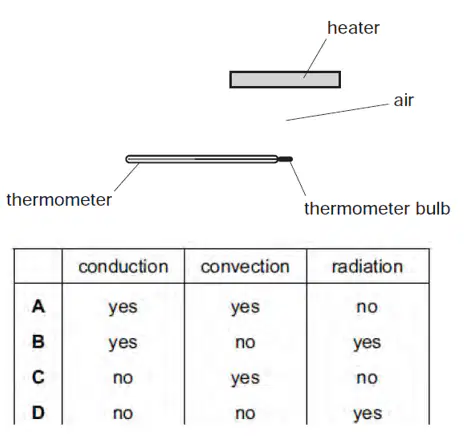
The diagram shows a heater above a thermometer. The thermometer bulb is in the position shown.
Which row shows how the heat energy from the heater reaches the thermometer bulb?
A
B
C
D
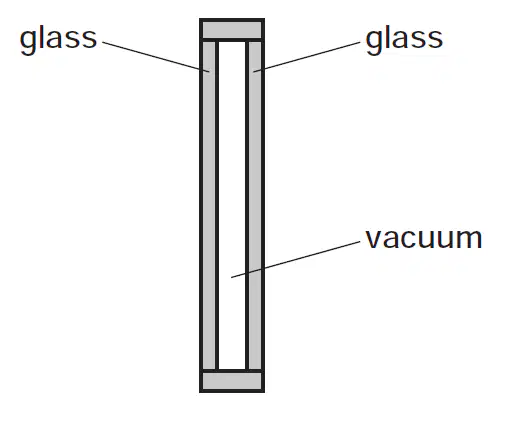
One type of double glazing consists of two panes of glass separated by a vacuum. Which method or methods of energy transfer are prevented by the vacuum?
conduction and convection
conduction and radiation
convection and radiation
radiation only
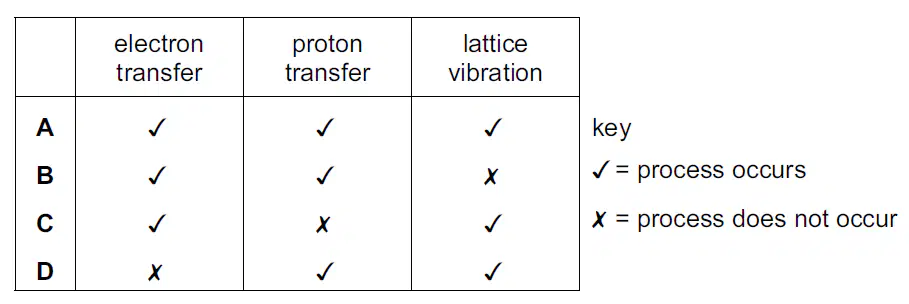
Which processes occur in a metal to cause thermal conduction?
A
B
C
D
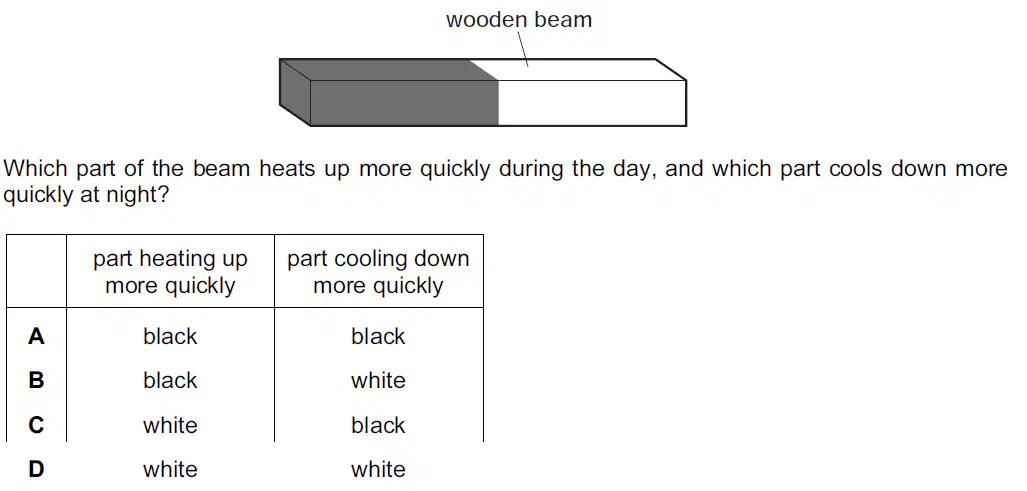
A wooden beam is painted part black and part white. The beam absorbs infra-red radiation from the Sun during the day, and loses infra-red radiation to the surroundings at night.
A
B
C
D

A student suggests some uses for containers made from good thermal conductors and for containers made from poor thermal conductors.
In which row are both suggested uses correct?
A
B
C
D
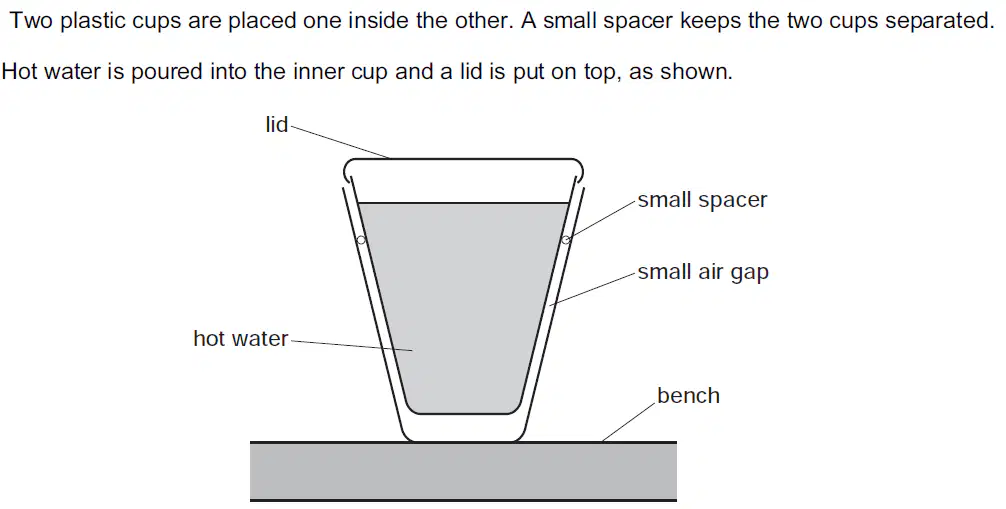
Which statement is correct?
The bench is heated by convection from the bottom of the outer
The lid reduces the energy lost by convection.
There is no thermal conduction through the sides of either cup.
Thermal radiation is prevented by the small air gap.

On a hot day, the drink in a bottle can be kept cool by standing the bottle in a bowl of water and placing a wet cloth over it.
Why is the drink kept cool?
Hot air cannot escape from the bottle.
The cloth conducts heat from the bottle into the water.
The drink cannot evaporate from the bottle.
Water evaporating from the cloth cools the drink.
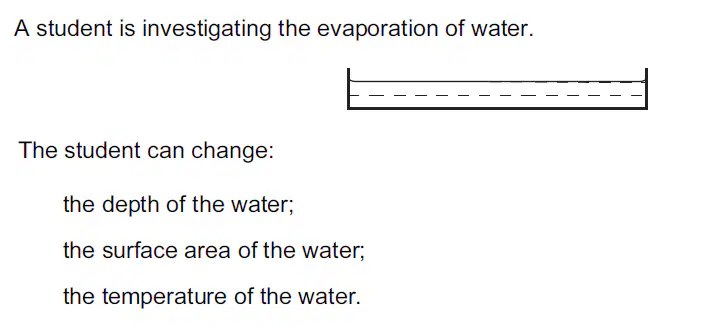
How many of these changes, if any, would alter the rate at which evaporation occurs?
0
1
2
3
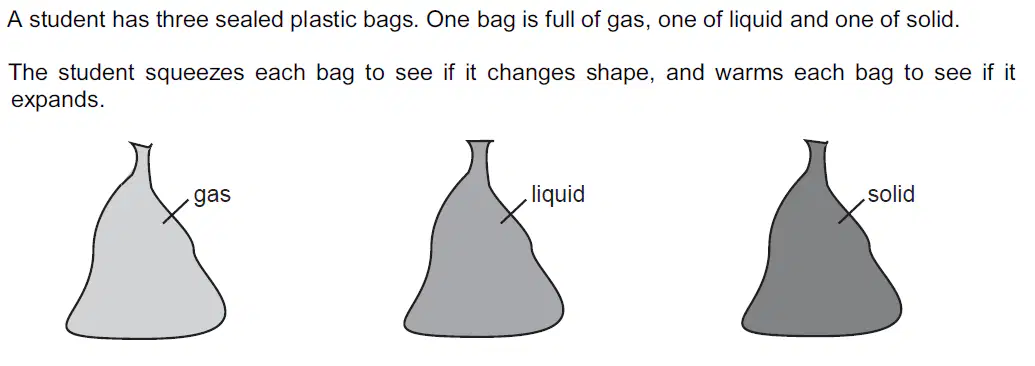
Which bag contains gas?
the one that changes shape easily and expands the least when heated
the one that changes shape easily and expands the most when heated
the one that is fixed in shape and expands the least when heated
the one that is fixed in shape and expands the most when heated
The tubes inside solar heating panels use the Sun’s radiation to warm water.
Why are the tubes painted black?
Black surfaces absorb radiation well.
Black surfaces conduct heat well.
Black surfaces emit radiation well.
Black surfaces reflect radiation well.
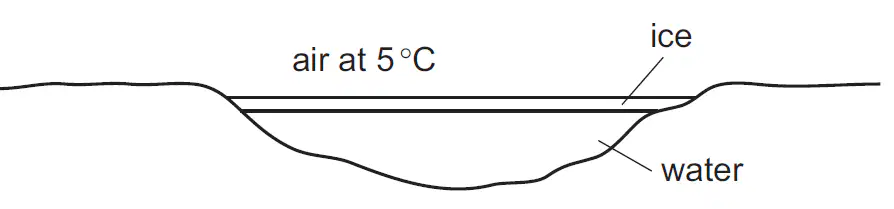
The diagram shows a frozen pond with the surface of the ice slowly melting as heat is transferred from the warmer air above it.
By which processes is heat transferred from the air to the ice?
conduction, convection and radiation
conduction and convection only
convection and radiation only
radiation and conduction only
Four metal cans are identical except for the colour and the texture of their outer surfaces.
100 cm3 of water at 70 °C is poured into each can.
Which cools the most rapidly?


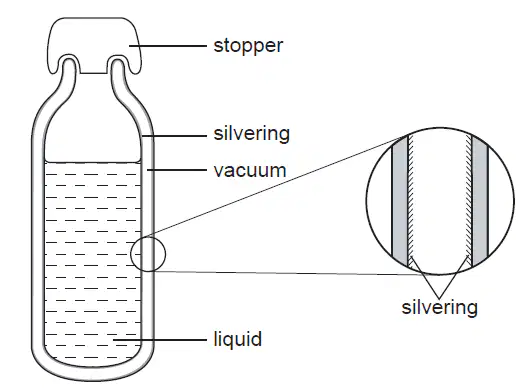
The diagram shows a vacuum flask and an enlarged view of a section through the flask wall.
The main reason for the silvering is to reduce heat transfer by
conduction only.
radiation only.
conduction and convection.
convection and radiation.
Less heat is needed to raise the temperature of 1 kg of copper by 1 °C than is needed to raise the
temperature of 1 kg of water by 1 °C.
Which statement explains this?
Copper has a higher melting point.
Copper has a lower specific heat capacity.
Copper has a smaller specific latent heat.
Copper is a better conductor of heat.

The change in shape occurs because
brass contracts more than invar.
brass expands when it cools down.
invar and brass contract by equal amounts.
invar contracts more than brass.
To raise the temperature of a 2.0 kg block of metal by 20 °C, energy of 5.2 kJ is needed.
What is the value of the specific heat capacity of the metal?
0.13 J / (kg °C)
52 J / (kg °C)
130 J / (kg °C)
52 000 J / (kg °C)
What is latent heat of vaporisation?
the energy required to make molecules expand
the energy required to make molecules expand and move apart
the energy required to make molecules move apart
the energy required to make molecules move faster
The fillings for a hole in a tooth should be made from a material that
expands more than the hole in the tooth.
expands by the same amount as the hole in the tooth.
expands less than the hole in the tooth.
does not expand when heated
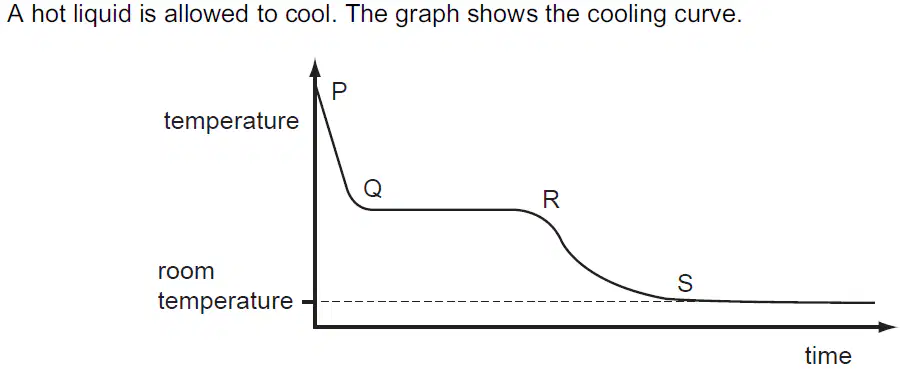
In which part of the curve is latent heat released?
PQ
QR
RS
ST

