
 Worksheets
HGCSE October 2024 Physics Assessment
Total questions: 100
Worksheet time: 4hrs 40mins

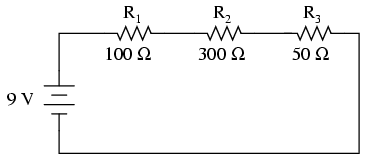
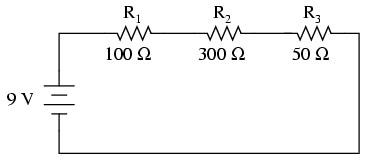


What is the total resistance (RT) across this circuit?
3 kΩ
10 kΩ
13 kΩ
18 kΩ
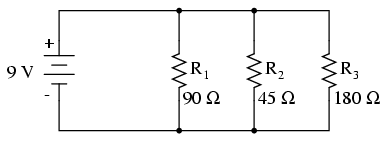
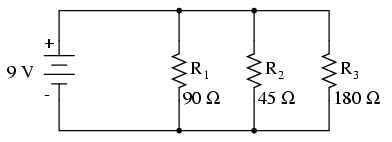


What is the definition of electrical current?
The opposition to the flow of electrons
The rate of flow of charge
The work done on each coulomb of charge
Electrons moving around
Which circuit diagram represents the correct way to measure the current in a resistor?


When only one lightbulb blows out, an entire string of decorative lights goes out. The lights in this string must be connected in
series with multiple current pathways
series with one current pathway
parallel with multiple current pathways
parallel with one current pathway
A 3-ohm resistor and a 6-ohm resistor are connected in parallel across a 9-volt battery. Which statement best compares the potential difference across each resistor?
The potential difference across the 6-ohm resistor is four times as great as the potential difference across the 3-ohm resistor.
The potential difference across the 6-ohm resistor is half as great as the potential difference across the 3-ohm resistor.
The potential difference across the 6-ohm resistor is the same as the potential difference across the 3-ohm resistor.
The potential difference across the 6-ohm resistor is twice as great as the potential difference across the 3-ohm resistor.
Circuit A has four 3.0-ohm resistors connected in series with a 24-volt battery, and circuit B has two 3.0-ohm resistors connected in series with a 24-volt battery. Compared to the total potential drop across circuit A,
the total potential drop across circuit B is
four times as great
twice as great
the same
one-half as great
A 3.0-ohm resistor and a 6.0-ohm resistor are connected in series in an operating electric circuit. If the current through the 3.0-ohm resistor is 4.0 amperes, what is the potential difference across the 6.0-ohm resistor?
12 V
24 V
2.0 V
8.0 V
A 2.0-ohm resistor and a 4.0-ohm resistor are connected in series with a 12-volt battery. If the current through the 2.0-ohm resistor is 2.0 amperes, the current through the 4.0-ohm resistor is
1.0 A
4.0 A
2.0 A
3.0 A
A 6.0-ohm lamp requires 0.25 ampere of current to operate. In which circuit below would the lamp operate correctly when switch S is closed?


The diagram above represents a circuit consisting of two resistors connected to a source of potential difference.
What is the current through the 20.-ohm resistor?
12 A
6.0 A
4.0 A
0.25 A

The circuit diagram above represents four resistors connected to a 12-volt source. What is the total current in the circuit?
2.0 A
0.50 A
24 A
8.6 A

In the electric circuit diagram above, possible locations of an ammeter and a voltmeter are indicated by circles 1, 2, 3, and 4.
Where should an ammeter be located to correctly measure the total current, and where should a voltmeter be located to correctly measure the total voltage?
ammeter at 1 and voltmeter at 2
ammeter at 3 and voltmeter at 4
ammeter at 2 and voltmeter at 3
ammeter at 1 and voltmeter at 4
A circuit consists of a 10.0-ohm resistor, a 15.0-ohm resistor, and a 20.0-ohm resistor connected in parallel across a 9.00-volt battery. What is the equivalent resistance of the circuit?
45.0 ohms
4.62 ohms
1.95 ohms
0.200 ohms
Three resistors, 4 ohms, 6 ohms, and 8 ohms, are connected in parallel in an electric circuit. The equivalent resistance of the circuit is
between 4 ohms and 8 ohms
less than 4 ohms
18 ohms
between 10. ohms and 18 ohms

The diagram above represents an electric circuit consisting of four resistors and a 12-volt battery.
What is the current measured by ammeter A shown in the diagram?
4.0 A
72 A
2.0 A
0.50 A

The diagram below represents an electric circuit consisting of four resistors and a 12-volt battery.
What is the equivalent resistance of the circuit shown?
72 ohms
3.0 ohms
0.33 ohms
18 ohms
1 hp is equivalent to ____.
746 watts
764 watts
756 watts
W = 500 J
T = 25 seconds
P = ?
12500 W
20 W
525 W
A horse performs 15000 joules of work pulling a wagon for 20 seconds. What is the horse's power?
300 000 W
750 W
15020 W

What happens to light during total internal reflection?
The light reflects back into the original medium at the same angle.
The light refracts closer to the normal line.
The light refracts farther away from the normal line.
The light reflects at the angle it would have refracted at.
When angle of incident (i) equals to critical angle (c) if light is traveled from a denser medium to a less dense medium,
total internal reflection occurs.
angle of refraction is equal to 90 degree.
light is refracted out
light travel in straight line

Why does the pencil appear bent?
Light rays travelling from parts of the pencil above the water bend away from the normal and appear closer to the horizontal surface, thus making the pencil appear broken.
Light rays travelling from parts of the pencil above the water bend towards from the normal and appear closer to the horizontal surface, thus making the pencil appear broken.
Light rays travelling from parts of the pencil under the water bend away from the normal and appear closer to the horizontal surface, thus making the pencil appear broken.
Light rays travelling from parts of the pencil under the water bend towards from the normal and appear closer to the horizontal surface, thus making the pencil appear broken.
What is total internal reflection
Where a wave is refracted at the boundary between a dense medium and a less dense medium when the angle of incidence is greater than the critical angle.
Where a wave is refracted at the boundary between a dense medium and a less dense medium when the angle of incidence is smaller than the critical angle.
Where a wave is reflected at the boundary between a dense medium and a less dense medium when the angle of incidence is greater than the critical angle.
Where a wave is reflected at the boundary between a dense medium and a less dense medium when the angle of incidence is smaller than the critical angle.
What happens to the speed of light in a more optically dense medium?
it slows down
it speeds up
stays the same because all light travels at the speed of light
When will total internal reflection occur?
When light travels from a less dense to a more dense medium
When the angle of incidence is smaller than the critical angle
When the angle of incidence is greater than the critical angle
When the light cannot pass through a medium
When the angle of refraction is 90 ° the angle of incidence is called the...
Angle of incidence
Critical angle
Angle of total internal reflection
Angle of refraction
For total internal reflection to occur, light must
travel from a more dense to a less dense medium
travel from a less dense to a more dense medium

What is the refractive index of a fibre optic pipe if the critical angle is 30 degree?
Outside is air.
2.0
1.7
2.4
Choose the correct statement that describes what happens to the ray of light if the critical angle is 48o and the angle of incidence is 48o
refract
totally internally reflect
travel along the boundary
The law of reflection is:
angle of (a) = angle of reflection

This diagram shows...
specular reflection
diffuse reflection
total internal reflection
refraction

This diagram shows...
specular reflection
diffuse reflection
total internal reflection
refraction

This diagram shows...
specular reflection
diffuse reflection
total internal reflection
refraction
In refraction, the angle of incidence is _______ to the angle of refraction
equal
different
What happens when light enters a less dense medium above the critical angle?
refraction
refraction along the boundary
total internal reflection
What happens when light enters a less dense medium below the critical angle?
refraction
refraction along the boundary
total internal reflection
What happens when light enters a less dense medium along the critical angle?
refraction
refraction along the boundary
total internal reflection
When a sound wave enters a more dense medium it will...
slow down
speed up
not change speed
When a light ray enters a less dense medium it will...
slow down
speed up
not change speed
Light travels from glass (n=1.66) to water, what is the critical angle for these two mediums?
53.2
48.8
37
not possible

see image
A
B
C
D

see image
A
B
C
D
The refractive index of a glass prism is 1.9. Determine its critical angle.
23o
30o
32º
35o
When the angle of refraction is 90 ° the angle of incidence is called the...
Angle of incidence
Critical angle
Angle of total internal reflection
Angle of refraction

see image
A
B
C
D
flint glass n=1.70
barium glass n=1.60
crown glass n=1.523
water n=1.33
diamond n=2.45
1. What is a property of all electromagnetic waves?
They are deflected by magnets.
They are positively charged.
They travel at the speed of sound.
They travel through a vacuum.
Which type of electromagnetic radiation travels at the highest speed through a vacuum?
gamma ray
x-ray
radio waves
none of the above
Which type of wave is longitudinal?
Light wave
Radio wave
Sound wave
Surface water wave
The highest frequency in the electromagnetic spectrum component is
Radio Wave
Gamma Ray
Ultraviolet light
X-ray
The longest wavelength in the electromagnetic spectrum component is
Microwave
Gamma Ray
Radio Wave
Radioactive nuclei
State the magnitude of the speed of electromagnetic spectrum travel in a vacuum
4 x 10⁻⁸ m/s
3 x 10⁻⁸ m/s
4 x 10⁸ m/s
3 x 10⁸ m/s
Give the correct position of electromagnetic spectrum component from the longest wavelength to the shortest wavelength
Radio, Micro, Infrared, Visible light, Ultraviolet, X-ray, Gamma
Gamma, X-ray, Ultraviolet. Visible light, Infrared, Micro, Radio
Ultraviolet, Visible light, Gamma, X-ray, Micro, Radio, Infrared
Infrared, Micro, Visible light, Gamma, Ultraviolet, Radio, X-ray
Which one is the correct position? From the highest frequency to lowest frequency.
Radio, Micro, Infrared, Visible light, Ultraviolet, X-ray, Gamma
Gamma, X-ray, Ultraviolet. Visible light, Infrared, Micro, Radio
Ultraviolet, Visible light, Gamma, X-ray, Micro, Radio, Infrared
Infrared, Micro, Visible light, Gamma, Ultraviolet, Radio, X-ray
Which one is not the properties of electromagnetic wave
They travel in a vacuum
They travel in a speed of 3 x 10⁸ m/s in a vacuum
They are transverse wave
They are longitudinal wave
Which of the following spectrum is emitted from some radioactive nuclei
Radio wave
Gamma Ray
X-Ray
Visible Light
The electromagnetic spectrum is a continuous range of ______ for electromagnetic radiation.
light
frequencies
particles
magnestism
Electromagnetic waves that you can see
radio waves
visible light
x-rays
ultraviolet rays

Which EM waves are have the highest energy & are the most dangerous?
radio
gamma rays
infrared
x-rays
how fast do electromagnetic waves travel through the vacuum of space?
they don't
250,000,000 m/s
the speed of light
100mph
Sound waves cannot travel through which of these?
paper
milk
outer space
hydrogen
When drawing magnetic field lines, they should have…
arrows pointing south to north
arrows pointing in both directions
no arrows
arrows pointing north to south
An unmagnetised iron nail is passed through a coil of wire attached to a sensitive ammeter.
What happens?
The nail is attracted
The nail is repelled
A current is induced
No current is induced
A magnetic field is acting away from you and a conductor moves upwards through this field.
If you use Fleming's right hand rule, what can you conclude?
No current will be induced
A current will be induced upwards
A current will be induced to the left
A current will be induced away from you

A current passes through this solenoid from the left to right end. How should the magnetic field arrows be drawn?
The magnetic field arrows should be drawn inward at both ends
The magnetic field arrows should be drawn outward at both ends
The magnetic field arrows should be drawn into the left end and out of the right end
The magnetic field arrows should be drawn into the right end and out of the left end
The region around a magnet where the effect of the magnet can be felt is called the…
magnetic pole
magnetic field
magnetic force
magnetic line
An iron nail that isn't initially magnetic is brought close to a magnet and becomes magnetised.
What is the nail now called?
A constant magnet
A permanent magnet
A temporary magnet
An induced magnet
Which piece of equipment would you NOT need to use in order to show how a current is induced?
A magnet
A battery
A wire
An ammeter
Which of the following describes what a relay switch can be used for?
To attract a hammer to hit a bell
To attract the switch terminals of a circuit to turn on something needing a larger current
To attract an iron bolt to pull it back
To attract an iron bar to activate an electronic counter
When you move towards a magnet, the magnetic field becomes…
stronger
more spread out
weaker
parallel
A magnet is moved past a straight wire and a current is induced.
Which of the following would increase the induced current?
Turning the magnet round
Moving the magnet past in the opposite direction
Making the wire into a coil
Moving the magnet more slowly
Which of the following would NOT make an electromagnet stronger?
Having the wire coils turn in both directions
Wrapping more turns of wire round the core
Using a soft iron core instead of air
Increasing the current through the wire
A magnet is passed through a coil of wire at a steady speed.
It is then passed back through the same coil of wire at the same speed but in the opposite direction.
Which of the following is true?
The current is now stronger, but in the same direction
The current is the same strength and in the same direction
The current is the same strength but in the opposite direction
The current is now stronger and in the opposite direction
The magnetic field around a solenoid is the same shape as the magnetic field…
between two north poles
between two south poles
between two opposite poles
surrounding a bar magnet
A coil of wire is connected to a sensitive voltmeter.
A magnet is pushed into the coil then left there.
What does the voltmeter needle do?
The needle does not respond
The needle flicks to the right then stays in that position
The needle flicks right then left
The needle flicks right then returns to zero when the magnet stops moving

Look at this solenoid. How would a permanent magnet stood underneath the solenoid be affected?
A permanent magnet stood under this solenoid with the south pole upwards would be attracted
A permanent magnet stood under this solenoid with the south pole upwards would be repelled
A permanent magnet stood under this solenoid with the north pole upwards would be repelled
A permanent magnet stood under this solenoid with the north pole upwards would be unaffected
How could you investigate the strength of an electromagnet?
See how many plastic beads it can hold
See how many steel paper clips it can hold
See how many copper nails it can hold
See how many brass tacks it can hold

What does this image show?
This image shows two opposite poles repelling
This image shows two opposite poles attracting
This image shows two like poles repelling
This image shows two like poles attracting
How are the two poles on a bar magnet named?
North and north
South and south
North and south
East and west
When a current passes through a straight length of wire, the magnetic field created is…
alongside the wire in the direction of the current
alongside the wire but in the opposite direction to the current
circular, along the length of the wire
radiating outwards from the wire in all directions
A magnet is dropped through a coil of wire.
Which of these suggestions will NOT affect the strength of current that is induced?
Drop the magnet through with the other pole pointing downwards
Drop a stronger magnet through the coil
Use a coil with more turns of wire
Lower the magnet through on a string instead of dropping it
Which of these devices does NOT use a solenoid?
A door bell
A relay switch
An electric door lock
An electric fan
An iron bar is made to be magnetic all the time.
What is the iron bar called?
A constant magnet
A permanent magnet
A temporary magnet
An induced magnet
Which of the following is NOT an advantage of an electromagnet?
Can be turned on and off easily
Can be made stronger or weaker easily
Poles can be reversed easily
Doesn't need a power supply
Electromagnetic induction causes a current to flow when…
currents cut through a field
a field experiences a force
a conductor cuts through magnetic field lines
a conductor aligns with magnetic field lines

