Wayground logo

Free Printable Worksheets

Font size

S
M
L
XL
Worksheets

Midterm #1 Review

Total questions: 78

Worksheet time: 1hrs 20mins

Name
Class
Date
1.
At 60 seconds, how far had this object traveled? 
a)
0 m
b)
10 m
c)
20 m
d)
40 m
2.

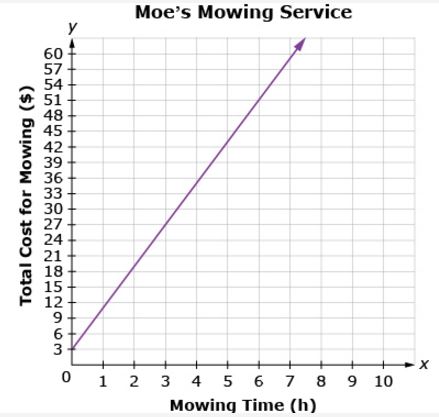
What is the general trend of this line graph?

a)

The more you mow, the less money you make.

b)

You make the same amount of money regardless of how long you mow.

c)

The more you mow, the more money you make.

d)

Mowing is dangerous.

3.
How many significant figures does the following number have?
0.00345
a)
6
b)
5
c)
3
d)
Ambiguous: 3,4,5, or 6
4.
How many significant figures does the following number have: 0.00204
a)
6
b)
4
c)
3
d)
2
5.
What is 98.907 rounded to 1 significant figure?
a)
98.9
b)
90
c)
100
d)
1x10²
6.

(a)   is a measure of how close measurements come to each other when they are made in the same way.

7.

How close a measurement is to the accepted value is called (a)   .

8.

A student's measured length during a science experiment was 12.00 cm. The actual size was 14.25 cm.


What was the percent error?


*Hint: You now know how to calculate error, and you should know how to calculate a percent, so put the two together to find this answer.

a)

15.79%

b)

18.75%

c)

2.25%

9.

Which is the more precise measurement?

a)

4 mL

b)

4.3 mL

c)

4.30 mL

d)

4.300 mL

10.

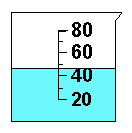
Based on the markings of this beaker, what is the estimated volume?

a)

48 mL

b)

48.2 mL

c)

48.25 mL

d)

0.04 L

11.

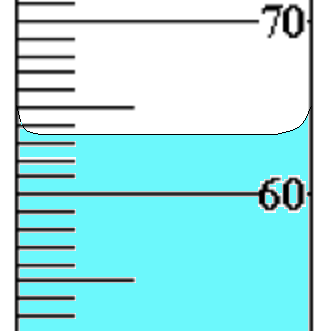
Based on the markings of this graduated cylinder, what is the estimated volume?

a)

63.5 mL

b)

63 mL

c)

63.55 mL

d)

0.063 L

12.

What SI Unit is used for Length?

a)

Gram

b)

Foot

c)

Meter

d)

Liter

13.

What SI Unit is used for Volume

a)

Ounce

b)

Liter

c)

Cup

d)

Gram

14.

What SI Unit is used for Mass

a)

Pound

b)

Ounce

c)

Meter

d)

Gram

15.
The SI unit for temperature is __?__.
a)
degree fahrenheit  (° F)
b)
degree celsius  (° C)
c)
kelvin  (K)
d)
degree centigrade  (°C)
16.

If glass breaks in the lab you should...

a)

clean it up and put it in the trash can

b)

just leave it and walk away

c)

tell the teacher so they can clean it up

d)

blame it on your friend and laugh at them

17.

Goggles must be worn when using...

a)

fire

b)

chemicals

c)

sharps instruments

d)

all of the above

18.

Long hair in the laboratory must be

a)

tied back or kept entirely out of the way with a hair band, etc.

b)

always neatly groomed.

c)

held away from the experiment with one hand.

d)

cut short.

19.

Horseplay, practical jokes, or pranks in the classroom are

a)

always against the rules.

b)

okay.

c)

not dangerous

d)

okay if you are working alone.

20.
Identify the piece of lab equipment seen in the image.
a)
Erlenmeyer Flask
b)
Graduated Cylinder
c)
Beaker
d)
Test Tube
21.
Identify the piece of lab equipment seen in the image.
a)
Pipets
b)
Test Tubes
c)
Forceps
d)
Scoopulas
22.

What equipment allows you to measure liquid's volume and measures in milliliters?

a)

test tube

b)

beaker

c)

flask

d)

graduated cylinder

23.
How many variables should be tested at a time?
a)
Three
b)
Zero
c)
Two
d)
One
24.
A testable prediction about a scientific investigation is a(n)
a)
Question
b)
Observation
c)
Hypothesis
d)
Experiment
25.
If you increase the amount of spinach you eat, then you will increase the iron in your blood. 
What's the dependent variable?
a)
increase the amount of iron in your blood
b)
spinach you eat
26.

This part of the experiment serves as a basis of comparison:

a)

control group

b)

Independent variable

c)

dependent variable

d)

data

27.

This variable in an experiment is the one being deliberately changed by the scientist.

a)

dependent variable

b)

independent variable

c)

data

d)

control group

28.

Observations made during an experiment are called:

a)

data

b)

problems

c)

conclusions

d)

questions

29.

An experiment is performed on plants to see how different liquids affect plant growth. Each plant in the experiment is given a different liquid; water, apple juice, or milk. Each plant has the same amount of soil, sunlight, and listens to the same music. In this investigation, what are the controlled variables?

a)

type of plant, amount of music, and sunlight

b)

plant growth

c)

water, apple juice, milk

30.

The graph below shows atmospheric carbon dioxide levels since the year 1880.Which of the following conclusions can be drawn from this graph

a)

Atmospheric carbon dioxide levels are responsible for global temperature change.

b)

Atmospheric carbon dioxide levels have been rising at about the same rate for the past century.

c)

Atmospheric carbon dioxide levels have remained the same over the past century.

d)

Atmospheric carbon dioxide levels have been rising at an increasingly higher rate as the past century has progressed.

31.

Mrs. Lewis sets up an experiment to see how the mass of a ball affects the distance it rolls off a ramp. Identify the dependent variable.

a)

height of the ramp

b)

distance traveled by the ball

c)

mass of the ball

d)

weight of the ball

32.
An experiment was carried out to determine whether drinking caffeinated soda increases pulse rate. The pulse rates of two groups of people at rest were measured. Group A was then given caffeinated soda and group B was given caffeine-free soda. One hour after drinking the soda, the pulse rates were measured. The participants in the experiment were all the same age, and they were all given the same amount of soda. The dependent variable in this experiment is the
a)
type of soda given to each group
b)
amount of soda given to each group
c)
 pulse rate of each group
d)
age of participants in each group
33.
Explaining the color of a chemical would be what kind of observation?
a)
Qualitative 
b)
Quanitative
34.
What is the part of the experiment that is left alone or “natural", and is used to compare back to?
a)
Independent Variable
b)
Dependent Variable
c)
Control Group
d)
Experimental Group 
35.

What two words should be in your hypothesis?

a)

I think

b)

If ...then...

c)

It will

d)

No idea

36.

Choose the correctly written hypothesis for "What is the effect of putting Pam Cooking Spray on the bottom of a sled?"

a)

I think the sled will slide faster.

b)

If I put Pam Cooking Spray on the bottom of my sled, then I will win the race."

c)

If I put Pam Cooking Spray on the bottom of my sled, then I will slide faster.

37.
When you step out into the cold, your body shivers in order to keep its temperature at 98.6F.
a)
All living things use energy
b)
All living things contain cells
c)
All living things maintain homeostasis
d)
All living things grow
38.
All organisms have more than one cell.
a)
false
b)
true
39.
 The best definition for biological evolution is?
a)
A.  When Earth’s processes cause change overtime.
b)
B.  When rock’s change over time.
c)
C.  When a species changes      overtime.
40.
All biological macromolecules are organic, meaning they have ________ and hydrogen bonds.
a)
Carbon
b)
Hydrogen
c)
Nitrogen
d)
Oxygen
41.
What are the monomers (building blocks) of CARBOHYDRATES?
a)
Monosaccharides (simple sugars)
b)
Amino Acids
c)
Nucleotides
d)
Triglycerides/No true monomer
42.
What are the monomers (building blocks) of PROTEINS?
a)
Monosaccharides (simple sugars)
b)
Amino Acids
c)
Nucleotides
d)
Triglycerides/No true monomer
43.
What are the monomers (building blocks) of NUCLEIC ACIDS?
a)
Monosaccharides (simple sugars)
b)
Amino Acids
c)
Nucleotides
d)
Triglycerides/No true monomer
44.
What are the monomers (building blocks) of LIPIDS?
a)
Monosaccharides (simple sugars)
b)
Amino Acids
c)
Nucleotides
d)
Triglycerides/No true monomer
45.
Enzymes are a special type of _______________.
a)
Protein
b)
Carbohydrate
c)
Nucleic Acid
d)
Lipid
46.
The FUNCTION of any macromolecule is determined by its ______________.
a)
structure
b)
pH
c)
strength
d)
dissolvability
47.
Carbohydrates are composed of which elements?
a)
C , H , O
b)
C , H , O , N
c)
C , H , O , N , P
d)
C , H , O , S
48.
Lipids are composed of which elements?
a)
C , H , O
b)
C , H , O , N
c)
C , H , O , N , P
d)
C , H , O , S
49.
Proteins are composed of which elements?
a)
C , H , O
b)
C , H , O , N
c)
C , H , O , N , P
d)
C , H , O , S
50.
Nucleic acids are composed of which elements?
a)
C , H , O
b)
C , H , O , N
c)
C , H , O , N , P
d)
C , H , O , S
51.
The image contains an example of which biological macromolecule?
a)
Carbohydrate
b)
Protein
c)
Nucleic Acid
d)
Lipid
52.
The image contains an example of which biological macromolecule?
a)
Carbohydrate
b)
Protein
c)
Nucleic Acid
d)
Lipid
53.

All living things ___ to the environment in order maintain homeostasis.

a)

grow

b)

respond

c)

consume

d)

evolve

54.

What is the correct order of organization?

a)

cells->tissue->organs->organ systems-> organism

b)

tissue->cells->organs->organ systems-> organism

c)

organs->organ systems-> organism->cells->tissue

55.
All organisms are made of:
a)
organelles
b)
cytoplasm
c)
DNA
d)
cells
56.
Which one of the following is a characteristic of life?
a)
Growth
b)
Breathing
c)
Expelling toxins
d)
Photosynthesis
57.

Which macromolecule is used as our main source of energy?

a)

Lipids/Fats

b)

Nucleic Acids

c)

Proteins

d)

Carbohydrates

58.
What type of macromolecule is being represented in this image? 
a)
carbohydrate
b)
lipid
c)
protein
d)
nucleic acid
59.
Is found in the cell membrane as a bilayer. 
a)
lipids
b)
protein
c)
nucleic acid
d)
carbohydrate
60.

Which macromolecule is shown?

a)

lipid

b)

protein

c)

nucleic acid

d)

carbohydrate

61.
What type of carbohydrate is shown?
a)
monosaccharide
b)
disaccharide
c)
polysaccharide
62.
How do enzymes increase the speed of chemical reactions?
a)
reducing the number of products   
b)
reducing the activation energy
c)
increasing the temperature of the cell
d)
increasing the concentration of reactants 
63.
Connects monomers to form a polymer
a)
Dehydration synthesis
b)
hydrolysis
64.
Produces water as a by-product
a)
Dehydration synthesis
b)
Hydolysis
65.
Water is used to break bonds between polymers
a)
dehydration synthesis
b)
Hydrolysis
66.
The following figure is illustrating
a)
Dehydration Synthesis
b)
Hydrolysis
67.
The following figure is illustrating
a)
Dehydration Synthesis
b)
Hydrolysis
68.
The following figure is illustrating
a)
Dehydration Synthesis
b)
Hydrolysis
69.

Macromolecules are made of repeating subunits called

a)

monomers

b)

monosaccharides

c)

polymers

d)

polysaccharides

70.

What functional group is -OH

a)

Hydroxyl

b)

Carboxyl

c)

Amino

d)

Carbonyl Ketone

71.

What polymer does iodine solution indicate for?

a)

polynucleotide

b)

polysaccharide

c)

many fatty acids

d)

polypeptide

72.

What macromolecule is biuret solution indicating for?

a)

Carbohydrate

b)

Lipid

c)

Protein

d)

Nucleic Acid

73.

Benedict's solution indicates for which monomer?

a)

amino acid

b)

monosaccharide

c)

fatty acid

d)

nucleotide

74.

What is C labeling in the picture?

a)

active site

b)

substrate

c)

products

d)

enzyme

75.

This reagent turns light purple when the test is positive; stays blue if negative

a)

Lugol's Iodine Solution

b)

Benedict's Solution

c)

Brown Paper Bag

d)

Biuret's Solution

76.

This reagent must be heated in order to see a color change

a)

Lugol's Iodine Solution

b)

Benedict's Solution

c)

Brown Paper Bag

d)

Biuret's Solution

77.

This reagent turns orange when the test is positive; stays blue if negative

a)

Lugol's Iodine Solution

b)

Benedict's Solution

c)

Brown Paper Bag

d)

Biuret's Solution

78.

This reagent turns dark purple/grey/black if positive and stays yellow if negative

a)

Lugol's Iodine Solution

b)

Benedict's Solution

c)

Brown Paper Bag

d)

Biuret's Solution