wayground logo

Free Printable Worksheets

Font size

S
M
L
XL
Worksheets

Unit 3 Assessment: Ecological Diversity

Total questions: 87

Worksheet time: 1hrs 8mins
Name
Class
Date
1.
Tigers living in warm climates have thinner coats of fur than tigers living in cool climates. This is a result of
a)
genetic diversity.
b)
species diversity.
c)
ecosystem diversity.
d)
general diversity.
2.
The Convention on International Trade in Endangered Species of Wild Fauna and Flora (CITES) and the Convention on Biological Diversity are examples of
a)
organizations that promote poaching.
b)
polls measuring American opinion about biodiversity.
c)
treaties to protect biodiversity.
d)
laws to increase the number of species.
3.
To manage, protect, and reintroduce threatened and endangered species are the goals of
a)
wildlife corridors.
b)
conservation concessions.
c)
Species Survival Plans.
d)
biodiversity hotspots.
4.
Relieving a nation from repaying some of the money it owes other nations in exchange for protecting its biodiversity is called a
a)
debt-for-nature swap.
b)
conservation concession.
c)
Species Survival Plan.
d)
wildlife corridor.
5.
A region that includes tigers, eagles, lizards, fish, rabbits, and many other types of organisms would be described as having a high level of
a)
taxonomic diversity.
b)
genetic diversity.
c)
ecosystem diversity.
d)
species diversity.
6.
The latitudinal gradient is a natural pattern in which species diversity generally
a)
increases toward the equator.
b)
decreases toward the prime meridian.
c)
decreases in warmer climates.
d)
increases toward the poles.
7.
High levels of biodiversity tend to
a)
have little or no effect on ecosystems.
b)
decrease an ecosystem’s resistance.
c)
make an ecosystem less resilient.
d)
increase the stability of an ecosystem.
8.
Which product is often derived from the natural environment?
a)
cooking oil
b)
medicines
c)
fuel
d)
all of the above
9.
The disappearance of a particular population from a given area, but not of the entire species globally, is called
a)
extirpation.
b)
extinction.
c)
poaching.
d)
fragmentation.
10.
A species that is at serious risk of extinction is called a(n)
a)
threatened species.
b)
invasive species.
c)
endangered species.
d)
extirpated species.
11.
By far, the biggest cause of biodiversity loss today is
a)
climate change.
b)
over harvesting.
c)
habitat change and fragmentation.
d)
pollution.
12.
What global phenomenon has caused some organisms to move toward the poles or to higher altitudes?
a)
habitat fragmentation
b)
pollution
c)
invasive species
d)
warming temperatures
13.
In the United States, what is the major law that protects biodiversity?
a)
Convention on Biological Diversity
b)
Endangered Species Act
c)
U.S. Fish and Wildlife Service
d)
Species Survival Plan
14.
One way that zoos and aquariums help increase wildlife populations is through
a)
captive breeding programs.
b)
international biodiversity treaties.
c)
conservation concessions.
d)
wildlife corridors.
15.
Which of the following represents single-species approaches to protecting biodiversity?
a)
building wildlife corridors
b)
selling conservation concessions
c)
captive breeding and cloning
d)
mapping biodiversity hotspots
16.
There is a plan to establish an 8000-kilometer-long strip of land across eight southeast Asian countries to rejoin fragments of tiger habitat. This is an example of a
a)
wildlife corridor.
b)
worldwide biodiversity treaty.
c)
captive breeding program.
d)
conservation concession.
17.
Which of the following would be most effective in slowing the loss of biodiversity?
a)
freezing fertilized eggs of endangered animals in case the species become extinct in the wild
b)
setting aside small plots of land in a variety of ecosystems, such as forests, grasslands, and marshes
c)
creating large parks/preserves in biodiversity hotspots
d)
requiring every country to maintain a seed bank
18.
In what part of the world are the greatest number of extinctions occurring?
a)
in tropical rain forests
b)
in deserts
c)
in the Arctic
d)
in Europe and the United States
19.
Earth's various organisms appear to be
a)
mostly small vertebrates.
b)
largely known to scientists.
c)
concentrated in certain biomes.
d)
evolving at an unprecedented rate.
20.
The current rate of species extinction is
a)
slower than at any other time in this century.
b)
attributable to the actions of humans.
c)
the result of natural environmental processes.
d)
of little consequence to Earth’s long-term survival.
21.
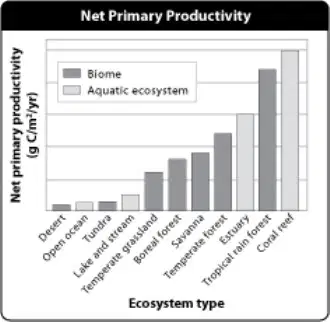
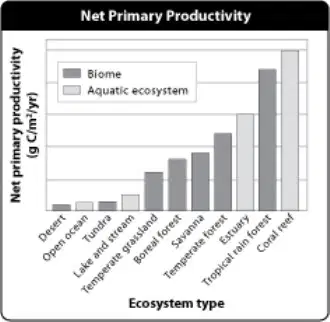
Which biome , or aquatic ecosystem would have the highest net primary production?
a)
savanna
b)
boreal forest
c)
coral reefs
d)
desert
22.
Which of the following describes the aphotic zone in an aquatic ecosystem?
a)
the very bottom of a body of water
b)
the zone where no sunlight penetrates and photosynthesis cannot occur
c)
the shallow, near-shore zone
d)
the uppermost layer where there is enough sunlight for photosynthesis
23.
Which zone of an aquatic ecosystem tends to have more life—both producers and consumers?
a)
aphotic zone
b)
photic zone
c)
benthic zone
d)
All have roughly the same amounts of life.
24.
Which ecosystems are considered standing freshwater ecosystems?
a)
lakes
b)
wetlands
c)
ponds
d)
all of the above
25.
Ecologists use similarities between ecosystems to classify them into broad categories called
a)
biomes.
b)
littoral zones.
c)
estuaries.
d)
benthic zones.
26.
Which biome would have the lowest net primary production?
a)
tropical rain forest
b)
temperate grassland
c)
coral reef
d)
desert
27.
Over a given unit of time, the rate at which plants and algae convert solar or chemical energy into energy stored in the bonds of organic sugars is called
a)
natural selection.
b)
gross primary production.
c)
salinity.
d)
estivation.
28.
Criteria such as salinity, depth, and whether the water is flowing or standing are used by scientists to
a)
classify aquatic ecosystems.
b)
measure net primary productivity in lakes.
c)
distinguish aquatic ecosystems from terrestrial ecosystems.
d)
determine the number of species in a body of water.
29.
Which statement about the littoral zone in a lake or pond is true?
a)
There are no rooted aquatic plants.
b)
It has deep water.
c)
It is far from the shore.
d)
It is rich in invertebrates , and other organisms.
30.
What is the difference between freshwater swamps and freshwater marshes?
a)
Swamps have deep water, but marshes have shallow water.
b)
Swamps have mostly woody shrubs and trees, but marshes have mostly grasses.
c)
Swamps usually have saltwater, but marshes have fresh water.
d)
Swamps have lots of wildlife, but marshes do not.
31.
Where rivers flow into the ocean, mixing fresh water with saltwater, brackish ecosystems occur which are called
a)
bogs.
b)
flood plains.
c)
estuaries.
d)
limnetic zones.
32.
What is the name of the type of large brown algae that grows from the ocean floor of continental shelves, reaching upward toward the sunlit surface?
a)
coral
b)
chiton
c)
kelp
d)
phytoplankton
33.
Which of the following is the best description of a region’s climate?
a)
The average weather that occurs over a long time
b)
The average precipitation that occurs over a long time
c)
The average high and low temperatures of a region
d)
The amount of precipitation in a typical year
34.
What is one significant effect of upwelling?
a)
It creates an area of high precipitation
b)
It creates an area of high nutrient levels along the coast
c)
It drives thermohaline circulation
d)
It brings warm water to the surface of the ocean
35.
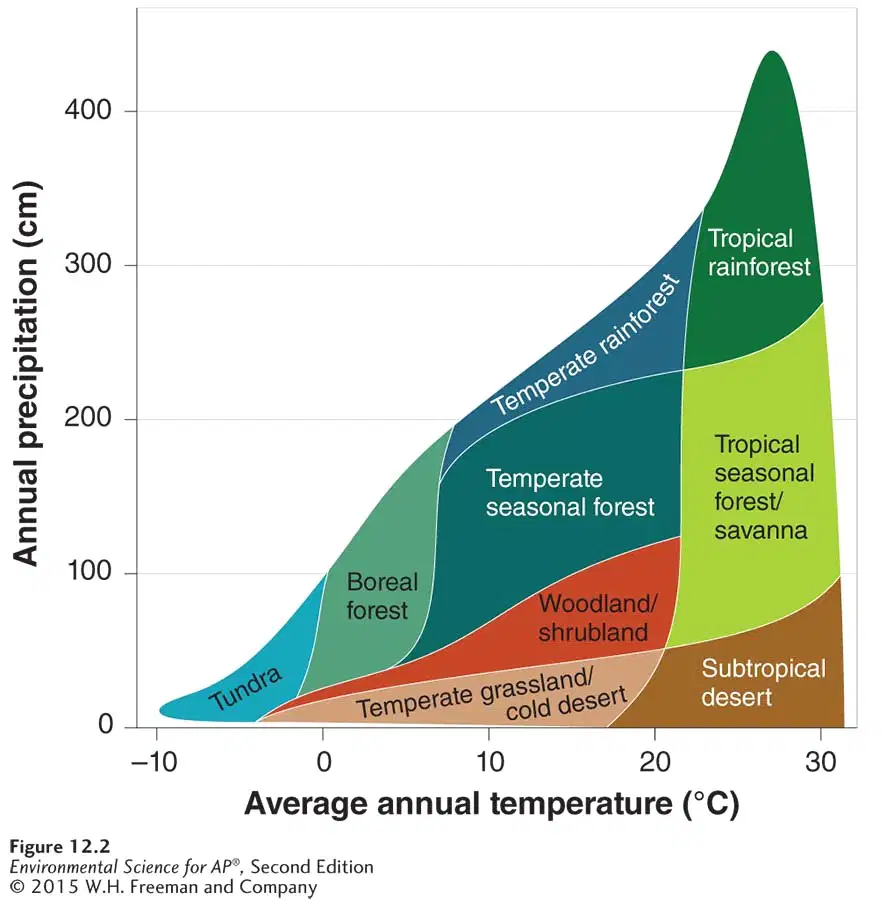
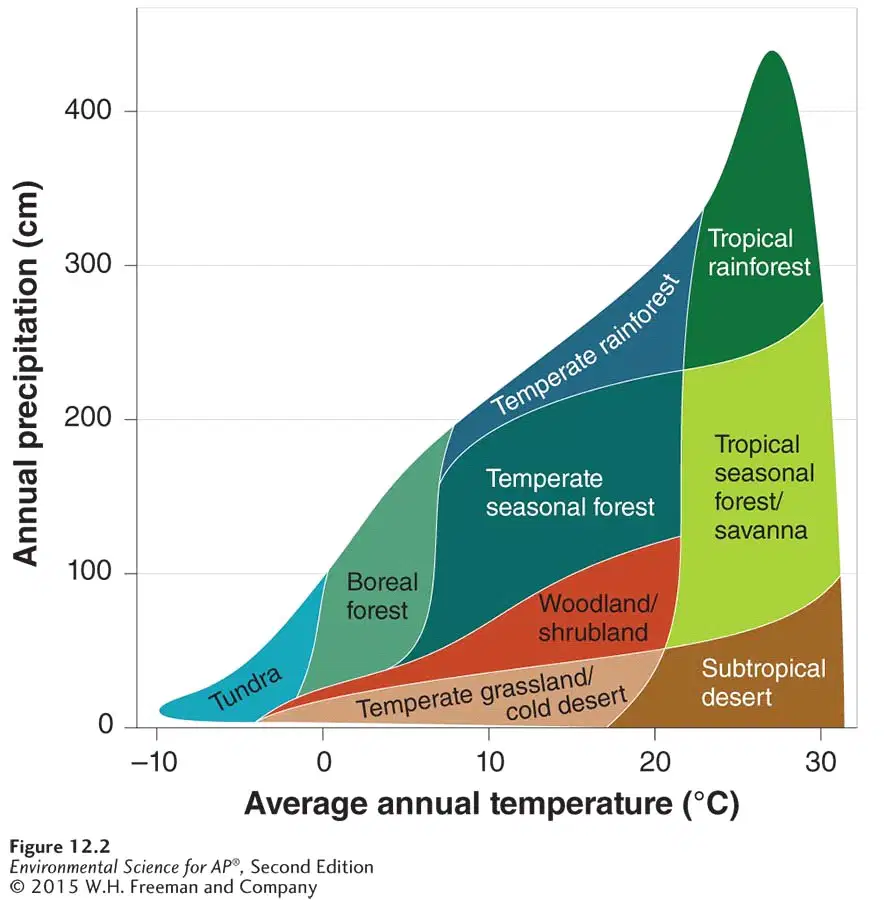
Use Figure below. In which biome would you expect to find in an area with an average temperature of 10 C and 100 cm of precipitation annually?
a)
Boreal forest
b)
Temperate rainforest
c)
Temperate grassland
d)
Temperate seasonal forest
36.
Use Figure below. In which biome would you expect to find in an area with an average temperature of 25 C and 200 cm of precipitation annually?
a)
Tropical rainforest
b)
Tropical seasonal forest/savanna
c)
Temperate seasonal forest
d)
Woodland/shrubland
37.
Which biome has some low-growing vegetation, but cannot support trees because of a permanently frozen layer of soil?
a)
Tropical seasonal forest/savanna
b)
Tundra
c)
Temperate grassland/cold desert
d)
Boreal forest
38.
Which biome has warm temperatures, high precipitation, and little seasonal variation due to its location near the equator?
a)
Subtropical desert
b)
Temperate grassland/cold desert
c)
Woodland/shrubland
d)
Tropical rainforest
39.
Which is NOT an ECOLOGICAL service provided by wetlands?
a)
Wetlands store rainwater.
b)
Wetlands are frequently used for agriculture because of the suitability of the soil.
c)
Wetlands provide breeding site for birds and fish.
d)
Wetlands filter pollutants from water.
40.
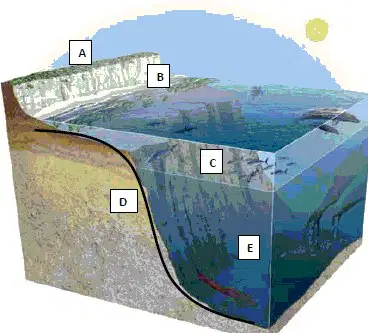
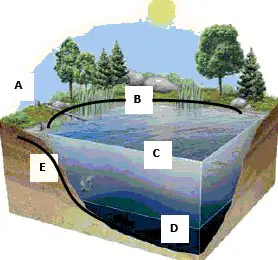
Use Figure below. Which is the benthic zone?
a)
A
b)
B
c)
C
d)
D
41.
Use Figure below. Which is the photic zone?
a)
A
b)
B
c)
C
d)
D
42.
Use Figure below. In which ocean zone changes the most from high tide to low tide?
a)
A
b)
B
c)
C
d)
D
43.
Use below. Which zone of the pond contains phytoplankton, but not rooted plants?
a)
A
b)
B
c)
C
d)
D
44.
Use Figure below. In which zone of the pond does most photosynthesis occur?
a)
A
b)
B
c)
C
d)
D
45.
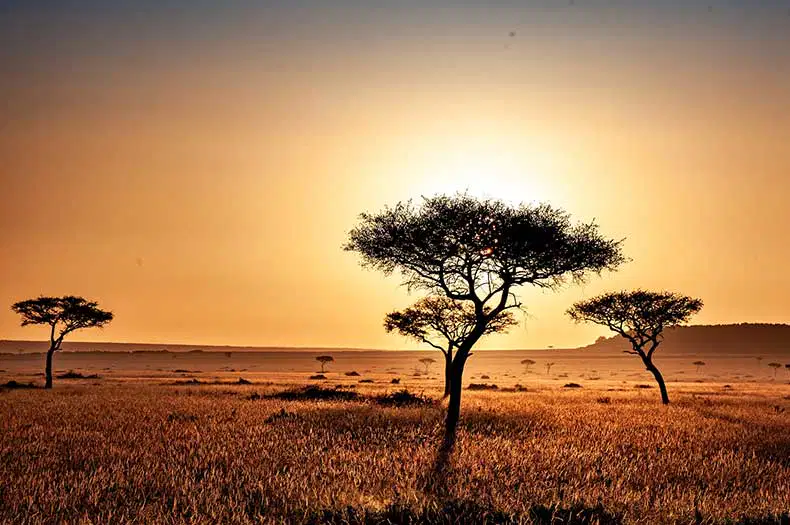
If you visited a savanna, you would likely see
a)
large herds of grazing animals, such as rhinos, gazelles, and giraffes.
b)
a dense forest.
c)
snow and ice.
d)
a coastal ecosystem.
46.
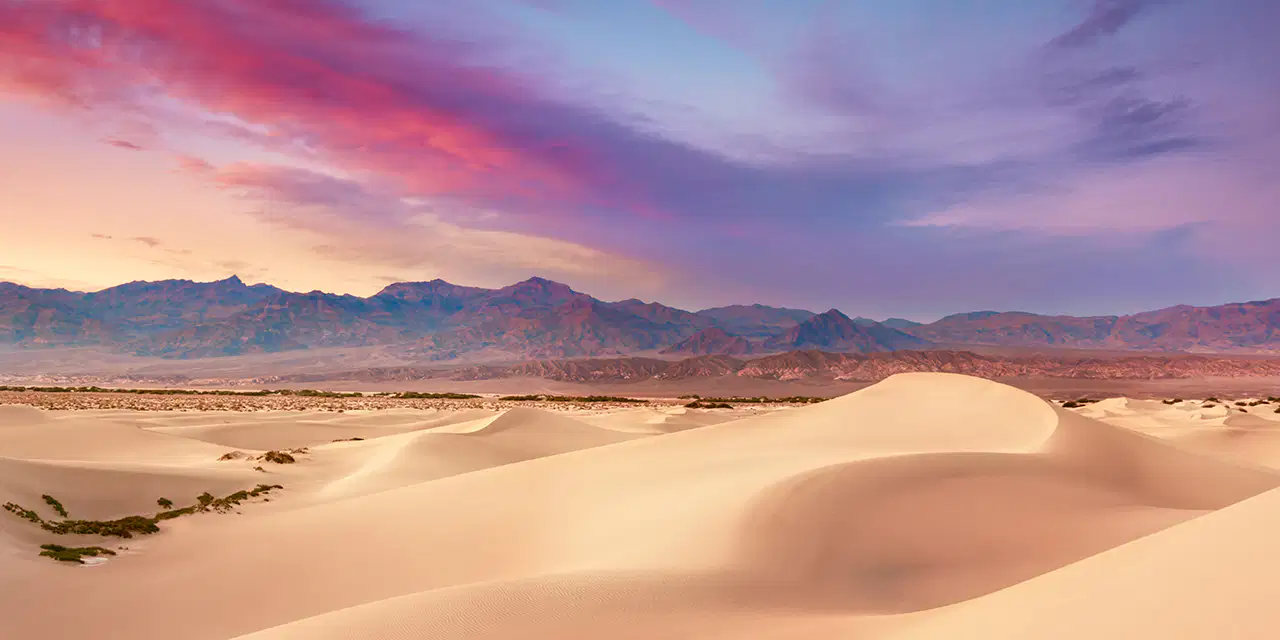
Animals that live in the desert
a)
hibernate in winter.
b)
are usually nocturnal.
c)
usually have thin skin to absorb water.
d)
include camels, moose, and various reptiles.
47.
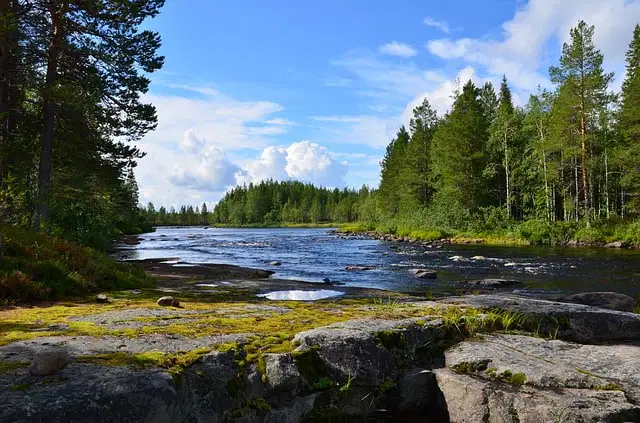
Taiga is
a)
a cold, treeless, desert-like biome found near the North and South Poles.
b)
found mostly in Africa.
c)
a forest biome dominated by coniferous trees, such as pine, fir, and spruce.
d)
a dry, rocky biome found in the central part of South America.
48.
As you travel from the North Pole toward the equator, you would expect to see
a)
tropical rain forests, then deserts, then taiga.
b)
temperate deciduous forests, then taiga, then tropical rain forests.
c)
tundra, then grasslands, then tropical rain forests.
d)
taiga, then desert, then tundra.
49.
The distance north or south of the equator, as measured in degrees, is called
a)
altitude.
b)
latitude.
c)
longitude.
d)
magnitude.
50.
Which of the following is located primarily in coastal areas that have Mediterranean-style climates with warm, dry summers and mild, wet winters?
a)
tallgrass prairie
b)
savanna
c)
tundra
d)
chaparral
51.
The graphs below show average temperature and precipitation for four biomes—chaparral, desert, tropical rain forest, and temperate grassland. The lines across the tops of the graphs represent temperature, and the bars represent precipitation. Which of the four graphs above represents a biome with mild, wet winters and hot, dry summers?
a)
A
b)
B
c)
C
d)
D
52.
Which of the four graphs above represents a biome with heavy, year-round precipitation and constant, warm temperatures?
a)
A
b)
B
c)
C
d)
D
53.
The graphs above show average temperature and precipitation for four biomes—chaparral, desert, tropical rain forest, and temperate grassland. The lines across the tops of the graphs represent temperature, and the bars represent precipitation. Which of these four graphs would represent a desert biome?
a)
A
b)
B
c)
C
d)
D
54.
The fact that organisms are adapted to survive in particular environments helps to explain why
a)
captive-breeding programs are often ineffective.
b)
non-native plant species never flourish in new areas.
c)
habitat destruction accounts for most extinctions.
d)
compromise is impossible on environmental issues.
55.
The type of hunting that threatens species survival the most is
a)
sanctioned by industrialized nations.
b)
legal hunting done by sports enthusiasts.
c)
ignored by global conservation groups.
d)
especially a problem in less developed nations.
56.
What groups of organisms are most in danger of extinction?
a)
a. those with small populations
b)
b. those that migrate or need special habitats
c)
c. those with large populations that breed quickly
d)
d. Both (a) and (b)
57.
Why is biodiversity important to ecosystems?
a)
It allows animals to feed permanently from one type of plant.
b)
It increases at each level of the food chain.
c)
It helps populations adapt to ecological changes.
d)
It reduces the number of insects in a given ecosystem.
58.
When the last member of a species dies, ________ has occurred.
a)
selection
b)
endangerment
c)
extinction
d)
decline
59.
Non-local species that spread rapidly across large areas are known as
a)
alien species.
b)
invasive species.
c)
exotic species.
d)
native species.
60.
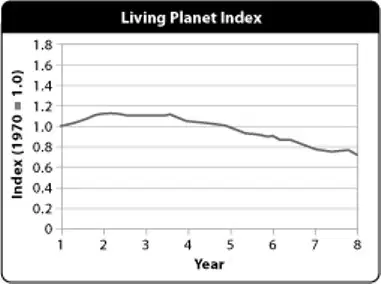
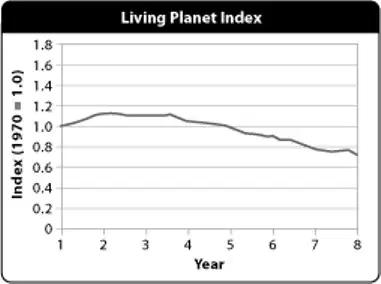
Use the graph to answer the following question: By what percentage has the Living Planet Index fallen since year 1?
a)
roughly 50%
b)
roughly 20%
c)
roughly 30%
d)
roughly 10%
61.
What can you infer about populations of life on Earth based on this graph?
a)
That the population of species has dramatically increased in recent years.
b)
That it species populations have fluctuated from one year to the next.
c)
That populations of many species have declined since 1970.
d)
That there is a stabilization of species population since 1970.
62.
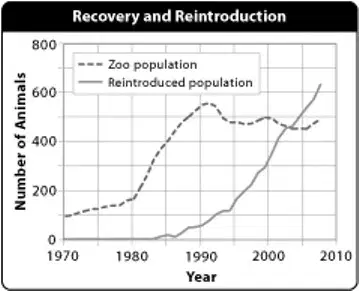
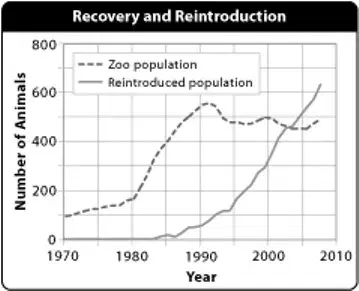
Use the graph to answer the following questions. What would most likely be the main cause for the initial increase in the zoo population?
a)
Animals born as part of a captive breeding program.
b)
The zoo acquiring additional animals from the wild for research
c)
The zoo acquiring addition animals due to animal on the endangered species list.
d)
All of the above.
63.

Use the graph to answer the following questions. Predict what will happen to the reintroduced population, in the graph, in the next ten to twenty years.

(a)  

64.

Match the following

a)

Habitat Loss

1.

Natural habitats are completely changed.

b)

Habitat Fragmentation

2.

Habitats are split into smaller sections

c)

Habitat Restoration

3.

returns conditions to previous habitat

65.

​ (a)   is the relative proportion of individuals within the different species in a given area.

Choose from the below words
Species evenness
species richness
66.

Match the following statements with the correct words.

a)

biodiversity

1.

The variety of life found on Earth.

b)

ecological

2.

This type of diversity refers to the ways that species interact with each other & their environment

c)

Genetic

3.

This type of diversity is the variation in genes within a species.

d)

Surviving

4.

Organisms with a large gene pool have a great chance of ____ than a population w/limited variability

e)

Species

5.

This type of diversity refers to the number of species & abundance of species in a particular place

67.

Match the following

a)

Ecosystem Diversity

1.

Variety of habitats in biosphere

b)

Species Diversity

2.

Different types of organisms in area

c)

Genetic Diversity

3.

Different alleles present in species

68.

A series of progressive changes in the composition of an ecological community over time

a)

Climax Community

b)

Primary Succession

c)

Ecological Succession

d)

Species Richness

69.

A measure of both species richness and relative number of species.

a)

Species diversity

b)

Species richness

c)

Biodiversity

d)

Keystone species

70.

a change or disturbance of the environment most often caused by human influences and natural ecological processes.

a)

Environmental Change

b)

Evidence Of Evolution

c)

Trophic Level

d)

Natural Selection

71.

an area that was previously occupied by living things is disturbed, then re-colonized following the disturbance.

a)

Pioneer species

b)

Ecological succession

c)

Climax community

d)

Secondary succession

72.

newly exposed or newly formed rock is colonized by living things for the first time. Certain hardy plants and lichens with few soil requirements, called pioneer species, colonize the area first.

a)

Climax community

b)

Primary succession

c)

Ecological succession

d)

Secondary succession

73.

A species that has a disproportionately large effect on community structure relative to their abundance.

a)

Pioneer Species

b)

Invasive Species

c)

Keystone Species

d)

Foundation Species

74.

usually modify the environment so that it can support the other organisms that form the community.

a)

Pioneer Species

b)

Foundation Species

c)

Invasive Species

d)

Keystone Species

75.

any change in the environment, that can modify the composition, structure, or function of an ecological community

a)

Ecosystem

b)

Secondary Succession

c)

Disturbance

d)

Biodiversity

76.

Match the following

a)

Biomass

1.

the total amount of living tissue in a trophic level.

b)

Species richness

2.

All the populations of all the different species that live together in a particular area

c)

Complexity

3.

the state or quality of being intricate or complicated

d)

Dynamic Equilibrium

4.

a state of balance between continuing processes

e)

Biodiversity

5.

the variety of organisms in an area, by species, genes, populations, and communities

77.

Non-native species whose introduction causes, or can cause harm in their new area

a)

Pioneer Species

b)

Invasive Species

c)

Keystone Species

d)

Foundation Species

78.

all living things and their physical environments within a particular area

a)

Community

b)

Invasive Species

c)

Ecosystem

d)

Biodiversity

79.

Each step in a food chain or food web

a)

ecosystem

b)

pioneer species

c)

foundation species

d)

trophic level

80.

The first species to populate an area during succession.

a)

Keystone species

b)

Pioneer species

c)

Foundation species

d)

Invasive species

81.

Primary succession occurs in an area that has:

a)

Has Soil

b)

Has No Soil

c)

Has Some Soil

d)

none of these

82.

What is an example of an area that is likely to undergo primary succession?

a)

Glaciers melt and leave exposed rock

b)

Plants die from drought and decompose

c)

Land is bulldozed and soil remains

83.
What are examples of pioneer species in a primary succession?
a)
Bushes and Shrubs
b)
Oak trees
c)
Mossess and Lichens 
d)
A rose Bush
84.

After a volcanic eruption, volcanic rock is present (but no soil). Which of the following states the most likely order of succession that would be seen?

a)

Lichens → Shrubs → Grasses → Trees

b)

Lichens → tree → shrubs→Grasses

c)

Grasses → Lichens → Shrubs → Trees

d)

Lichens → Grasses → Shrubs → Trees

85.

Primary or secondary ecological succession?

a)
b)
86.

T or F: Succession increases biodiversity.

a)

true

b)

false

87.
What is the order of succession shown in this figure?
a)
A, B, C, D
b)
B, A, D, C
c)
C, D, A, B
d)
D, A, B, C