
 Worksheets
Sankalp
Total questions: 75
Worksheet time: 1hrs 3mins
The correct pair of best conductors of heat are
Alluminium and Silver
Copper and Silver
Silver and Zinc
Zinc and Magnesium
Lead and Mercury are
Best conductors of heat
Bad conductors of heat
Poor conductors of heat
Bad conductors of electricity
Elements do not react with oxygen even at high temperature are
Gold and Silver
Magnesium and Alluminium
Sodium and Potassium
Copper and Zinc
Zn, Fe, Al and Mg. When we arrange these elements in the ascending order of their
reactivity series we get
Mg < Al < Zn < Fe
Al < Mg < Fe < Zn
Zn < Al < Mg < Fe
Fe < Zn < Al < Mg
Hydrogen gas is not liberated when a metal reacts with HNO3. This is because
HNO3 is a
Weak oxidizing agent
Strong oxidizing agent
Weak reducing agent
Strong reducing agent
Alloys are the
Heterogenous mixture of metals and non-metals
Heterogenous mixture of two or more metals
Homogenous mixture of metals and non-metals
Homogenous mixture of two or more non-metals
Identify the correct group of soft metals from the following
Sodium, Alluminium and Copper
Sodium, Potassium and Lithium
Copper, Manganese and Magnesium
Zinc, Barium and Lithium
Observe the given information with respect to some elements and choose the correct name of the elements
Elements A B C D
Electrons K 2 2 2 2
L 8 8 6 8
M 1 8 0 4
N 0 1 0 0
A is Silicon, B is Sodium, C is Potassium
and D is Oxygen
A is Potassium, B is Oxygen, C is Sodium
and D is Silicon
A is Oxygen, B is Silicon, C is Potassium and
D is Sodium
A is Sodium, B is Potassium, C is Oxygen and D is Silicon
NaCl and CuSO4 compounds have high melting and boiling points. This is because
These are easily soluble in water and makes aqueous solutions
A considerable amount of energy is required to break the strong inter-ionic bond
They form positive and negative ions by the process of ionization
Their ions move freely and conduct electricity
The strong force of attraction between the positive and negative ions of ionic
compounds shows their
Hardness
Solubility
Conduction of electricity
Conduction of heat

Non-metals come in only a few colours and are mostly silver-grey.
True
False

At room temperature, a non-metal, such as oxygen (O), can be invisible.
True
False
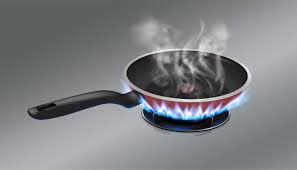
The handle in this picture is covered in a ___.
metal
non-metal
Non-metals are ___ conductors of heat.
Good
Poor / Bad
If iron nails are added to zinc sulphate solution ,the possible observation can be
No reaction takes place
A silvery white coating appears on iron nails
A black coating appears on iron nails
A pale green colour of solution is seen
option 1
What is just so typical of NON-metals?
They don't know what colours go well together.
Malleable.
Form acidic oxides.
Good conductors of electricity.
High melting points.
A metal high in the reactivity series.....
Forms unstable compounds.
Can be obtained by the reduction of the ore with the carbon.
Readily gains electrons.
Burns to form basic oxides.
Reacts readily with cold water to form Hydrogen.
Which of the following is true of all metals?
They react with acids to form Hydrogen
They are denser than water
They conduct electricity
They're silver in colour.
what temperature does mercury melt at ?
1200 Celsius
120 degrees Fahrenheit
12 degrees Celsius
room temperature

What is just so typical of NON-metals?
They don't know what colours go well together.
Malleable.
Form acidic oxides.
Good conductors of electricity.
High melting points.
A metal high in the reactivity series.....
Forms unstable compounds.
Can be obtained by the reduction of the ore with the carbon.
Readily gains electrons.
Burns to form basic oxides.
Reacts readily with cold water to form Hydrogen.


By looking at the element illustrated here, how might you classify it by appearance?
Metal
Non-Metal
Metalloid

This picture illustrates copper's
brittleness
malleability
ductility
Potassium (K), an alkali metal, and magnesium (Mg), an alkaline earth metal, both combine readily with bromine (Br), a halogen. What compound will each element (K and Mg) most likely form with bromine?
KBr and Mg2Br
KBr and MgBr
K2Br and Mg2Br
KBr and MgBr2
Unknown element W has 2 valence electrons. Unknown element X has 7 valence electrons. Which formula shows the most likely outcome when elements W and X react?
WX
WX2
W2X
W2X2
Amphoteric oxides react with both acids and alkali to form salt and water.Pick the amphoteric oxide
Aluminium oxide
calcium oxide
zinc oxide
Both aluminium and zinc oxide
The metal that will release hydrogen gas on reacting with Dilute nitric acid will be:
Sodium
Iron
Magnesium
Zinc
Identify the correct group of soft metals from the following
Sodium, Alluminium and Copper
Sodium, Potassium and Lithium
Copper, Manganese and Magnesium
Zinc, Barium and Lithium
Zn, Fe, Al and Mg. When we arrange these elements in the ascending order of their
reactivity series we get
Mg < Al < Zn < Fe
Al < Mg < Fe < Zn
Zn < Al < Mg < Fe
Fe < Zn < Al < Mg


_____ is used in vulcanization of rubber
Sodium
Chlorine
Sulphur
Iodine
_______ are used in match sticks heads
Nickel and Phosphorus
Phosphorus and Neon
Gold and Sulfur
Phosphorus and Sulfur
The solution of ash of magnesium ribbon is
acidic
basic
neutral
all of these
Which of the following metal is generally extracted by electrolysis ?
Zn
Al
Fe
Cu
Amphoteric oxides react with both acids and alkali to form salt and water. Pick the amphoteric oxide (s)
Aluminium oxide
calcium oxide
zinc oxide
Both aluminium and zinc oxide
Of these, the metals which occur in free state as well as combined state are
Na, Mg
Mg, Au
Zn, K
Cu, Ag
Which of the following is not a metalloid?
Rhenium
Germanium
Tellurium
Silicon
The colour of PbO2 is
Dark Brown
Yellow
White
Light Blue
Select the correct statement:
All ores are minerals
All minerals are ores
Reaction between X and Y forms compound Z. X loses electron and Y gains electron. Which of the following properties is not shown by Z?
Has high melting point
Has low melting point
Conducts electricity in molten state
Occurs as solid
The electronic configurations of three ele¬ments X, Y and Z are X — 2, 8; Y — 2, 8, 7 and Z — 2, 8, 2. Which’of the following is correct?
X is a metal
Y is a metal
Z is a non-metal
Y is a non-metal and Z is a metal
Which one of the following metals do not react with cold as well as hot water?
Na
Ca
Mg
Fe
Which of the following oxide(s) of iron would be obtained on prolonged reaction of iron with steam?
FeO
Fe2O3
Fe3O4
Fe2O3 and Fe3O4
Which of the following are not ionic compounds?
(i) KCl
(ii) HCl
(iii) CCl4
(iv) NaCl
(i) and (ii)
(ii) and (iii)
(iii) and (iv)
(i) and (iii)
Which one of the following four metals would be displaced from the solution of its salts by other three metals ?
Mg
Ag
Zn
Cu
Although metals form basic oxides, which of the following metals form an amphoteric oxide ?
Na
Ca
Al
Cu
Al2O3 + 2NaOH → …… + H2O
Al(OH)3
Na2O
NaAlO2
AlNaO2
Which of the following metals catch fire on reaction with air?
Magnesium
Manganese
Potassium
Calcium
Metals, except Al and Zn, react with oxygen to form _______ oxides.
acidic
neutral
amphoteric
basic

