wayground logo

Free Printable Worksheets

Font size

S
M
L
XL
Worksheets

Unit 6 - Gene Expression and Regulation

Total questions: 120

Worksheet time: 2hrs 57mins
Name
Class
Date
1.
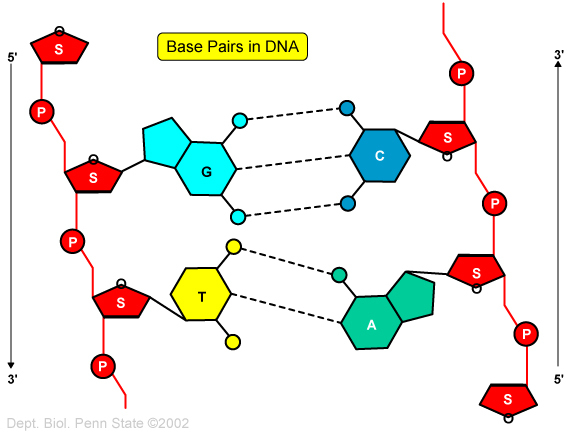
Which of the following best describes a DNA molecule?
a)
double helix
b)
contains ribose
c)
made of amino acids
d)
contains Uracil
2.
Which 2 molecules form the sides (backbone) of the DNA ladder?
a)
deoxyribose sugar and adenine
b)
deoxyribose sugar and a hydrogen bond
c)
deoxyribose sugar and the nucleus
d)
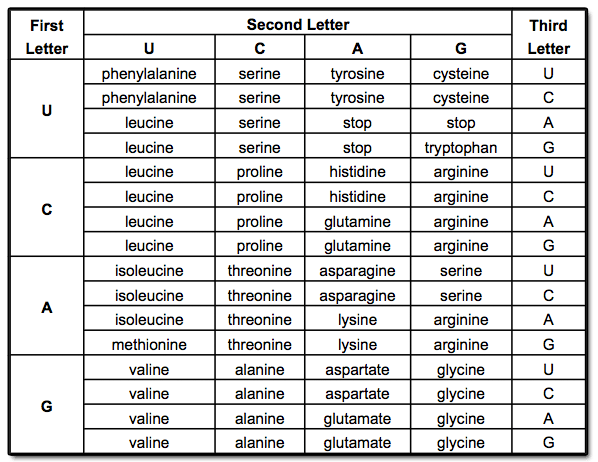
deoxyribose sugar and phosphate
3.
Nitrogenous bases are joined by which type of bond?
a)
polar bonds
b)
ionic bonds
c)
covalent bonds
d)
hydrogen bonds
4.
What does DNA stand for?
a)
Deoxyribonucleic acid
b)
Denitrogenous acid
c)
Deribonucleic acid
d)
Diribonucleic acid
5.
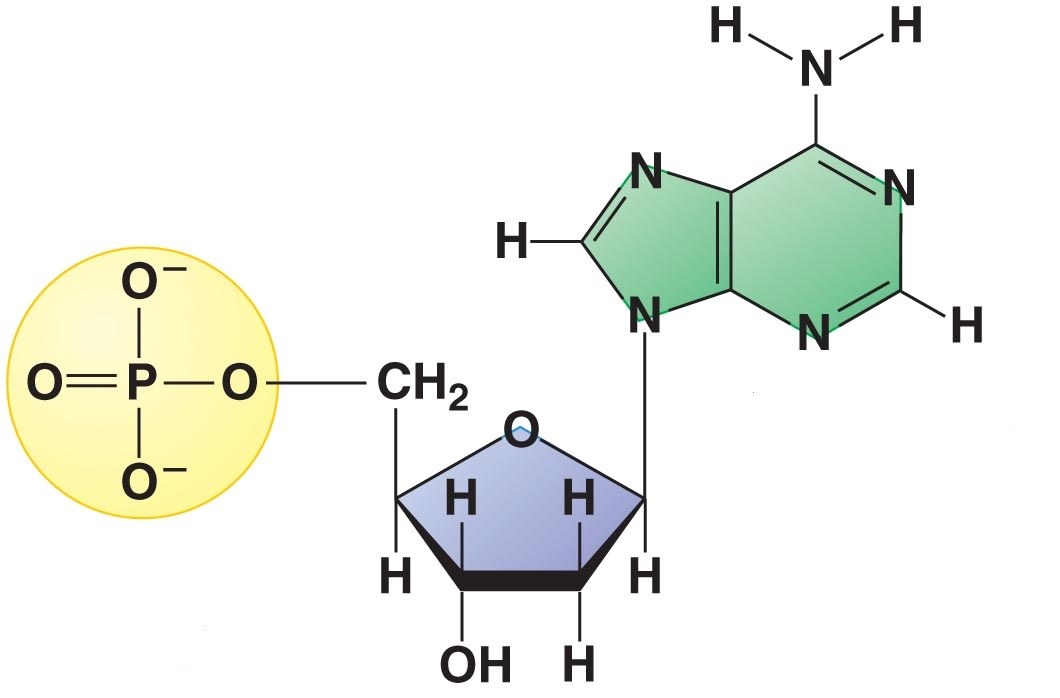
What are the three components of a nucleotide?
a)
sugar, hydrogen, nitrogen base
b)
sugar, oxygen, nitrogen base
c)
sugar, phosphate, nitrogen base
d)
sugar, phosphate, protein
6.
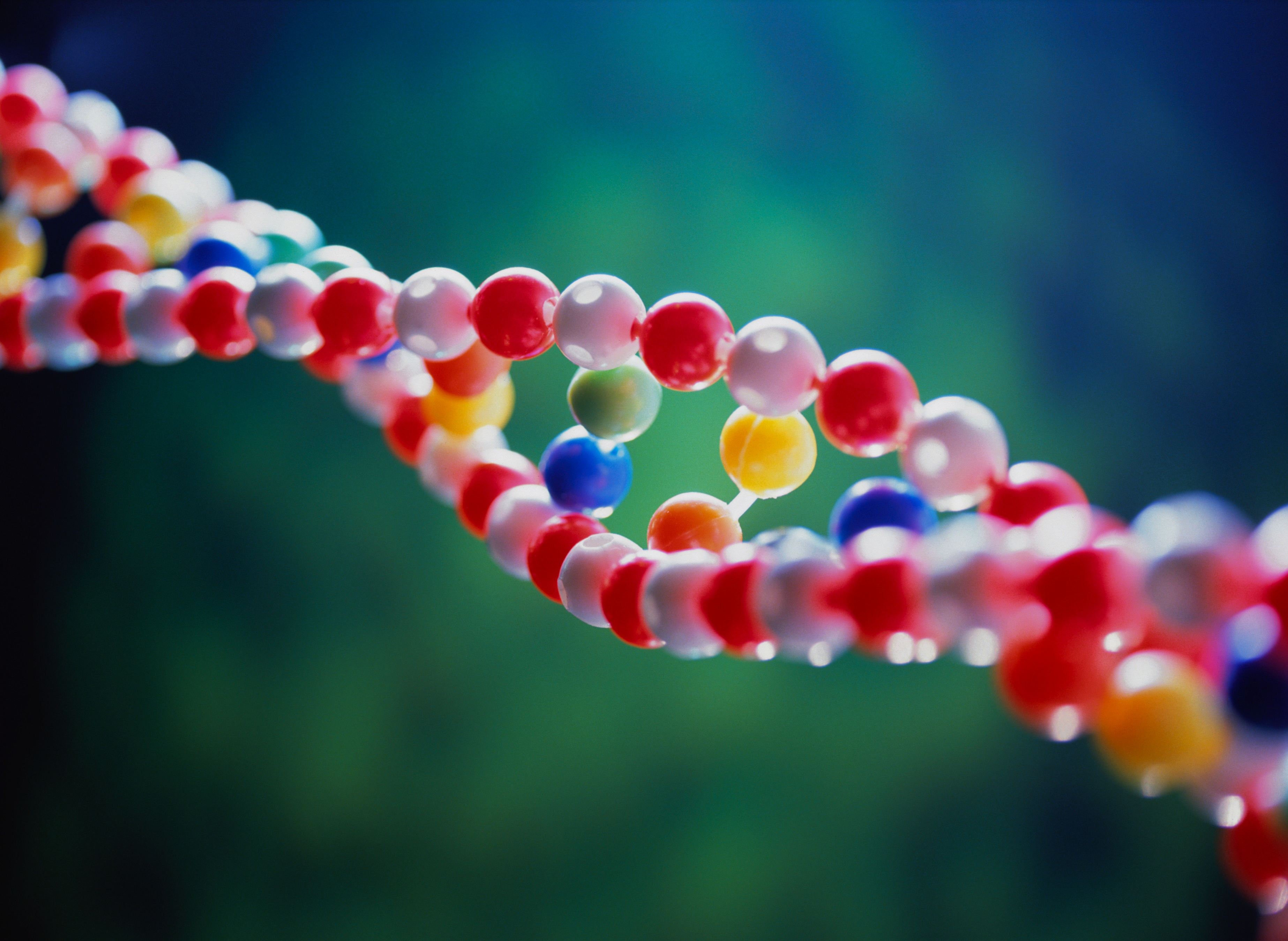
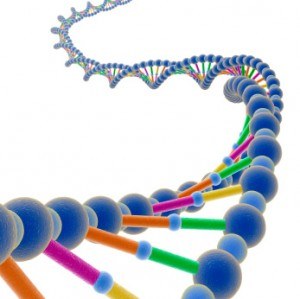
Name this structure
a)
double helix
b)
nucelotide
c)
twisted ladder
d)
hydrogen bond
7.
Cytosine always pairs with
a)
Adenine
b)
Thymine
c)
Uracil
d)
Guanine
8.
Guanine bonds with ______________.
a)
Adenine
b)
Guanine
c)
Cytosine
d)
Thymine
9.
Adenine bonds with ______________.
a)
Guanine
b)
Thymine
c)
Cytosine
d)
Adenine
10.
What are the 4 nitrogen bases?
a)
adenine, thymine, cytoplasm, and guanine
b)
adenine, thymine cytosine, and guanine
c)
adenine, thymine, cytosine, and gylcerol
d)
adenine, thymine, cytosine, and glucose
11.
Which sequence of DNA bases would pair with this partial strand
ATG TGA CAG
a)
ATG TGA CAG
b)
TAC ACT GTC
c)
GTA AGT GAC
d)
CAT TCA CTG
12.
The sugar in DNA is ?
a)
sucrose
b)
glucose
c)
deoxyribose
d)
fructose
13.
Which sequence of DNA bases would pair with this partial strand
CAT TCA CTG
a)
ATG TGA CAG
b)
TAC ACT GTC
c)
GTA AGT GAC
d)
CAT TCA CTG
14.
DNA replication results in two DNA molecules,
a)
each one with two original strands
b)
each one with two new strands
c)
each one with one new strand and one original strand
d)
one with two new strands and the other with two original strands
15.
A process in which DNA has the unique ability to make an exact copy of itself.
a)
Replication
b)
Translation
c)
Transcription
16.

The weak bonds between base pairs is a ___

a)

Covalent Bond

b)

Polar Bond

c)

Non Polar Bond

d)

Hydrogen

17.
Why is DNA important?
a)
it is very small and very complicated
b)
it's in everything
c)
it serves as the blueprint for traits of all living things
d)
because we eat it every day for energy
18.
Which organelle is DNA usually found in?
a)
cell membrane
b)
vacuole
c)
chloroplast
d)
nucleus
19.

DNA is turned to RNA and then into Protein---this is called what?

a)

Central Dogma of Biology

b)

Replication

c)

Transcription

d)

Translation

20.
What are the three components of a nucleotide in DNA & RNA? 
a)
sugar, hydrogen, nitrogen base
b)
sugar, oxygen, nitrogen base
c)
sugar, phosphate, nitrogen base
d)
sugar, phosphate, protein
21.

What is the process called of turning DNA into RNA?

a)

Central Dogma of Biology

b)

Transcription

c)

Translation

d)

Replication

22.

What is the process called of turning RNA to Amino Acid or Protein?

a)

Central Dogma of Biology

b)

Transcription

c)

Translation

d)

Replication

23.

When DNA is copied it is called?

a)

Central Dogma of Biology

b)

Transcription

c)

Translation

d)

Replication

24.
Which of the following statements is true?
a)
DNA is single-stranded
b)
RNA is single-stranded
c)
DNA contains uracil
d)
RNA contains deoxyribose
25.
What is the difference between the sugars found in DNA and RNA?
a)
RNA contains glucose
b)
RNA contains sucrose
c)
RNA contains deoxyribose
d)
RNA contains ribose
26.
In DNA, Adenine matches up with: 
a)
Thymine
b)
Adenine
c)
Cytosine
d)
Guanine
27.
In RNA, Adenine matches up with: 
a)
Thymine
b)
Guanine
c)
Uracil
d)
Cytosine 
28.
How many letters or nitrogen bases make a codon in RNA?
a)
1
b)
2
c)
3
d)
6
29.

What is the Central Dogma of Biology?

a)

RNA-Protein-DNA

b)

RNA-DNA-Protein

c)

DNA-Protein-RNA

d)

DNA-RNA-Protein

30.

What does mRNA do?

a)

carries copy of DNA's instructions

b)

transfers amino acids to ribosomes

c)

helps with RNA splicing

d)

makes ribosomes

31.

What does rRNA do?

a)

carries the copy of DNA's instructions

b)

transfers amino acids to ribosomes

c)

helps with RNA splicing

d)

makes ribosomes

32.
What does tRNA do?
a)
carries copies of DNA's instructions
b)
transfers amino acids to ribosomes
c)
helps with RNA splicing
d)
makes ribosomes
33.
Which amino acid is made from the RNA codon GUA?
a)
Phenylalanine
b)
Leucine
c)
Serine
d)
Valine
34.
Which amino acid is made from the RNA codon ACC?
a)
Tyrosine
b)
Isoleucine
c)
Threonine
d)
Valine
35.
How many amino acids are commonly found in our bodies? 
a)
10
b)
20
c)
50
d)
100
36.
A change in our genetic material or instructions can lead to a: 
a)
trait
b)
transcription
c)
mutation
d)
translation
37.
A change in a SINGLE gene is called: 
a)
Gene expression
b)
Gene mutation
c)
Replication
d)
Chromosome mutation
38.
A change in a CHROMOSOME is called: 
a)
Gene expression
b)
Gene mutation
c)
Chromosome mutation
d)
Replication
39.
Translate this DNA strand to DNA: 
CGT   AGC  
a)
GCA  UCG
b)
GCU  TCG
c)
GCA  TCG
d)
CGA  TCA
40.
Translate this DNA strand to RNA:
TAA   GGG   CAT
a)
AUU  CCC  GTU
b)
AUU  CCC  GUA
c)
UUU  CCC  GUA
d)
UUU  GGG  GUA
41.
This type of gene mutation causes a base to be removed: 
a)
Inversion
b)
Insertion
c)
Substitution
d)
Deletion
42.
This type of gene mutation causes a base to be added: 
a)
Inversion
b)
Insertion
c)
Substitution
d)
Deletion
43.

This type of gene mutation causes the bases to not match up correctly or one base is replaced by an incorrect base:

a)

Inversion

b)

Insertion

c)

Substitution

d)

Deletion

44.

Which organelle is the location where protein is made?

a)

Ribosome

b)

Nucleus

c)

Cytoplasm

d)

Nucleotide

45.

During transcription, this type of ribonucleic acid is responsible for copying the DNA and brining it out of the nucleus.

a)

tRNA

b)

mRNA

c)

rRNA

d)

dRNA

46.
What is the term for a three-nucleotide sequence that codes for an amino acid?
a)
base
b)
codon
c)
amine
d)
serine
47.
Genetic info flows in one direction. Which best represents this flow?
a)
DNA-protein-RNA
b)
Protein-RNA-DNA
c)
RNA-protein-DNA
d)
DNA-RNA-protein
48.

What brings the amino acids to the ribosome to assemble a protein?

a)
mRNA
b)
tRNA
c)
rRNA
d)

DNA

49.
The information about an organism’s heredity is stored in its DNA. DNA is located in the cell’s _____________________. 
a)
mitochondria
b)
lysosomes
c)
nucleus
50.
·  Copying and carrying the genetic code is the responsibility of which molecule?
a)
RNA
b)
Glucose
c)
Oxygen
51.
The base Uracil is only found in which molecule?
a)
DNA
b)
RNA
c)
Carbohydrates
52.
DNA never leaves the nucleus
a)
True
b)
False
53.
Proteins are made of which molecule?
a)
Amino Acids
b)
Lipids
c)
Carbohydrates
54.
DNA is a double helix.
a)
True
b)
False
55.
RNA is a double helix
a)
True
b)
False
56.
Muscles are made of proteins.
a)
True
b)
False
57.
An organism's DNA is a code to make proteins.
a)
True
b)
False
58.

During transcription, this type of ribonucleic acid is responsible for copying the DNA and brining it out of the nucleus.

a)

tRNA

b)

mRNA

c)

rRNA

d)

dRNA

59.

When these bond together, they form a protein

a)

Amino Acids

b)

Peptide Bonds

c)

Ribose

d)

Nucleotides

60.
What is the mRNA strand that would result from the DNA template strand CCTA?
a)
GGAT
b)
CCAT
c)
GGAU
d)
CCAU
61.
Which of these nitrogenous bases is NOT in RNA?
a)
Uracil
b)
Thymine
c)
Cytosine
d)
Guanine
62.
DNA holds the code for
a)
lipids
b)
carbohydrates
c)
protein
d)
sugar
63.
Why is DNA important?
a)

it is very small and very complicated

b)

it isn't important

c)

it serves as the blueprint for traits of all living things

d)

because we eat it every day for energy

64.

The first step of protein synthesis is.....

a)

replication

b)

mitosis

c)

translation

d)

transcription

65.

The DNA strands are held together

a)

with covalent bonds

b)

with sugar molecules

c)

with hydrogen bonds between bases

66.
Where does transcription take place?
a)
nucleus
b)
cytoplasm
c)
ribosome
67.
Which RNA bases would pair with TACGAA in transcription
a)
AUGCUU
b)
ATGCTT
c)
GCATCC
d)
GCAUCC
68.
How many amino acids are coded for by this sequence of nucleotides:
ATG GGA ACT CCA
a)
4
b)
2
c)
6
d)
12
69.
What is occurring in this picture?
a)
Translation
b)
Replication
c)
Translocation
d)
Transcription
70.

Transcribe the following DNA sequence into RNA:


AAT TAG GGC TCG

a)

AAT TAG GGC TCG

b)

TTA ATC CCG AGC

c)

UUA AUC CCG AGC

d)

TTU UTC CCG UGC

71.
Which of the following statements is true?
a)
DNA is single-stranded
b)
RNA is single-stranded
c)
DNA contains uracil
d)
RNA contains deoxyribose
72.
What is the difference between DNA and RNA in terms of bases?
a)
RNA contains uracil in place of thymine
b)
RNA contains uracil in place of adenine
c)
RNA contains uracil in place of guanine
d)
RNA contains uracil in place of  cytosine
73.
Amino acids are the building blocks of... 
a)
DNA
b)
RNA
c)
Atoms
d)
Proteins
74.
What are the three components of a nucleotide?
a)
sugar, hydrogen, nitrogen base
b)
sugar, oxygen, nitrogen base
c)
sugar, phosphate, nitrogen base
d)
sugar, phosphate, protein
75.

Which RNA carries the message from the DNA molecule out of the nucleus?

a)

mRNA

b)

rRNA

c)

tRNA

76.

Where does TRANSCRIPTION occur in EUKARYOTIC cells?

a)

Nucleus

b)

Ribosome

c)

Cytoplasm

d)

Mitochondria

77.

How many nucleotides equal make up a codon?

a)

1

b)

2

c)

3

d)

4

78.
In RNA, Uracil pairs with ______. 
a)
cytosine
b)
adenine
c)
guanine
d)
thymine
79.

Nucleic acids are the building blocks of...

a)

DNA

b)

RNA

c)

Atoms

d)

Nucleotides

80.

TRANSCRIBE this DNA sequence into RNA: AUG CGC TCT

a)

AUG CAA UGA

b)

ATG CAA TGA

c)

UAC GCG AGA

d)

TAC GTT ACT

81.
Choose the nucleotide sequence of the RNA strand that would be complementary to the following strand: 
GTAGTCA
a)
UATUAGA
b)
ACGACTG
c)
CAUCAGU
d)
CATCAGT
82.
Which is the mRNA molecule that would be transcribed from this DNA template:
TGGCAAGTACGT
a)
ACCGTTCATGCA
b)
UGGCAAGUACGU
c)
UCCGUUCUUGCU
d)
ACCGUUCAUGCA
83.
Which RNA bases would pair with TACGAA in transcription
a)
AUGCUU
b)
ATGCTT
c)
GCATCC
d)
GCAUCC
84.

One difference between DNA and RNA is that....

a)

Only RNA has the base Uracil

b)

only RNA contains the base Thymine

c)

only RNA contains the base Cytocine

d)

only RNA contained the base Guanine

85.

What is the process by which mRNA is decoded to produce a specific sequence of amino acids?

a)

mutation

b)

transcription

c)

replication

d)

translation

86.

Which cellular organelle is responsible for protein synthesis?

a)

mitochondria

b)

endoplasmic reticulum

c)

nucleus

d)

ribosome

87.

What are the building blocks of proteins?

a)

amino acids

b)

nucleic acids

c)

lipids

d)

carbohydrates

88.

What is the term for a sequence of three nucleotides that codes for a specific amino acid?

a)

codon

b)

gene

c)

protein

d)

nucleotide

89.

Which type of RNA carries amino acids to the ribosome during translation?

a)

mRNA

b)

rRNA

c)

tRNA

d)

snRNA

90.

During translation, where does the ribosome bind to the mRNA?

a)

Stop codon

b)

Promoter region

c)

Intron

d)

Start codon

91.

How many nucleotides are there in a codon?

a)

3

b)

1

c)

4

d)

2

92.

Which of the following is NOT a stop codon?

a)

None of the above

b)

UAA

c)

UGA

d)

UAG

93.

What is the term for the process of adding amino acids to a growing polypeptide chain?

a)

transcription

b)

replication

c)

mutation

d)

translation

94.

Which of the following is responsible for recognizing the codon on the mRNA and bringing the corresponding amino acid?

a)

DNA

b)

tRNA

c)

mRNA

d)

rRNA

e)

RNA polymerase

95.

In DNA, A goes with __ and C goes with __

a)

T, G

b)

G, T

c)

C, A

96.

A mutation in which a base pair is removed, and the code shifts over

a)

addition

b)

deletion

c)

substitution

d)

mutation

97.

A mutation in which a base pair is inserted, and the code shifts over

a)

addition

b)

deletion

c)

substitution

d)

mutation

98.

A mutation in which one base pair is swapped for another, and the code is changed but doesn't move over

a)

addition

b)

deletion

c)

substitution

d)

mutation

99.

A mutation is always harmful.

a)

True

b)

False

100.

A mutation can be...

a)

harmful

b)

helpful

c)

neutral

d)

harmful or helpful, but never neutral

e)

harmful, helpful, AND neutral

101.

A segment of DNA that codes for a single trait

a)

gene

b)

chromosome

c)

protein

d)

chromatin

102.

The process of DNA making an RNA

a)

transcription

b)

translation

c)

replication

d)

deamination

103.

The process of RNA making a protein

a)

translation

b)

transcription

c)

replication

d)

amination

104.

A change in DNA

a)

mutation

b)

mutagen

c)

polygenic

d)

trait

105.

Which of these is not a type of mutation?

a)

elimination

b)

deletion

c)

insertion

d)

substitution

106.

What RNA sequence would be made from this DNA sequence? CGAT

a)

GCUA

b)

CGAT

c)

TAGC

d)

GGUU

107.

If the DNA sequence was originally CCG GAA TT, which of these would represent a deletion?

a)

CCG AAT T

b)

GGC CTT AA

c)

TTA AGG CC

d)

GGC CUU AA

108.

Which of the following bases is only found in RNA?

a)

uracil

b)

guanine

c)

thymine

d)

adenine

109.
What mutation has occurred here? 
T-G-A-C-C-A
T-G-A-G-C-A
a)
Substitution
b)
Deletion
c)
Insertion
d)
Frameshift 
110.

What type of mutation is sickle-cell anemia?

Original DNA from hemoglobin:

T-G-A-G-G-T-C-T-C

Sickle-cell DNA from hemoglobin:

T-G-A-G-G-A-C-T-C

a)

Insertion

b)

Deletion

c)

Frameshift

d)

Substitution

111.

A gene mutation can cause cells to replicate incorrectly.

a)

True

b)

False

112.

What would happen to the mRNA sequence CCG if A (Adenine) was substituted for the third base G (Guanine)?

a)

The amino acid would change to STOP

b)

The amino acid would change to Serine

c)

There would be no change in the amino acid sequence

d)

The protein would be smaller

113.
What is the term for a three-nucleotide sequence that codes for an amino acid?
a)
base
b)
codon
c)
amine
d)
serine
114.

How many amino acids are coded for by this sequence of nucleotides:

ATG GGA ACT CCA

a)

4

b)

2

c)

6

d)

12

115.

What is the correct amino acid sequence for the mRNA code AUG CCA GUA UGA

a)

Met-Pro-Ala-Val

b)

Met-Pro-Val

c)

Tyr-Gly-His

d)

Tyr-Gly-Arg-His

116.

. What are the building blocks of proteins called?

a)

nucleotides

b)

proteins

c)

amino acids

d)

carbohydrates

117.

Using the codon identify the amino acid sequence:

AUG-CCA-GUA-GGG-UAA

a)

MET-HIS-ALA-GLY-STOP

b)

MET-PRO-GLY-VAL-STOP

c)

MET-PRO-VAL-GLY-STOP

d)

MET-THR-SER-ASP-STOP

118.

Which amino acid is made from the RNA codon UUA?

a)

Phenylalanine

b)

Leucine

c)

Serine

d)

Tyrosine

119.
Which structure reads the mRNA codons?
a)
Nucleus
b)
Ribosome
c)
Golgi Body
d)
Enzyme
120.

Which sequence could be found in RNA?

a)

ACCTGT

b)

CGCATT

c)

AUGCUU