
 Worksheets
Human Populations Review
Total questions: 99
Worksheet time: 1hrs 27mins

The size of the human population began to increase exponentially after the
bubonic plague
development of plowing and irrigation
Industrial Revolution
development of the first cities.
Which of the following is NOT a potential limiting factor of human population growth?
famine medicine war disease
disease
war
medicine
famine
After the demographic transition is complete, a population
grows rapidly. grows slowly. begins a period of rapid decline. stays about the same size as time passes.
grows rapidly
grows slowly
begins a period of rapid decline
stays about the same size as time passes.

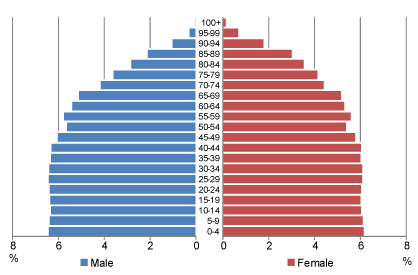
Name the type of pyramid in the picture.
slow growth
rapid growth
zero growth
negative growth
Since the mid-1960s, the average annual growth rate of the human population has
remained about the same. failed to show a consistent pattern. increased. decreased.
remained about the same
failed to show a consistent pattern.
increased
decreased
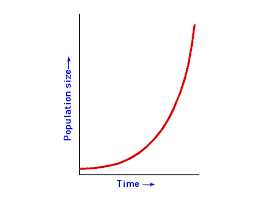

Which state has the greatest population density?
New Jersey
Rhode Island
Connecticut
Vermont
The number of deaths compared to the total number of people in a population
death rate
doubling time
population decline
birth rate
One reason the world is growing so quickly is because...
The world has infinite resources for everyone
Birth rate is higher than death rate
There are more and more places for people to live
Death rate is higher than birth rate

The world’s two most-populous countries are on which continent?
North America
Europe
Asia
South America
Africa

What happens to population density in China as one travels from east to west?
The population gets less dense
The population gets more dense
The population stays the same
The population increases and then decreases repeatedly

How many people per square mile live in the area around the city of Osaka, Japan?
more than
5,000,000 people
1,000,000
to 5,000,000 people
500,000
to 1,000,000 people
less than 500,000 people

Where is the majority of the U.S. population live?
The Northeast Coast
The West Coast
The Central Plains
The Gulf Coast
A population pyramid that shows negative or declining growth will have what type of shape?
a narrower middle and wide bottom
almost equal at middle and bottom
narrower at bottom than middle

3. The population pyramid of Japan shows two bulges. What age groups make up those bulges?
35-39 and 60-64
25-29 and Over 80
50-54 and 0-4
30-34 and Over 80

How would you describe the population of this country?
They are experiencing stable population growth
They are experiencing negative population growth
They are experiencing rapid population growth

How would you describe the population of this country?
They are experiencing stable population growth
They are experiencing rapid population growth
They are experiencing negative population growth

What population is displayed on the RIGHT side of this pyramid?
Children
Women
Men
Elderly

Which statement is true?
There are more men in this country
There are fewer women in this country
There are more 30-34 year olds than 25-29 year olds
There are more people age 25-29 than 30-34
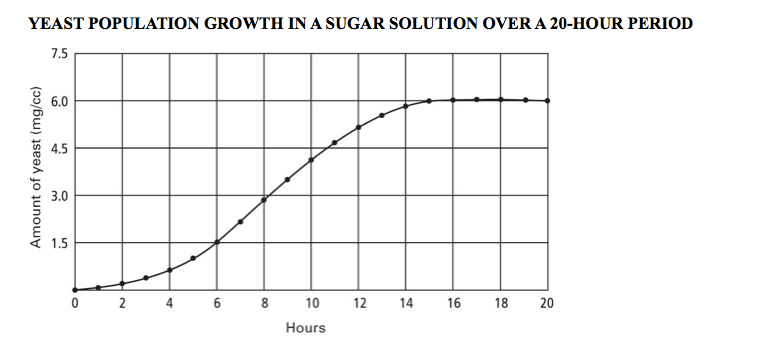

If the number of births in a population is the same as the number of deaths (little change), what will happen to the growth of the population?
It will increase
It will stay the same
It will decrease
It fluctuate

How do we calculate population density?
Number of inhabitants/Number of births
Number of inhabitants/Number of deaths
Number of inhabitants/Surface area of the place
Number of inhabitants/Life expentancy
Factor that limits a population and is dependent on the number of organisms in the population.
Density-dependent
Density-independent
Abiotic factors
Biotic factors
Factor that limits a population and is NOT dependent on the number of organisms in the population.
Density-dependent
Density-independent
Abiotic factors
Biotic factors


during logistic growth, a population begins to level off when it reaches its ________________
exponential growth
carrying capacity
ecosystem
habitat
Which of the following have lead to the human population passing 8 Billion?
Better healthcare

Which statement BEST describes this population?
Lower birth rate
More developed
Less developed

What does the whole right side of the population pyramid represent?
Males
Females
Unemployed
Young people
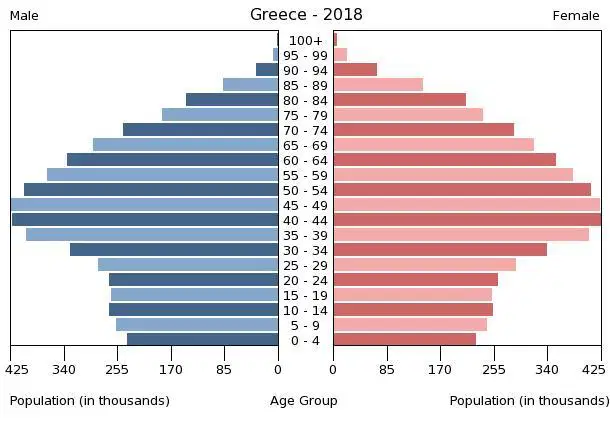
What should this country do to prepare for the future?

What growth rate does this population pyramid represent?
Rapid Growth
Slow Growth
Negative Growth
Zero Growth

What age group does the top of the population pyramid represent?
The working people
The rich people
The elderly
The young people

Which growth rate does this population pyramid represent?
Slow Growth
Zero Growth
Rapid Growth
Negative Growth

Is this a developing or developed country?

Is this country developed or developing?
Developed
Developing

Educating women worldwide has lowered birthrates partly because
educated women bear many children to ensure some survive
educated women may learn family-planning techniques
educated women contribute less to their family income
all of these answers
Professionals who study and make predictions about human populations are called
stenographer
demographer
geologist
populist
A population pyramid is created by
studying a group of people and noting when each member dies
graphing the distribution of ages in a population at a specific time
calculating the number of children a woman gives birth to in her lifetime
estimating the demand for services within a community

decreasing population size, zero or negative growth rate (stage 4)
preindustrial
postindustrial
transitional
industrial
large population size, low growth rate (stage 3)
preindustrial
postindustrial
transitional
industrial
increasing population size, very high growth rate (stage 2)
preindustrial
postindustrial
transitional
industrial
small population size, low growth rate (stage 1)
preindustrial
postindustrial
transitional
industrial

Identify Rapid Population growth
A
B
C
None
Identify Negative Population growth
A
B
C
None
Identify Stable / Zero Population growth
A
B
C
None
Exponential growth occurs when a population
exceeds the habitat’s carrying capacity
is competing with another species
grows increasingly faster
breeds with another species.
For a population’s growth rate to be zero
more deaths than births must occur
more births than deaths must occur
no births can occur
the average number of births and deaths must be the same
Which of the following is one of the main properties used to describe a population?
number of individuals
color of individuals
number of species
kind of adaptations
Which of the following limits a population’s growth?
carrying capacity of its habitat
natural disasters
severe weather
all of the answers
dispersion
water, land/property, or food
deaths caused by disease
number of individuals per unit area
relative distribution of individuals
deaths caused by natural disasters
A Factor that would increase the size of the population
Emmigration
Death Rate higher than Birth Rate
Birth Rate Higher than Death Rate
Drought
Due to severe overcrowding in an Asian village, many children to not survive to reach adulthood.
Density-dependent
Density-independent
Movement of individuals into a population
Immigration
Emigration
Migration
Urbanization
Movement of individuals out of a population
Immigration
Emigration
Migration
Urbanization
What are two ways populations decrease?
birth & migration
immigration & death
death & emigration
birth & immigration
The United States' population grows when more people are born worldwide each year than die worldwide each year.
true
false
As the human population grows, the demand for natural resources stays the same.
true
false
Advances in arts and sciences have improved human health and allowed for tremendous population growth.
true
false
In most areas of the world today
people are richer than ever in human history
people are smarter than ever in human history
people weigh more than ever in human history
people live longer than ever in human history
The COVID-19 pandemic is an example of what type of limiting factor?
Density dependent
Density independent
An earthquake occurs in California and kills 500 people. Is this an example of a density dependent or independent limiting factor?
Independent
Dependent
When the environment has reached its human carrying capacity, which of the following
conclusions can be made?
Growth and immigration rate is equal to death and emigration rate.
Growth and immigration rate is less than death and emigration rate.
Growth and immigration rate is greater than death and emigration rate.
Growth and immigration rate is exponential to death and emigration rate.
If a population grows larger than its environmental carrying capacity, then
death rate may rise.
death rate may fall significantly.
birth rate may rise significantly.
immigration rate may increase.

Which correctly describes the term demographic transition?
The transition from low birth rates and death rates to high birth rates and death rates as a country develops.
The transition from high birth rates and death rates to low birth rates and death rates as a country develops.
The transition from high birth rates to low death rates as a country develops.
The transition from low birth rates to high death rates as a country develops.
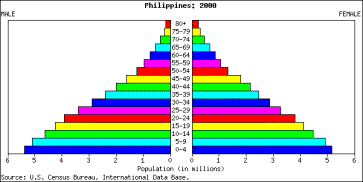

Which of the following is true of human demographic trends?
In preindustrial societies, birth rates are low and the population grows rapidly.
When the average number of children born to each woman falls, the total population always increases.
When birth rates and death rates are both high, the population grows slowly, if at all.
Death rates rise in the third stage of the demographic transition.

Using Figure 5–6, describe the type of growth Mexico is experiencing.
Mexico is experiencing a rapid growth rate because there are more children than adults.
Mexico is experiencing no growth because people are living longer.
Mexico is experiencing slowed growth because there are fewer adults.
Mexico is experiencing a rapid decline because there are more children than adults.

How can population growth lead to more pollution?
Too many people breathing causes too much carbon dioxide to enter the atmosphere
The body heat generated by billions of people leads to an increase in global warming
More people being born means more paper is needed to print birth certificates
All people produce waste, so more people equals more waste
Human activities and natural events can have a large effect on populations, biodiversity and ecosystem processes. How does the growth of the human population into rural areas affect the
environmental quality of the native ecosystem?
Human population growth produces new resources that benefit the native ecosystems.
Human population growth in rural areas help organisms evolve in order to survive in
harsher urban environments.
Human population growth in rural areas creates additional waste that is put back into the
environment and lowers environmental quality.
Human population growth in rural areas creates additional living areas for humans to
populate, which would increase the value of the land.

Based on the demographic transition model above, what stage of development would a country
be in that is experiencing a stable increase?
Stage 1
Stage 2
Stage 3
Stage 4

The graph below shows changes in human population numbers over time.
Which of the following statements would predict a consequence of these changes?
An increase in biosphere stability.
A decrease in the availability of natural resources.
An increase in the numbers and kinds of organisms worldwide.
A decrease in deforestation due to technological improvements.
Many factory farms dump animal waste products into neighboring streams, rivers and lakes.
How might this affect the health of the people living in these areas?
The water will clean the waste products, therefore it does not affect them.
The smell from the waste products deter people from living in the surrounding area.
The farmers clean the waste products before it is put into the environment, therefore it will
not affect them.
The waste products enter the drinking water and other parts of the environment, which
could cause people in the surrounding areas to become sick.
The United States depends on its forests in many ways. Forests provide environmental, social
and economic benefits to many people around the globe. They help filter drinking water, provide timber for building homes, habitats for a diverse array of plants and animals, supply oxygen, moderate temperatures and store atmospheric carbon. The health of a forest plays a role in maintaining human health. Which of the following statements supports the idea that human health benefits from a healthy forest?
Forests provide timber for building homes.
Forests provide habitats for plants and animals.
Forests add oxygen to the atmosphere through decomposition.
Forests filter carbon dioxide and oxygen through photosynthesis to allow for clean air to breathe.
The United States depends on its forests in many ways. Forests provide environmental, social
and economic benefits to many people around the globe. They help filter drinking water, provide timber for building homes, habitats for a diverse array of plants and animals, supply oxygen, moderate temperatures and store atmospheric carbon. The health of a forest plays a role in maintaining human health. Which of the following statements supports the idea that human health benefits from a healthy forest?
Forests provide timber for building homes.
Forests provide habitats for plants and animals.
Forests add oxygen to the atmosphere through decomposition.
Forests filter carbon dioxide and oxygen through photosynthesis to allow for clean air to breathe.
The United States depends on its forests in many ways. Forests provide environmental, social
and economic benefits to many people around the globe. They help filter drinking water, provide timber for building homes, habitats for a diverse array of plants and animals, supply oxygen, moderate temperatures and store atmospheric carbon. The health of a forest plays a role in maintaining human health. Which of the following statements supports the idea that human health benefits from a healthy forest?
Forests provide timber for building homes.
Forests provide habitats for plants and animals.
Forests add oxygen to the atmosphere through decomposition.
Forests filter carbon dioxide and oxygen through photosynthesis to allow for clean air to breathe.

