
 Worksheets
Magnetics, and Sound and Light 2024
Total questions: 166
Worksheet time: 3hrs 12mins
What data can be collected to understand the effect of the number of turns of wire on electromagnetic fields?
The length of the wire
The material of the wire
The number of turns of the wire
The temperature of the environment
Identify the factors that influence the strength of electric and magnetic forces.
Distance and orientation of interacting objects.
Color and texture of the objects.
Temperature and humidity of the environment.
Speed and direction of the wind.
Predict the strength of electric and magnetic forces by understanding the (a) of interacting objects.
Objects can influence other objects at a distance via (a)
Match the following observations and measurements with their descriptions of magnetic and electrical field interactions.
Observations of compass needle deflection near a magnet
Qualitative data showing interaction with a magnetic field
Measurements of voltage in a circuit
Quantitative data showing electrical potential difference
Calculations of magnetic flux
Quantitative data showing the amount of magnetic field passing through a surface
Quantitative analysis of electric field strength
Quantitative data showing the intensity of an electric field
Match the following tools with their functions in a lab setting.
A detailed report
Used to document experiments and findings
A motion sensor
Used to measure and analyze movement
A microscope
Used to observe small objects or organisms
A thermometer
Used to measure temperature
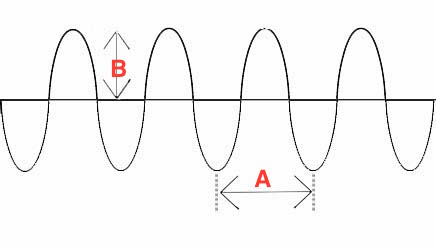
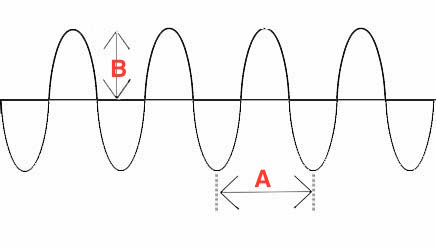
Identify parts of a mechanical wave.
Frequency, amplitude, wavelength.
Mass, velocity, acceleration.
Pressure, volume, temperature.
Voltage, current, resistance.
How is the energy of a wave related to its amplitude?
Energy is directly proportional to the square of the amplitude.
Energy is inversely proportional to the amplitude.
Energy is directly proportional to the amplitude.
Energy is independent of the amplitude.
Match the following types of waves with their characteristics.
Sound or water waves, with specific amplitudes and frequencies.
Waves that require a medium and have specific amplitudes and frequencies.
Light waves, with varying wavelengths and speeds.
Waves that have varying wavelengths and can travel at different speeds.
Electromagnetic waves, with no medium required.
Waves that do not require a medium to travel through.
Seismic waves, traveling through the Earth's layers.
Waves that move through the Earth's interior and surface.
The difference between electromagnetic and mechanical waves is that (a)
What factors affect the speed of a wave in a given medium?
The size and shape of the medium.
The color and brightness of the wave.
The temperature and density of the medium.
The frequency and amplitude of the wave.
Match the following relationships between frequency and wavelength in a constant medium.
Frequency is directly proportional to wavelength.
As wavelength increases, frequency increases.
Frequency is equal to wavelength.
Wavelength and frequency are the same.
Frequency is inversely proportional to wavelength.
As wavelength increases, frequency decreases.
Frequency is independent of wavelength.
Wavelength does not affect frequency.
What is the role of a medium in the propagation of mechanical waves?
A medium amplifies the energy of mechanical waves.
A medium slows down the speed of mechanical waves.
A medium changes the direction of mechanical waves.
A medium is necessary for the transmission of mechanical waves.
What is the relationship between wave speed, frequency, and wavelength in a given medium?
Wave speed is the sum of frequency and wavelength.
Wave speed is independent of frequency and wavelength.
Wave speed is the product of frequency and wavelength.
Wave speed is the difference between frequency and wavelength.
Which of the following best describes a transverse wave?
Particles of the medium move in a circular motion.
Particles of the medium move perpendicular to the direction of wave propagation.
Particles of the medium move parallel to the direction of wave propagation.
Particles of the medium do not move at all.
How does the density of a medium affect the speed of sound waves traveling through it?
Sound waves cannot travel through dense media.
Sound waves travel faster in denser media.
Sound waves travel at the same speed regardless of the medium's density.
Sound waves travel slower in denser media.
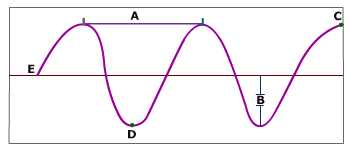
Where is the crest of the wave?

Drag and Drop the answer to match the numbers below
Use the picture provide <-----
1) (a)
2) (b)
3) (c)
4) (d)
The height between the rest position and crest is called (a)

A. Wavelength
B. Amplitude
C. Speed
D. Frequency

A. Wavelength
B. Amplitude
C. Speed
D. Frequency

The _______ of a wave is how many waves pass a given point every second.
Frequency
Wavelength
Amplitude


A. Wavelength
B. Amplitude
C. Speed
D. Frequency

What does Label #1 show?
Trough
Crest
Amplitude
Wavelength

How does sound travel through a medium?
By transferring energy through electromagnetic waves
By the movement of particles in a vacuum
By the vibration of particles in the medium
By changing the temperature of the medium

Fill in the blank: Waves carry from one place to another.
(a)
Sonar is often used to find sunken ships underwater. Sonar is the process of using _____ waves and bouncing them off of solid objects to locate their position.
imaging
infrared
light
sound
An mariachi band is playing on a float in a parade. When the float is moving away from you, the (a) of the music sounds (b) because of (c)

Sound waves are (a)
What are the 2 parts of a magnet?
North Pole and South Pole
North Pole and West Pole
South and East Pole
South and South Pole

In which part of a magnet is the magnetic force strongest?
In the Center
At the Poles
In the middle
At the North Pole only
What will happen when two like poles of magnets are put together?
They attract each other
They repel each other
When two opposite poles of magnets are put together, they (a) each other.
Which is an example of magnetic object?
Iron screw
Copper wire
Rubber toy
newspaper

How is magnet used in the picture?
hold objects
show direction
produces movements
lift heavy objects

What is the use of the magnet in the picture?
to produce sounds
to show directions
to store information
When _______________ travels through a
conductor, a magnetic field is created
current
a magnetic field
neutrons
Electric currents produce _____________
electron clouds
magnetic fields
sound waves
In magnets and electromagnets, similar poles attract
true
false
In magnets and electromagnets, dissimilar (opposite) poles attract
true
false
Electrons which collect at the negative end of the battery, can flow to the positive end through a ___________________
wire
electron cloud
magnet
When the strength of the magnetic field changes, the ________________________between the coil and the permanent magnet changes.
attractive force
polarity
wire
Which of the following are important parts in allowing the speaker to function?
A wire
Speaker cone/membrane
magnet
Music player
Spider
Potential energy is stored within the magnetic field and is transferred to the magnets. When the magnets move, this is _________ energy.
Magnetic
Kinetic
Plain ol' energy
Force
True or False: Taking air out from between two magnets takes away the magnetic field.
True
False
What factors affect the strength of magnetic forces?
Distance between the magnets
Number of magnets
Number of coils
Strength of the current
True or False: Electromagnets can be turned off.
True
False
What direction does the magnetic force point?
Out of north, into south
Out of south, into north
Out of north and south
It has no direction
Which part of the speaker system vibrates so that we can hear the sound?
Wire
Magnet
Cone/Membrane
Music Player
What are the 2 parts of a magnet?
North Pole and South Pole
North Pole and West Pole
South and East Pole
South and South Pole
In which part of a magnet is the magnetic force strongest?
In the Center
At the Poles
In the middle
At the North Pole only
What will happen when two like poles of magnets are put together?
They attract each other
They repel each other
What will happen when two opposite poles of magnets are put together?
They attract each other
They repel each other
Which is an example of magnetic object?
Iron screw
Copper wire
Rubber toy
newspaper
What is the use of the magnet in the picture?
to produce sounds
to show directions
to store information
Potential energy is stored within the magnetic field and is transferred to the magnets. When the magnets move, this is _________ energy.
Magnetic
Kinetic
Plain ol' energy
Force
True or False: Taking air out from between two magnets takes away the magnetic field.
True
False
What direction does the magnetic force point?
Out of north, into south
Out of south, into north
Out of north and south
It has no direction
How is magnet used in the picture?
hold objects
show direction
produces movements
lift heavy objects
What will happen when two like poles of magnets are put together?
They attract each other
They repel each other
What will happen when two opposite poles of magnets are put together?
They attract each other
They repel each other
Which is an example of magnetic object?
Iron screw
Copper wire
Rubber toy
newspaper

What does this image show?
Parallel circuit
Series circuit
Magnet
Electromagnet

These waves have the same amplitude.
True
False

These waves have different frequencies.
True
False

What kind of sound would be heard with this type of wave?
Quiet, low pitch
Loud, low pitch
Quiet, high pitch
Loud, high pitch

What kind of sound would be heard with this type of wave?
Quiet, low pitch
Loud, low pitch
Quiet, high pitch
Loud, high pitch

What is being labeled in this picture?
Amplitude
Frequency
Wavelength
Peak

What part of the wave is labeled here?
Amplitude
Frequency
Peak
Wavelength

What part of the wave is labeled here?
Amplitude
Frequency
Peak
Wavelength

What part of the wave is labeled here?
Amplitude
Frequency
Wavelength
Valley

Which wave has a lower frequency?
Left
Right

When the wavelength is longer the frequency is
slower/lower
faster/higher
wavelength and frequency aren't related

Which wave would be the result of higher energy transfer?
left
right

What causes the speaker to vibrate?
The sound makes it vibrate.
The speaker needs a force such as being plugged in or turned on to cause vibration.

When the speaker vibrates, why do the air particles move?
The air particles move because the speaker pushes on the air particles.
The air particles move because of the sound.

How do the air particles between the speaker and sound detector move?
The particles travel across the whole space to the sound detector.
The particles vibrate back and forth.

What moves across the whole sound wave?
Air particles
Energy

How is energy transferred through the medium?
The air particles collide into each other over the space between the speaker and the sound detector.
The speaker sends out energy.

If the sound had a large amplitude, how would the particles move?
They would vibrate back and forth farther away from the speaker.
They would vibrate back and forth closer to the speaker.
They would vibrate back and forth faster.
They would vibrate back and forth slower.

Match the following descriptions with how particles would move if the sound had a low pitch.
The particles would vibrate back and forth farther from the speaker.
Sound waves travel a longer distance.
The particles would vibrate back and forth closer to the speaker.
Sound waves travel a shorter distance.
The particles would vibrate back and forth slower.
Sound waves have a lower frequency.
The particles would vibrate back and forth faster.
Sound waves have a higher frequency.

How would hair cells react to a low pitch sound?
The hair cells would vibrate slowly.
The hair cells would vibrate quickly.
The hair cells would move back and forth farther.
The hair cells would move back and forth less far.

How would hair cells react to a quiet sound?
They would vibrate back and forth quickly.
They would vibrate back and forth slowly.
They would vibrate less far.
They would vibrate farther.

Match the following phenomena with their effects on a compass needle.
gravitational field
Causes no movement in a compass needle
copper wire
Conducts electricity but does not affect a compass needle directly
battery
Provides power but does not directly affect a compass needle
magnetic field
Causes the compass needle to move
Not all metals are attracted to magnets. Which of the following metals are? Select all that apply
iron
nickel
cobalt
aluminum

At which point is the magnetic field the strongest?
1
2
3
4
Match the following phenomena with their effects:
gravitational pull
Massive objects attract each other
magnetic fields
Electric currents produce _____________
sound waves
Vibrations in the air

How is Earth's magnetic field similar to that of a magnet?
It's shaped like a horseshoe.
It has north and south poles.
It is made plastic.
It is hundreds of miles long.

In this image, matching north poles from two magnets are introduced. What do you predict will be the outcome?
nothing
The magnets will attract
The magnets will repel

what is this?
electromagnet
permanent magnet

Why will the compass needle move? Select all that apply.
Because electric current is flowing through the wire
Because a magnetic field is being produced
Because the wire is hot
Because the current is creating thermal energy

Match the following statements with the correct magnetic behavior.
Like poles of the button magnets repel
North pole and North pole interaction
Like poles of the button magnets attract
South pole and South pole interaction
Unlike poles of the button magnets repel
North pole and South pole interaction
Unlike poles of the button magnets attract
South pole and North pole interaction

Just like magnetic poles, electric field charges follow the same rules. What will the outcome be for these electric field charges?
attract
repel

Even though these magnets are not touching and at a distance from each other, the magnetic force still exists between them. Why are the magnets behaving this way?
Because two like poles are repelling each other
Because two unlike poles are attracting each other
Because they are producing different amounts of electricity
Because one is hot and the other is cold

Nick used similar steel nails, batteries and electrical wires and prepared four set-ups as shown below.
Which set-up will have the strongest electromagnet?
Set up "W"
Set up "X"
Set up "Y"
Set up "Z"

Hilary held a U-shaped magnet over some pins. She counted the number of pins attracted by Parts A, B and C of the magnet.
Which of the following observations is possible?
1
2
3
4

The Earth is like one big giant magnet. Therefore where would the strongest magnetic force be found on
Earth?
At the poles
At the equator
In the water
The magnetic field is the same at all locations of Earth

What field is being pictured above?
electric field
magnetic field
gravitational field
soccer field
The farther apart two objects are, the ____ their gravitational force.
weaker
stronger
more equal
Which of the following is not needed for the speaker system to produce a sound?
Cone
Metal frame
copper coil
Magnet
In Lesson 1 we created a homemade speaker, which statement is true about the system we built?
The magnet is not needed for the cone to vibrate
The magnet needs to be near the connector wires for it to work
The magnet needs to be right near the copper coil for it to work
The magnet needs to be attached to the cone
In lesson 2 we investigated magnets. According to our 1st investigation, what do magnets interact with?
Anything made of metal
Anything with copper in it
Anything with iron in it
We can not easily predict what they will interact with
According to Lesson 2 (Investigation 2), how do the magnet and copper coil behave when there is an electric current in the coil?
They still do not interact at all
They can pull on each other only
They can push on each other only
They can push or pull on each other
According to Lesson 2, how can we get the copper coil and magnet to change the direction of the force they apply to each other when the electricity is moving through the coil?
We can't control which direction they apply force on each other
We can turn the direction of the magnet or the coil
We can disconnect the wires
We can only make them apply force in one direction
According to lesson 2, an object that is able to attract other objects containing iron from a distance anytime is called a:
Electromagnet
Permanent magnet
A power source
A conductor
According to Lesson 2, an electromagnet an only be a magnet when:
It is touching an electrical source
It is touching another magnet
It has an electric current running through it
I has iron near it
According to lesson 2, what types of objects can attract to a magnet of any kind?
Only other magnets
Anything containing metal
Anything containing a conductor of electricity
Anything containing iron
According to lesson 2, what kinds of objects can a magnet repel or push away from?
Only objects containing iron
Only other magnets
Only objects conducting electricity
All objects containing metal.
An object that can be a magnet when electricity is passing through it is called a(n):
Permanent magnet
Conductor
Partial magnet
Electromagnet
According to Lesson 3, we concluded that magnetic forces:
Need matter in order to travel
Do not need matter in order to travel

According to Lesson 4, we know that forces in a magnetic field move from:
North to south
South to north
South only
North only

According to Lesson 4, we know that forces in magnetic fields around electromagnets:
Move north to south
Move south to north
Move north only
Move south only
According to Lesson 2, a copper coil can attract to a permanent magnet like to one in the speaker if:
It is touching a battery
It is conducting electricity
It is being moved against a magnet
It has a certain number of coils
According to Lesson 4, a compass needle will always point North because:
It is attracted to cold temperatures
It is attracted to the sun
It is attracted to Earth's magnetic field
It is pulled that way by Earth's gravity
What kind of magnet is a compass?
Permanent
Temporary
What are the 2 parts of a magnet?
North Pole and South Pole
North Pole and West Pole
South and East Pole
South and South Pole
In which part of a magnet is the magnetic force strongest?
In the Center
At the Poles
In the middle
At the North Pole only
When two like poles of magnets are put together, they (a) each other.
What will happen when two opposite poles of magnets are put together?
They attract each other
They repel each other
Which is an example of magnetic object?
Iron screw
Copper wire
Rubber toy
newspaper
How is magnet used in the picture?
hold objects
show direction
produces movements
lift heavy objects
What is the use of the magnet in the picture?
to produce sounds
to show directions
to store information
When _______________ travels through a
conductor, a magnetic field is created
current
a magnetic field
neutrons
Electric currents produce _____________
electron clouds
magnetic fields
sound waves
In magnets and electromagnets, similar poles attract
true
false
In magnets and electromagnets, dissimilar (opposite) poles attract
true
false
Electrons which collect at the negative end of the battery, can flow to the positive end through a ___________________
wire
electron cloud
magnet
When the strength of the magnetic field changes, the ________________________between the coil and the permanent magnet changes.
attractive force
polarity
wire
Which of the following are important parts in allowing the speaker to function?
A wire
Speaker cone/membrane
magnet
Music player
Spider
True or False: Electromagnets can be turned off.
True
False
What direction does the magnetic force point?
Out of north, into south
Out of south, into north
Out of north and south
It has no direction
Which part of the speaker system vibrates so that we can hear the sound?
Wire
Magnet
Cone/Membrane
Music Player

Magnets can pull on things without touching them.
True
False

How is a permanent magnet different from a temporary magnet?
A permanent magnet attracts materials made of iron.
A permanent magnet has poles.
A permanent magnet has a magnetic field.
A permanent magnet keeps its magnetism for a long time.

The magnetic field is...
The invisible space around a magnet that pushes or pulls
The invisible space around a magnet that does nothing
The visible space around a magnet that does nothing
The visible space around a magnet that pushes or pulls
If you want to increase the strength of magnetic forces, which could you do? (Check off all that apply)
Add more magnets
Use bigger magnets
Use stronger magnets
Decrease the distance between the magnet and the object
Which of these is NOT an example of an electromagnet?
A Desk
A Speaker
A Computer
Headphones

Electricity comes from charged particles moving around and creating an ______ ______.
Contact Force
Sound Wave
Electric Current
Fossil

Which question could lead to the investigation in Table 1?
What kind of materials does a magnet attract?
What conditions cause magnetic attraction and repulsion?
How does the magnetic field of different size magnets compare?
How does distance from a magnet affect the force exerted by the magnet?

What conclusion can be made based on the data in Table 3?
(a)

Definition of Vibration:
when objects jump around
When objects move back and forth
When objects stop moving
when objects run away
The more an object vibrates when greater force is applied, the softer the sounds is made.
True
False
Pitch is (a)
lower amplitude = softer sound
False
True

Air near the sound source moves all the way from the sound source to our ears.
True
False

Sound can travel through (choose all that apply)
empty space with no matter
gases
liquids
solids

Amplitude is the
distance from the starting position to a peak or valley
the number of peaks or valleys in one second
the number of waves in one second
How high you are in the mountains

Frequency is
something very odd
the distance from starting position to a peak or valley
the number of waves in one second
the number of peaks or valleys in one second
Waves of bigger amplitude transfer more energy than waves with less amplitude.
True
False

Hearing loss is caused when one of the structures in your ear is healed.
True
False

Which structure sends the signal to the brain when you hear a sound?
eardrum
auditory canal
auditory nerve
cochlea
Which of these three animals—an elephant, a human, or a dog—can hear the lowest pitch sounds?
dog
elephant
human
Loud music can damage your hearing.
True
False

The sound source from the truck speakers vibrates the particles/molecules in the air causing the window to shake.
True
False
What is being passed/moving from the sound source (truck speakers) to the window?
air
energy
particles
dust
Match the following mediums with the speed of sound through them.
empty space
Sound does not travel through this medium.
water
Sound travels faster than air but slower than metal.
air
Sound travels slower than water and metal.
metal
Sound travels fastest through this medium.
Sound is a form of
music
pitch
volume
energy
Sound is caused by?
vibrations
force
instruments
jumping beans

