
 Worksheets
Biology Final Exam Sem 1 - Dec 2024
Total questions: 75
Worksheet time: 1hrs 15mins

What happens to blood vessels when body temperature falls?
Blood vessels dilate
Blood vessels constrict
Blood vessels remain unchanged
Blood vessels burst

What is the body's response when body temperature rises?
Blood vessels constrict
Sweat glands stop secreting fluid
Blood vessels dilate
Shivering occurs

What role do sweat glands play when body temperature rises?
They stop secreting fluid
They secrete fluid
They constrict
They generate heat

What is the effect of shivering on the body?
It cools the body
It generates heat
It dilates blood vessels
It stops sweat production

What happens to heat when blood vessels dilate?
Heat is retained
Heat is lost to the environment
Heat is generated
Heat is absorbed

What is the result of blood vessels constricting?
Heat is lost
Heat is retained
Heat is generated
Heat is absorbed

What happens to sweat glands when body temperature falls?
They secrete fluid
They stop secreting fluid
They dilate
They generate heat

What is the body's normal response to maintain temperature?
Blood vessels burst
Blood vessels dilate or constrict
Sweat glands always secrete fluid
Shivering always occurs

What happens to the body when heat is retained?
Body temperature rises
Body temperature falls
Body temperature remains constant
Body temperature fluctuates

What is the effect of fluid evaporation from sweat glands?
Heat is retained
Heat is lost from the body
Heat is generated
Heat is absorbed


What is the arrow pointing to?
vena cava
mitral valve
tricuspid valve
aorta
Which of the following are chambers of the heart?
Valves
Atrium and ventricle
Arteries and veins
Sinoatrial nerve
The right side of the heart contains...
Oxygenated Blood
De-oxygenated Blood
Both Oxygenated and De-oxygenated Blood
Water
The first chamber that blood enters in the Heart is...
The Atrium
The Ventricle
The Septum
The Aorta
What is the function of valves in the heart?
To keep the heart pumping
To create pressure
To prevent back flow of blood
To keep the blood warm
Your heart is an involuntary muscle that is always working.
True
False

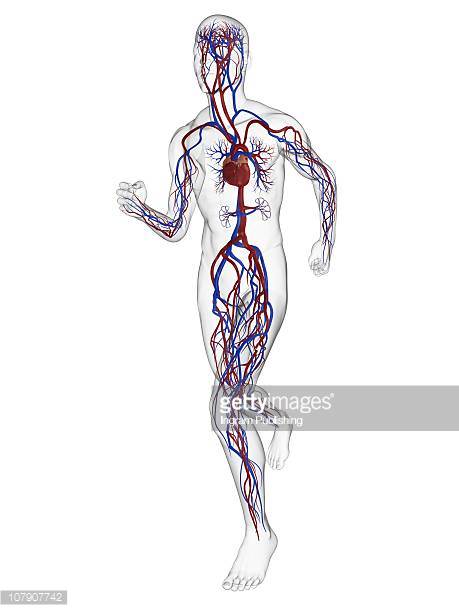
What is the main organ of the circulatory system?
small intestine
bone
lungs
heart
Arteries carry oxygen rich blood away from the heart.
True
False
Veins carry oxygen poor blood back to the heart.
False
True
The job of the heart is to . . .
pump blood around the body.
send food to the small intestines.
break down food.
give energy to the body.
The heart is about the size and shape of your . . .
head
fist
hand
foot
Which of the following best describes the role of amino acids in the body?
They are the smallest structural units of organisms.
They are the basic building blocks of proteins.
They carry genetic instructions in cells.
They are short chains of proteins.
What is the relationship between a gene and a protein?
A gene is a short chain of proteins.
A gene is a segment of DNA that codes instructions for making proteins.
A gene is a compound made from amino acids.
A gene is a type of tissue that performs a specific function.
How do peptides differ from proteins?
Peptides are made of DNA, while proteins are made of amino acids.
Peptides are short chains of amino acids, while proteins are long chains.
Peptides carry genetic instructions, while proteins do not.
Peptides are the smallest structural units of organisms.
Which of the following statements is true about DNA?
DNA is a short chain of amino acids.
DNA is a long, double-stranded molecule that carries genetic instructions.
DNA is a type of tissue made of cells.
DNA is a compound that forms the basis of muscles and tissues.
What is the primary function of proteins in cells?
To carry genetic instructions.
To form the basis of muscles and tissues and perform work inside cells.
To provide the nutrition for growth and maintenance of health.
To act as the smallest structural units of organisms.
How are tissues related to cells?
Tissues are made of DNA segments that code for proteins.
Tissues are made of cells and work as a unit to perform a particular function.
Tissues are the basic building blocks of proteins.
Tissues are short chains of amino acids.
Which of the following best describes the function of a diet in animals?
To provide the smallest structural units of organisms.
To carry genetic instructions in cells.
To provide nutrition for growth and maintenance of health.
To form the basis of muscles and tissues.
What is the structural relationship between amino acids and proteins?
Proteins are made from one or more long chains of amino acids.
Amino acids are made from one or more long chains of proteins.
Proteins are short chains of amino acids.
Amino acids carry genetic instructions for proteins.
Which of the following is a characteristic of a cell?
It is a long, double-stranded molecule that carries genetic instructions.
It is the smallest structural and functional unit of an organism.
It is a short chain of amino acids.
It is a compound made from amino acids.
What is the role of DNA in living organisms?
To form the basis of muscles and tissues.
To provide nutrition for growth and maintenance of health.
To carry genetic instructions.
To act as the smallest structural unit of organisms.
How do genes relate to DNA?
Genes are short chains of amino acids.
Genes are segments of DNA that code instructions for making proteins.
Genes are the smallest structural units of organisms.
Genes are compounds made from amino acids.
Which of the following best describes a peptide?
A long, double-stranded molecule that carries genetic instructions.
A short chain of amino acids.
A compound made from one or more long chains of amino acids.
A segment of DNA that codes instructions for making proteins.
What is the primary function of tissues in living organisms?
To carry genetic instructions.
To work as a unit to perform a particular function.
To provide the nutrition for growth and maintenance of health.
To form the basis of muscles and tissues.
Which of the following statements is true about proteins?
Proteins are the smallest structural units of organisms.
Proteins are compounds made from one or more long chains of amino acids.
Proteins are short chains of amino acids.
Proteins carry genetic instructions in cells.
What is the relationship between diet and health in animals?
Diet provides the smallest structural units of organisms.
Diet provides the nutrition necessary for growth and maintenance of health.
Diet carries genetic instructions for cells.
Diet forms the basis of muscles and tissues.
Which of the following best describes the role of amino acids in the body?
They are the smallest structural units of organisms.
They are the basic building blocks of proteins.
They carry genetic instructions in cells.
They are short chains of proteins.
What is the relationship between a gene and a protein?
A gene is a short chain of proteins.
A gene is a segment of DNA that codes instructions for making proteins.
A gene is a compound made from amino acids.
A gene is a type of tissue that performs a specific function.
How do peptides differ from proteins?
Peptides are made of DNA, while proteins are made of amino acids.
Peptides are short chains of amino acids, while proteins are long chains.
Peptides carry genetic instructions, while proteins do not.
Peptides are the smallest structural units of organisms.
Which of the following statements is true about DNA?
DNA is a short chain of amino acids.
DNA is a long, double-stranded molecule that carries genetic instructions.
DNA is a type of tissue made of cells.
DNA is a compound that forms the basis of muscles and tissues.
What is the primary function of proteins in cells?
To carry genetic instructions.
To form the basis of muscles and tissues and perform work inside cells.
To provide the nutrition for growth and maintenance of health.
To act as the smallest structural units of organisms.
How are tissues related to cells?
Tissues are made of DNA segments that code for proteins.
Tissues are made of cells and work as a unit to perform a particular function.
Tissues are the basic building blocks of proteins.
Tissues are short chains of amino acids.
Which of the following best describes the function of a diet in animals?
To provide the smallest structural units of organisms.
To carry genetic instructions in cells.
To provide nutrition for growth and maintenance of health.
To form the basis of muscles and tissues.
What is the structural relationship between amino acids and proteins?
Proteins are made from one or more long chains of amino acids.
Amino acids are made from one or more long chains of proteins.
Proteins are short chains of amino acids.
Amino acids carry genetic instructions for proteins.
Which of the following is a characteristic of a cell?
It is a long, double-stranded molecule that carries genetic instructions.
It is the smallest structural and functional unit of an organism.
It is a short chain of amino acids.
It is a compound made from amino acids.
What is the role of DNA in living organisms?
To form the basis of muscles and tissues.
To provide nutrition for growth and maintenance of health.
To carry genetic instructions.
To act as the smallest structural unit of organisms.
How do genes relate to DNA?
Genes are short chains of amino acids.
Genes are segments of DNA that code instructions for making proteins.
Genes are the smallest structural units of organisms.
Genes are compounds made from amino acids.
Which of the following best describes a peptide?
A long, double-stranded molecule that carries genetic instructions.
A short chain of amino acids.
A compound made from one or more long chains of amino acids.
A segment of DNA that codes instructions for making proteins.
What is the primary function of tissues in living organisms?
To carry genetic instructions.
To work as a unit to perform a particular function.
To provide the nutrition for growth and maintenance of health.
To form the basis of muscles and tissues.
Which of the following statements is true about proteins?
Proteins are the smallest structural units of organisms.
Proteins are compounds made from one or more long chains of amino acids.
Proteins are short chains of amino acids.
Proteins carry genetic instructions in cells.
What is the relationship between diet and health in animals?
Diet provides the smallest structural units of organisms.
Diet provides the nutrition necessary for growth and maintenance of health.
Diet carries genetic instructions for cells.
Diet forms the basis of muscles and tissues.
Which organelle is responsible for the process of cellular respiration in living organisms?
Chloroplast
Mitochondria
Ribosome
Nucleus
What are the reactants required for the process of photosynthesis?
Glucose and oxygen
Carbon dioxide, water, and light energy
Carbon dioxide and glucose
Oxygen and water
Identify the type of process photosynthesis undergoes.
Catabolic (breaking down)
Anabolic (building up)
Exothermic
Endothermic
Which of the following statements is true about cellular respiration?
It requires sunlight to occur.
It occurs only in phototrophs.
It is an exothermic reaction.
It produces glucose as a by-product.
What is the main purpose of photosynthesis in plants?
To break down food particles
To produce food by capturing energy
To release energy in the form of ATP
To liberate carbon dioxide
Which of the following chemical equations represents cellular respiration?
6CO2+6H2O→C6H12O6+6O2
C6H12O6+6O2→6CO2+6H2O
6O2+6H2O→C6H12O6+6CO2
C6H12O6+6CO2→6O2+6H2O
Which process occurs in the chloroplasts of plant cells?
Cellular respiration
Photosynthesis
Fermentation
Glycolysis
Which of the following is true about the energy requirement of photosynthesis?
It releases energy.
It requires energy.
It does not involve energy.
It stores energy.
What is the main difference between the processes of cellular respiration and photosynthesis?
Both occur in mitochondria.
Both require sunlight.
One is catabolic (breaking down), and the other is anabolic (building up).
Both produce glucose.
Which of the following is a characteristic of an exothermic reaction?
Energy is absorbed.
Energy is released.
Energy is stored.
Energy is not involved.
In which type of organisms does photosynthesis occur?
All living organisms
Only in animals
Only in phototrophs
Only in fungi
What is the primary function of cellular respiration?
To produce glucose
To capture light energy
To break down food particles to release energy
To synthesize food
Which of the following is a by-product of photosynthesis?
Carbon dioxide
Water
Oxygen
ATP

Cellular respiration occurs in the (a)
Label the diagram with the following terms.
Oxygen
Chloroplast
Mitochondria
CO2

