
Font size
 Worksheets
805.💎Physical Science: Chem Semester Final Quizizz
Total questions: 100
Worksheet time: 1hrs 22mins
What is a nuclear reaction?
A process that involves the rearrangement of electrons in an atom
A chemical reaction that releases energy
A process that changes the nucleus of an atom
A reaction that occurs only in stars
What is an isotope?
Atoms with the same number of protons but different numbers of neutrons
Atoms with different numbers of protons and electrons
Atoms with the same number of neutrons but different numbers of electrons
Atoms with different numbers of protons and neutrons
What is a daughter isotope?
The original isotope before decay
An isotope that is artificially created
The isotope that remains after a radioactive decay
An isotope that has gained electrons
What is beta minus decay?
The conversion of a neutron into a proton with the emission of an electron
The conversion of a proton into a neutron with the emission of a positron
The emission of an alpha particle from a nucleus
The absorption of a beta particle by a nucleus
What is beta plus decay?
The conversion of a neutron into a proton with the emission of an electron
The conversion of a proton into a neutron with the emission of a positron
The emission of an alpha particle from a nucleus
The absorption of a beta particle by a nucleus
What is nuclear fission?
The process of combining two light nuclei to form a heavier nucleus
The splitting of a heavy nucleus into two lighter nuclei
The emission of a neutron from a nucleus
The absorption of a neutron by a nucleus
What is nuclear fusion?
The process of combining two light nuclei to form a heavier nucleus
The splitting of a heavy nucleus into two lighter nuclei
The emission of a neutron from a nucleus
The absorption of a neutron by a nucleus
What is a proton?
A negatively charged particle
A positively charged particle
A neutral particle
A particle with no charge
What is a neutron?
A positively charged particle
A negatively charged particle
A neutral particle
A particle with a positive charge
What is an electron?
A positively charged particle
A negatively charged particle
A neutral particle
A particle with no charge
What is the atomic number?
The number of protons in an atom
The number of neutrons in an atom
The total number of protons and neutrons
The number of electrons in an atom
What is the mass number?
The number of protons in an atom
The number of neutrons in an atom
The total number of protons and neutrons
The number of electrons in an atom
What is average atomic mass?
The mass of the most common isotope
The weighted average of all isotopes of an element
The mass of the heaviest isotope
The mass of the lightest isotope
What are metals?
Elements that are poor conductors of heat and electricity
Elements that are good conductors of heat and electricity
Elements that are gases at room temperature
Elements that are non-reactive
What are nonmetals?
Elements that are good conductors of heat and electricity
Elements that are poor conductors of heat and electricity
Elements that are shiny and malleable
Elements that are ductile
What are periods in the periodic table?
Vertical columns in the periodic table
Horizontal rows in the periodic table
Groups of similar elements
Isotopes of elements
What are groups in the periodic table?
Horizontal rows in the periodic table
Vertical columns in the periodic table
Isotopes of elements
Periods of elements
What is an ionic bond?
A bond formed by the sharing of electron pairs between atoms
A bond formed by the electrostatic attraction between oppositely charged ions
A bond formed by the attraction between free-floating valence electrons and positively charged metal ions
A bond formed by the sharing of a pair of electrons between two nonmetals
What is the octet rule?
Atoms tend to gain, lose, or share electrons to have eight electrons in their outer shell
Atoms tend to gain, lose, or share electrons to have six electrons in their outer shell
Atoms tend to gain, lose, or share electrons to have ten electrons in their outer shell
Atoms tend to gain, lose, or share electrons to have four electrons in their outer shell
What is a valence electron?
An electron in the innermost shell of an atom
An electron in the outermost shell of an atom
An electron that is shared between two atoms
An electron that is lost during a chemical reaction
What is an ion?
A neutral atom
An atom with a full outer shell
An atom or molecule with a net electric charge due to the loss or gain of one or more electrons
An atom with no electrons
What is a cation?
A negatively charged ion
A positively charged ion
A neutral atom
An atom with a full outer shell
What is an anion?
A positively charged ion
A negatively charged ion
A neutral atom
An atom with a full outer shell
What is the trend of atomic radius on the periodic table?
Increases across a period, decreases down a group
Decreases across a period, increases down a group
Increases across a period, increases down a group
Decreases across a period, decreases down a group
What is the trend of ionization energy on the periodic table?
Increases across a period, decreases down a group
Decreases across a period, increases down a group
Increases across a period, increases down a group
Decreases across a period, decreases down a group
What type of bond involves the sharing of electron pairs between atoms?
Ionic Bond
Metallic Bond
Covalent Bond
Hydrogen Bond
How many valence electrons does oxygen have?
4
6
8
2
How many valence electrons does carbon have?
2
4
6
8
How many valence electrons does nitrogen have?
3
5
7
9
How many valence electrons does sulfur have?
4
6
8
2
How many valence electrons does silicon have?
2
4
6
8
What type of bond is characterized by equal sharing of electrons?
Ionic Bond
Polar Covalent Bond
Nonpolar Covalent Bond
Metallic Bond
What type of bond is characterized by unequal sharing of electrons?
Ionic Bond
Polar Covalent Bond
Nonpolar Covalent Bond
Metallic Bond
What are two main types of intermolecular forces?
Ionic and Covalent
Dipole-Dipole and Hydrogen Bonding
Metallic and Network Solids
Surface Tension and Phase Change
Which of the following is an example of a dipole-dipole force?
Ionic Bonding
Hydrogen Bonding
Metallic Bonding
Van Der Waals Forces
What is a characteristic of network solids?
High melting points
Low boiling points
Weak intermolecular forces
High solubility in water
How are phases of matter and intermolecular forces (IMFs) related?
the strength of IMFs determine the phase of matter
Phases of matter determine the strength of IMFs
They are unrelated
IMFs only affect gases
Which term describes the energy of motion in particles?
Potential Energy
Kinetic Energy
Thermal Energy
Chemical Energy
What do vapor pressure curves show?
The relationship between temperature and pressure
The phases of matter
The energy levels of electrons
The density of a substance
Which law states that energy cannot be created or destroyed, only transformed?
Law of Thermodynamics
Law of Conservation of Energy
Law of Motion
Law of Gravity
What is the measure of the average kinetic energy of the particles in a system?
Heat
Temperature
Enthalpy
Pressure
What is the term for the energy stored in an object due to its position or arrangement?
Kinetic Energy
Potential Energy
Thermal Energy
Electrical Energy
What is the term for a reaction that releases heat to its surroundings?
Endothermic Reaction
Exothermic Reaction
Neutral Reaction
Catalytic Reaction
Which of the following is a synthesis reaction?
A + B → AB
AB → A + B
AB + CD → AD + CB
AB → A + B + C
What is a combustion reaction?
A reaction where a substance combines with oxygen, releasing energy.
A reaction where a substance breaks down into simpler substances.
A reaction where two substances combine to form a new compound.
A reaction where a substance loses electrons.
What is the molar mass of CO₂?
12 g/mol
16 g/mol
44 g/mol
28 g/mol
Calculate the molar mass of CH₂O.
30 g/mol
32 g/mol
34 g/mol
36 g/mol
Convert 22 g CO₂ into mol CO₂.
0.5 mol
1 mol
0.25 mol
2 mol
Temperature affects reaction rate by:
Increasing temperature decreases reactant collision energy
Increasing temperature increases reactant collision energy
Increasing temperature increases chance of reactant collision
Increasing temperature decreases chance of reactant collision
How does concentration affect reaction rate?
Increases with decreasing concentration
Decreases with increasing concentration
Increases with increasing concentration
Remains constant regardless of concentration
In an exothermic reaction, which has higher energy: reactants or products?
Products have higher energy than reactants
Reactants have higher energy than products
Energy remains constant
Energy decreases then increases
The potential energy diagram of an endothermic reaction shows that:
Products have higher energy than reactants
Reactants have higher energy than products
Energy remains constant
Energy decreases then increases
How much heat in joules does it take to raise 5.0 g of liquid water from 65°C to 70°C? (The specific heat of liquid water is 4.184 J/g°C)
20.92 J
104.6 J
83.68 J
41.84 J
The specific heat of copper is about 0.4 J/g°C. How much heat is needed to change the temperature of a 20.0 g sample of copper from 40.0°C to 70.0°C?
240 J
160 J
320 J
80 J
The weaker the intermolecular forces of a substance the _____________ the boiling point
higher
lower
What explains the strong surface tension of water?
Intermolecular forces are the forces
Within molecules
Between molecules
Reorder the forces from weakest to strongest:
Dispersion Forces
Dipole-Dipole Forces
Hydrogen Bonding
Ionic Bonding
How many moles of oxygen are consumed if 8 moles H2 are used?
How many grams of hydrogen are produced if 120 g of Na are available?
SiO2 + 3C → SiC + 2CO
Which conversion factor(s) would be needed to determine the following: "How many moles of SiC can be produced from 10 moles of C?"
10 g C = 1 mol C
1 mol C = 12.01 g C
1 mole SiC = 40.1 g SiC
3 mol C =1 mol SiC
3 mol C = 12.01 g C
Cl2 + 2 KBr → Br2 + 2 KCl
Convert 356 g of Cl2 into grams of KCl. How many steps does this stoichiometry problem require?
1
2
3
4
How many moles of carbon dioxide are produced from the combustion of 110 g of CH4?
2 NaClO3 (s) --> 2NaCl (s) +3 O2 (g)
Convert 12.00 moles of NaClO3 into grams of O2. How many stoich steps does this require?
1
2
3
4
B2H6 + 3O2 -->2 HBO2 + 2 H2O
Convert moles of O2 into moles of B2H6. How many stoich steps does this require?
1
2
3
4
How do you calculate the number of neutrons in an atom?
Atomic number + mass number
Mass number - atomic number
Atomic number - mass number
Number of protons + number of electrons
Which element has an atomic number of 19?
Aluminum
Magnesium
Potassium
Calcium
What is the mass number of Potassium-39?
19
39
39.10
20
How are elements arranged in the periodic table?
By decreasing atomic number
By increasing atomic number
By alphabetical order
By atomic mass
What does the atomic number represent?
The number of neutrons in the nucleus
The number of electrons in the nucleus
The number of protons in the nucleus
The number of atoms in a molecule
Which of the following is NOT a characteristic of metals?
Shiny
Brittle
Ductile
Malleable
What state are most nonmetals at room temperature?
Solids
Liquids
Gases
Plasmas
How many periods are there in the periodic table?
5
6
7
8
How are groups identified in the periodic table?
By letters (A-Z)
By numbers (1-18)
By colors
By symbols
Which groups are considered the transition metals?
1-2
13-18
3-12
1-8
Which group contains the most reactive metals?
Alkaline Earth Metals
Transition Metals
Halogens
Alkali Metals
What is the term for an atom that has gained or lost electrons and has a charge?
Molecule
Ion
Isotope
Compound
Match the characteristic to the Periodic Group
most reactive metals
forms ions with +1 charge
highly reactive (but not most reactive) metals
forms ions with +2 charge
extremely reactive nonmetals
forms ions with -1 charge
nonreactive nonmetals
stays neutral

beta minus particle
beta plus particle
What type of nuclear decay is shown here
13756Ba* → 13756Ba + 00Υ
alpha
beta minus
gamma
beta plus

In a correctly written symbol what would be located in the "Z" position?
number of neutrons
atomic number
number of electrons
mass number
Finish the equation
73181Ta → ____ + 74181W
24He
00Υ
−10β
10β

Solve the nuclear decay reaction:
1532S
1732P
1632S
1732Cl
If a sulfur atom has 16 protons, 16 electrons, and 16 neutrons, its mass number is:
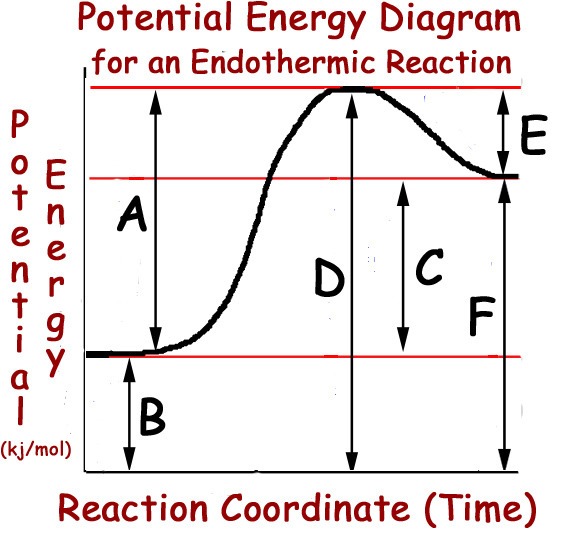
What letter represents the potential energy of the ΔH?
F
E
Which factor(s) increase the rate of a reaction.
decreasing surface area
increasing volume


What is the molar mass of Carbon?
12.01 g/mol
10.81 g/mol
207.2 g/mol
19.00 g/mol
Which conversion factor should be used to solve the following, "How many moles of argon atoms are present in 11.2 g of argon?"
Which conversion factor should be used for the following question "How many moles are there in 1600g of glucose, C6H12O6?"
1 mole = 180.18 g
What is the mass of 0.89 mol of CaCl2? [The molar mass of CaCl2 is 110.98]
98.8 grams
96 g/mol
130 g/mol
232.5 g/mol
303.3 g/mol

