wayground logo

Free Printable Worksheets

Font size

S
M
L
XL
Worksheets

PMA 2 Review

Total questions: 100

Worksheet time: 2hrs 40mins

Name
Class
Date
1.

The phenomenon by which toxins concentrate in the organisms at higher trophic levels within an ecosystem is known as...

a)

Biotoxicity

b)

Biomagnification

c)

Eutrophication

d)

Predation

2.

Which consumer is the most affected by toxins like mercury?

a)

Primary Consumer

b)

Secondary Consumer

c)

Apex Predator

d)

Producers

3.

Toxin concentrations _____________ as you go up the food chain.

a)

do not change

b)

increase

c)

decrease

4.

What is bio-remediation?

a)

Process where organic things are used to break down pollution

b)

When you use biology to meditate

c)

When you amend biological things

d)

Process where you watch bacteria break things down

5.

What is the main purpose of bioremediation?

a)

To remove contaminants from the environment

b)

To promote the growth of toxic waste

c)

To increase pollution in the environment

d)

To convert pollutants into more toxic forms

6.
What is unicellular? 
a)
one cell 
b)
many cells 
c)
no nuclues 
d)
DNA 
7.
What is multicellular? 
a)
one cell 
b)
no cells 
c)
many cells 
d)
no nucleus 
8.
What type of cell does not have a nucleus?
a)
eukaryotic 
b)
prokaryotic 
9.
Are prokaryotes multicellular or unicellular? 
a)
Multicellular
b)
Unicellular
10.
What structures distinguish a plant cell from an animal cell?
a)
Plant cells have cell walls and ribosomes.
b)
Plant cells have cell walls and chloroplasts.
c)
Plant cells have chloroplasts and ribosomes.
d)
Plant cells have chloroplasts and mitochondria.
11.
Where do all cells come from?
a)
From other planets
b)
From pre-existing cells
c)
From the moon
d)
Cells spontaneously appeared on Earth.
12.

Small grain-shaped organelles that produce proteins for the cell

a)

Cytoplasm

b)

Ribosomes

c)

Lysosomes

d)

Mitochondria

13.

Rod-shaped organelles that convert energy in food molecules to energy the cell can use to carry out its functions

a)

Mitochondria

b)

Golgi Apparatus

c)

Ribosomes

d)

Endoplasmic Reticulum

14.

Organelle in a cell that receives proteins and other newly formed materials from the endoplasmic reticulum, packages them, and distributes them to other parts of the cell

a)

Golgi Apparatus

b)

Lysosome

c)

Endoplasmic Reticulum

d)

Chloroplast

15.

Semipermeable membrane, surrounding a cell that controls what goes into and out of the cell

a)

Cell Wall

b)

Lysosome

c)

Nucleus

d)

Cell Membrane

16.

What is the function of the Vacuoles

a)

Store food, water and waste

b)

Receive proteins

c)

Assembles amino acids

d)

Found inside the nucleus

17.

What is the function of the cell membrane?

a)

To control what comes in and out of the cell

b)

To break down food inside the cell

c)

to serve as a barrier

d)

to eat the cells food

18.

Surrounds the plant cell and maintains the cell shape and structure.

a)

Cell wall

b)

Cell membrane

c)

Nucleus

d)

Ribosome

19.

Makes food for the plant cell.

a)

Ribosome

b)

nucleus

c)

chloroplast

d)

cytoplasm

20.

The control center for the cell.

a)

ribosome

b)

cytoplasm

c)

nucleus

d)

cell membrane

21.
I am only found in a plant cell. What am I?
a)
cell wall
b)
mitochondria
c)
cytoplasm
d)
chloroplast
22.
The Golgi apparatus _____.
a)
packages cell products for export
b)
eliminates waste
c)
stores DNA
d)
makes energy
23.

What type of cell is being shown in the image?

a)

plant

b)

animal

24.

Identify the structure that is indicated by the arrow in the image.

a)

cell wall

b)

central vacuole

c)

chloroplast

d)

cell membrane

25.

Identify the structure that is indicated by the arrow in the image.

a)

cell wall

b)

central vacuole

c)

chloroplast

d)

nucleus

26.

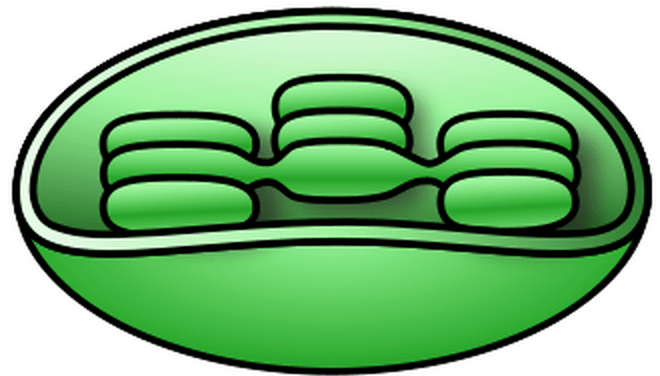
What is the function of a chloroplast?

a)

makes proteins for animal cells

b)

allows materials in and out of the cell

c)

provides structure and support

d)

absorbs sunlight for photosynthesis

27.

What organelle is called the "powerhouse" of a cell?

a)

mitochondria

b)

nucleus

c)

cell wall

d)

cell membrane

28.
Maze-like organelle that makes ribosomes: 
a)
Rough Endoplasmic Reticulum
b)
Lysosomes
c)
Nucleus
d)
Chromatin
29.

What two organelles are ONLY in plant cells?

a)

cell membrane and mitochondria

b)

nucleus and ribosomes

c)

cell wall and chloroplasts

d)

golgi apparatus and lysosomes

30.

Which organelle stores the genetic material, DNA?

a)

lysosomes

b)

vacuoles

c)

ribosomes

d)

nucleus

31.

The rough endoplasmic reticulum, has what organelle attached to it?

a)

vacuoles

b)

ribosomes

c)

lysosomes

d)

mitochondria

32.

What does the flower do for the plant?

a)

make energy for the plant

b)

allow water to flow through the plant

c)

protect the seeds

d)

attract insects to help it reproduce

33.

What is the job of the roots?

a)

to make seeds for the plant

b)

to make food for the plant and take in air

c)

to help the flower reproduce

d)

to support the plant and help deliver food, minerals, and water to other parts of the plant

e)

to anchor the plant in place, soak in water, and store food for the plant

34.

What is the job of the stem?

a)

to make seeds for the plant

b)

to make food for the plant and take in air

c)

to help the flower reproduce

d)

to support the plant and help deliver food, minerals, and water to other parts of the plant

e)

to anchor the plant in place, soak in water, and store food for the plant

35.
Small openings called ______ are found on the underside of leaves and allow gases to enter or leave the plant cells.
a)
Phloem
b)
Chloroplasts
c)
Xylem
d)
Stomata
36.
The plant tissue that carries food DOWNWARD from the leaves to the rest of the pant is the ______.
a)
Phloem
b)
Stomata
c)
Chlorophyll
d)
Xylem
37.
Plants COULD NOT survive without _____ and ______.
a)
Transpiration and Gravity
b)
Oxygen and Water
c)
Seeds and Water
d)
Carbon Dioxide and Water
38.
What part of the plant cell stores water?
a)
nucleus
b)
vacuole
c)
chloroplast
d)
ribosome
39.
The process of photosynthesis takes place in organelles (part of cell) called ______.
a)
Phloem
b)
Xylem
c)
Stomata
d)
Cholorplasts
40.
Why do plants do photosynthesis?
a)
to make oxygen for people
b)
to make food for itself
c)
to make a flower
d)
to make carbon dioxide
41.
Vascular tissue that transports water and minerals UPWARDS from a plant's roots is known as ______.
a)
Cuticle
b)
Phloem
c)
Stomata
d)
Xylem
42.

The diffusion of water vapor out of a leaf

a)

transportation

b)

transformation

c)

transpiration

d)

translocation

43.

The main function of stomata is to

a)

capture sunlight

b)

protect leaves from insects

c)

allow gases to move rapidly in/out of leaves

d)

release sugars into the atmosphere

44.

Which type of specialized cell opens and closes pores (holes) to let things in and out of the leaf?

a)

xylem

b)

guard cells

c)

epidermis cells

d)

phloem

e)

root hair cells

45.

Which of the following is a complex tissue that transports water, minerals, and sugars to different parts of the plant?

a)

Dermal tissue

b)

Ground tissue

c)

Permanent tissue

d)

Vascular tissue

46.

Which of the following is an undifferentiated embryonic tissue found in the active growth regions of plants such as tips of roots and stems?

a)

Parenchyma tissue

b)

Collenchyma tissue

c)

Meristematic tissue

d)

Permanent tissue

47.

Which of the following is a simple tissue that serves as a site for photosynthesis, provides supporting matrix for vascular tissue, and helps to store water and sugar?

a)

Vascular tissue

b)

Collenchyma tissue

c)

Ground tissue

d)

Sclerenchyma tissue

48.

Tissues with active cell division

a)

Permanent

b)

Meristematic

49.

Which of the following is a reactant Cellular Respiration?

a)

Oxygen

b)

Carbon Dioxide

c)

Water

d)

Sunlight

50.

Which of the following is a reactant Cellular Respiration?

a)

Sunlight

b)

CO2

c)

H20

d)

C6 H12 O6

51.

Cellular Respiration is an aerobic process which means it requires Oxygen.

a)

True

b)

False

52.

What organelle does cellular respiration take place?

a)

Chloroplast

b)

Cell Wall

c)

Mitochondria

d)

Central Vacuole

53.

What type of organism makes it's own food?

a)

Autotroph

b)

Heterotroph

c)

Consumer

d)

Omnivore

54.

What type of organism has to consume energy?

a)

Producers

b)

Plant

c)

Autotroph

d)

Heterotroph

55.

What is the best definition for cellular respiration?

a)

A process in which glucose is broken down to be used for energy.

b)

A process in which Carbon Dioxide is used to break down Glucose.

c)

The process in which animals make their own energy.

56.

According to the graph, what happens when the temperature increases?

a)

respiration rate decreases

b)

respiration rate increases

c)

respiration rate levels off

d)

respiration rate increases then decreases

57.

Based of the information in the graph, what inference can be made?

a)

There were 10 measurements taken.

b)

Average respiration rate is measured in beats per minute.

c)

As the respiration rate increases the amount of oxygen produced increases.

d)

As the temperature increases more carbon dioxide is produced.

58.
The energy in ATP is stored 
a)
in the bond between the second and third phosphate
b)
in the bond between the first and second phosphate
c)
in the bond between the adenosine and the first phosphate
d)
I like turtles
59.
What is the correct equation for cellular respiration?
a)
6O2 + C6H12O6 -> 6CO2 + 6H2O + Energy
b)
6O2 + C6H12O6 + Energy -> 6CO2 + 6H2O
c)
6CO2 + 6H2O -> 6O2 + C6H12O6 + Energy
d)
6CO2 + 6H2O + Energy -> 6O2 + C6H12O6
60.
In which way are photosynthesis and cellular respiration different?
a)
Cellular respiration stores ATP, while photosynthesis releases ATP.
b)
Cellular respiration produces oxygen, while photosynthesis uses oxygen.
c)
Photosynthesis releases energy, while cellular respiration stores energy.
d)
Photosynthesis used carbon dioxide, while cellular respiration produces carbon dioxide.
61.
Aerobic respiration is different from anaerobic respiration in that aerobic respiration needs...
a)
chlorophyll
b)
carbon dioxide
c)
glucose
d)
oxygen
62.
______________ produces the most ATP.
a)
photosnthesis
b)
aerobic respiration
c)
anaerobic respiration
d)
glycolysis
63.
This molecule contains two phosphate groups
a)
ADP
b)
ATP
c)
Mitochondria
d)
Nucleus
64.
This molecule contains three phosphate groups
a)
ADP
b)
ATP
c)
Mitochondria
d)
Nucleus
65.
Movement of particles through the cell membrane from high to low concentrations
a)
diffusion
b)
photosynthesis
c)
mitochondria
d)
active transport
66.
Against the concentration gradient
low to high uses energy/ATP
a)
facilitated diffusion
b)
osmosis
c)
active transport
d)
diffusion
67.
Particles are too large to enter the membrane.
Need help from channel proteins. No energy required.
a)
active transport
b)
passive transport
c)
facilitated diffusion
d)
osmosis
68.
Diffusion of water across a cell membrane
from high to low.
a)
osmosis
b)
active transport
c)
protein channel
d)
pinocytosis
69.
Engulfs large molecules and moves them inside the membrane.
Uses energy.
a)
exocytosis
b)
endocytosis
c)
protein channel 
d)
diffusion
70.
Engulfing a large substance from the inside of the cell to move it outside of the cell. 
Uses energy. 
a)
exocytosis
b)
endocytosis
c)
photosynthesis
d)
diffusion
71.
Particles move from high concentrations to low concentrations.
Doesn't need energy
a)
passive transport
b)
facilitated transport
c)
active transport
d)
exocytosis
72.
A state of biological balance
a)
homeostasis
b)
hypertonic
c)
hypotonic
d)
hippocampus
73.
Permeable means
a)
things can pass through
b)
the concentration levels are different
c)
permanent
d)
things are stuck
74.
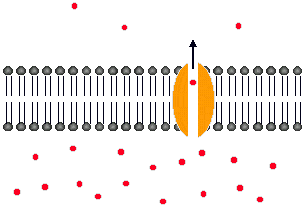
The picture is an example of...
a)
active tranport
b)
passive transport
c)
diffusion
d)
osmosis
75.

What is this an example of?

a)

Active Transport

b)

Exocytosis

c)

Passive Transport

d)

Easy Transport

76.

The cell membrane contains channels and pumps that help move materials from one side to the other. What are these channels and pumps made of?

a)

Carbohydrates

b)

Lipids

c)

Bilipids

d)

Proteins

77.
Salt water is an abundant resource but unusable for irrigation and drinking. As demands on freshwater sources increase, the use of desalination processes to remove salt from ocean water is increasing. A concern of desalinating water is the large amounts of recovered salts that are returned to the ocean. Which of the following describes the most likely impact of desalination on the surrounding ocean environment? 
a)
Methane gas would pollute the ocean environment as shoreline organisms begin to die and decay.
b)
Alteration in ocean salt levels would cause loss of species and unbalanced populations in marine food webs.
c)
Nonrenewable resources in the ocean environment would become depleted and upset the ecosystem's balance.
d)
Increased levels of salts and minerals in the ocean would result in overpopulation of marine bivalves due to strengthened shells
78.
New fuels are being produced by converting corn and grasses into compounds containing alcohols that can be broken down for energy in various engines. The purpose of this research is to
a)
 reduce the use of nonrenewable resources.
b)
increase the rate of air pollution.
c)
reduce the rate of homeostasis in organisms.
d)
 cause a loss of biodiversity in the rain forests.
79.
The presence of wastes, such as plastic bags and motor oil, in lakes and streams miles away from developed areas suggests that
a)
. ecosystems are interconnected and human action can alter ecosystem equilibrium.
b)
recycling programs have failed to conserve biotic resources.
c)
natural processes can alter ecosystem stability.
d)
 direct harvesting practices have led to irreversible destruction of ecosystems.
80.
DDT and other pesticides used over 50 years ago are still affecting the environment today. Scientists have found these substances in recent glacier runoff. Glacier runoff occurs during the summer, when precipitation that has fallen on glaciers during the winter is released. Ice layers from existing glaciers have been analyzed. The results of this analysis show that the concentrations of DDT and other pesticides were highest about 10 years after the use of these substances was banned. This information shows that
a)
DDT and other pesticides cause glacier runoff during the summer.
b)
it takes humans over 50 years to analyze a glacier.
c)
precipitation helps to break down pesticides.
d)
the decision of one human generation may have an impact on future generations.
81.
A community is concerned about the water quality of a nearby lake. Increased sedimentation in the lake is endangering the native habitat. The increased sedimentation is most likely caused by which of the following?
a)
trees planted along the shore of the lake
b)
construction of homes along the lake
c)
the amount of sunlight on the lake
d)
the amount of fish in the lake
82.
When fertilizers run off farmland into streams and ponds, the nitrogen content of the water increases. This can lead to rapid growth of algae in a process called eutrophication. How can this process affect other organisms in the water?
a)
Oxygen is used up as algae is decomposed, reducing the amount available to other organisms.
b)
The water becomes better able to support aerobic organisms.
c)
The algae provide food for fishes and other organisms, leading to decreased algae populations.
d)
The extra nitrogen provides additional food for the other organisms, increasing their population.
83.
A strip mining company wants to lease some land that is currently part of a national park. They promise to reclaim the land should any minerals be mined from the area, and they are willing to pay top dollar for the rights. As an ecologist, what factors would you raise with the local government?
a)
the threat to local biodiversity
b)
management of the land after the company leaves
c)
the new jobs that would be created
d)
the increased traffic in the area
84.
Whaling was a very profitable profession until whale populations crashed. The global community came together to enact a ban on whaling. However, Japan and Norway have not agreed to stop whaling. Which of the following is the most likely consequence of their decision?
a)
The whale populations are bouncing back very successfully and are unaffected by Japan and Norway continuing to whale.
b)
The whale populations are not rebounding as quickly as they might if all of the countries agreed not to hunt whales. 
c)
The whale populations have mutated into new kinds of organisms.
d)
The whales are getting better at avoiding capture. 
85.

What macromolecule is made up of C,H,O,N?

a)

Carbohydrates

b)

Lipids

c)

Proteins

d)

Nucleic acids

86.

What is the function of Carbohydrates?

a)

Long-term energy

b)

Muscle development

c)

Short-term energy

d)

enzyme activity

87.

Which one of the macromolecules are instrumental in the cell membrane?

a)

Carbohydrates

b)

Lipids

c)

Proteins

d)

Nucleic acids

88.

This macromolecules is responsible for providing our genetic material. Choose the macromolecule that best fits.

a)

Carbohydrates

b)

Lipids

c)

Proteins

d)

Nucleic acids

89.

Which one of our macromolecules would you consume in order to receive long-term energy?

a)

Carbohydrates

b)

Lipids

c)

Proteins

d)

Nucleic acids

90.

My monomers are glycerol and fatty acids. Which macromolecule am I?

a)

Carbohydrates

b)

Lipids

c)

Proteins

d)

Nucleic acids

91.

My monomers consist of a phosphate group, a sugar, and a nitrogenous base. Which macromolecule am I?

a)

Carbohydrate

b)

Lipids

c)

Proteins

d)

Nucleic Acids

92.

Which macromolecule has this structure?

a)

Carbohydrate

b)

Lipids

c)

Proteins

d)

Nucleic acids

93.

Which macromolecule is structured this way?

a)

Carbohydrates

b)

Lipids

c)

Proteins

d)

Nucleic acids

94.

Which macromolecule is structured in this way?

a)

Carbohydrates

b)

Lipids

c)

Proteins

d)

Nucleic acids

95.

Which of the macromolecules are structured in this way?

a)

Carbohydrates

b)

Lipids

c)

Proteins

d)

Nucleic acids

96.

Which of the following conclusions can be drawn from the graph?

a)

The optimum temperature is 20C

b)

The optimum temperature is 38C

c)

The enzyme's activity continually increases as temperature increases.

d)

The enzyme's activity continually decreases as temperature increases.

97.

What is an example of a protein?

a)

b)

c)

d)

98.

What is an example of a carbohydrate?

a)

b)

c)

d)

99.
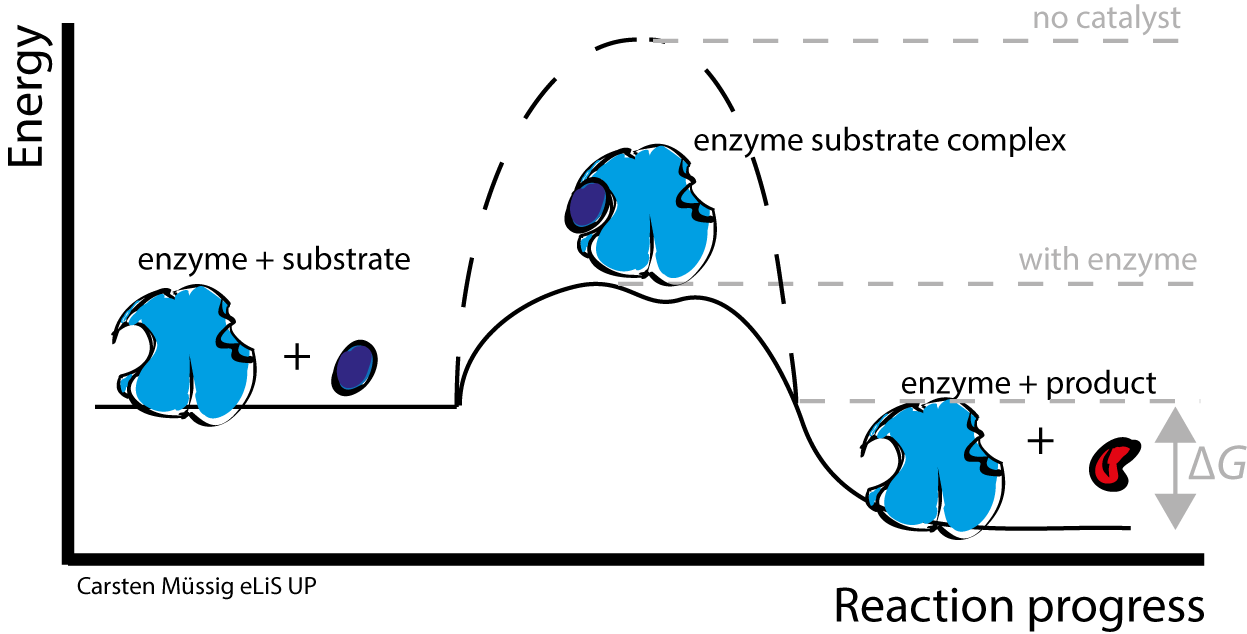
An enzyme speeds up a reaction by
a)
lowering the activation energy.
b)
raising the activation energy.
c)
releasing energy.
d)
absorbing energy.
100.
What is a Cataylst?
a)
A substance that speeds up a rate of chemical reaction.
b)
Molecules that make enzymes work harder and faster 
c)
reaction of an enzyme
d)
A substance that slows down a rate of chemical reaction.