Wayground logo

Free Printable Worksheets

Font size

S
M
L
XL
Worksheets

EXAM - SEMESTER 1

Total questions: 100

Worksheet time: 2hrs 17mins

Name
Class
Date
1.
When a baby kitten becomes an adult cat, this is an example of...
a)
energy metabolism
b)
growth and development
c)
response to stimuli
d)
having cells
2.
A _____ is something in the environment that causes an organism to respond.
a)
stimulus
b)
cause
c)
effect
3.

Maintaining a stable internal

environment is called (also means balance!)

a)

equilibrium

b)

balance

c)

evenness

4.
A reaction to a stimulus is a ______________.
a)
hiccup
b)
response
c)
metabolism
d)
homeostasis
5.
Your body shivers when you are cold. This is because of the concept of...
a)
homeostasis
b)
heredity
c)
energy metabolism
d)
cellular organization
6.
Provides usable energy for other life functions
a)
growth
b)
cellular respiration
c)
digestion
d)
excretion
7.

All living things or organisms in an ecosystem are

a)

None

b)

biotic factors

c)

abiotic factors

8.

Is a deer an abiotic or biotic factor?

a)

abiotic

b)

biotic

9.

Is sunlight an abiotic or biotic factor?

a)

abiotic

b)

biotic

10.

Is a rain an abiotic or biotic factor?

a)

abiotic

b)

biotic

11.

These 2 parts of the microscope support the entire microscope.

a)

Base; eyepiece

b)

Arm; Base

c)

Objective Lenses; Stage

12.

What is the purpose of the diaphragm on the microscope?

a)

It is the light source

b)

It regulates/controls the amount of light

c)

Supports the stage

13.

Which adjustment knob is used for first focusing? (I.e. moving the stage closer or farther away from the objective lenses to find the specimen).

a)

Coarse Adjustment Knob

b)

Fine Adjustment Knob

14.

Which adjustment knob is used for final focusing (small adjustments to increase the focus of the lens)?

a)

Coarse Adjustment Knob

b)

Fine Adjustment Knob

15.

Using a 10x eyepiece and a 40x objective would give a total magnification of ___

a)

40x

b)

50x

c)

400x

d)

500x

16.

What is the magnification of the eyepiece lens on a microscope?

a)

4x

b)

10x

c)

40x

17.

The word resolution describes:

a)

how big an image is

b)

how clear an image is

18.

What will you notice about an image projected through a light microscope?

a)

It is flipped and upside down

b)

It is sideways

c)

It disappears

d)

It is smaller

19.

When you move the slide to the right on the stage, what does it appear to do?

a)

move up

b)

move down

c)

move right

d)

move left

20.

Which objective lens should you ALWAYS BEGIN your observation with?

a)

low power objective

b)

medium power objective

c)

high power objective

d)

extra high power objective

21.
In the energy pyramid here, which organisms have the most energy available?
a)
Producers
b)
Carnivores
c)
Herbivores
d)
Top Predator
22.
In the energy pyramid below, which organism has the least amount of energy available?
a)
Producers
b)
Herbivores
c)
Carnivores
d)
Top Predator
23.
Carrying Capacity is
a)
the capacity of what one person can carry per day 
b)
how many animals you have in your daily bag limit at the end of the year
c)
wildebeest at a watering hole with zebras
d)
the maximum number of individuals that the environment can support
24.

What is a food chain?

a)

The flow of energy from one thing to another

b)

The way animals eat each other

c)

The way the sun makes everything

d)

How the plants grow

25.

The original source of energy for a food web is...

a)

plants

b)

sun

c)

producers

d)

decomposers

26.

Arrows in a food web represent...

a)

eating

b)

sunlight

c)

energy

d)

matter

27.
True or False. In this Food Web Pyramid the consumers on each level only get about 10 percent of energy that the plants have stored.
a)
True
b)
False
28.
In the energy pyramid here, how much of the energy in each level gets lost as heat or used by the organism for survival?
a)
80%
b)
90%
c)
10%
d)
20%
29.
Cattle egrets forage (feed) in fields among cattle. The egret gets easy access to flying insects stirred up by the cattle, and the cattle don't care if they are there or not.
a)
mutualism
b)
commensalism
c)
competition
d)
parasitism
30.
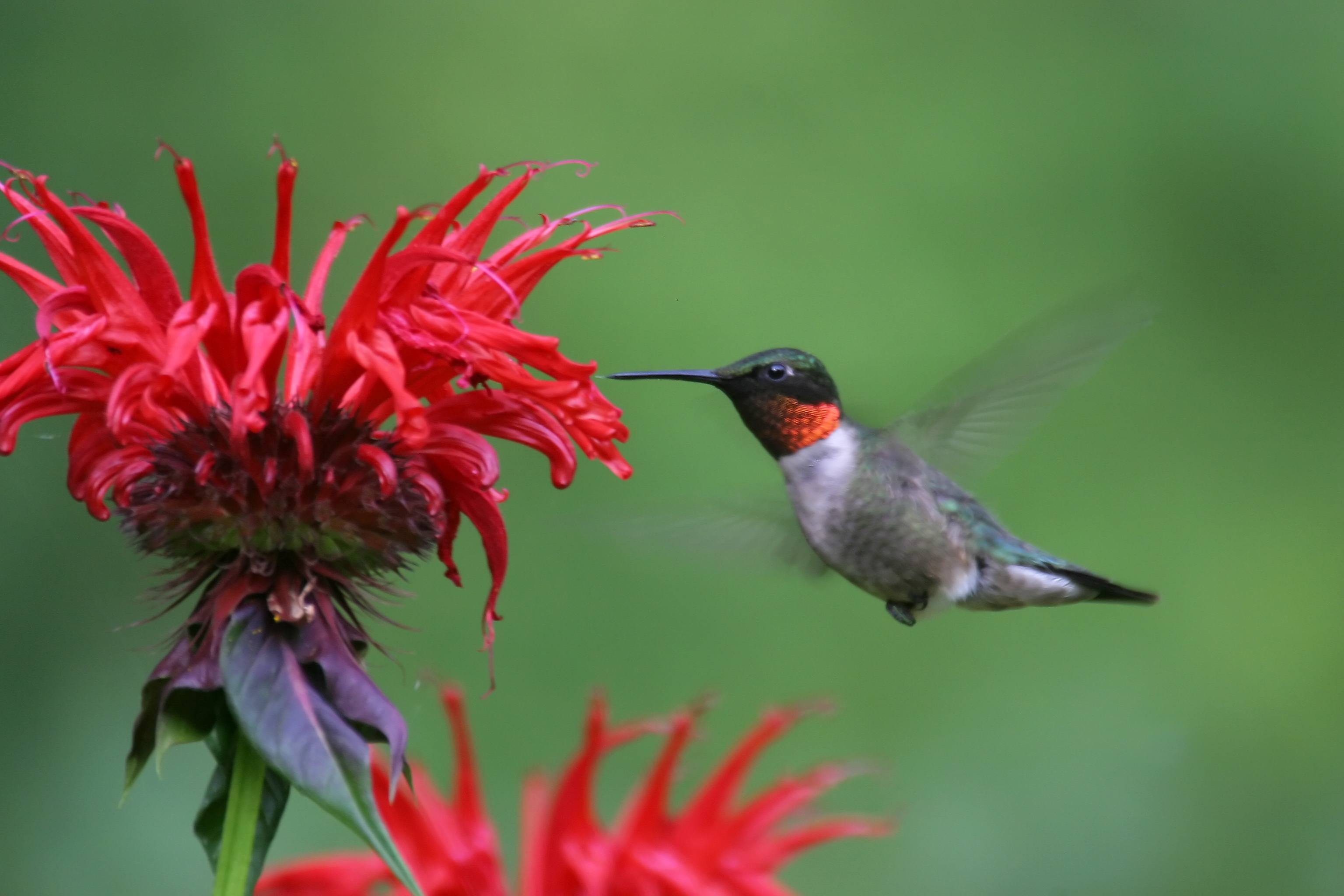
What type of symbiosis?  Hummingbirds feed on nectar from flowers.  The flowers are pollinated by hummingbirds as they move from flower to flower.
a)
commensalism
b)
mutualism
c)
parasitism
d)
predation
31.
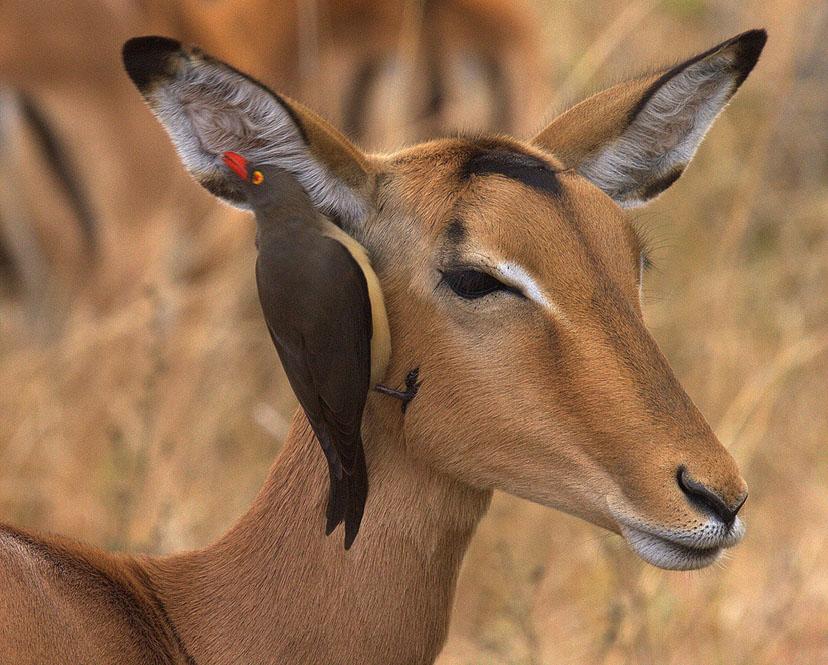
Red-billed oxpeckers are birds that often feed on parasites that infest impala.  This is an example of _______.
a)
commensalism
b)
mutualism
c)
neutralism
d)
competition
32.
A tick and a dog have this type of relationship.
a)
mutualism
b)
commensalism
c)
neutralism
d)
parasitism
33.

Which subatomic part of an atom gives it a positive charge?

a)

Neutron

b)

Proton

c)

Electron

34.

What is the smallest 'building block' of the elements that make up the universe?

a)

An atom

b)

An electron

c)

A proton

35.

What type of bond is formed when atoms share electrons?

a)

Covalent

b)

Ionic

c)

Hydrogen

36.

What type of bond is formed when one atom gains electrons and the other loses.

a)

Covalent

b)

Ionic

c)

Hydrogen

37.

negatively charged particles

a)
Electrons
b)
Neutrons
c)
Protons
38.

particles that have no charge

a)

neutrons

b)

protons

c)

electrons

39.

particles that have a negative charge

a)

neutrons

b)

protons

c)

electrons

40.

What are the electrons on the outermost cloud called?

a)

valence electrons

b)

electrons

c)

protons

d)

neutrons

41.

How many electrons can the FIRST energy cloud hold up to?

a)

1

b)

2

c)

6

d)

8

42.

AFTER the first electron cloud, how many electrons do the REST of the clouds hold?

a)

1

b)

2

c)

6

d)

8

43.

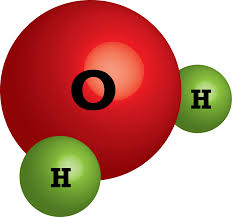
How many atoms of Hydrogen are in this compound?

a)

1

b)

2

c)

3

d)

4

44.

What is the chemical symbol for Hydrogen

a)

H

b)

He

c)

Hy

d)

Hg

45.

How many protons does Oxygen (O) have?

a)

24

b)

16

c)

15.999

d)

8

46.
This organelle controls what goes in and out of plant and animal cells.
a)
Cell Membrane
b)
Cytoplasm
c)
Cytoplasm
47.
The _____________ stores food, water, wastes, and other materials in both plant and animal cells.
a)
Vacuole
b)
Mitochondria
c)
Ribosomes
48.
An organelle that captures energy from the sunlight in order to use it to produce food in plant cells is ______________.
a)
Chloroplast
b)
Cytoplasm
c)
Cell Membrane
49.
The organelles that clean plant and animal cells by using chemicals to break down food and worn out cell parts are ______________.
a)
Lysosomes
b)
Mitochondria
c)
Nucleolus
d)
Cell Wall
50.
The _____________ is like JELL-O, and is a gel-like fluid that fills plant and animal cells, and is where the organelles are found.
a)
Cytoplasm
b)
Cell Membrane
c)
Cell Wall
d)
JELL-O
51.
The _____________ holds the DNA, and controls the functions of plant and animal cells.
a)
Nucleus
b)
Nuclear Membrane
c)
New Moon
52.
What is the difference between rough and smooth ER?
a)
There is no difference.
b)
Plants have rough ER, animals have smooth ER.
c)
What type of injuries the Doctors treat.
d)
Rough has ribosomes, smooth does not.
53.
Is considered the "powerhouse" of the cell. Provides energy...
a)
nucleus
b)
mitochondria
c)
vacuole
54.
What type of cell is in this picture?
a)
plant cell
b)
animal cell
55.
What type of cell is in this picture?
a)
plant cell
b)
animal cell
56.

Prokaryote Cells...

a)

Have a Nucleus

b)

DO NOT have a Nucleus

57.

What are the small structures inside of cells that carry out specific functions called?

a)

Organelles

b)

Tissues

c)

Organs

58.

Which organelle belongs in PLANT CELLS ONLY?

a)
Cell Membrane
b)
Mitochondrion
c)
Chloroplast
d)
Nucleus
59.
Which organelle belongs in plant cells only?
a)
Cytoplasm
b)
Mitochondrion
c)
Cell Wall
d)
Nucleus
60.
A cell will __________________ in a hypotonic solution.
a)

Swell and maybe burst

b)
Shrink
c)
Not change in size
61.
A cell will _____________________ in a hypertonic solution.
a)
Swell and maybe burst (lyse)
b)
Shrink
c)
Will not change
62.

A cell will _____________________ in a isotonic solution.

a)
Swell and maybe burst (lyse)
b)
Shrink
c)
Will not change
d)
Will violently explode
63.

The type of cellular transport that DOES NOT require energy

a)

Active transport

b)

Passive transport

c)

Exocytosis

d)

Endocytosis

64.

Movement of solute particles from an area of high concentration to low concentration is called...

a)

Osmosis

b)

Diffusion

c)

Active Transport

d)

Facilitated diffusion

65.

What type of solution is this cell in? (pay attention to the arrows)

a)

Isotonic

b)

Hypertonic

c)

Hypotonic

66.

Which of the following terms means the movement of WATER from high concentration to low concentration?

a)

Simple Diffusion

b)

Facilitated Diffusion

c)

Osmosis

d)

Concentration Gradient

67.
What is the definition of  Selective Permeability?
a)

The movement of ALL materials across the cell membrane

b)

the cell membrane allows SOME things to pass through and keep other things out

68.

Where is there the highest concentration of perfume?

a)

in the bottle

b)

on the hand

c)

in the room

69.

"Water Loving"

a)

Hydrophobic

b)

Hydrophilic

70.

"Water Fearing"

a)

Hydrophobic

b)

Hydrophilic

71.
The cell below is in a _____________ solution.
a)
Hypertonic
b)
Hypotonic
c)
Isotonic
72.
The cell below is in a _________ solution.
a)
Hypotonic
b)
Hypertonic
c)
Isotonic
73.

What does the shell of the egg represent?

a)

nucleus

b)

cell membrane

c)

cell wall

74.
This egg has shrunk, what type of solution was it placed in?
a)
hypotonic solution
b)
hypertonic solution
c)
isotonic solution
75.

The orbeez absorbed water, so which type of solution was it?

a)
hypotonic solution
b)
hypertonic solution
c)
isotonic solution
76.

Structure A is pointing to the _____. 

a)
chromosome
b)
centromere
c)
DNA
d)
chromatid
77.

Structure B is pointing to the _____. 

a)
chromosome
b)
centromere
c)
DNA
d)
chromatid
78.

Structure C is pointing to the _____. 

a)
chromosome
b)
centromere
c)
DNA
d)
chromatid
79.

Identify the phase of mitosis or cell cycle

a)
Anaphase
b)
Prophase
c)
Metaphase
d)
Interphase
80.

Identify the phase of mitosis or cell cycle

a)
Anaphase
b)
Prophase
c)
Metaphase
d)
Interphase
81.

Identify the phase of mitosis or cell cycle

a)
Anaphase
b)
Prophase
c)
Metaphase
d)
Interphase
82.
Identify the stage of mitosis.
a)
interphase
b)
prophase
c)
metaphase
d)
anaphase
83.
During which phase of the cell cycle does the cell spend the most time?
a)
Mitosis
b)
Cytokinesis
c)
Interphase
84.

Mitosis is cell division of....

a)

body cells

b)

sex cells

c)

skin cells

85.

The two stages that are not part of mitosis but part of the cell cycle are:

a)
interphase and metaphase
b)
interphase and cytokinesis
c)
cytokinesis and anaphase
86.

What is the end result of mitosis and cytokinesis?

a)

Two, identical cells

b)

Four, identical cells

c)

Two, different cells

d)

Four, different cells

87.

Why do our cells divide?

a)

growth

replication

b)

growth

reproduction

repair

c)

growth

duplication

mitosis

d)

growth

replication

mediation

88.
The summary at the end of an experiment that explains the results. 
a)
conclusion
b)
procedures
c)
materials
d)
responding variable
89.
The independent variable is what you _______ during an experiment.
a)
change
b)
do not change 
c)
measure
d)
count
90.
The dependent variable in an experiment is what you ________________. 
a)
Change
b)
Measure
91.
Will a construction paper air plane fly faster than an airplane made from notebook paper? Choose the best hypothesis.
a)
If I make a paper airplane from notebook paper, then it will fly faster than construction paper.
b)

The construction paper airplane will fly faster.

c)

The construction paper airplane will not fly faster.

d)
I think the construction paper air plane will fly faster.
92.

Which of the following hypotheses is written correctly?

a)

If I freeze a tennis ball, then it will not bounce as high.

b)

If a tennis ball is frozen, it won't bounce as high as one that is not frozen.

c)

Frozen tennis balls will not bounce as high.

d)

If I heat up a tennis ball it will bounce high

93.

The step-by-step instructions in an experiment.

a)

problem

b)

hypothesis

c)

procedure

d)

data

e)

conclusion

94.

What is the best example of a Problem?

a)

Which brand of tissue is strongest when wet?

b)

We will test tissue strength.

c)

Puffs is the strongest when wet.

95.

Should experiments be repeated over and over (trials) to see if the results are the same each time?

a)

yes

b)

no

96.

Based on the Mythbusters Experiment we watched in class, is it better to walk or run in the rain?

a)

walk

b)

run

97.

This is the group that we will compare our experimental group to. This group stays "normal" or the same.

a)
Control Group
b)
Experimental Group
c)
 Normal Group
d)
Weird Group
98.
Which is NOT a step in the scientific method?
a)
Make observation
b)
Form a theory
c)
Collect data
d)
Form a hypothesis
99.

One chicken is injected with a growth hormone while another chicken is not injected. Both chickens are weighed after a year. What is the INDEPENDENT variable?

a)

growth hormone

b)

weight of chickens

100.

One chicken is injected with a growth hormone while another chicken is not injected. Both chickens are weighed after a year. What is the DEPENDENT variable?

a)

growth hormone

b)

weight of chickens