wayground logo

Free Printable Worksheets

Font size

S
M
L
XL
Worksheets

Biology Mid Year Review

Total questions: 78

Worksheet time: 1hrs 1mins

Name
Class
Date
1.
A testable explanation to a problem that has not yet been tested. 
a)
data
b)
theory
c)
hypothesis
d)
fact
2.
This variable in an experiment is the one being changed by the scientist. 
a)
dependent variable
b)
independent variable
c)
data
d)
control group
3.
Dependent variable means
a)
the scientist controls what to test
b)
educated guess
c)
ask a question
d)
what is being measured
4.
Large bodies of water do not quickly fluctuate in temperature. Why?
a)
Water is a solvent.
b)
Water has a high heat capacity.
c)
Water acts as a buffer.
d)
Water is non-polar.
5.
What word describes when water is attracted to other substances?
a)
cohesion
b)
adhesion
c)
capillary action
d)
surface tension
6.
Why does water move from the roots to the leaves of plants?
a)
Water is pushed by solutes
b)
Capillary action pulls the water molecules like a chain
c)
Water is pulled by gravity
d)
Water’s cohesion causes it to “pull” towards the leaves
7.
Why does ice float?
a)
As water freezes, it expands and its density decreases.
b)
As water freezes, it takes up more hydrogen from the atmosphere, causing it to have a greater buoyancy.
c)
As water freezes, air becomes trapped between the hydrogen bonds of water molecules.
d)
As water freezes, it takes up more oxygen from the atmosphere, causing it to have a greater buoyancy.
8.
Proteins are made of monomers called ___________
a)
Nucleotides
b)
Monosaccharides
c)
Amino Acids
d)
Glycerol and fatty acids
9.
DNA and RNA are examples of 
a)
Carbohydrates
b)
Lipids
c)
Proteins
d)
Nucleic Acids
10.
Nucleotides are monomers of
a)
Carbohydrates
b)
Lipids
c)
Proteins
d)
Nucleic Acids
11.
Monosaccharides are monomers of
a)
Carbohydrates
b)
Lipids
c)
Proteins
d)
Nucleic Acids
12.
Waxes, oils and fats are examples of
a)
Carbohydrates
b)
Lipids
c)
Proteins
d)
Nucleic Acids
13.

Enzymes belong to which class of macromolecules?

a)

lipids

b)

carbohydrates

c)

proteins

d)

nucleic acids

14.

Which macromolecule is shown?

a)

lipid

b)

protein

c)

nucleic acid

d)

carbohydrate

15.
Is found in the cell membrane as a bilayer. 
a)
lipids
b)
protein
c)
nucleic acid
d)
carbohydrate
16.
Which major macromolecule is being represented in this image? 
a)
carbohydrate
b)
lipid
c)
protein
d)
nucleic acid
17.

Enzymes are an example of

a)

Lipids

b)

Carbohydrate

c)

Protein

d)

Nucleic Acid

18.
What is the purpose  of an enzyme?
a)
give permission for the reaction
b)
raise activation energy
c)
speed up reactions
d)
control how many reactions occur
19.
What 3 letters do enzymes typically end in?
a)
-ose
b)
-ase
c)
-ese
d)
-tic
20.
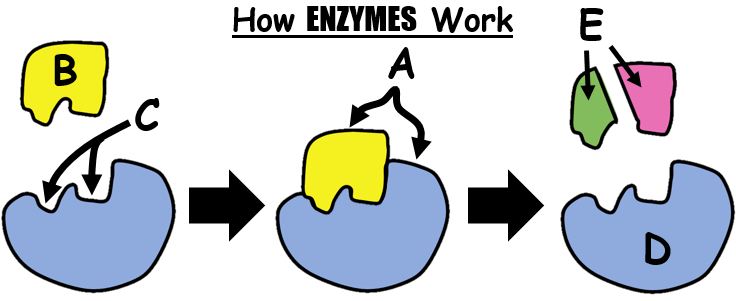
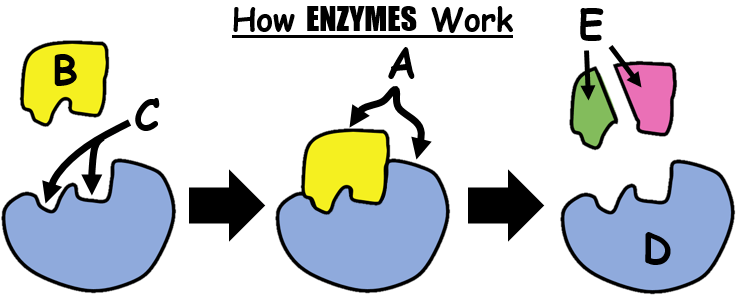
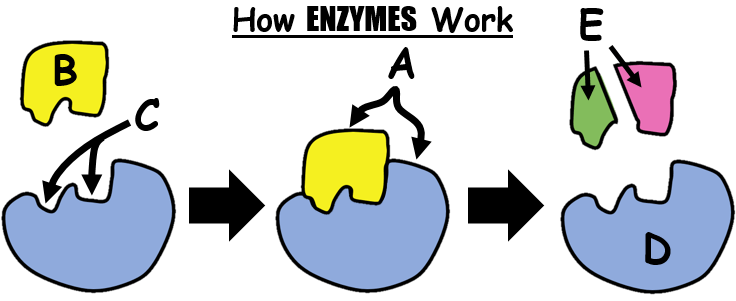
In the diagram, what is letter A? 
a)
product
b)
substrate
c)
enzyme-substrate complex
d)
active site
21.
Letter D...
a)
active site
b)
enzyme
c)
substrate
d)
products
22.
Letter B...
a)
active site
b)
enzyme
c)
substrate
d)
products
23.
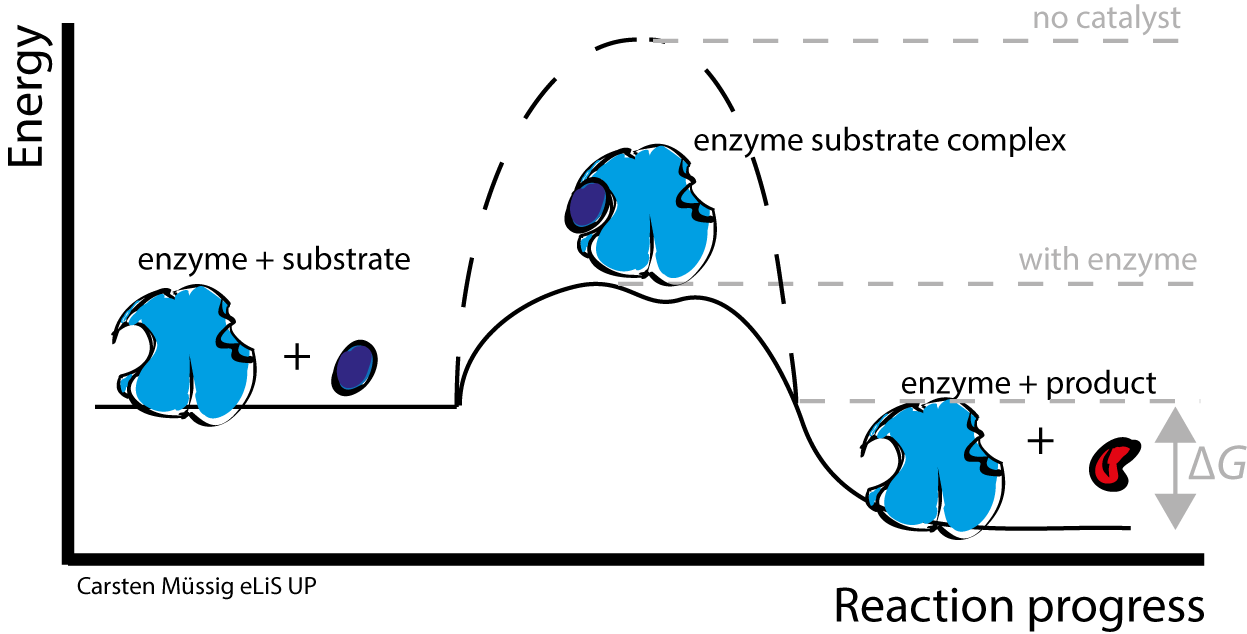
An enzyme speeds up a reaction by
a)
lowering the activation energy.
b)
raising the activation energy.
c)
releasing energy.
d)
absorbing energy.
24.

Which of the following does not have a nucleus?

a)

prokaryotes

b)

eukaryotes

c)

prokaryotes and eukaryotes

25.

Which of the following has organelles?

a)

prokaryotes

b)

eukaryotes

c)

prokaryotes and eukaryotes

26.

Which of the following has DNA?

a)

prokaryotes

b)

eukaryotes

c)

prokaryotes and eukaryotes

27.

Animals are an example of __________.

a)

prokaryotes

b)

eukaryotes

28.

Which of the following have circular DNA?

a)

prokaryotes

b)

eukaryotes

29.
Which invention from the 17th century allowed for the development of modern cell theory?
a)
x-rays
b)
computers
c)
the light microscope
d)
the scanning electron microscope
30.
Cell theory states:
a)
All living cells must have a cell wall.
b)
 All living cells require glucose for survival.
c)
The basic unit of life is a cell.
d)
All cells contain a nucleus
31.
What type of cell does not have a nucleus?
a)
eukaryotic 
b)
prokaryotic 
32.

What do plant cells have that animal cells do not?

a)

Chloroplasts

b)

Cell wall

c)

Large vacuoles

d)

Nucleus

e)

ribosomes

33.

Both prokaryotic and eukaryotic cells have all of the following EXCEPT:

a)

Cytoplasm

b)

Ribosomes

c)

DNA

d)

Cell Wall

34.

The function of flagella is:

a)

Movement

b)

Provide Energy

c)

Protection

d)

Make Proteins

35.

The plant organelle that captures light to make energy is the:

a)

Cell Wall

b)

Mitochondria

c)

Chloroplast

d)

Ribosome

36.

If the lysosome were a part of the city it would be the:

a)

Mayor - controls the cell

b)

Waste management - digests cell waste and cleans up

c)

Farms- synthesizes proteins

d)

Water tower - stores water

37.

The organelle where cellular respiration occurs is the:

a)

Chloroplast

b)

Mitochondria

c)

Ribosome

d)

Lysosome

38.

Organelles in cells are called membrane-bound because

a)

They are attached to the cell membrane

b)

They are surrounded by their own membrane

39.

The function of the rough ER is to:

a)

Produce and folding lipids

b)

Produce and folding proteins

c)

Produce and folding carbohydrates

d)

Produce and folding Nucleic acids

40.

The function of the Golgi apparatus is to

a)

Sort, package and modify macromolecules produced by the cell.

b)

Produce proteins

c)

Produce lipids

d)

Produce RNA

41.

The function of the smooth ER is to:

a)

Make proteins

b)

Make lipids

c)

Make carbohydrates

d)

Make nucleic acids

42.
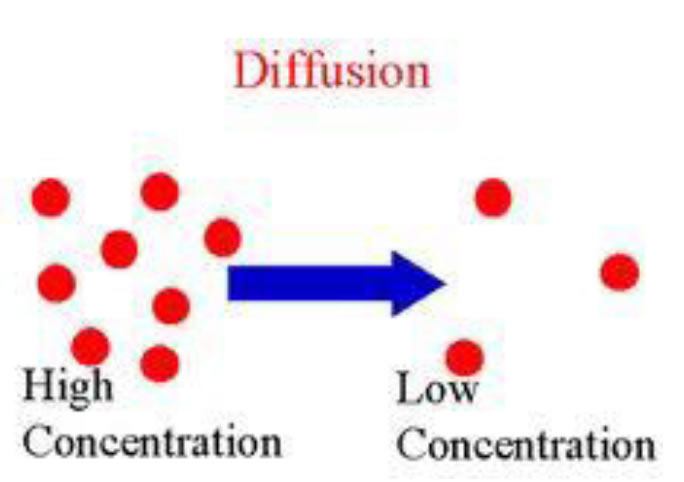
Movement of particles from high to low concentration. 
a)
Passive Transport
b)
Active Transport
43.
Osmosis is a form of ______________. 
a)
Passive Transport
b)
Active Transport
44.
Solutes move with the concentration gradient, therefore no energy is used. 
a)
Passive Transport
b)
Active Transport
45.
a)
Passive Transport
b)
Active Transport
46.
Solutes move against the concentration gradient, therefore energy is needed
a)
Passive Transport
b)
Active Transport
47.
This takes substances into a cell
a)
endocytosis
b)
exocytosis
c)
both
48.

If you looked at red blood cells under a microscope and saw the blood cells exploded, what would you say happened?

a)

The cells were placed in a hypotonic solution.

b)

the solution was isotonic.

c)

The solution was hypertonic.

49.

The concentration of water is higher in the soil than in plant root cells. Water moves into root cells of a plant by...

a)

Osmosis

b)

Simple Diffusion

c)

Active Transport

50.

The cell cycle consists of interphase, mitosis, and cytokinesis? True or false?

a)

True

b)

False

51.

During interphase, ________is replicated.

a)

ATP

b)

DNA

c)

RNA

d)

FBI

52.

The structure in the nucleus that is formed from DNA is called a __________________.

a)

chromosome

b)

organelle

c)

membraneds

d)

ribosome

53.
There are a TOTAL of ___ chromosomes in human body cells.
a)
23
b)
46
c)
92
d)
scientists don't know
54.

Our DNA is located in the ______________________ of our cells.

a)

mitochondria

b)

cytoplasm

c)

nucleus

d)

chloroplasts

55.

The longest phase of cell division is

a)

prophase

b)

anaphase

c)

metaphase

d)

interphase

56.

The organelles are made and the cell is checked before mitosis starts.

a)

G1

b)

S

c)

G2

d)

Prophase

57.

The chromosomes line up in the middle of a cell.

a)

prophase

b)

metaphase

c)

anaphase

d)

telophase

58.

Where do spindle fibers originate?

a)

centriole

b)

mars

c)

nucleus

d)

ER

59.

What is A?

a)

sister chromatids

b)

chromosome

c)

centromere

60.

Identify B.

a)

Chromosome

b)

Sister chromatids

c)

brother chromatids

d)

Centromere

61.

The phase when the sister chromatids move "away" from each other to opposite sides of the cell.

a)

interphase

b)

prophase

c)

metaphase

d)

anaphase

62.

Identify the phase

a)

interphase

b)

prophase

c)

metaphase

d)

anaphase

63.

Identify the phase.

a)

Prophase

b)

Anaphase

c)

Telophase

d)

Cytokinesis

64.

Ends with diploid number of chromosomes

a)

Mitosis

b)

Meiosis

c)

Both

65.

Involves crossing over

a)

Mitosis

b)

Meiosis

c)

Both

66.

Produces four cells

a)

Mitosis

b)

Meiosis

c)

Both

67.

involves 1 division of nucleus

a)

Mitosis

b)

Meiosis

c)

Both

68.

involves two divisions of the nucleus

a)

Mitosis

b)

Meiosis

c)

Both

69.

The central dogma of molecular biology can be summed up by

a)

DNA + RNA = Protein.

b)

DNA to RNA to Protein.

c)

RNA to DNA to Protein.

d)

RNA + DNA = Protein.

70.
Which of the following units are repeatedly joined together to form a strand of DNA?
a)
amino acids
b)
nucleotides
c)
fatty acids
d)
polysaccharides
71.
Transcription takes place in the 
a)
cytoplasm
b)
chloroplast
c)
nucleus
d)
mitochondria
72.

STRUCTURE: One difference between RNA and DNA is -

a)

RNA has thymine where DNA has ademine

b)

DNA is single stranded where RNA is double stranded

c)

DNA is made in the nucleus where RNA is made in the ribosomes

d)

RNA is single stranded where DNA is double stranded

73.
In a molecule of double-stranded DNA, the amount of adenine present is always equal to the amount of _________.
a)
cytosine
b)
guanine
c)
thymine
d)
uracil
74.
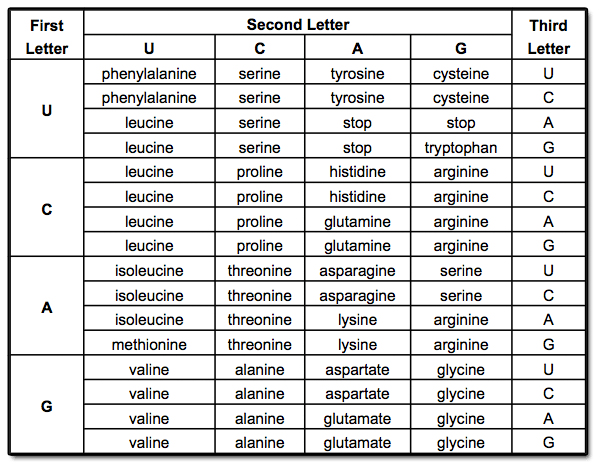
What amino acid is represented by the codon UUA?
a)
Phenylalanine
b)
Tyrosine
c)
Leucine
d)
Stop codon
75.
What kind of cells are made in MEIOSIS?
a)
Haploid Gametes
b)
Diploid Somatic Cells
c)
Skin Cells
d)
Liver Cells
76.

Which enzyme catalyzes the elongation of a new DNA strand?

a)

DNA ligase

b)

reverse transcriptase

c)

DNA polymerase

d)

RNA polymerase

77.

Any change in the nucleotide sequence of DNA is called a

a)

mutation

b)

base substitution

c)

frameshift

d)

silent

78.

Anything in the environment that causes a mutation is a(n)

a)

splicing

b)

frameshift

c)

elongation

d)

mutagen