
 Worksheets
Y7 Science Revision
Total questions: 141
Worksheet time: 3hrs 31mins
Forces are...
Amounts of mass
Energy
Pushes and pulls
How do we measure forces?
Metre Stick
Newton Meter
Stopwatch
Measuring cylinder
Forces always come...
singly
in pairs
in triplets
in groups of four

The force shown by the arrow is...
Engine force
Air resistance
Gravity
Weight
Mass

The force in the opposite direction (the blue arrow) is...
Engine force
Reaction from the ground
Weight
Drag

If the yellow arrow force is larger than the purple arrow force...
The car will decelerate if it's moving forwards
The car will keep going at the same speed
The car will reverse if it's stopped to start with
The car will accelerate forwards

If the car is moving forwards, then the yellow arrow force could be...
Drag
Engine force
Weight
Reaction from the ground

The Newton meter (force meter)reading is...
0N
0.1N
1N
10N

There is no force on the Newton meter. This means that...
The Newton meter needs to be calibrated by turning the screw at the top
The Newton meter is working perfectly
The Newton meter is broken and needs to be thrown away
Which are the non-contact forces?
Drag
Magnetic attraction
Gravity
Pushing a block
A contact force is from
objects physically touching
far apart objects
not touching object
always a pull
Which of these is not a contact force?
Air resistance
Gravity
Friction
Upthrust
If the forces acting on an object are balanced, the object will...
remain stationary
move faster
When you rub your hands together, which force is acting?
Skin resistance
Air resistance
Gravity
Friction
Friction produces...
heat
water
noise
light
You can reduce friction by making the surfaces...
smoother
hotter
closer together
harder
Rougher surfaces create __________ friction.
more
less
Which of these scenarios would you expect more friction?


If the amount of friction increased, what would you expect to happen to the amount of heat?
Heat increases
Heat decreases
Heat stays the same
Heat disappears

Friction works in the _____________ direction to the object moving.
same
opposite

Look at the picture,
Select the correct answer to complete the sentence.
The forces shown above are pushing/pulling forces
pulling
pushing
Look at the picture,
Select the correct answer to complete the sentence.
The forces shown are working together / opposite forces.
working together
opposite forces
Look at the picture,
Select the correct answer to complete the sentence.
The forces are equal / not equal.
not equal
equal
Look at the picture,
Select the correct answer to complete the sentence.
The resultant force (overall force) is 1000N to the right / 1000N to the left / zero
1000N to the left
zero
1000N to the right
What do we measure a force in?
Kilograms
Newtons
Miles per hour
Kilometres

Which direction is the force acting?
To the left
To the right
Up
down
Look at the picture, how do you know the direction is the force acting?
The arrow is pointing in the direction
The boy is pushing in the direction
Forces are shown as an arrow. What is the same of this arrow?
Viangle
Tractor
Hector
Vector

What is the biggest force?
Left
Right
How do you know it is the biggest force?
The arrow is smaller
The arrow is bigger
The girl is pulling in that direction
What does a vector (arrow) tell us about the force? (2 correct answers)
How smelly it is
The direction it is
How strong it is
What the force is
A force is either a push or a pull. True or false?
true
false

Look at the image.
The force created by the car's engine and shown by the arrow is _________.
gravity
weight
thrust
upthrust
The speed of an object is a measurement of how _____ the object is moving.
long
fast
far

Look at the image.
The name of the force that makes the apple fall to the ground is ___________.
magnetism
air resistance
gravity
weight

The two cats on the see-saw have the same weight. The forces acting against the pivot of the see-saw are _________.
unbalanced
balanced

Which famous scientist discovered gravity?
Newton
Galileo
Hawking
Einstein
A force can change the . . .
speed, shape or colour of an object.
speed or direction of an object.
speed, direction or shape of an object.
speed or shape of an object.

Which piece of equipment do you use to measure the size of a force?
A
B
C
D

Magnetism is an example of a ______________ force.
contact
non-contact

The car in the image is moving along a flat road. Which of these forces resists the movement of the car?
thrust
air resistance
upthrust

Force A is ___________.
thrust
weight
water resistance
upthrust
Force B is ___________.
thrust
weight
water resistance
upthrust

The arrow in diagram A shows the thrust of the car.
How would you show that the car in diagram B has a smaller force of thrust?
Draw a wider arrow.
Draw a shorter arrow.
Draw a longer arrow.

The resultant force acting on the wooden block is . . .
2 N to the right
10 N to the right
2 N to the left
10 N to the left

The resultant force acting on the trolley is . . .
60 N to the right
90 N to the right.
30 N to the right
90 N to the left.

The resultant force on the block is . . .
50 N to the left.
90 N to the left.
40 N to the right.
40 N to the left.

Which piece of scientific equipment is used to measure force?
newtonmeter
balance
scales


In which force diagram would the car slow down?
A
B
C


What does the mitochondria do?
Controls the cell
Helps with respiration and creates energy
It doesn't do anything
Helps maintain the cell's shape

What does the nucleus do?
It helps with the cell's respiration
It controls the cells activities
It controls what goes in and out of the cell
It helps with photosynthesis
Approximately how many cells are in the human body?
30 million
40 million
60 trillion
30 trillion
Who named 'cells'?
Captain Hook
Albert Einstein
Robert Hooke
Michelangelo
What is the gelly like substace in a cell?
Cytoplasm
Nucleus
Cellulose
Mitochondria
Why do cells have a cell membrane?
Because it helps to maintain the shape
It controls what goes in and out of a cell
It controls the cell's activities
It contains the cell's DNA
Which one is smaller?
Animal cell
Plant cell
Yeast cell
Bacterial cell
What do plant cells have that aimal cells do not
Cytoplasm
Nucleus
Chloroplasts
Cell membrane
Which one of these do not have a nucleus?
Animal cell
Red blood cell
White blood cell
Plant cell
Why did Robert Hooke name 'cells' this way?
They look like prison cells
They just look like they should be called 'cells'
The letters 'C,E,L,L' stand for something
True or False:
Unicellular organisms are made up of more than one cell.
true
false
Give an example of a unicellular organism.
bacteria
yeast
animal cell
plant cell
Which piece of scientific equipment is used to observe cells?
telescope
microscope
magnifying glass
thermometer
Which scientific word is used to describe a group of cells of the same type working together to perform a particular function?
cells
tissue
organ
organ system
Complete:
Tissues of different types that work together to perform one main function is known as an _____.
cells
tissue
organ
organ system
Complete:
Groups of organs can work together to form an _____.
cells
tissues
organ
organ system
Name 3 structures that nearly all living cells posses.
cell membrane
vacuole
cytoplasm
cell wall
nucleus
True or False
Bacterial cells posses a nucleus?
true
false
Name 2 structures found in a plant cell but not in an animal cell.
cell membrane
vacuole
chloroplast
cytoplasm
cell wall
Is the heart a cell, tissue or organ?
cell
tissue
organ
Which cell structure controls cell activities?
nucleus
cytoplasm
cell membrane
In which part of a cell do most chemical reactions occur?
nucleus
cytoplasm
mitochondria
cell membrane
Which cell structure controls the movement of substances into and out of the cell?
cell membrane
cell wall
nucleus
cytoplasm
True or False:
The cell membrane provides support and gives the cell its shape.
true
false
True or False:
The vacuole of a cell is full of watery sap that stores minerals.
true
false
True or False:
Some substances pass through a cell membrane by diffusion.
true
false
True or False:
Diffusion is when particles move from a high concentration to a low concentration
true
false

What is this?
cytoplasm
nucleus
vacuole
cell membrane

What type of cell is this?
amoeba
animal cell
bacteria
plant cell
What is the function of a nerve cell?
The site where respiration occurs
To transmit electrical impulses around the body
To absorb water

What is this?
cell wall
cytoplasm
vacuole
chloroplast

What is this?
cell wall
chloroplast
cell membrane
vacuole
Which organelle belongs in plant cells only?
Cytoplasm
Mitochondrion
Large Permanent Vacuole
Cell Membrane
Nucleus
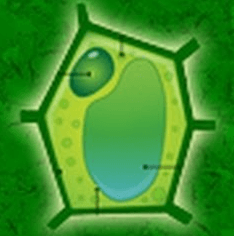
produce ATP (energy)


What part of the animal cell represents the cell membrane?
5
1
2
4

What part of the plant cell represents the cell wall?
5
3
6
4


Solids have...
a fixed shape and a fixed volume
a fixed shape but can change volume
No fixed shape but a fixed volume
no fixed shape or volume
The piece of equipment used to measure the mass of a substance or object is a ______________.
balance/scales
measuring cylinder
ruler
thermometer
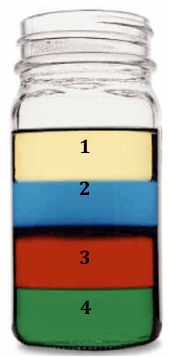
Which state of matter can be compressed easily?
solid
liquid
gas
all of them
Silver
Melting point 961oC boiling point 2210oC
What state of matter will it be at 959oC?
Solid
Liquid
Gas
Which TWO things will not increase the pressure of a gas?
adding more particles
cooling particles
heating the particles up
Making a stretchy container
The melting point of gold is 1063 oC. What process happens to gold when liquid gold changes state to solid gold?
Evaporation
Melting
Freezing
Condensation
If a substance had a melting point of -12⁰C and a boiling point of 200⁰C what state would it be in at room temperature (around 20oC)?
Solid
Liquid
Gas

For what reason do liquids flow so easily?
Because the particles.....
are so tightly compacted to one another.
can slide past one another.
vibrate with one another.
are so far apart from one another.

Why does the liquid inside a thermometer rise?
When the thermometer heats up, the liquid inside ...... because the particles move about ........
expands, less quickly
expands, more quickly
contracts, less quickly
contracts, more quickly
When particles move from areas of high concentration to areas less concentrated, this has taken place.
diffusion
expansion
contraction
condensation
At higher temperatures, the particles of a liquid
diffuse more slowly
diffuse more quickly
spread out more
continue to move at the same speed
condense more
Condensation
Freezing
Eevaporation
Melting
When a solid (a) it becomes a liquid
What happens to the liquid particles when they lose energy...
The particles move faster
The particles get further apart
The particles get closer together
The particles stop moving
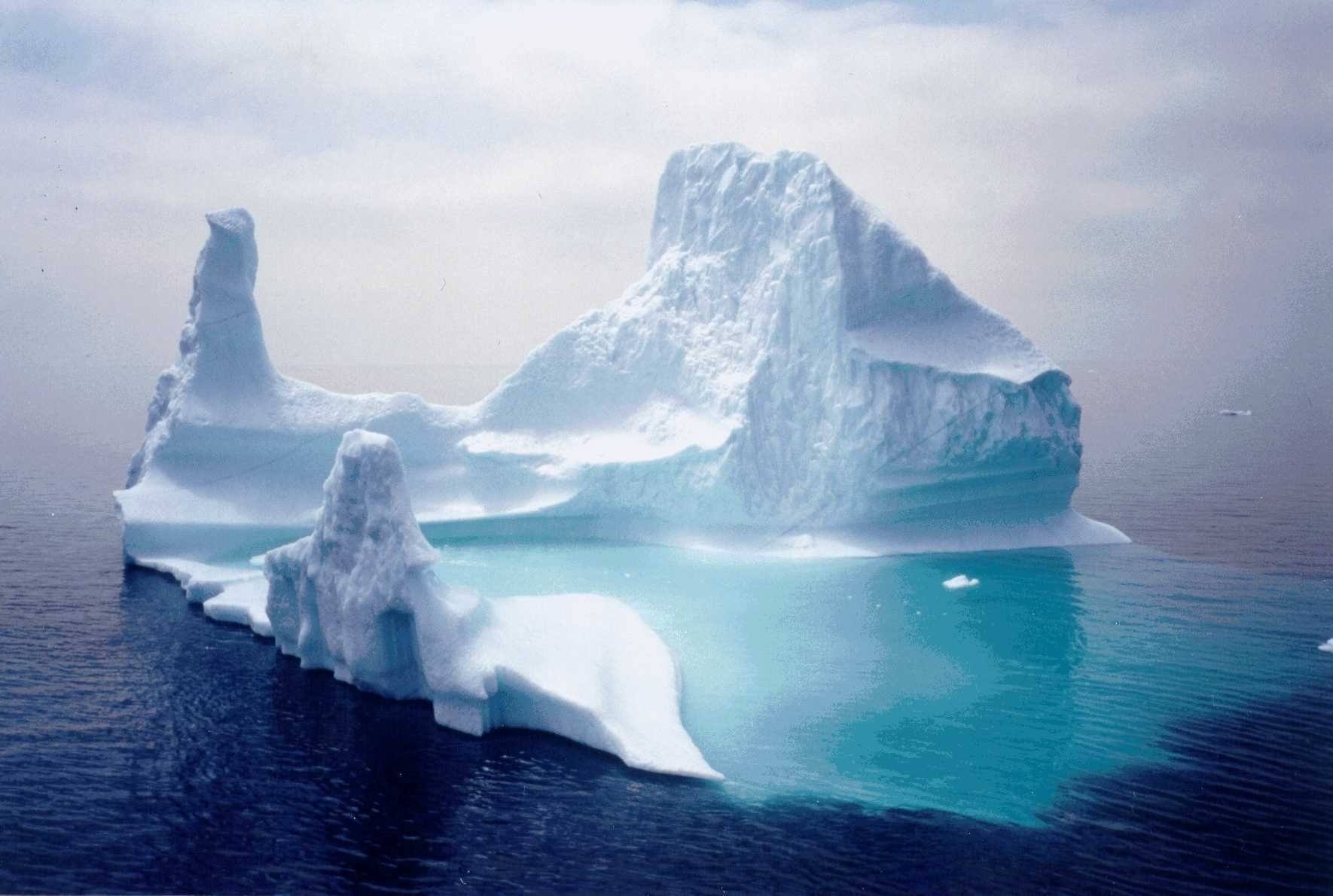
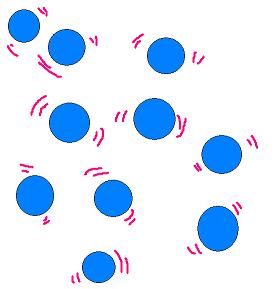
Which state of matter does this picture show?
Solid
Liquid
Gas

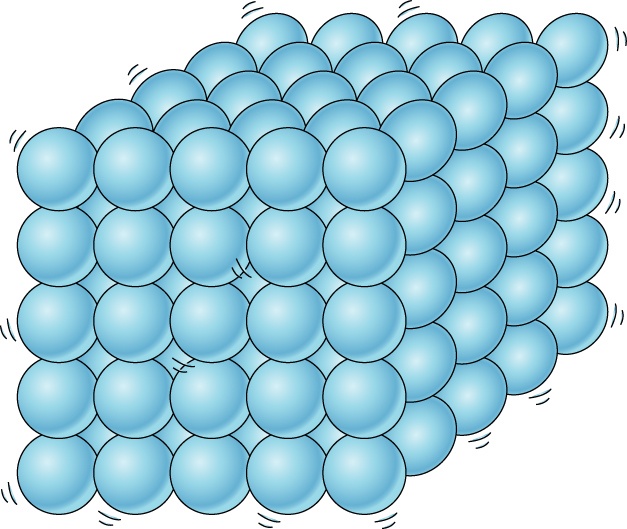
What state of matter?
Solid
Liquid
Gas
Plasma!!!
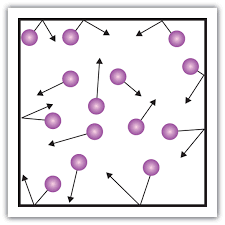
What state of matter?
Solid
Liquid
Gas
Which of the following describes the particle arrangement of a solid?
Particles are all touching, and are in a random pattern.
Particles are all touching, and are in a neat pattern.
Particles are not touching, and are in a neat pattern.
Particles are not touching, and are in a random pattern.
Which of the following describes the particle arrangement of a liquid?
Particles are all touching, and are in a random pattern.
Particles are all touching, and are in a neat pattern.
Particles are not touching, and are in a neat pattern.
Particles are not touching, and are in a random pattern.
Which of the following describes the particle arrangement of a gas?
Particles are all touching, and are in a random pattern.
Particles are all touching, and are in a neat pattern.
Particles are not touching, and are in a neat pattern.
Particles are not touching, and are in a random pattern.
Which of the following explains why solids cannot be compressed?
The particles can be squashed.
The particles cannot move around.
There is air between the particles.
The particles are all in contact.
Which of the following explains why gases can be compressed?
The particles are spread out.
The particles have air between them.
The particles can be squashed.
The particles move around randomly.
Which of the answers explains why liquids flow?
The particles are all touching.
The particles can move around each other.
The particles can be squashed.
The particles can are in fixed positions.
What happens when a substance is cooled?
It expands
It contracts
The particles get bigger
The particles get smaller
Why does a solid object expand when it is heated?
The particles get bigger.
The particles vibrate more.
The particles push each other apart.
The particles are fixed in position.
What is density?
density = volumemass
The amount of matter an object is made from.
The amount of space an object takes up.
A measure of how closely packed the particles are.
Which of the following methods will increase the pressure in a gas?
Adding more particles.
Cooling the gas.
Making the volume bigger.
Heating the gas.
What is the name of the change from solid to liquid?
melting
boiling
condensing
freezing
What is the name of the change from liquid to gas?
melting
boiling
condensing
freezing
What is the name of the change from liquid to solid?
melting
boiling
condensing
freezing
What is the name of the change from gas to liquid?
melting
boiling
condensing
freezing
What is the name of the process by which the particles in a gas or liquid spread out from an area of high concentration to an area of low concentration?
Melting
Diffusion
Expansion
Density

