wayground logo

Free Printable Worksheets

Font size

S
M
L
XL
Worksheets

Plant and Evolution CFa

Total questions: 87

Worksheet time: 49mins

Name
Class
Date
1.

What part of the plant is the main support and anchor and helps absorb water?

a)

Tap Root

b)

Lateral Roots

c)

Root Hairs

d)

Stem

2.

Which part is where flowers or stems come from, and is found throughout the plant?

a)

Axillary Bud

b)

Node

c)

Internode

d)

Petiole

3.

Which part acts as support and is responsible for absorbing water and nutrients?

a)

Lateral Roots

b)

Tap Root

c)

Leaf Blade

d)

Petiole

4.

Which part is the main structure of the plant?

a)

Stem

b)

Tap Root

c)

Flower

d)

Fruit

5.

Which part is how most plants reproduce and is where seeds are usually found?

a)

Flower

b)

Axillary Bud

c)

Fruit

d)

Leaf Blade

6.

Which part of the plant attracts bees and other insects to aid in pollination?

a)

Flower

b)

Fruit

c)

Leaf Blade

d)

Node

7.

Which of the following is the stem of the leaf?

a)

Petiole

b)

Leaf Blade

c)

Internode

d)

Node

8.

What is the correct term for the large section of the leaf where photosynthesis occurs?

a)

Leaf Blade

b)

Petiole

c)

Node

d)

Leaf

9.

What is the junction of the stem and petiole called?

a)

Node

b)

Internode

c)

Stem

d)

Axillary Bud

10.

What is the area or section of the stem between two nodes called?

a)

Internode

b)

Node

c)

Stem

d)

Leaf blade

11.

The male part of the flower is called the stamen.

a)

True

b)

False

12.

The female part of the flower is called the pistil.

a)

True

b)

False

13.

Which part of the flower helps to attract insects for pollination?

a)

Stamen

b)

Pistil

c)

Petal/Petals

d)

Sepal

14.

Name the parts of a flower.

What is number 1 called?

a)

Stamen

b)

Pistil

c)

Petal

d)

Sepal

15.

Name the parts of a flower.

What is number 2 called?

a)

Stamen

b)

Pistil

c)

Petal

d)

Sepal

16.

Name the parts of a flower.

What is number 3 called?

a)

Pistil

b)

Petal

c)

Sepal

d)

Stamen

17.

Name the parts of a flower.

What is number 4 called?

a)

Petal

b)

Stamen

c)

Sepal

d)

Pistil

18.

What part covers and protects the flower bud?

a)

petal

b)

sepal

c)

stamen

19.

What is the male part of the flower?

a)

egg

b)

pollen

20.

What two things need to be put together to make a seed?

a)

pollen and stamen

b)

pollen and a bee

c)

pollen and an egg cell

21.

The process of getting the pollen to the egg cell is called...

a)

pollination

b)

pollen

c)

stamenation

22.

The part that attracts pollinators

a)

A

b)

C

c)

E

d)

F

23.

The part that becomes the fruit

a)

G

b)

C

c)

B

d)

F

24.

The flower which contains only male parts is

a)

Flower A

b)

Flower B

c)

Flower C

25.

The part that becomes the seed

a)

G

b)

A

c)

F

d)

E

26.
causes plant cells to lengthen
a)
auxins
b)
cytokins
c)
ethylene
27.
ripens the fruit of plants 
a)
auxins
b)
cytokins
c)
ethylene
28.
promotes plant cell divison
a)
auxins
b)
cytokins
c)
ethylene
29.

What is tropism?

a)

A plant's response to a stimulus

b)

A plant reproducing

c)

An animal's response to a stimulus

d)

A prokaryote's response to a stimulus

30.

Which of these are types of tropism? Select all that apply:

a)

Hydrotropism

b)

Synthetropism

c)

Electrotropism

d)

Gravitropism

31.

What is gravitropism/geotropism?

a)

The movement of a plant in response to gravity

b)

The movement of a plant in response to earthquakes

c)

The movement of bacteria in response to changes in temperature

d)

The movement of plants towards water

32.

True or False: Gravitropism can be either negative or positive

a)

True

b)

False

33.

What is hydrotropism?

a)

The movement of plants towards water

b)

The movement of plants away from water

c)

The rate of growth of a plant in response to temperature changes in water

d)

A plant's response to gravity and touch

34.

What makes a tropism positive or negative?

a)

Positive = movement towards stimulus, Negative = movement away from stimulus

b)

Negative = movement towards stimulus, Positive = movement away from stimulus

c)

Who cares? It doesn't matter whether it is positive or negative

d)

Positive = when a plant is happy, Negative = when a plant is sad

35.

What is thigmotropism?

a)

The movement of plants in response to touch

b)

The movement of plants toward the sun

c)

A prokaryote's movement inside the bloodstream

d)

The movement of plants in response to gravity

36.

Which of these are not tropisms? Select all that apply:

a)

Gravitropism

b)

Chemotropism

c)

Phototropism

d)

Tempertropism

37.

What is phototropism?

a)

The movement of plants towards light

b)

The movement of plants away from light

c)

The movement of plants in response to infrared light

d)

The movement of plants towards water

38.

Is phototropism positive or negative?

a)

Positive

b)

Negative

c)

Neither

d)

Both

39.

What is the reaction that is shown by the plant in the figure above?

a)

Positive hydrotropism.

b)

Negative phototropism.

c)

Positive thigmotropism.

d)

Negative geotropism.

40.

The growth hormone that is used to speed up the ripening of fruits for export is

a)

giberellin.

b)

ethylene.

c)

cytokinin.

d)

auxin.

41.

Auxins are responsible for _____________ of a plant

a)

Colour change

b)

Watering

c)

Phototropism

d)

Growth

42.

Which plant hormone is a gas?

a)

auxin

b)

gibberellin

c)

ethylene

d)

cytokinin

43.

Which of the following are plant hormones

a)

Auxin

b)

Cytokinin

c)

Gibberellin

d)

Abcissic acid, ethylene

e)

All

44.

Geotropism is

a)

The plant response to light

b)

The plant response to water

c)

The plant response to soil

d)

The plant response to gravity

45.
Which hormone promotes seed germination?
a)
abscisic acid
b)
ethylene
c)
gibberellin
d)
auxin
46.

How does water flow through a plant (from entry to exit)?

a)

stem-root-leaves

b)

leaves-stem-root

c)

root-stem-leaves

d)

root-leaves-stem

47.

Which of the following describe transpiration best?

a)

Water enters the leaves of a plant as a liquid.

b)

Water exits the leaves of a plant as liquid.

c)

Water enters the leaves of a plant as a gas.

d)

Water exits the leaves of a plant as a gas.

48.

What is it called when water sticks to water?

a)

Cohesion

b)

Adhesion

c)

Capillary Action

d)

Xylem

49.

When the forces of cohesion and adhesion work together, water can move up the plant against the force of gravity by....

a)

Phototropism

b)

Geotropism

c)

Photosynthesis

d)

Capillary Action

50.

This force is created by water filling up the vacuoles, and gives a plant rigidity and shape so that it does not wilt.

a)

Photosynthesis

b)

Respiration

c)

Turgor Pressure

d)

Xylem

51.

How are the processes of photosynthesis and respiration related?

a)

They both occur in the chloroplast.

b)

They both occur in the mitochondria.

c)

The products of respiration become the raw materials of photosynthesis.

d)

Neither benefit the plant.

52.

In the tropical rainforest it rains daily, so which of the following would be most likely.

a)

The guard cells would close the stomata to conserve water.

b)

The guard cells would open the stomata so that transpiration could take place.

c)

The turgor pressure would be low because of the lack of water.

53.
_______ slow down transpiration by _______ the stomata.
a)
Guard cells; closing
b)
Chloroplasts; closing
c)
Guard cells; opening
d)
Chloroplasts; opening
54.
During photosynthesis, plants absorb energy from sunlight, they take in water from the soil using their roots, and they take in carbon dioxide from the atmosphere. What is produced in the leaves of plants, in addition to oxygen?
a)
sugar
b)
hydrogen
c)
minerals
d)
all of these
55.
Through the process of transpiration, plants
a)
lose water through their leaves.
b)
break down sugar for energy.
c)
transfer pollen grains to their stigma.
d)
absorb sunlight to produce energy.
56.
Which of the following statements can be inferred from the fact that cellular respiration uses oxygen and produces carbon dioxide?
a)
Animals participate in cellular respiration, while plants participate in both cellular respiration and photosynthesis.
b)
Animals participate in cellular respiration, while plants do not.
c)
Animals do not rely on plants for survival.
d)
Animals participate in cellular respiration because it results in the same products as photosynthesis.
57.
Which physiological adaptation would decrease the process of transpiration in a plant?
a)
opening stomata at night only
b)
development of the ability to bind metals to roots cells
c)
development of an altered growth cycle to match the seasons
d)
growth of an extensive root structure
58.

Tissues are

a)

Group of cells that perform similar functions

b)

Groups of organelles that perform similar functions

c)

Groups of organs.

d)

Important for the survival of living organisms

59.

Phloem and Xylem together make up the...

a)

Ground Tissue

b)

Vascular Tissue

c)

Dermal Tissue

d)

Cardiac Tissue

60.

What happens to a plant when Turgidity is low?

a)

It stands more upright

b)

Its rate of photosynthesis increases

c)

It shrivels and wilts

d)

The roots become clogged

61.

Plants that grow extremely quickly likely have a high number of which cell type?

a)

Perenchyma

b)

Sclerenchyma

c)

Dermal

d)

Meristem

62.

Guard cells belong to which type of tissue?

a)

Ground Tissue

b)

Vascular Tissue

c)

Epidermal Tissue

d)

Muscular Tissue

63.
Structures that are inherited from a common ancestor are homologous.
a)
True
b)
False
64.
When would convergent evolution occur?
a)
When organisms share a common ancestor
b)
When organisms live in similar environments
c)
When organisms become increasingly different
d)
When organisms experience a change in their environment
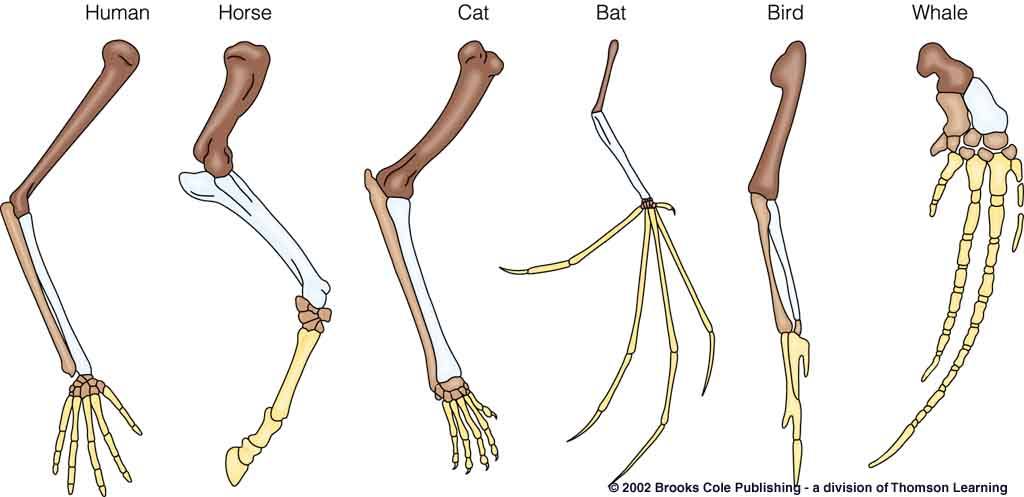
65.
Humans, birds, whales, and lizards all have similar arm bones. What is the reason for this?
a)
The function of these bones is the same in all animals
b)
They live in similar environments
c)
They have a common ancestor
d)
All organisms resemble humans
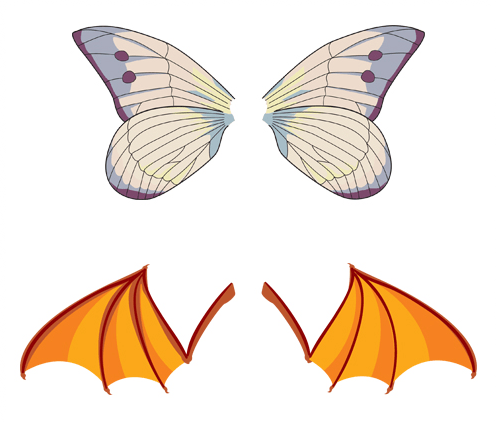
66.
Bird wings and butterfly wings are an example of
a)
Homologous structure
b)
Analogous structure
c)
Mimicry
d)
Camoflague
67.
Shark fins and dolphin fins are examples of analogous structures.
a)
True
b)
False
68.
Analogous structures show common ancestry.
a)
True
b)
False
69.
When did life on Earth begin?
a)
4.6 to 4.0 billion years ago
b)
3.9 to 3.5 billion years ago
c)
4.6 to 4.0 million years ago
d)
3.9 to 3.5 thousand years ago
70.
Which of the following places the geologic time eras in order from oldest to most recent?
a)
Precambrian, Paleozoic, Mesozoic, Cenozoic
b)
Mesozoic, Cenozoic, Paleozoic, Precambrian
c)
Cenozoic, Mesozoic, Paleozoic, Precambrian
d)
Precambrian, Cenozoic, Paleozoic, Mesozoic
71.
A scientific theory is proven and based on evidence.
a)
True
b)
False
72.
Individuals with favorable traits survive, reproduce, and pass their traits onto their offspring. This is called
a)
Mutation
b)
Adaptation
c)
Evolution
d)
Natural Selection
73.
Individuals within a population can evolve.
a)
True
b)
False
74.
An organism's ability to survive and reproduce in its environment refers to its
a)
Fitness
b)
Variation
c)
Selection
d)
Mutation
75.
Which of the following pieces of evolution evidence deals with aged and identified fossils?
a)
fossil record
b)
comparative embryology
c)
comparative biochemistry
d)
comparative anatomy
76.
Which of the following pieces of evolution evidence deals with comparing similar structures in various species?
a)
fossil record
b)
comparing embryology
c)
comparing biochemistry
d)
comparing anatomy
77.
Which of the following pieces of evolution evidence deals with structures common in embryos that form differently or for different purposes in adult form?
a)
fossil record
b)
comparing embryology
c)
comparing biochemistry
d)
comparing anatomy
78.
Which of the following pieces of evolution evidence contain both homologous and vestigial structures?
a)
fossil record
b)
comparing embryology
c)
comparing biochemistry
d)
comparing anatomy
79.
What is suggested by the similarity of early embryos of different species of vertebrates?
a)
no evolutionary relationships between the groups
b)
recent common ancestry
c)
similar environments in the past
d)
evolution from a distant common ancestor
80.
If an organism has a vestigial structure, that structure likely once had a function in a(n)
a)
close relative
b)
early ancestor
c)
unrelated organism
d)
embryological stage
81.
Some organisms that share a common ancestor have features that have different functions, but similar structures.  These are known as
a)
vestigial structures
b)
analogous structures
c)
homologous structures
d)
fossil structures
82.
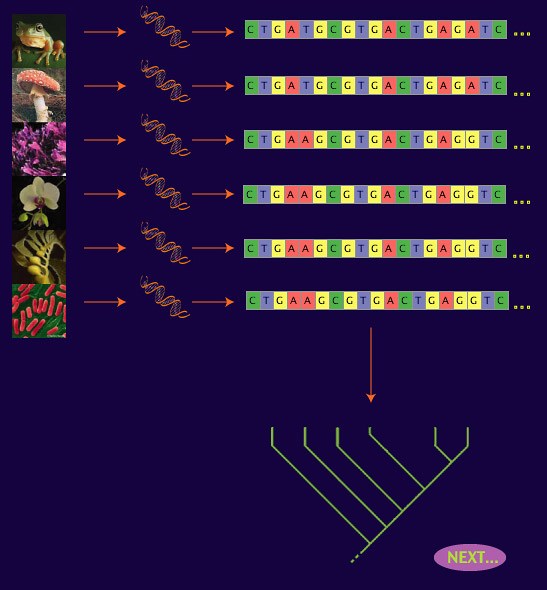
Two organisms that are closely related would have
a)
very similar DNA sequence
b)
exactly the same DNA sequences
c)
no proteins in common
d)
completely different DNA sequence
83.
Mutations are important because they bring about
a)
death of the organism in which they develop
b)
genetic variation needed for a population to evolve
c)
benefits for the individual, not for the population
d)
Hardey-Weinberg equilibrium within a population
84.
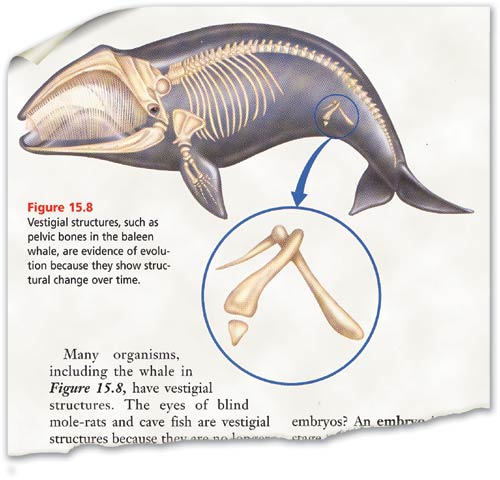
The hind leg bones in a whale are examples of
a)
homologous structures
b)
analogous structures
c)
fossils
d)
vestigal structures
85.
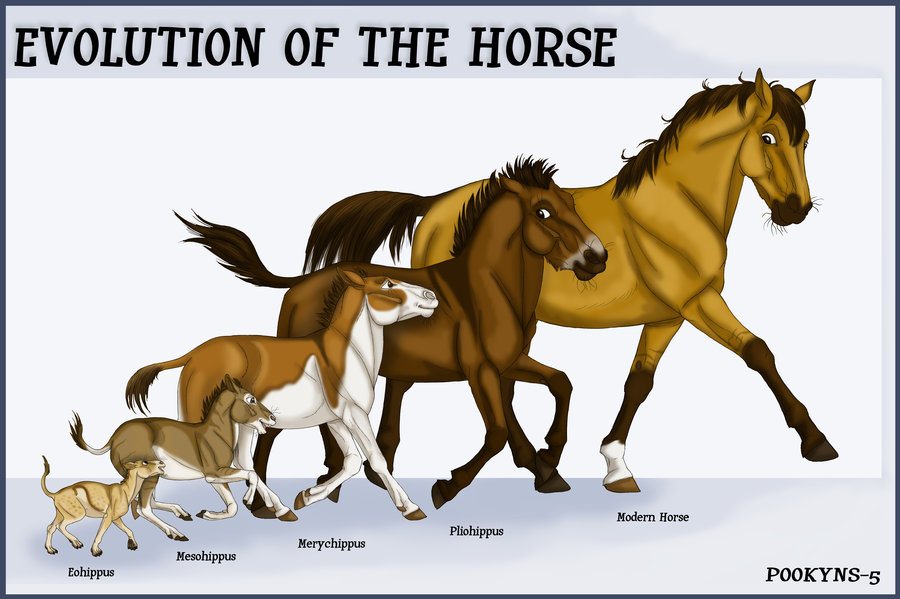
How would you describe this evolution?
a)
Homologous structure
b)
Analogous structure
c)
Structural adaption
d)
Functional adaption
86.
The structures shown are_________
a)
homologous
b)
heterologous
c)
analogous
d)
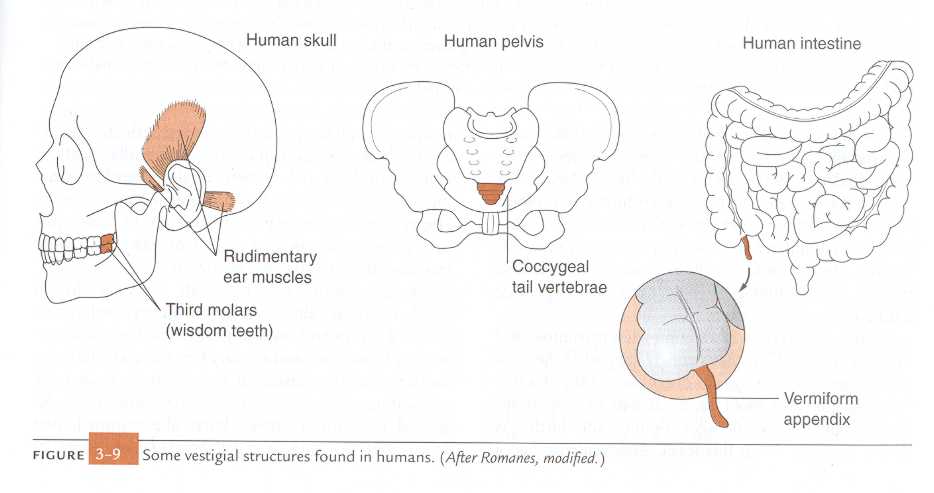
vestigial
87.
Biologists discover two rabbit species living on opposite sides of a large river. What could they do to test and see if these species came from a common ancestor?
a)
Compare DNA sequences
b)
Compare body structures
c)
Compare protein sequences
d)
All of these