wayground logo

Free Printable Worksheets

Font size

S
M
L
XL
Worksheets

AP Chemistry Review

Total questions: 79

Worksheet time: 59mins

Name
Class
Date
1.

Round the following number to four significant figures and express the result in scientific notation: 229.613

a)

0.2296 X 10³

b)

229.6

c)

2.296 x 10⁻²

d)

2.296 X 10²

e)

22.96 x 10⁻¹

2.

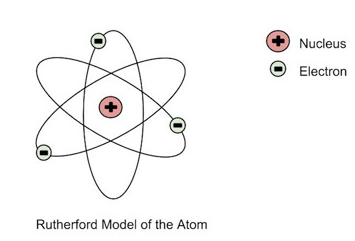
If my charge becomes 2+ what does that say about me?

a)

I am stealing 2 electrons

b)

I am losing 2 electrons

c)

I am in period 2

d)

I have an atomic # of 2

3.
If an atom has 8 protons and 10 electrons, what is its charge?
a)
Positive
b)
Neutral
c)
Negative
d)
It depends on its size
4.
24.1% of all the isotopes of a an element have a mass of 75.23 amu, 48.7% have a mass of 74.61 amu, and 27.2% have a mass of 75.20 amu.
What is the average mass of this element?
a)
74.92 amu
b)
24.97 amu
c)
75.01 amu
d)
74.51 amu
5.

The mass spectrum of a sample of an element is shown below. What is the average atomic mass of this element?

a)

69.0

b)

between 69.0 and 70.0

c)

70.0

d)

between 70.0 and 71.0

6.

NH4+ is the formula for which ion?

a)

ammonia

b)

ammonium

c)

nitrogen tetroxide

d)

amine

7.

The difference between an ion ending in -ite and an ion ending in -ate is

a)

the -ate ion is 2+; the -ite ion is 2-

b)

the -ate ion is 2+; the -ite ion is 1+

c)

the -ate ion is contains one more oxygen than the -ite ion

d)

the -ate ion is contains one less oxygen than the -ite ion

8.

The formula for the nitrate ion is

a)

N3-

b)

NO3-

c)

NO2-

d)

NO3-

9.

CN- is the formula for the

a)

acetate ion

b)

cyanate ion

c)

cyano ion

d)

cyanide ion

10.

The correct formula for the permanganate ion is

a)

MnO4-

b)

MNO4-

c)

KMnO4-

d)

MnO42-

11.

The S2- ion is

a)

sulfate

b)

sulfite

c)

hyposulfite

d)

sulfide

12.

PO43- is the formula for

a)

Phosphide

b)

Phosphite

c)

Phosphate

d)

Perphosphate

13.
What is the density of an object having a mass of 8.0 g and a volume of 25 cm3?
a)
0.32 g/cm3
b)
3.1 g/cm3
c)
200 g/cm3
d)
2.0 g/cm3
14.

What is the metric system prefix for the quantity 0.000 001?

a)

deci

b)

micro

c)

centi

d)

kilo

15.
What is the quantity 0.0075 meters expressed in centimeters?  Use the table behind this question to help you.
a)
70.5 cm
b)
7.5 cm
c)
0.075 cm
d)
0.75 cm
16.
In the measurement 0.503 L, which digit is the estimated digit?
a)
5
b)
3
c)
the 0 immediately to the left of the 3
d)
the 0 t the left of the decimal point
17.

What is the SI unit of mass?

a)

grams

b)

mole

c)

liter

d)

kilogram

18.
What is the result of adding 2.5 x 10³ and 3.5 x 10²?
a)
2.9 x 10²
b)
6.0 x 10³
c)
2.9 x 10³
d)
6.0 x 10⁵
19.
How many significant figures are in the measurement 811.40 grams?
a)
two
b)
three
c)
four
d)
five
20.
Express the sum of 1111 km and 222 km using the correct number of significant figures.
a)
1333.0 km
b)
1300 km
c)
1333 km
d)
1330 km
21.
What is the volume of 45.6 g of silver if the density of silver is 10.5 g/mL?
a)
479 mL
b)
4.34 mL
c)
0.23 mL
d)
none of the above
22.
The number of sig figs in the number 170.040 is...
a)
5
b)
3
c)
6
d)
4
23.
The term that refers to the reproducibility of a laboratory measurement is
a)
precision
b)
repeatability
c)
accuracy
d)
exactness
24.
What scientist is best known for his "Plum Pudding" model of the atom?
a)
J.J. Thomson
b)
Ernest Rutherford
c)
John Dalton
d)
Democritus
25.
In an atom, electrons move in definite orbits around the nucleus.
a)
Thomson
b)
Rutherford
c)
Bohr
d)
Democritus
26.
What contribution did John Dalton make to atomic theory? 
a)
He discovered that every atom was positively charged. 
b)
He discovered that every element consisted of one type of atom that couldn't be divided. 
c)
He discovered that atoms had nuclei. 
d)
He discovered that atoms could be divided into smaller parts. 
27.
Place the following scientists in order, from earliest to latest: 
Rutherford, Dalton, Bohr, Thomson
a)
Dalton, Rutherford, Bohr, Thomson
b)
Thomson, Dalton, Rutherford, Bohr
c)
Dalton, Thomson, Rutherford, Bohr
d)
Bohr, Dalton, Rutherford, Thomson
28.
Rutherford's gold foil experiment provided evidence that...
a)
negative and positive charges are spread evenly throughout the atom.
b)
alpha particles have a positive charge.
c)
gold is not a dense as previously thought.
d)
there is a dense positively charged nucleus at the center of an atom.
29.
The first person to propose a theory about an atom called the Atomos Theory was
a)
Democritus
b)
Rutherford
c)
Dalton
d)
Aristotle
30.
He discovered the electron using cathode ray tube experiment.
a)
Joseph Thomson
b)
John Dalton
c)
Ernest Rutherford
d)
Robert Millikan
31.
How did Thomson build upon Dalton's model? 
a)
His model was the same.
b)
He put electrons in orbitals.
c)
He discovered the nucleus.
d)
He discovere subatomic particles (electron).
32.
How did each model of the atom help to develop the atomic theory? 
a)
Each model provided opinions that were added.
b)
Each model showed different properties of the same structure. 
c)
Each model showed new particles that had been discovered.
d)
Each model built upon the other to show new particles or properties of previously discovered particles. 
33.
This particle is found in the nucleus and has a positive charge
a)
Electron
b)
Proton
c)
Neutron
34.
J.J. Thomson provided evidence that an atom...
a)
is the smallest particle of matter
b)
contains negatively charged particles
c)
has an overall negative charge
d)
has an overall positive charge
35.

A compound's overall charge is ________.

a)

positive

b)

depends

c)

neutral

d)

negative

36.
The majority of an atom's mass exists where?
a)
In the nucleus
b)
In the electron cloud
c)
In the space between the nucleus and the electrons
d)
In the neutrons
37.
phosphorus trichloride
a)
KCl3
b)
PCl3
c)
K3Cl
d)
P3Cl
38.
silicon dioxide
a)
SO2
b)
NaO2
c)
SiO2
d)
SiO
39.
The chemical formula of dinitrogen textroxide is
a)
Ni₂O₄
b)
NiO
c)
N₂O₄
d)
NiO₂
40.
What is the formula for Tricarbon Octahydride?
a)
Ca3O
b)
C2H8
c)
C3H8
d)
Ca3H8
41.
Metals tend to 
a)
gain electrons
b)
lose electrons
42.
How do the following two elements bond together?
Na1+  F1-         
a)
NaF
b)
NaF3
c)
Na3F
d)
Na1F2
43.
How do the following two elements bond together?
Cr3+  O2-         
a)
CrO
b)
Cr3O2
c)
Cr2O3
d)
CrO3
44.
How do the following two elements bond together?
Al3+  O2-         
a)
AlO
b)
Al2O3
c)
Al3O6
d)
Al3O2
45.
PbS2
a)
lead sulfide
b)
lead sulfur
c)
lead II sulfide
d)
lead IV sulfide
46.
What is the formula for the compound formed by magnesium ions and nitrogen ions?
a)
MgN
b)
Mg2N3
c)
Mg3N2
d)
MgN3
47.

What are valence electrons?

a)

Any of an atom's electrons

b)

Electrons located on the first energy level

c)

Electrons not attached to any atom

d)

electrons located on the outer energy level

48.

What period is Lead (Pb) in?

a)

6

b)

4

c)

Metals

d)

4A

49.

What is the ionic charge of Phosphorus (P)?

a)

+5

b)

-3

c)

+3

d)

-5

50.

What is group name of the most reactive metals?

a)

Noble gases

b)

Halogens

c)

Alkali metals

d)

Alkaline earth metals

51.

Why are halogens so reactive?

a)

They want to get rid of their only valance electron

b)

They only need one more electron

c)

They are non reactive, they have a full shell

52.

How many valence electrons does a carbon atom have?

a)

8

b)

4

c)

2

d)

6

53.

where are the metaloids found

a)

far left, vertical

b)

stair step/diagonal

c)

far right horizontal

d)

at the bottom

54.

what group number are the halogens

a)

18

b)

1

c)

2

d)

17

55.
Each column in the periodic table is called a 
a)
period
b)
group
c)
cluster
d)
unit
56.
The atomic number tells you what?
a)
number of electrons
b)
number of protons
c)
number of neutrons
d)
both electrons and protons in an atom.
57.
Which group of the periodic table is composed of inert (not reactive)  gases?
a)
alkali metals
b)
alkaline earth metals
c)
halogens
d)
noble gases
58.
Elements in a ..................have similar chemical properties.  
a)
period
b)
group
c)
row
59.
What does it mean if a mixture is heterogeneous?
a)
you can see the different parts
b)
cannot tell one part from another
c)
very well blended
d)
made of elements
60.
What type of mixture is this?
a)
heterogeneous 
b)
homogeneous
61.
To separate the sugar and lemonade what method should you use?
a)
filtration 
b)
sorting
c)
magnet
d)
boiling
62.
To separate iron filings and sulfur what method should you use?
a)
filtration 
b)
sorting
c)
magnet
d)
boiling
63.
To separate noodles from water what method should you use?
a)
filtration with a strainer
b)
boiling while it is cooking
c)
magnet for the noodles
64.
Which mixture separation method uses a net?
a)
filtration 
b)
magnet
c)
boiling/evaporation
d)
sorting physically
65.
Elements and compounds are always ___.
a)
pure
b)
mixed
66.
OH-
a)
hydronium
b)
hydroxide
67.
NO3-
a)
nitrate
b)
nitrite
68.

What is the correct name for this polyatomic ion: ClO

a)

hypochlorite

b)

chlorite

c)

chlorate

d)

perchlorate

69.

What is the correct name for this polyatomic ion: CrO42–

a)

chromate

b)

dichromate

c)

carbonate

d)

ammonium

70.

What is the correct formula for the polyatomic ion called perchlorate?

a)

ClO

b)

ClO2

c)

ClO3

d)

ClO4

71.
Name the acid: HC2H3O2
a)
Acetic Acid
b)
Acetous Acid
c)
Hydrogen Acetate
d)
Hydrogen Dicarbon Trihydrogen Dioxygen
72.
What is the formula for phosphorous acid?
a)
H3PO4
b)
H2PO4
c)
H3P
d)
H3PO3
73.
What is the formula for Hydrosulfuric Acid?
a)
H2(SO3)
b)
H2S
c)
H2(SO2)
d)
H2(SO4)
74.
What is the formula for Nitric Acid?
a)
HNO2
b)
HNO3
c)
HNO4
d)
H2NO3
75.
What is the formula for hydrochloric acid?
a)
HCl
b)
HClO
c)
H3ClO3
d)
HClO3
76.

what is a liquid?

a)

a substance that flows freely but is of constant volume

b)

a substance or matter in a state in which it will expand freely

c)

firm and stable in shape

77.

How would you describe the way molecules move when the molecules are solid?

a)

the molecules are moving in place.

b)

the molecules are moving around each other.

c)

the molecules are moving away from each other.

d)

the molecules are not moving

78.

Molecules are always moving no matter what phase they are in: solid, liquid, gas.

a)

True

b)

False

79.

If there is a metal in a compound you know it is ____compound.

a)

covalent

b)

ionic

c)

none of these