

wayground logo

Free Printable Worksheets

Font size

S
M
L
XL
Worksheets

Ost Science Review

Total questions: 40

Worksheet time: 32mins
Name
Class
Date
1.
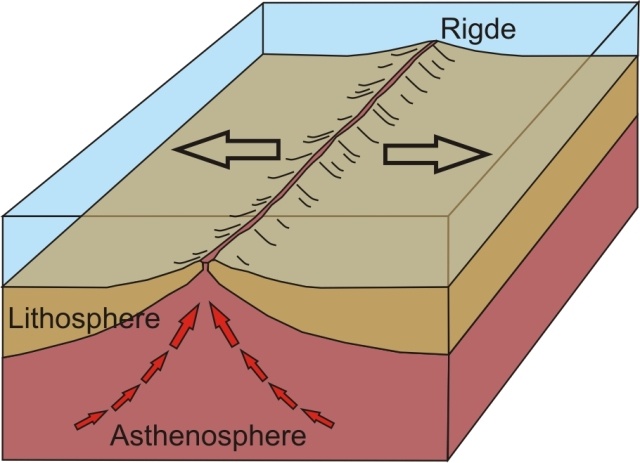
What kind of plate boundary is shown here?
a)
divergent
b)
convergent
c)
transform
d)
subducting
2.
What kind of plate boundary is shown here?
a)
divergent
b)
convergent
c)
transform
d)
submergent
3.
What kind of plate boundary is shown here?
a)
divergent
b)
convergent
c)
transform
d)
strike slip
4.
What geologic feature/event you be most likely to find at a transform boundary?
a)
Earthquakes
b)
Volcanoes
c)
Mountains
d)
Rift Valleys
5.
What geologic feature/event would you most likely to find at a divergent boundary between two pieces of oceanic crust?
a)
Rift Valley
b)
Mid-Ocean Ridge
c)
Island Arc
d)
Flat land
6.
What geologic feature/event would you most likely to find at a divergent boundary between two pieces of continental crust?
a)
Mid-Ocean Ridge
b)
Mountain
c)
Rift Valley
d)
Island Arc
7.
What geologic feature/event would you most likely to find at a convergent boundary between two pieces of continental crust?
a)
Volcano
b)
Mountain
c)
Rift
d)
Island Arc
8.
A subduction zone is formed...
a)
when one tectonic plate sinks below another
b)
at every type of convergent plate boundary
c)
at every type of divergent plate boundary
d)
at transform boundaries
9.
The area where two or more plates meet is called a __________________.
a)
fault
b)
plate boundary
c)
plate edge
d)
ring of fire
10.
What would you be most likely to find at a transform boundary?
a)
Earthquakes
b)
Volcanoes
c)
Mountains
d)
Rift
11.
What would you be most likely to find at a convergent boundary between a continental and oceanic plate?
a)
Mountains
b)
Volcanoes
c)
Mid-Ocean Ridge
d)
Rift
12.
What would you be most likely to find at a divergent boundary between two pieces of oceanic crust?
a)
Rift
b)
Mid-Ocean Ridge
c)
Island Arc
d)
Flat land
13.
What would you be most likely to find at a convergent boundary between two pieces of continental crust?
a)
Volcano
b)
Mountain
c)
Rift
d)
Island Arc
14.
What is happening at 1?
a)
Convergent Boundary
b)
Subduction Zone
c)
Divergent Boundary
15.
What is happening at 2?
a)
Convergent Boundary
b)
Subduction Zone
c)
Divergent Boundary
16.
What is happening at 3?
a)
Convergent Boundary
b)
Subduction Zone
c)
Divergent Boundary
17.
What is the ring of fire?
a)
a hula hoop on fire
b)
a belt of volcanoes
c)
a red belt with flames on it
d)
a ring that is in a fire
18.
What boundary would cause a mid-ocean ridge?
a)
Divergent
b)
Convergent
c)
Subduction
d)
Transform
19.
What was Wegener's hypothesis?
a)
The continents have always been where they are today
b)
We live on a super continent today
c)
Super continent, called Pangaea, that drifted apart
20.
Do hot spots form at plate boundaries?
a)
yes
b)
no
21.
Where is the newest rock?
a)
A
b)
B
c)
C
d)
D
22.
Where is the oldest rock?
a)
A
b)
B
c)
C
d)
D
23.
Chains of volcanoes form above hot spots because of plate tectonics
a)
True
b)
False
24.
Which U.S. state formed over a hot spot in an oceanic plate?
a)
Oregon
b)
California
c)
Florida
d)
Hawaii
25.
Column of hot rock that lies below a hot spot
a)
mantle plume
b)
plate boundary
c)
fissure
d)
volcano
26.
Feature that forms when magma flows onto Earth's surface
a)
volcano
b)
hot spot
c)
mantle plume
d)
none of these answers are correct
27.

made of iron and nickel, solid due to pressure

a)

outer core

b)

mantle

c)

inner core

d)

crust

28.

This layer is liquid, made of iron and nickel, and is 4700 degrees Celcius

a)

Outer Core

b)

Inner Core

c)

Mantle

d)

Crust

29.

This layer is less than 1% of Earth's mass, made of 2 types: Oceanic and Continental, rocky layer

a)

Inner Core

b)

Outer Core

c)

Mantle

d)

Crust

30.

This layer of Earth is solid, but can flow like hot fudge. At hot spots and plate boundaries, it melts into magma and rises to the surface as volcanic eruptions.

a)

Crust

b)

Mantle

c)

Outer Core

d)

Inner Core

31.
The cycle that powers the ocean currents, weather, and tectonic plates it called
a)
conduction current
b)
radiation
c)
condition current
d)
convection current
32.
What is the rigid layer of the Earth's surface made up of the  crust and upper mantle called?
a)
asthenosphere
b)
lithosphere
c)
mesosphere
d)
continental crust
33.
What are the two types of crust?
a)
Continental and Landforms
b)
Oceanic and Mountains
c)
Mountains and Landforms
d)
Oceanic and Continental
34.
Particles of hot soup rise slowly in a pot simmering on a stove. As the hot soup nears the surface, it begins to cool. The cooler soup sinks, forming a constant movement of soup that moves energy toward the surface of the pot. This constant movement of the soup in the pot is called a(n) 
a)
conduction loop
b)
convection current
c)
energy field
d)
magnetic field
35.
Geologists learn about the Earth's interior by studying ____________ which travel through the Earth.
a)
seismic waves
b)
radiation
c)
x-rays
36.
Hot matter is _________ dense and ___________
a)
less, sinks
b)
less, rises
c)
more, sinks
d)
more, rises
37.

Which of the following is used as evidence to support the theory of Pangaea

a)

Similar fossils on separated continents

b)

Cave drawings of fossils and rock types

c)

Rocks and geological formations that are same time period and composition

d)

Continents seem to fit like puzzle pieces

e)

The plate movement can be felt

38.

Which seismic waves move faster?

a)

P-waves

b)

S-waves

39.

Which seismic waves can only travel through solids?

a)

P-waves

b)

S-waves

40.

Heat rising in the mantle creates __________ boundaries, while the sinking of cold magma creates ____________ boundaries.

a)

convergent, transform

b)

transform, divergent

c)

divergent, convergent
