Worksheets
DNA to Proteins: Instructions for Life
Total questions: 63
Worksheet time: 2hrs 9mins
What is the primary function of mRNA in protein synthesis?
To carry amino acids to the ribosome
To serve as a template for protein synthesis
To form the structure of ribosomes
To catalyze peptide bond formation
During transcription, which enzyme is responsible for synthesizing RNA from a DNA template?
DNA polymerase
RNA polymerase
Helicase
Ligase
Explain the role of tRNA in the translation process.
It carries genetic information from the nucleus to the ribosome.
It brings amino acids to the ribosome and matches them to the coded mRNA message.
It forms the core of the ribosome's structure.
It unwinds the DNA double helix.
Which of the following best describes the function of ribosomes in protein synthesis?
They store genetic information.
They synthesize lipids.
They facilitate the binding of tRNA to mRNA.
They replicate DNA.
Describe the process of transcription in your own words, including the role of RNA polymerase.
Transcription is the process of copying a segment of DNA into RNA, where RNA polymerase binds to DNA and synthesizes RNA.
Transcription is the process of translating RNA into proteins, where ribosomes play a key role.
Transcription is the process of DNA replication, where DNA polymerase is involved.
Transcription is the process of protein folding, where chaperones assist.
What is the first step in the translation process?
The ribosome binds to the mRNA.
tRNA brings the first amino acid to the ribosome.
The mRNA is transcribed from DNA.
The polypeptide chain is released.
How does the structure of tRNA enable it to perform its function in translation?
Its double-stranded structure allows it to bind to DNA.
Its cloverleaf structure allows it to carry amino acids and match them to mRNA codons.
Its linear structure allows it to be easily transcribed.
Its circular structure allows it to store energy.
Which of the following statements about the translation process is true?
Translation occurs in the nucleus.
Translation involves the conversion of mRNA into a polypeptide chain.
Translation is the process of copying DNA into RNA.
Translation is the process of DNA replication.
In the context of protein synthesis, what is the significance of the start codon?
It signals the end of translation.
It marks the beginning of transcription.
It indicates where translation should begin on the mRNA.
It is involved in the splicing of mRNA.
Evaluate the impact of a mutation in the mRNA sequence on the protein synthesis process.
It will have no effect on the protein produced.
It may result in a different amino acid sequence, potentially altering the protein's function.
It will always result in a nonfunctional protein.
It will only affect the transcription process.
What is the role of the anticodon in tRNA?
It binds to the ribosome.
It pairs with the complementary codon on mRNA.
It catalyzes peptide bond formation.
It initiates DNA replication.
Identify the sequence of events in the translation process.
mRNA is transcribed, ribosome binds to mRNA, tRNA brings amino acids, polypeptide chain is formed.
DNA is replicated, mRNA is transcribed, ribosome binds to mRNA, polypeptide chain is formed.
Ribosome binds to mRNA, mRNA is transcribed, tRNA brings amino acids, polypeptide chain is formed.
tRNA brings amino acids, ribosome binds to mRNA, mRNA is transcribed, polypeptide chain is formed.
How does the ribosome ensure the correct sequence of amino acids in a protein?
By matching tRNA anticodons with mRNA codons.
By synthesizing mRNA from DNA.
By unwinding the DNA double helix.
By catalyzing the formation of DNA.
What is the role of the stop codon in the translation process?
It signals the start of transcription.
It signals the end of translation.
It is involved in the splicing of mRNA.
It catalyzes peptide bond formation.
Compare and contrast the roles of mRNA and tRNA in protein synthesis.
mRNA carries amino acids, while tRNA carries genetic information.
mRNA serves as a template for protein synthesis, while tRNA brings amino acids to the ribosome.
Both mRNA and tRNA carry amino acids to the ribosome.
Both mRNA and tRNA serve as templates for protein synthesis.
Which of the following is a key difference between transcription and translation?
Transcription occurs in the cytoplasm, while translation occurs in the nucleus.
Transcription involves RNA polymerase, while translation involves ribosomes.
Transcription produces proteins, while translation produces RNA.
Transcription requires tRNA, while translation requires mRNA.

The chart matches messenger RNA codons with amino acids. A DNA strand has the triplet AAT.
According to the chart, the corresponding messenger RNA codes for which amino acid?
Alanine
Leucine
Glycine
Serine
Translation of the DNA sequence AAGCTGGGA would result in...
an mRNA strand with the sequence UUGCACCCU.
a sequence of three amino acids linked by peptide bonds.
an mRNA strand with the sequence TTCGACCCT.
a DNA strand with the base sequence TTCGACCCT.

The codon chart shown here uses the three base sequence found on the mRNA molecule after the information is copied from DNA during transcription. Imagine that a protein is being assembled at the ribosome. What is the amino acid sequence for the codons GUU AAA?
leucine - lysine
valine - arginine
valine - lysine
leucine - arginine
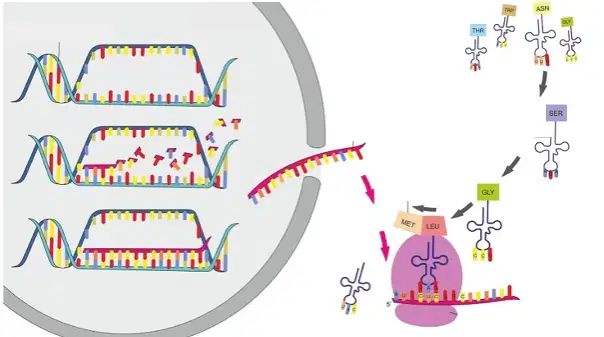
This is a model of translation in which the genetic code carried on mRNA is used to assemble amino acids into a polypeptide. A codon is a sequence of three nucleotides that codes for a particular amino acid.
Using the model, where would you find a codon?
attached to the ribosome
attached to the polypeptide
on mRNA
on tRNA
What is the function of the mRNA molecule that is created during transcription?
To carry the genetic information from DNA to ribosomes in the cytoplasm.
To bring amino acids to the ribosome so the protein can be built.
The open up DNA for replication.
To compose the building blocks of ribosomes.


The result is two daughter cells, each with 46 chromosomes.
G1
S
G2
M
Encompasses G1, S, and the G2 Phase.
Cytokinesis
Mitosis
Interphase
Meiosis
Chromosomes are replicated and proteins synthesized.
G1
S
G2
M

The picture below shows an enzyme unwinding and unzipping DNA.
What is the name of this enzyme?
DNA Helicase
DNA Ligase
DNA polyermase
RNA Polymerase
Match he nucleotide with its complementary nucleotide. (DNA to DNA).
Adenine -
Thymine
Guanine
Cytosine
Match he nucleotide with its complementary nucleotide. (DNA to DNA).
Cytosine-
Thymine
Guanine
Adenine
Which enzyme is responsible for adding the free nucleotides to the replicating DNA?
DNA Helicase
DNA Ligase
DNA polyermase
RNA Polymerase

ATG TGA CAG


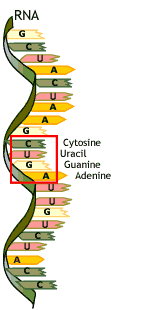
A researcher identifies a strand of a genetic material that has the sequence ACCGTA. What is the substance, and how is it identified?
DNA - it contains the bases A, T, G, and C.
DNA - it contains GTA.
RNA - it contains the bases A, T, G, and C.
RNA - it contains the bases A, U, G, and C.
This enzyme is capable of breaking Hydrogen bonds found between the bases of DNA
Topoisomerase
DNA Helicase
DNA Polymerase
Exonuclease
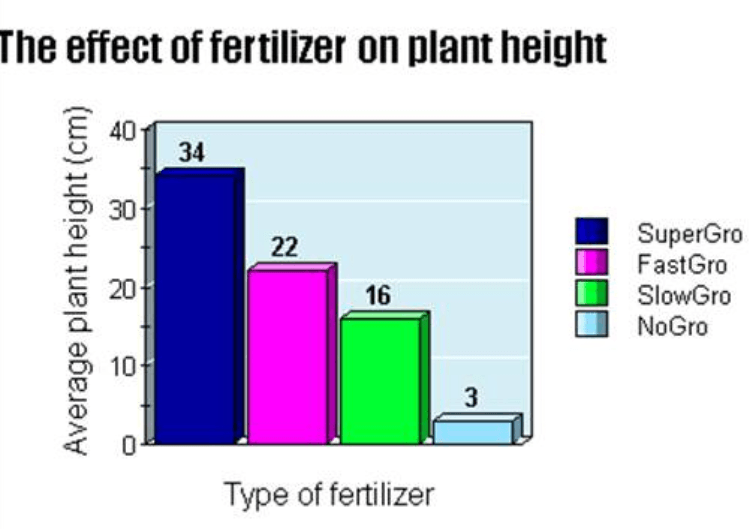
What is the unit of measurement for the dependent variable?
Type of fertilizer
Average plant height
34 in
cm

How many people visited the park in 1998?
20
40
60
50
35