wayground logo

Free Printable Worksheets

Font size

S
M
L
XL
Worksheets

Counting Atoms Reteach

Total questions: 64

Worksheet time: 1hrs 25mins

Name
Class
Date
1.

How many different elements are present in H2C2H3O2?

a)

1

b)

2

c)

3

d)

4

2.

Which of these elements is not present in NaNO3?

a)

sodium

b)

hydrogen

c)

oxygen

d)

nitrogen

3.

How many magnesium atoms are found in MgCl2?

a)

1

b)

2

c)

3

d)

4

4.

How many sulfur atoms are present in Al2(SO4)3

a)

1

b)

2

c)

3

d)

4

5.

How many atoms of carbon are in this compound?

H2C3O4N5

a)

2

b)

3

c)

4

d)

5

6.

How many oxygen atoms are found here?

Mg(NO3)2

a)

2

b)

4

c)

6

d)

8

7.

4CF2Cl2

a)

C = 4, F = 4, Cl = 2

b)

C = 1, F = 8, Cl = 8

c)

C = 4, F = 8, Cl = 8

d)

C = 1, F = 4, Cl = 8

8.
How many total atoms are in the compound C2H8O ?
a)
11
b)
2
c)
8
d)
1
9.
How many Magnesium are in 10MgCl2?
a)
10
b)
5
c)
20
10.
How many Hydrogen are in 4H2O?
a)
6
b)
8
c)
2
d)
4
11.
How many Sodium (Na) are in 6NaCl?
a)
1
b)
12
c)
6
12.

How many elements are in this chemical formula?

H2SO4H_2SO_4  

a)

1

b)

2

c)

3

d)

4

13.
How many elements are in C6H12O6?
a)
1
b)
2
c)
3
d)
4
14.
Which problem is balanced?
a)
PbO2 + 2H2--> H2SO4
b)
SO2 + H20 --> H2SO4
c)
2Na + 2H2O --> 2NaOH + H2
d)
2Na + 2H2O --> 2NaOH + H
15.

What elements are represented in this chemical formula? Fe2O3Fe_2O_3  

a)

Iron, Oxygen

b)

Francium, Europium, Oxygen

c)

Ferrium, Oxygen

d)

Berylium, Oxygen

16.

What is the total number of atoms in this formula? H2O2H_2O_2  

a)

2

b)

4

c)

3

17.

2 CH2CO3OH

Number of C: ​ (a)  

Number of H: ​ (b)  

Number of O: ​ (c)  

Choose from the below words
4
6
8
2
3
1
5
7
9
10
18.

Match the element to the number of atoms it has.

2 Al(C2H3O4)2

a)

aluminum

1.

2

b)

carbon

2.

8

c)

hydrogen

3.

12

d)

oxygen

4.

16

19.

How many water molecules are in 4H2O?

a)

6

b)

8

c)

2

d)

4

20.
What is the left part of a chemical equation called?
2H2 + O2 --> 2H2O
a)
Reactants
b)
Products 
c)
Yields 
d)
Chemical Equation 
21.
What does the Law of Conservation of Mass state?
a)
Matter cannot be gained or lost in a chemical reaction.
b)
Matter can only be lost in a chemical reaction.
c)
Matter can only be gained in a chemical reaction.
d)
Matter can be gained and lost in a chemical reaction. 
22.
What is the right part of a chemical equation called...
2H2 + O2 --> 2H2O
a)
Reactants
b)
Products 
c)
Yields 
d)
Chemical Equation 
23.
Is the following equation balanced?...
Al + O2 --> 2Al2O3
a)
Yes!
b)
No!
24.
Is the following equation balanced?
2C2H2 + 5O2 --> 4CO2 + 2H2O
a)
yes
b)
no
25.
Is the following equation balanced?
2C2H2 + 5O2 --> 4CO2 + 2H2O
a)
yes
b)
no
26.
Is the following equation balanced?
4Fe + 3O2 --> 2Fe2O3
a)
yes
b)
no
27.
Is the following reaction balanced?
2CH3OH + 3O2 --> 2CO2 + 4H2O
a)
yes
b)
no
28.
A chemical reaction is balanced when
a)

both sides have the same elements

b)

Both sides have the same  number of atoms

c)

Same subscripts

d)

Same coefficients

29.
If reaction starts with 20g of reactants it should produce 
a)
a total of 40g of products
b)
a total of 10g of products
c)
a total of 80 g of products
d)
a total of 20g of products
30.
What is the Law of Conservation of mass?
a)
Mass is created in a chemical reaction
b)
Mass is created in a physical change
c)
New chemicals formed from a chemical reaction have a larger overall mass than the original reactants
d)
Mass is never created or destroyed
31.

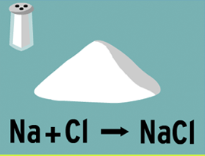
When sodium and chlorine combine to form sodium chloride, sodium chloride is the:

a)

Originator

b)

Reactant

c)

Product

d)

Produce

32.
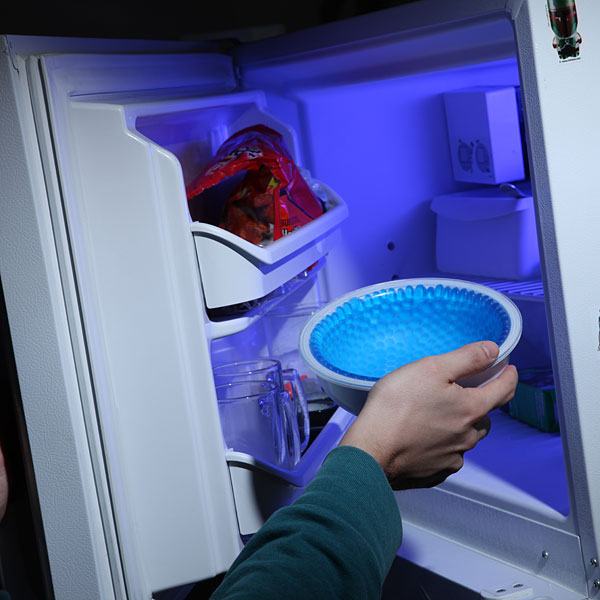
Maria fills a bowl with 200 g of water. She puts the bowl of water in the freezer, and the water freezes. Which will most likely be the mass of the frozen water?
a)
50 g
b)
100 g
c)
200 g
d)
400 g
33.

Does the equation H2+O2 →H2O follow the Law of Conservation of Mass?

a)

Yes, because the atoms are equal.

b)

No, because more info is needed.

c)

No, because there are more atoms in the product.

d)

No, because there are more atoms in the reactant.

34.

According to the Law of Conservation of Mass, what happens to the wood and oxygen when it is burned?

a)

The wood disappears.

b)

It stays the same chemically.

c)

The atoms in the wood and oxygen rearrange and form smoke and ash.

d)

Nothing.

35.

How many grams of OXYGEN would be needed to show conservation of mass in the example below?

a)

100 g

b)

93 g

c)

7 g

d)

0 g

36.

How many grams of coal were present at the start of the chemical change?

a)

Unknown

b)

100 g

c)

200 g

d)

50 g

37.

How many grams of CHOCOLATE POWDER are shown in the example of conservation of mass below?

a)

450 g

b)

465 g

c)

0 g

d)

15 g

38.

How many kilograms of SMOKE are shown in the example of conservation of mass?

a)

1 kg

b)

30 kg

c)

28 kg

d)

3 kg

39.
In a reaction A + B ----> C,  reactant A has 5g and product  C has 9g. How many grams does reactant B should have? 
a)
4g
b)
5g
c)
9g
d)
14g
40.
In a reaction A + B ----> C,  reactant A has 5g and product  C has 9g. How many grams does reactant B should have? 
a)
4g
b)
5g
c)
9g
d)
14g
41.

Which Chemical Equation is Balanced?

a)

CH₄+O₂------CO₂+2H₂O

b)

H₂+O₂-----2H₂O₄

c)

4Al+3O₂-----2Al₂O₃

42.
Bob puts 200 grams of ice into a pitcher with 900 grams of water. He gets distracted and comes back later to find that the ice has melted in the water. How many grams of water does Bob now have in the pitcher?
a)
200 g
b)
700 g
c)
1,100 g
43.
24 g of magnesium reacts with 38 g of fluorine to produce _____ g magnesium fluoride
a)
62 
b)
38
c)
24
d)
14
44.

Which Chemical Equation is Balanced?

a)

4O2 + 2H2 + S2------ 2H2SO4

b)

4H2+O2-----2H2O2

c)

3Cr+4O₂-----2Cr₂O₃

45.

How many Hydrogen atoms are present in the product of the following equation: 2SO2 + 2H2O2 ----> 2H2SO4

a)

2

b)

3

c)

4

d)

8

46.

The law of conservation of mass says the bonds between atoms are​ (a)   to form new substances with new properties.

Choose from the below words

fused

created

destroyed

broken and rearranged
47.
If a reaction starts with a total 75g of reactants it should produce 
a)
a total of 40g of products
b)
a total of 75g of products
c)
a total of 180 g of products
d)
None of the above
48.
In the reaction AB-----> A + B reactant AB has 12g and product B has 5g. How many grams should product A have?
a)
17g
b)
2g
c)
7g
d)
None of the above
49.
Matter can not be created nor destroyed: it can only be
a)
Destroyed a little bit
b)
Invisible
c)
Transformed, changed
d)
None of the above
50.

O + H2 → H2O

32 g of Oxygen completely reacts with 8 g of Hydrogen to produce _____ g of water.

a)

8

b)

12

c)

24

d)

40

51.

Mg + F → MgF

24 g of magnesium reacts with 38 g of fluorine to produce _____ g magnesium fluoride.

a)
62 
b)
38
c)
24
d)
14
52.

How many elements does PbNO7 have?

Hint: Every capital letter😉

a)
2
b)
3
c)
4
d)
5
53.
How many nitrogen atoms does NH3 have?
a)
1
b)
2
c)
3
d)
4
54.

Substances present at the start of a chemical reaction are called ____.

a)
subscripts
b)
coefficients
c)
reactants
d)
products
55.

Substances that form as the result, or at the end, of a chemical reaction are called ____.

a)
products
b)
reactants
c)
coefficients
d)
subscripts
56.
One property of a nonmetals is that it is a good conductor of electricity?
a)
true
b)
false
57.
All of the following would classify an element as a metal except?
a)
Dull
b)
Luster
c)
Malleable
d)
Hard
58.

______________ refers to the way a metal can be hammered or rolled into thin sheets.

a)

Luster

b)

Malleable

c)

Metalloids

d)

Solid

59.

Copper is a common metal. Which of the following properties does this metal most likely have?

a)

High conductivity, high malleability, and low luster

b)

Low conductivity, low malleability, and low luster

c)

High conductivity, high malleability, and high luster

d)

Low conductivity, high malleability, and high luster

60.

Which of the following represents an element?

a)

H2O

b)

HCl

c)

NaCl

d)

Au

e)

CaCO3

61.

4CF2Cl2

a)

C = 4, F = 4, Cl = 2

b)

C = 1, F = 8, Cl = 8

c)

C = 4, F = 8, Cl = 8

d)

C = 1, F = 4, Cl = 8

62.

H2SO4

a)

H = 2, S = 4, O = 4

b)

H = 2, S = 1, O = 4

c)

H = 8, S = 4, O = 4

d)

H = 2, SO = 4

63.
How many Hydrogen are in 4H2O?
a)
6
b)
8
c)
2
d)
4
64.

How many hydrogen atoms are there?

a)

1

b)

4

c)

5

d)

6