wayground logo

Free Printable Worksheets

Font size

S
M
L
XL
Worksheets

Electron Configuration and Periodic Table Concepts

Total questions: 111

Worksheet time: 2hrs 52mins

Name
Class
Date
1.
What atom matches this electron configuration?
1s22s22p63s23p64s23d10
a)
Zinc
b)
Copper
c)
Nickel
d)
Germanium
2.
What electron configuration matches an oxygen atom?
a)
1s22s22p63s2, 3p64s23d104p5
b)
1s22s22p4
c)
1s22s22p6
d)
1s22s22p63s23p64s23d1
3.
The electron configuration of an atom is 1s22s22p6.  The number of electrons in the atom is 
a)
3
b)
6
c)
8
d)
10
4.
Which electron configuration belongs to Chlorine (Cl)?
a)
1s2s2p3s3p5
b)
1s2s2p3s3p6
c)
1s2s2p3s3p7
5.
How many electrons can the d sublevel hold?
a)
14
b)
10
c)
2
d)
6
6.
How many electrons can the s sublevel hold?
a)
14
b)
10
c)
2
d)
6
7.
What atom matches this electron configuration?
1s22s22p63s2
a)
Neon
b)
Magnesium
c)
Aluminum
d)
Potassium
8.

Choose the correct shortcut configuration for iodine.

a)

[Ar]4s24d104p5

b)

[Kr]5s24d105p5

c)

[Xe]5s25d105p5

d)

none of the above

9.

Each row on the periodic table represents:

a)

an energy level

b)

a sublevel

c)

an electron

d)

an orbital

10.

Which area on the periodic table represents the electrons in the "d" sublevel?

a)

representative elements

b)

columns 3-8

c)

rare earth elements

d)

transition elements

11.

Energy levels are denoted by:

a)

letters

b)

numbers

c)

a combination of letters and numbers

d)

subscripts

12.

Which of the following is not a correct designation for a sublevel?

a)

zz

b)

p

c)

d

d)

f

13.
How many electrons can the s sublevel hold?
a)
14
b)
10
c)
2
d)
6
14.
There are 4 different types of subshells (orbitals) s,p,d,f.
a)
true
b)
false
15.
Which periodic table family could have electrons filling orbitals in the s-block?
a)
Alkaine Earth 
b)
Halogens
c)
Noble Gases
d)
Transition Metals
16.
24.1% of all the isotopes of a an element have a mass of 75.23 amu, 48.7% have a mass of 74.61 amu, and 27.2% have a mass of 75.20 amu.
What is the average mass of this element?
a)
74.92 amu
b)
24.97 amu
c)
75.01 amu
d)
74.51 amu
17.
What does the 1.00794 stand for?
a)
Hydrogen
b)
atomic number
c)
atomic mass
d)
atomic explosion
18.
What is the atomic number for an element with three protons?
a)
2
b)
1
c)
3
d)
6
19.

The atomic mass of an element is the ___.

a)

average of the mass number and the atomic number for the element

b)

weighted average of the masses of the isotopes of the element

c)

total mass of the isotopes of the element

d)

total number of subatomic particles in the nucleus

20.

Calculate the average atomic mass of the element iron (Fe) using the following data:

[Isotope / % abundance]

[Iron 54 / 6% ] [Iron 56 / 92% ] [ Iron 57 / 2% ]

a)

53.7 amu

b)

54.9 amu

c)

5592.0 amu

d)

55.9 amu

21.
An isotope has three forms.  30% have a mass of 4 amu, 20% have a mass of 5 amu and 50% have a mass of 3 amu.  Average atomic mass will be closest to
a)
2 amu
b)
3 amu
c)
4 amu
d)
5 amu
22.
4.35% of all X atoms have a mass of 39.946 amu. 83.79% have a mass of 41.941 amu, 9.50% have a mass of 42.941 amu, and 2.36% have a mass of 43.939 amu. What is the average atomic mass of atom X?
a)
41.97 amu
b)
42.19 amu
c)
10.43 amu
d)
40.04 amu
23.
For a given element, the atomic number indicates the number of _____
a)
protons in the nucleus
b)
neutron in the nucleus
c)
electrons in the atom
d)
nucleons in the atom
24.
If an atom contains exactly three protons, then it's an atom of _____
a)
lithium
b)
gold
c)
nitrogen
d)
carbon
25.
How many neutrons does the isotope of lithium have?
a)
8
b)
3
c)
4
d)
5
26.
How many neutrons in C-14?
a)
6
b)
7
c)
14
d)
8
27.
How many neutrons does an atom of the isotope Neon-22 have?
a)
12
b)
10
c)
22
d)
20
28.
Ions are: 
a)
atoms with a positive or negative charge
b)
atoms with no charge
c)
atoms with ONLY a positive charge
d)
atoms with ONLY a negative charge
29.
How many electrons are in an atom that has an atomic number of 34, an atomic mass of 74 and a charge of -2?
a)
34
b)
36
c)
2
d)
40
30.
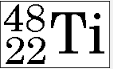
How many protons does this isotope of titanium have?
a)
48
b)
22
c)
26
d)
70
31.

What is a positive ion called?

a)

anion

b)

cation

c)

isotope

d)

covalent

32.

What is a negative ion called?

a)

anion

b)

cation

c)

covalent

d)

isotope

33.

If an atom loses electrons, the charge will be positive.

a)

true

b)

false

34.

A Bromine ion gains 1 electron, which of the following is the correct symbol for a Bromine ion?

a)

Br-1

b)

Br+1

c)

Br+7

d)

Br-7

35.
What is the charge of an atom that has lost one electron?
a)
-1
b)
-2
c)
+1
d)
+2
36.

An atom with 2 protons, 3 neutrons, and 4 electrons has a charge of ____.

a)

+2

b)

-2

c)

+3

d)

0

37.
Ions are: 
a)
atoms with a positive or negative charge
b)
atoms with no charge
c)
atoms with ONLY a positive charge
d)
atoms with ONLY a negative charge
38.

In an atom, there are three types of subatomic particles. ______ are positively charged, ______ are negatively charged, and ______ are neutral.

a)

Protons, Electrons, Neutrons

b)

Electrons, Protons, Neutrons

c)

Neutrons, Protons, Electrons

d)

Electrons, Neutrons, Protons

39.

In an atom, there are three types of subatomic particles. ______ are positively charged, ______ are negatively charged, and ______ are neutral.

a)

Protons, Electrons, Neutrons

b)

Electrons, Protons, Neutrons

c)

Neutrons, Protons, Electrons

d)

Electrons, Neutrons, Protons

40.

The atomic number tells the number of ______ in an atom, which never changes.

a)

Protons

b)

Neutrons

c)

Electrons

41.

_______ is the average mass of all the isotopes of an element.

a)

Atomic Mass

b)

Atomic Number

c)

Chemical Symbol

d)

Element Name

42.

An atom of an element with a different number of neutrons and therefore a different atomic mass

a)

Isotope

b)

Ion

c)

Atom

d)

Particle

43.

Isotopes are atoms of the same element with different ____________.

a)

Number of Neutrons & Mass Number

b)

Number of Protons & Atomic Number

c)

Number of Protons, Neutrons, and Electrons

d)

Number of Electrons & Mass Number

44.

What is the ATOMIC MASS of the isotope Carbon-14?

a)

14

b)

6

c)

12

d)

20

45.

Carbon-14 has ____ protons, ____ electrons, and _____ neutrons.

a)

6, 6, 8

b)

6, 6, 6

c)

6, 6, 14

d)

6, 10, 14

46.

Isotopes of the same element have the same number of ________ but a different number of _______.

a)

protons, neutrons

b)

neutrons, protons

c)

protons, electrons

d)

electrons, neutrons

47.

An atom of phosphorus has an atomic number of 15 and a mass number of 31. How many neutrons does it contain?

a)

15

b)

16

c)

31

d)

46

48.

The identity of a chemical element is always determined by which of the following?

a)

the number of protons it has

b)

the number of neutrons it has

c)

the number of electrons it has

49.

By studying the picture, you can determine that Carbon-13 has ____ protons.

a)

6

b)

13

c)

12

d)

14

50.

Using the picture, you can determine that Carbon-13 has ____ neutrons.

a)

13

b)

6

c)

12

d)

7

51.

Atomic Mass is...

a)

protons + neutrons

b)

neutrons + electrons

c)

protons + electrons

52.

An element's atomic number _______ changes.

a)

always

b)

sometimes

c)

never

53.

The three subatomic particles are

a)

proton, neutron, electron

b)

proton, nucleus, electron

c)

protein, neutron, electricity

d)

proton, neutral, electives

54.

99.9% of the atom's mass is found where?

a)

nucleus

b)

protons

c)

electron cloud

d)

neutrons

55.

Electrons are

a)

negative

b)

positive

c)

neutral

56.

Protons are

a)

negative

b)

positive

c)

neutral

57.

Neutrons are

a)

negative

b)

positive

c)

neutral

58.

When an atom contains more electrons than protons, it is

a)

a neutral atom with no charge

b)

an ion and negatively charged

c)

an ion and positively charged

d)

an isotope and has more mass

59.

When an atom contains more neutrons than another atom, it is

a)

a neutral atom with no charge

b)

an ion and negatively charged

c)

an ion and positively charged

d)

an isotope and has more mass

60.

The nucleus is ____________ charged.

a)

positively

b)

negatively

c)

neutral

61.

The area around the nucleus of an atom where the atom's electrons are most likely to be found is called

a)

electron cloud

b)

quark

c)

electron

d)

nucleus

62.

If a carbon atom has six protons and has a mass of 13 amu, how many neutrons are in that carbon atom?

a)

5

b)

6

c)

7

d)

8

63.

If a neutral atom has 8 protons, how many electrons does it have?

a)

7

b)

8

c)

9

d)

10

64.

A chemical symbol represents the _________ of an element.

a)

name

b)

structure

c)

reaction

d)

type

65.

Atoms of the same element with different numbers of neutrons are called

a)

metalloids

b)

transition elements

c)

radioactive

d)

isotopes

66.

A certain atom has 26 protons, 26 electrons, and 30 neutrons. What is its mass number?

a)

26

b)

30

c)

52

d)

56

67.

What is 'E' pointing to?

a)

electron cloud

b)

electron

c)

nucleus

d)

proton

e)

neutron

68.

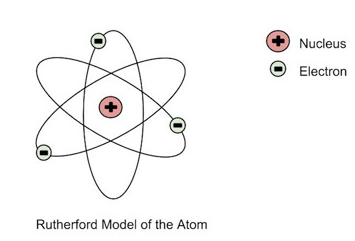
Rutherford and his students did experiments that showed

a)

quark

b)

nucleus

c)

proton

d)

electron

69.

Bohr discovered that electrons are located in

a)

the nucleus

b)

inside protons

c)

electron cloud

d)

circular orbits around the nucleus

70.

The smallest particle of an element that still represents that element.

a)

Nucleus

b)

electron

c)

proton

d)

atom

71.

All matter is made of

a)

energy

b)

atoms

c)

electrons

d)

compounds

72.
Matter always has mass.
a)
true
b)
false
73.
In Dalton's Atomic Theory, all elements consist of __________ that cannot be divided.
a)
Atoms
b)
Parts
c)
Molecules
d)
Hydrogen
74.

Who was the Greek philosopher who called the smallest particle of matter an "atom"?

a)

Democritus

b)

Aristotle

c)

J.J Thompson

d)

Einstein

75.

Which of the following is/are conclusions based on Rutherford’s gold foil experiment?

a)

Atom is mostly empty space

b)

The nucleus is positively charged

c)

The atom has a small dense nucleus

d)

All answers are correct

76.
Who is the scientist who proposed the "solar system" model of an atom where the electrons orbit around the nucleus?
a)
Democritus
b)
Niels Bohr
c)
Ernest Rutherford
d)
Chadwick
77.
Rutherford's gold foil experiment provided evidence that...
a)
negative and positive charges are spread evenly throughout the atom.
b)
alpha particles have a positive charge.
c)
gold is not a dense as previously thought.
d)
there is a dense positively charged nucleus at the center of an atom.
78.
J.J. Thomson provided evidence that an atom...
a)
is the smallest particle of matter
b)
contains negatively charged particles
c)
has an overall negative charge
d)
has an overall positive charge
79.
Which of the following is NOT a part of Dalton's atomic theory?
a)
All elements are composed of atoms.
b)
Atoms are alwyas in motion.
c)
Atoms of the same element are always identical.
d)
Atoms that combine do so in simple, whole-number ratios.
80.

The majority of an atom's mass exists where?

a)

In the nucleus

b)

In the electron cloud

c)

In the space between the nucleus and the electrons

d)

In the neutrons

81.

The PES spectrum below is for the element _______________.

a)

O

b)

Ne

c)

N

d)

F

82.

What does the 4th peak from the left represent?

a)

The 2s electrons

b)

The 3d electrons

c)

The 2p electrons

d)

The 3s electrons

83.

How many peaks would be expected for a PES spectum for Calcium?

a)

2

b)

3

c)

4

d)

5

84.

What is the electron configuration for this PES graph?

a)

1s22s22p63s23p2

b)

1s22s22p63s23p1

c)

1s22s22p63s23p3

d)

1s22s22p63s2

85.
What atom matches this electron configuration?
1s2s2p3s2
a)
Neon
b)
Magnesium
c)
Aluminum
d)
Potassium
86.
Which element is pictured?
a)
neon
b)
fluorine
c)
magnesium
d)
argon
87.
Which of the following elements is a transition metal?
a)
1s2 2s2 2p3s2 3p6 4s2 3d10 4p6
b)
1s2 2s2 2p3s2 3p6 
c)
1s2 2s2 2p3s2 3p6 4s2 
d)
1s2 2s2 2p3s2 3p6 4s2 3d4
88.

Identify the Electron Configuration for Aluminum (Al)

a)

1s2 2s2 2p6 3s2 3p1

b)

1s2 2s2 2p6 3s2 3p3

c)

1s2 2s2 2p6 3s2 4p1

89.
Which of the following will have a lower ionization energy than Scandium (Sc)?
a)
Helium (He)
b)
Titanium (Ti)
c)
Calcium (Ca)
d)
Magnesium (Mg)
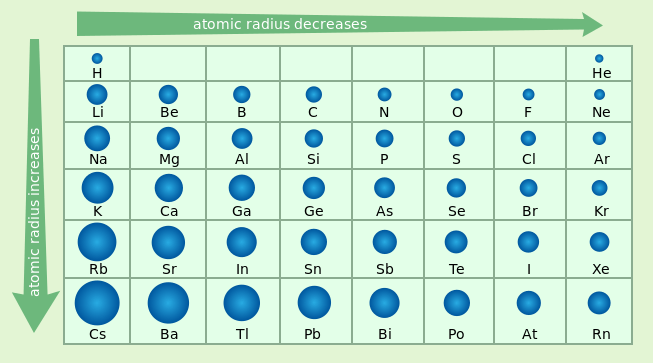
90.
As you move down the periodic table atoms get bigger.  This is because ____________.
a)
The atoms have more mass.
b)
The atoms have more protons.
c)
The atoms have more energy levels
d)
The atoms have more nuetrons
91.
Ionization energy is...
a)
the energy required to add an electron to a specific atom
b)
how much energy it takes to remove an electron from an atom
c)
the energy required to shield the outer electrons from the nucleus
d)
a measure of the ability of an atom to attract electrons
92.
Electronegativity is...
a)
how good an atom is at attracting electrons
b)
the ability of an atom to lose electrons
c)
the energy required to remove an electron from a specific atom
d)
how easy it is to make friends. 
93.

What is incorrect about this orbital diagram?

a)

Both arrows in the filled 2p box should be pointing the same direction

b)

There is nothing incorrect with this diagram

c)

In the there should only be 1 arrow in the first 2p box and one in the 2nd 2p box

d)

All the arrows should be pointing the same direction.

94.
As you move down a group, shielding 
a)
increases because there are more  orbitals
b)
increases because there are more protons
c)
decreases because the atomic radius increases
d)
stays constant because the number of valence electrons stays the same
95.
Atomic Radius is...
a)
the relative size of the atom's nucleus
b)
the relative size of the atom's electron cloud
c)
the energy required to shield the outer electrons from the nucleus
d)
a measure of the ability of an atom to attract electrons
96.
As you move down the periodic table atoms get bigger.  This is because ____________.
a)
The atoms have more mass.
b)
The atoms have more protons.
c)
The atoms have more energy levels
d)
The atoms have more nuetrons
97.
As you move across the periodic table atoms tend to get smaller because, ______________.
a)
the atoms have more mass.
b)
the atoms have less mass
c)
the atoms have more protons.
d)
the atoms have less electrons.
98.
Which atom has the largest atomic radius?
a)
potassium
b)
rubidium 
c)
francium
d)
cesium
99.
The atom with the largest atomic radius in Group 18 is - 
a)
Ar
b)
He
c)
Kr
d)
Rn
100.
Which periodic group has the smallest atomic radius?
a)
Alkali metals
b)
Halogens
c)
Noble Gases
d)
Transition metals
101.
Ionization energy is...
a)
the energy required to add an electron to a specific atom
b)
how much energy it takes to remove an electron from an atom
c)
the energy required to shield the outer electrons from the nucleus
d)
a measure of the ability of an atom to attract electrons
102.
Which of the following will have a lower ionization energy than Scandium (Sc)?
a)
Helium (He)
b)
Titanium (Ti)
c)
Calcium (Ca)
d)
Magnesium (Mg)
103.
Which of the following will have a higher ionization energy than arsenic (As)?
a)
Gallium (Ga)
b)
Neon (Ne)
c)
Antimony (Sb)
d)
Germanium (Ge)
104.
Electronegativity is...
a)
how good an atom is at attracting electrons
b)
the ability of an atom to lose electrons
c)
the energy required to remove an electron from a specific atom
d)
how easy it is to make friends. 
105.
Atoms that have a high electronegativity, _______________.
a)
give up their electrons more easily.
b)
hold on to their electrons more tightly.
c)
have more electron shells.
106.
Which of the following will have a higher electronegativity than arsenic (As)?
a)
Carbon (C)
b)
Neon (Ne)
c)
Antimony (Sb)
d)
Germanium (Ge)
107.
As atoms of elements in group 16 are considered in order from top to bottom, the electronegativity of each successive element....
a)
decreases
b)
increases
c)
remains the same
d)
none of the above
108.
The electronegativity of Cl is the highest in Period 2.  Why?
a)
Cl is the largest and has the greatest effective nuclear charge
b)
Cl is the smallest and has the lowest effective nuclear charge
c)
Cl is the largest and has the lowest effective nuclear charge
d)
Cl is the smallest and has the greatest effective nuclear charge
109.
What term is used to describe "an atom's tendency to attract electrons to itself when is is chemically combined with another element"
a)
electronation
b)
electron affinity
c)
electronegativity
d)
electrolysis
110.
What term is used to describe "The energy required to remove an electron from gaseous atoms"
a)
excitation energy
b)
ionization energy
c)
polarization energy
d)
electrolytic energy 
111.
What term is used to describe "A measure of the size of an atom"
a)
chemical reactivity
b)
atomic radius
c)
energy levels
d)
orbit