
 Worksheets
Exam 3 Cards and DM review
Total questions: 52
Worksheet time: 39mins
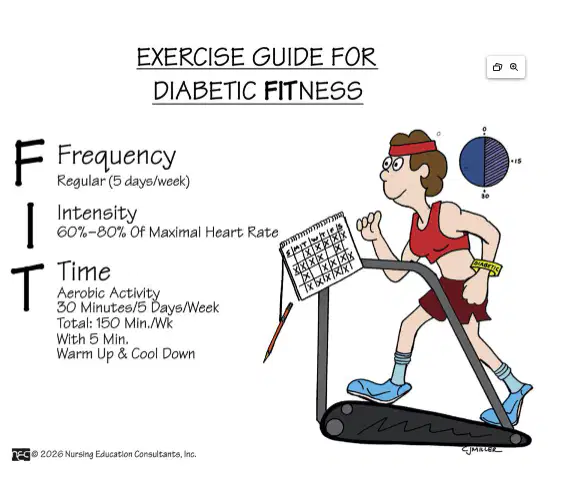
Your patient is newly diagnosed with T2DM and you're providing exercise education. The nurse knows education has been understood when the patient makes which statement?
If my blood glucose if over 240, I can exercise vigorously to reduce it.
If my blood glucose is less than 120, I can safely exercise.
I should consider a snack prior to exercise or carry a snack with me in case of a low.
Exercise alone will cure this disease for me.

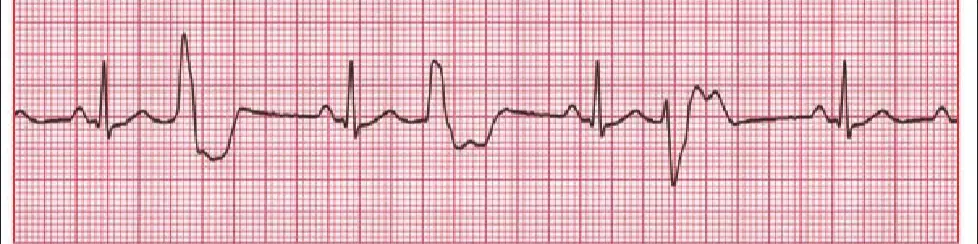
The nurse notes the pictured rhythm and knows to expect which of the following interventions? SATA
Prepare for pacemaker placement if unresolved
Administer Atropine
Administer IVF
Administer Metoprolol
The nurse on the cardiac unit has received the shift report from the outgoing nurse. Which client should the nurse assess first?
The client who has just been brought to the unit from the emergency department (ED) without any reported symptoms
The client who received pain medication 30 minutes ago for chest pain that was a level 3 on a 1-to-10 pain scale
The client who had a cardiac catheterization in the morning and has palpable pedal pulses bilaterally
The client who has been turning on the call light frequently and stating her care has been neglected
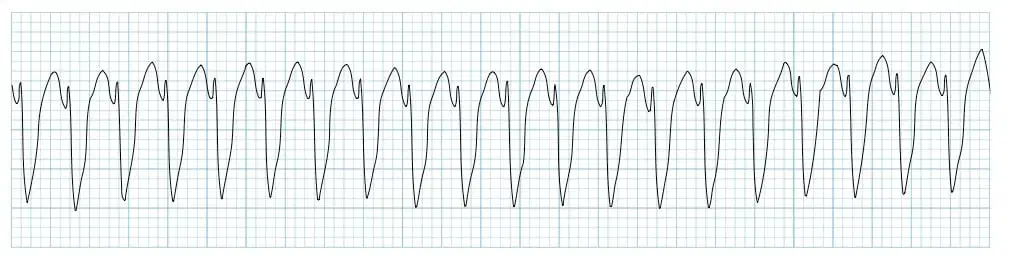
The telemetry tech notes the pictured rhythm and alerts the RN. The RN completes the following action next:
Check for a pulse
Call a Code Blue
Send the UAP to check on the patient
Begin compressions
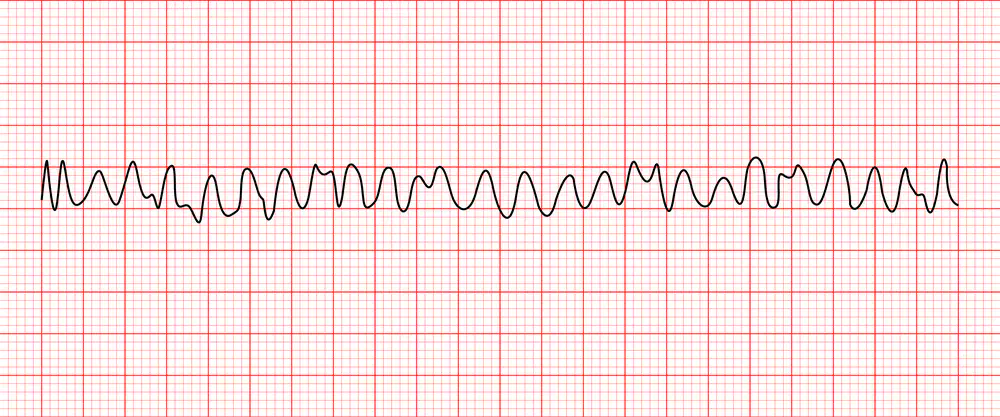
The nurse on the cardiac unit is preparing to administer medications after receiving the morning change-of-shift report. Which medication should the nurse administer first?
The cardiac glycoside to the client who has an apical pulse of 58
The loop diuretic to a client with a serum K+ level of 3.2 mEq/L
The antidysrhythmic to the client in ventricular fibrillation
The calcium-channel blocker to the client who has a blood pressure of 110/68
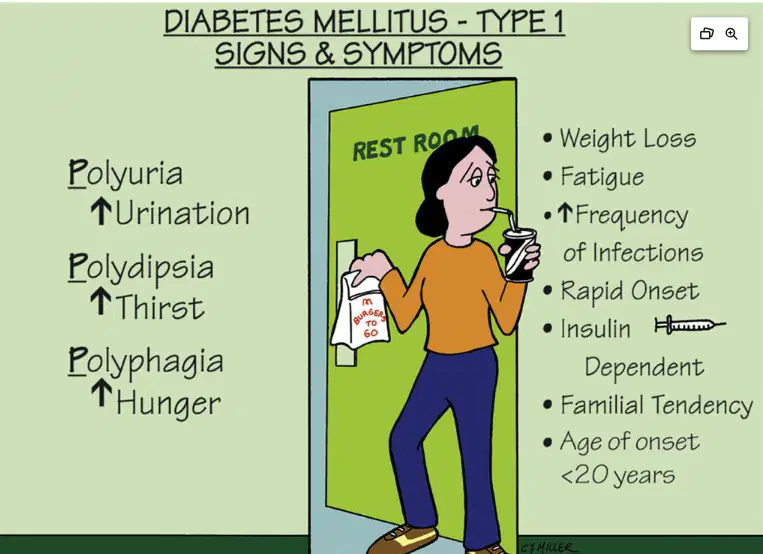
Signs and Symptoms of HYPERglycemia are escalated in T1DM if DKA is imminent. Which s/s prompt the nurse to evaluate for this common complication? SATA
fruity breath
Rapid, shallow respirations
N/V
yeast infection
Which client should the telemetry nurse assess first after receiving the a.m. shift report?
The client diagnosed with deep vein thrombosis who has an edematous right calf
The client diagnosed with mitral valve stenosis who has heart palpitations
The client diagnosed with arterial occlusive disease who has intermittent claudication
The client diagnosed with congestive heart failure who has pink frothy sputum
The RN charge nurse is making assignments for clients on a cardiac unit. Which client should the RN charge nurse assign to a new graduate nurse (GN)?
The 44-year-old client diagnosed with a myocardial infarction
The 65-year-old client diagnosed with unstable angina
The 75-year-old client scheduled for a cardiac catheterization
The 50-year-old client reporting chest pain
The RN staff nurse assesses erratic electrical activity on the telemetry reading while the client is talking to the nurse on the intercom system. Which task should the nurse instruct the UAP to implement?
Call a Code Blue immediately.
Check the client’s telemetry leads.
Find the nurse to check the client.
Remove the telemetry monitor.
The client is in the cardiac intensive care unit on dopamine and BP increases to 210/130. Which intervention should the intensive care nurse implement first?
Discontinue the client's dopamine
Administer hydralazine or another BP medication
Call the physician
Assess the client's neurological status
The RN charge nurse is making client assignments in the cardiac critical care unit. Which client should be assigned to the most experienced nurse?
The client diagnosed with acute rheumatic fever carditis who refuses to stay on bedrest
The client who has the following ABG values: pH, 7.35; PaO2, 88; PaCO2, 44; HCO3, 22
The client who is showing multifocal premature ventricular contractions (PVCs)
The client diagnosed with angina who is scheduled for a cardiac catheterization
The nurse is administering medications to clients in the cardiac critical care area. Which client should the nurse question administering the medication?
The client receiving a calcium channel blocker who is drinking a glass of grapefruit juice
The client receiving a beta-adrenergic blocker who has an apical heart rate of 62 bpm
The client receiving nonsteroidal anti-inflammatory drugs (NSAIDs) who has just finished eating breakfast
The client receiving an oral anticoagulant who has an International Normalized Ratio (INR) of 2.8
Which client warrants immediate intervention by the nurse?
The client diagnosed with pericarditis who has chest pain with inspiration.
The client diagnosed with mitral valve regurgitation who has a thready peripheral pulse.
The client diagnosed with Marfan syndrome who has pectus excavatum.
The client diagnosed with atherosclerosis who has slurred speech and drooling
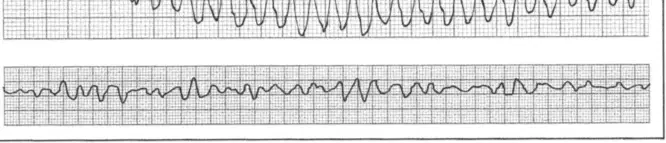
Does the RN expect the patient with the rhythm pictured to have a pulse? SATA
Hard no. This is a nonperfusing rhythm.
Yes!
No, but we will check one anyways to be sure.
If the patient is shivering, this can be a false v. fib and this patient would have a pulse.
The nurse is initiating discharge teaching to a 68-year-old male client who had quadruple coronary bypass surgery. Which priority question should the nurse ask the client?
Are you sexually active?
Can you still drive your car?
Do you have pain medications at home?
Do you know when to call your HCP?
The client diagnosed with arterial hypertension has been taking a calcium channel blocker, a loop diuretic, and an ACE inhibitor for 3 years. Which statement by the client would warrant intervention by the nurse?
I have to go to the bathroom a lot during the morning.
I get up very slowly when I have been sitting for a while.
I do not salt my food when I am cooking it but I add it at the table.
I drink grapefruit juice every morning with my breakfast.
The home health (HH) nurse received phone messages from the agency secretary. Which client should the nurse contact first?
The client diagnosed with hypertension who is reporting a BP of 148/92
The client diagnosed with cardiomyopathy who has a pulse oximeter reading of 93%
The client diagnosed with congestive heart failure who has edematous feet
The client diagnosed with chronic atrial fibrillation who is having chest pain

The RN notes the patient has a BG of 16. The RN knows to proceed with which tx option?
Call a code
Rub frosting in their gums since they cannot swallow
Administer SQ D50W
Administer IM glucagon
The client is diagnosed with end-stage congestive heart failure. The nurse finds the client lying in bed, short of breath, unable to talk, and with buccal cyanosis. Which intervention should the nurse implement first?
Assist the client to a sitting position.
Assess the client’s vital signs.
Call 911 for the paramedics.
Auscultate the client’s lung sounds.
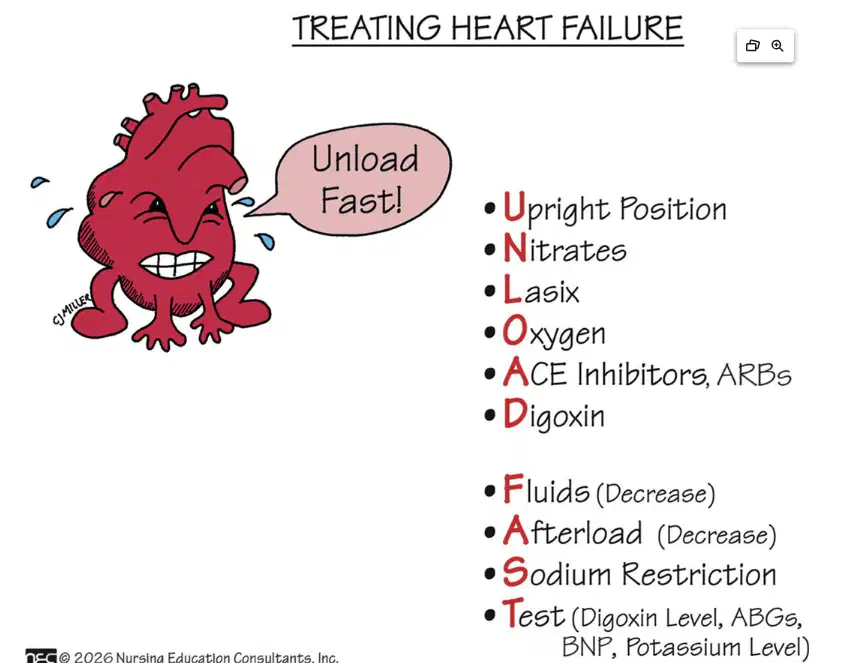
The nurse knows which of the following symptoms are associated with Right Sided HF? SATA
Restlessness
Hepatomegaly
Peripheral Edema
Anorexia
The cardiac nurse is teaching the client diagnosed with congestive heart failure. Which teaching interventions should the nurse discuss with the client? Select all that apply.
Notify the health-care provider (HCP) if the client gains more than 2-3 lb in 1 day.
Notify HCP if more than 5 lbs gained in 1 week
Take the loop diuretic once a day before going to sleep.
Teach the client which foods are high in sodium and should be avoided.
Notify the HCP if cold symptoms that last more than 3-5 days.
The nurse is administering medications on a cardiac unit. Which medication should the nurse question administering?
Warfarin to a client with a PT of 14 and an INR of 1.6 mg/dL
Digoxin to a client with a potassium level of 3.3 mEq/L
Atenolol for the client with an aspirate aminotransferase (AST) of 18 U/L
Lisinopril for the client with a serum creatinine level of 0.8 mg/dL

The nurse sees the pictured rhythm and knows to prepare which of the following interventions? SATA
Atropine administration
Anticoagulant administration
Amiodarone administration
Diltiazem (cardizem) administration

The nurse knows the patient understands teaching of hypoglycemic tx when they state they will do which of the following to tx a BG of 42? SATA
Drink 8 oz of juice
Check BG in 15 minutes after consuming 30 g short-acting carbohydrates
Personal Pan Pizza for dinner
Call 911
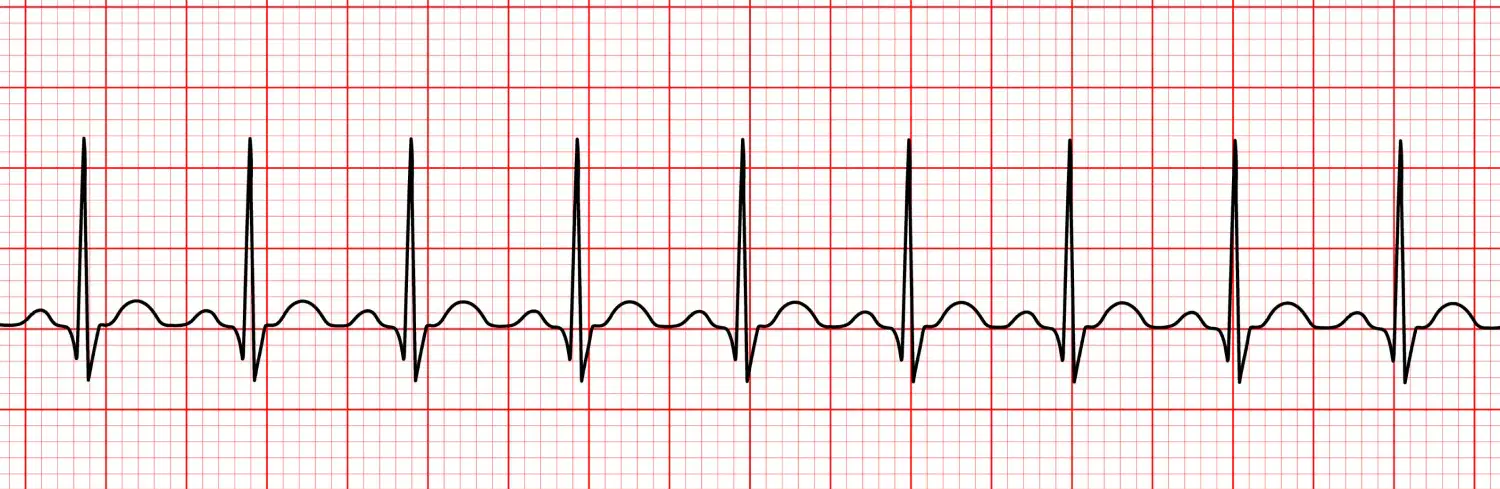
All four patients have the same pictured rhythm. Which one does the RN see first?
This patient just walked the hallways.
This patient had a large coffee from the caf for breakfast.
This patient has mild SOA and notes palpitations.
This patient is anxious about their stay.
Which of the following rhythms can be defibrillated? SATA
Asystole
V tach with a pulse and stable
V. Fib
V. Tach without a pulse
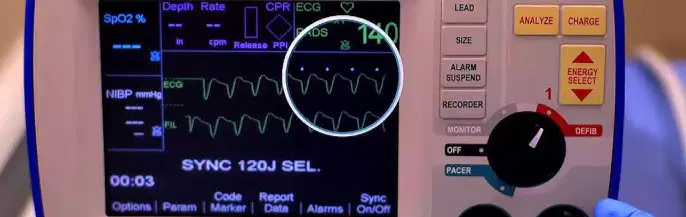
Which of the following rhythms can be treated with a synchronized cardioversion?
Atrial Fibrillation
Ventricular Tachycardia with a pulse
Asystole
Atrial Fibrillation of unknown duration without coagulation
The RN educates the patient on which food items to be used for treatment of hypoglycemia (BG 68)? SATA
5 hard candies
Apple
Cup (8 oz) of apple juice
4 teaspoons of sugar
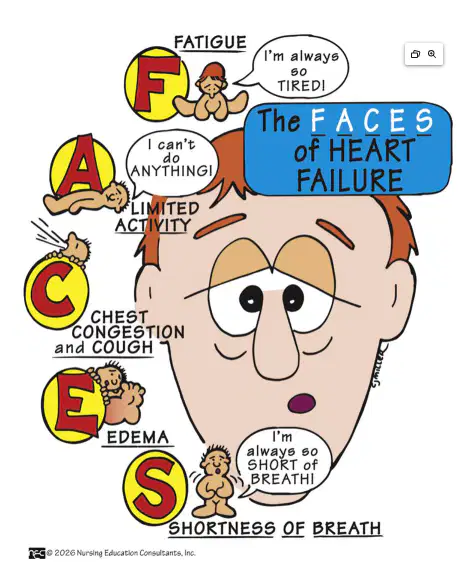
The nurse associates left side heart failure with the following symptoms? SATA
Dyspnea
Anasarca
JVD
Altered Mental Status
The RN is educating a diabetic client on proper orthotics. The RN provides further education when the patient makes which statement?
My shoes should not be too tight and I should have roughly 0.5 inches of space for my toes to allow for swelling.
I should pack an extra pair of shoes to allow me to change midday to allow for swelling and promote good foot hygiene.
The heels of my shoes should be no more than 3 inches
I should be fitted for my shoes by a professional.
When providing education on foot care, the RN knows the patient understands the education when they make which statement?
I should check my feet for wounds whenever I can.
I should use a mirror to see my feet if I cannot see them myself.
I should avoid going barefoot.
I can wear my favorite fuzzy blended material socks because they're soft.
The RN knows that which cardiac complication is often seen with aging and is the result of hardening and loss of elasticity of arteries?
Atherosclerosis
Arteriosclerosis
Coronary Artery Disease
Peripheral Artery Disease
When considering risk factors for the development of Type 1 Diabetes, the nurse knows which patient is most at risk for developing this condition?
22 yo white female who recently was under a lot of stress and has two autoimmune diseases.
27 yo black male who has a family history of T1DM.
18 yo who recently recovered from a viral illness.
12 yo white male with a family history of type 2 diabetes.
The RN is providing education on insulin mixing. The RN knows the patient understands teaching when they state?
I can mix my lantus and lispro to reduce the number of injections I receive.
I must instill air into NPH before Regular insulin.
I need to roll the regular insulin prior to instilling air.
I need to draw NPH up first and then Regular insulin.
Classic symptoms of hyperglycemia include: SATA
polyphagia
polydipsia
polygamy
polyuria
The RN knows which medications can cause kidney dysfunction and require routine monitoring of kidney function labs? SATA
ACEi
ARBs
Metformin
Insulins
The nurse has the following patients to prepare for cardiac catheterization today. The nurse seeks additional clarification when considering prepping which patient for this procedure?
47 yo client who received metformin 28 hours ago.
32 yo patient who has a creatinine of 2.2.
48 yo pt with a BUN of 12 who takes lisinopril.
29 yo T1DM who uses a CGM.
The RN knows which of the following symptoms are a sign of PAD? SATA
Intermittent Claudication
Dependent Rubor
Dry, scaly skin
Decreased peripheral pulses
Your patient is a 64 yo smoker with chronic stress. He reports concerns with numbness and pallor of his toes during this snow storm. The nurse knows his risk factor in conjunction with which symptom helps the nurse know the difference between Raynauds and Buergers?
The presence of ulcerations
Gangrene
Tunica externa involvement
Extremity pallor and pain is the give away for Buergers.
Signs and symptoms of atherosclerosis include SATA
Bruits & angina
Cool, pale extremities
HTN
SOA
The nurse suspects a DVT in the patient in room 9 on a medical surgical unit. The nurse came to this conclusion based on which of the following symptoms?
Decreased calf circumference
+ Homan's sign
Unilateral erythema and edema of the calf
Presence of tortuous, edematous veins
The nurse is providing education on varicose vein prevention. The nurse knows further education is required when the patient states?
I will wear compression stockings and avoid girdles or garters.
I will try to stand every 50 minutes to prevent prolonged sitting.
I need to stop smoking and lose weight to decrease my risks.
I should limit exercises, especially exercises like swimming and yoga.
The DM patient understands teaching on diabetic management when they state:
I should see an optometrist for a DM eye exam annually
I know my BG is well controlled when my Hgb A1c is 7.5%.
If my fasting glucose is 130, I am in range.
If my glucose tolerance test is under 200, I need to do better with my management.
When considering HTN, the nurse knows the patient understands teaching when the patient states: SATA
I will abstain from alcohol use if possible.
My goal for HTN mgmt is to be <150/90.
I will begin exercising at least five days a week, but will not push myself to the point I cannot talk during exercise.
I will limit foods high in sodium and take my medications as prescribed.
The nurse knows the client's atorvastatin is working if the following is noted:
LDL decreased to 112
HDL is 42
The client notes less fatigue.
The client notes a A1c of 5.8%
When teaching a client with Raynaud's how to manage exacerbations, the nurse knows to include which items in their education?
Stop smoking
Reduce Caffeine Intake
Take amlodipine as prescribed
Take antibiotics and NSAIDs to treat inflammation of tunica intima
The nurse is teaching a patient about how to administer insulin. The nurse knows that the patient understands the teaching when they state:
My arms have the best absorption rate.
I should rotate sites for each injection so I switch between my arms, legs, and belly.
When using a pen to injection insulin, I set the pen to the ordered amount.
I clean the injection site with an alcohol pad and allow it to dry prior to injections.
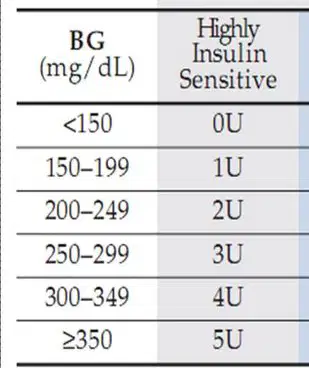
The pt has the following ss orders, a BG of 222, and an order for NPH 15 units at 0700. The RN gave 2U ss lispro and 15 U NPH. The patient has a low at 0800. The RN suspects what to be the causative agent?
The NPH
The lispro
The fact the patient did not consume their breakfast
The patient went for a walk at 0730

Are you getting more comfortable with these values?
(a)
The nurse notes tall, peaked T waves on the EKG and the patient complains of diarrhea. The nurse knows this may be due to the combination of which medications given this AM at 0700?
metoprolol and lispro
spironolactone and captopril
furosemide and atorvastatin
diltiazem and warfarin
The patient is going home with a prescription for nitroglycerin. The nurse knows education has been effective when the client states:
I can take 4 doses of NG at home before I call EMS
If my systolic BP is less than 100, I will call 911 instead of taking my NG at home
There are no medications I need to worry about mixing with NG.
NG decreases oxygen supply.
Your pt is recovering from a popliteal bypass surgery. As a prudent RN, you know which of the following s/s are a complication of this procedure?
Lack of DP/PT pulses
erythema to the lower extremities
Risk for bleeding, often noted as bruising & hypotension
the 6 P's!

