
 Worksheets
SPEAK CFUs
Total questions: 86
Worksheet time: 43mins
Name
Class
Date
1.
Name
4 lines
2.
1. How does the NEP 2020 align with the objectives of the Speak program?
a)
By prioritizing rote memorization to improve oral skills
b)
By developing proficiency in languages and mastering oral communication skills
c)
By emphasizing written communication over speaking skills
d)
By limiting students' flexibility in choosing a language-based curriculum
3.
2. What is the primary reason that listening and speaking are often neglected in traditional school environments, as identified in the Speak Classroom?
a)
They are often deprioritized in favor of grammar and writing, and there are limited digital tools to assess speaking skills
b)
Schools focus more on standardized testing rather than interactive communication skills
c)
Teachers rely heavily on textbooks, reducing opportunities for spoken language practice
d)
Lack of interest from students makes speaking exercises less effective
4.
3. Which of the following elements is NOT a core part of Speak’s principles?
a)
Functional speaking skills
b)
Positive reinforcement
c)
Judgment-free feedback
d)
Emphasis on grammatical skills
5.
4. What is the broader objective of focusing on functional English in the Speak program?
a)
To focus on literary analysis and understanding classic literature
b)
To enable students to effectively communicate in real-life situations
c)
To encourage students to memorize English vocabulary for academic purposes
d)
To teach students how to write essays and research papers
6.
5. Sarah hesitates to speak in front of the class because she’s unsure of her grammar. Mr. Patel notices her hesitation and praises her for trying, saying, "Great effort, Sarah! Your ideas are clear, and you're improving every time you speak!"
What is the primary benefit of Mr. Patel's use of positive reinforcement in this teaching approach?
a)
It helps students memorize grammar rules more effectively
b)
It boosts students’ confidence and motivates them to keep trying
c)
It forces students to focus on accuracy rather than communication
d)
It ensures that students will always speak perfectly in the language
7.
6. Ria, a student in grade 3 was asked to describe her favorite hobby. She hesitated at first because she wasn't sure if her answer would be perfect. Some classmates laughed at her accent when she spoke, making her feel judged. Ria immediately felt discouraged and unsure if she should speak up again. In the case study context, how does the Speak program encourage a judgment-free environment for Ria?
a)
By allowing students to express themselves freely without any intervention or correction.
b)
By promoting open discussions while subtly correcting mistakes to maintain learning integrity.
c)
By fostering an atmosphere where students feel safe to make mistakes and learn from them.
d)
By creating a structured feedback system that helps students refine their communication skills.
8.
7. What does "TPR" stand for in teaching strategies, and what is its main goal in language learning?
a)
Total Participation Rule; Encouraging students to memorize long texts
b)
Total Physical Response; Teaching language through physical movement and actions
c)
Total Persuasive Response; Focusing only on reading and writing skills
d)
Total Practical Response; Limiting student participation in class activities
9.
8. How does the Speak program ensure that learning is retained beyond the classroom?
a)
Through automated AI-based practice exercises without teacher input
b)
By assigning daily memorization exercises for students
c)
By reducing speaking activities in favor of written assignments
d)
Through repetition and structured speaking tasks in multiple sessions
10.
9.How does the Echo strategy benefit students in the UOLO Speak program?
a)
It allows students to move on to new topics without revisiting previous concepts.
b)
It encourages students to create their own explanations without external input.
c)
It helps students retain and reinforce new concepts through guided repetition.
d)
It focuses only on passive listening without requiring active participation.
11.
10. What is the key benefit of the E&R (Express & Repeat) strategy for students?
a)
It helps students build confidence and clarity by expressing their understanding while receiving immediate feedback and repetition.
b)
It allows students to share their thoughts, but without the opportunity for correction or improvement.
c)
It encourages students to explain concepts, but only based on memorized answers rather than true understanding.
d)
It gives students a chance to speak, but without reinforcing the correct responses.
12.
11. Which of the following statements is NOT TRUE about Speak Junior and Speak Senior?
a)
Speak Junior is more teacher-guided, while Speak Senior encourages active student participation
b)
Speak Senior contains more chapters than Speak Junior
c)
Speak Junior includes 9 chapters, whereas Speak Senior includes 12 chapters
d)
Speak Junior is designed for grades 1-3 and Speak Senior is for grades 4-8
13.
12. How many periods are allocated to complete one chapter in Speak Junior and Speak Senior?
a)
2 periods for Junior and 3 periods for Senior
b)
3 periods for Junior and 4 periods for Senior
c)
4 periods for Junior and 3 periods for Senior
d)
5 periods for both Junior and Senior
14.
13. What does each chapter of the Conversations book begin with, and why?
a)
A list of key vocabulary words – To help students understand difficult words before reading
b)
A set of comprehension questions – To test understanding before starting the chapter
c)
A summary of the chapter – To provide an overview before reading
d)
A unique picture – To engage students visually and spark discussion about the chapter’s theme
15.
14. What does the term "Big Skill" refer to in the context of Speak chapters?
a)
A challenging task assigned to students for advanced learning
b)
A practical skill that the teacher wants students to focus on and develop
c)
A basic language skill, such as vocabulary memorization
d)
A set of rules for students to follow during the lesson
16.
15. What are the correct steps of the Speak pedagogy?
a)
Warm-up, Listen, Echo, E&R (Exploration and Review), Conclusion
b)
Listen, Speak, Review, Warm-up, Conclusion
c)
Warm-up, Echo, Listen, E&R (Express and Repeat), Conclusion
d)
Warm-up, Listen, Echo, E&R (Express and Repeat), Conclusion
17.
16. Ms. Yogita finds this written in the teacher manual: "Say: Welcome to the Speak class. Today, we will read Chapter 5—My Choices. Look at the cover picture for one minute. Observe the things that you see in the picture." This is an example of which part of the pedagogy?
a)
Listen
b)
Echo
c)
Exploration and Review (E&R)
d)
Warm-up
18.
17. What is the purpose of Model Response in the Warm-up of Period 1 in the Speak program's lesson plan?
a)
To suggest questions that teachers can ask students at the end of the class
b)
To encourage students memorize fixed responses without understanding
c)
To help students develop their ability to describe pictures in detail
d)
To provide teachers with instructions for classroom management
19.
18. In the "Listen" step of the Speak program, which of the following is NOT a part of text comprehension?
a)
Before the text
b)
After the text
c)
During the text
d)
Between the text
20.
19. Why might a teacher ask students questions while reading through a text or during the explanation of new concepts?
a)
To test the teacher's ability to explain the content
b)
To fill time during the lesson
c)
To ensure students are actively engaged and understand the concept
d)
To reduce the amount of content that needs to be taught
21.
21. Ms. Nisha is taking a SPEAK session. What should she say that can serve as an example of 'Echo' pedagogy?
a)
Read out the word 'Lovely' from the book
b)
Read aloud the meaning of the word 'Lovely'
c)
Repeat the word 'Lovely' after me.
d)
Tell me the meaning of the word 'Lovely'
22.
22. In which of the following activities can the teacher make use of the AI Cam in the Uolo app to record the learners' presentations?
a)
Warm-up - Plan and Speak
b)
Echo – Plan and Speak
c)
E&R – Plan and Speak
d)
Listen - Plan and Speak
23.

23. Which of the following steps represents the given symbol?
a)
Warm-up
b)
Listen
c)
E&R
d)
Digital Showcase
24.
24. Which activity in Period 2 is most critical for developing students’ speaking and presentation skills?
a)
Warm-up activities involving chapter recall
b)
Plan and Speak after Period 1
c)
Speak on the spot during the E&R step
d)
Speak on the spot during the Conclusion step
25.
25. Why does the teacher assign "Plan & Speak" as homework towards the end of Period 2?
a)
To evaluate students’ writing skills for grading purposes
b)
To prepare students for an important presentation and speaking activity in the next class
c)
To prepare students for an impromptu activity in the next class
d)
To ensure students memorize the content for a quiz in the following session
26.
26. Which of the following statements is TRUE about the conclusion of a Period 3 in the Speak Senior program?
a)
Summarize and assign E-Speak 3 as homework
b)
Summarize and reiterate the chapter
c)
Summarize and assign Plan and Speak as homework
d)
Summarize, end the class, and encourage students to do practice on UOLO Learn app
27.
27. Ms. Simran wants to organize a ‘Plan and Speak' activity in her classroom. What should be the correct order?
A. Make learners repeat the word, meaning, and sentence using Echo.
B. Read aloud the keyword/(s) using the listen component.
C. Ask learners to make sentences using E&R
a)
B → C → A
b)
A → C → B
c)
A → B → C
d)
B → A → C
28.

28. When are E-Speak 1 and E-Speak 2 projects assigned to students?
a)
At the end of Period 1 and during Period 3
b)
During Period 2 and at the beginning of Period 3
c)
At the end of Period 1 and Period 2
d)
At the beginning of Period 2 and end of Period 4
29.
29. What is the primary objective of the digital projects, E-Speak 1 and E-Speak 2, designed for students?
a)
To assess students' memorization skills of the course content
b)
To encourage students to independently explore and enhance their communication and presentation skills
c)
To provide teachers with a tool to evaluate student creativity without involving the students directly
d)
To replace classroom activities with purely app-based learning modules
30.
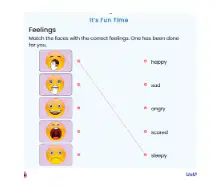
30. Which activity is depicted in the given image?
a)
Brain Booster
b)
Gaming Zone
c)
Speak on the Spot
d)
Plan and Speak
31.
31. In the Speak classroom, the teacher begins each lesson by demonstrating correct pronunciation and sentence structures. The teacher speaks, uses gestures, and encourages students to imitate her before they practice on their own. Over time, students gain confidence in their speaking skills by following her lead. Based on this scenario, which teaching strategy is being used?
a)
Task-based Learning : Focuses on completing specific tasks to develop language skills in context.
b)
Direct Method : Involves teaching through immersion, focusing on speaking and listening with minimal use of the native language.
c)
Modeling: The teacher demonstrates a behavior or skill for students to imitate and learn from.
d)
Collaborative Learning: Students work together in groups to solve problems and enhance learning through interaction.
32.
32. How can a teacher ensure high student engagement for pre-primary students with shorter attention spans?
a)
By conducting long lectures to build focus
b)
By keeping instructions complex and avoid using any physical activities
c)
By using a variety of enjoyable elements like rhymes, stories, songs, and movement
d)
By allowing students to play without structured activities
33.
33. Why are songs, rhymes, and stories integrated into the SPEAK Junior program?
a)
To introduce complex language concepts in an entertaining format without focusing on retention
b)
To help students learn through engagement and repetition, making the process more effective
c)
To provide passive exposure to language without requiring active participation
d)
To create a relaxed environment where students can enjoy learning without structured reinforcement
34.
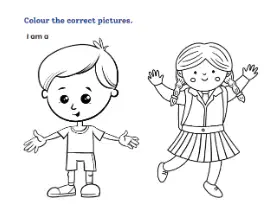
34. What is the purpose of the Brain Booster activity in the Speak Junior program?
a)
To conclude the session with a summary of key points
b)
To reinforce a previously learned big skill creatively
c)
To assess students' understanding through tests and quizzes
d)
To introduce a new skill and explain it thoroughly to students
35.
35. In the Speak Junior program, what is the purpose of the first and second reading of the rhyme in Listen?
a)
The first read is for explanation, and the second read is for memorization
b)
The first read is for enjoyment, and the second read is for explaining the story
c)
Both readings are for memorizing the rhyme
d)
Both readings are for evaluating students’ understanding
36.
37. Arrange the steps in the correct order to login to the 'Uolo Teach' app
A) Download the “Uolo Teach” app from the Play Store
B) Type the 4-digit OTP and click on ‘submit’
C) Type your registered mobile number, and click on ‘continue’
a)
A → B → C
b)
A → C → B
c)
B → A → C
d)
C → B → A
37.
38. A teacher is trying to log in but is not receiving an OTP after entering their phone number. What resolution can be provided?
a)
The teacher was asked to try again after 24 hours
b)
The tech team provided a manual OTP via email
c)
The teacher was instructed to log in using a password instead of OTP
d)
The teacher was given an alternative phone number to use
38.
39. In what way does the UOLO Teach app support teachers in implementing the Speak program?
a)
By providing teachers access to resources and real-time monitoring of student progress
b)
By replacing traditional textbooks with AI-generated lesson plans
c)
By automatically grading all spoken responses without teacher intervention
d)
By restricting students from accessing learning materials outside school hours
39.
40. Which of the following BEST describes the function of the ‘Scanner’ in UOLO Learn?
a)
It allows students to scan QR codes to access resources like talking books and projects
b)
It allows students to scan QR codes to access talking books and quizzes
c)
It allows students to scan QR codes to access talking books only
d)
It is a feature that enables teachers to track students' login times
40.
41. In a UOLO Speak session, Ms. Sharma is preparing for her upcoming class. She needs quick access to various resources from the Speak program, such as projects, practice quizzes, and a talking book. Which feature will help Ms. Sharma access the resources?
a)
Assignment
b)
Library
c)
Dashboard
d)
Progress report
41.

42. What is the main advantage of the ‘Dashboard’ feature in UOLO Teach for teachers?
a)
It allows teachers to edit students’ reports
b)
It lets teachers track login activity (provides an overview of how many students login)
c)
It enables teachers to create and assign quizzes easily
d)
It gives teachers an overview of classroom performance and student progress
42.
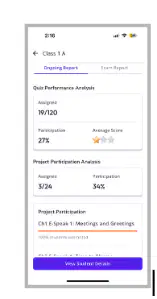
43. Ms. Archana checks reports on the Speak app to understand Preeti’s learning progress. Which of the following can NOT be illustrated from the report given below?
a)
Preeti's quiz participation analysis is 27%, with an average score of 1 star.
b)
Preeti has participated in 34% of assigned projects.
c)
Preeti has completed all project submissions for "Ch1 E-Speak 1: Meetings and Greetings."
d)
Preeti's overall attendance is 56%, and she has submitted 8 CW assignments out of 70.
43.
44. A teacher is trying to download a report showing student participation in quizzes. Where should they navigate?
a)
Assign → Quiz Performance Analysis
b)
Assigned Homework → Quiz Performance Analysis
c)
Progress Report → Quiz Performance Analysis
d)
Assignments → Quiz Performance Analysis
44.
45. Ms. Rohini is a teacher overseeing a class that recently completed an E-Speak project where students recorded their speeches on various topics. One student, in particular, performed exceptionally well, delivering a clear and engaging presentation. Ms. Rohini believes that showcasing this student's work could inspire other students to push their limits and improve their presentations.
Which feature will Ms. Rohini use to showcase the student's video to all other students on the app to help motivate them?
a)
Show Stopper
b)
Group Discussion
c)
Celebrations
d)
Star Performers
45.
46. Arrange the following steps in the correct order based on your understanding of assigning SPEAK projects.
A. The students receive a notification to submit the project
B. The teacher assigns the project after period 2
C. The teacher then gives feedback on all the submissions
D. The students can now see the feedback given by their teacher
a)
A → C → B → D
b)
B → A → C → D
c)
B → A → D → C
d)
B → C → A → D
46.
47. What feature should be enabled for the AI Cam to automatically identify students?
a)
Auto-zoom
b)
Autotagging
c)
Autofocus
d)
Manual tagging
47.
48. Which of the following is NOT one of the features of the Class Cam by Uolo?
a)
Automatically identifies students using facial recognition technology
b)
Stores recordings securely in the cloud
c)
Helps teachers grade student assignments
d)
Shares classroom moments with parents via the Uolo App
48.
49. How does the AI Cam by Uolo help reduce teachers' workload, particularly through its Autotagging feature based on facial recognition?
a)
It automatically assigns grades to students based on their classroom activities.
b)
It allows teachers to record classroom moments without needing to manually tag each student by identifying them through facial recognition.
c)
It sends real-time attendance reports to parents and school administrators.
d)
It replaces the need for teachers to take any manual photos or videos during classroom activities.
49.
50. For schools that do not wish to share the mobile numbers of their students, Uolo offers _______ method to login into the Uolo Learn app.
a)
ID and password
b)
Mobile number and password
c)
Name and password
d)
U-pin
50.
51. A school is enrolled for the Speak program, but students are seeing the Imagine and Aware programs instead. Upon investigation, what was found to be the cause?
a)
The teacher mistakenly enabled Imagine and Aware instead of Speak
b)
A dummy account was used, and the number was registered in multiple schools
c)
The students had outdated app versions
d)
The school had mistakenly assigned multiple programs to students
51.
52. As a parent using UOLO Learn, you want to track your child's academic progress. After your child completes a quiz on the app, what happens next?
a)
The score is automatically updated in the Progress Report, making it easy to monitor performance
b)
A digital certificate is awarded for every quiz attempt to motivate participation
c)
The teacher and parents receive a direct notification to review the child’s progress
d)
The quiz score is removed from the dashboard permanently to avoid access
52.
53. A teacher reports that students are not able to access their assigned projects. What is the FIRST step they should take?
a)
Remove all assignments and reassign them manually
b)
Ask students to reinstall the app
c)
Submit a technical complaint to UOLO support
d)
Check if the projects are visible under ‘Active Projects’ in the Assignments section
53.
54. A student is unable to submit their E-Speak project. What could be the most likely reason?
a)
The teacher has not assigned the project, and it remains locked
b)
The student has not enabled the ‘Submit’ option in their settings
c)
The app requires a WiFi connection to submit projects
d)
The student needs to register their email address before submitting
54.
55. A parent is concerned about having only one device while both of their children need to use the UOLO Learn app. Which feature can help in this situation?
a)
Profile switch feature, allows both children to use the same device with separate profiles, eliminating the need for multiple logins
b)
Add a buddy feature, that allows both children to use the same device with separate profiles, eliminating the need for multiple logins
c)
Profile switch feature, which can allow only two siblings at max to switch profiles, eliminating the need for multiple logins
d)
The Uolo Learn app restricts access to only one child at a time, hence it won’t be possible.
55.
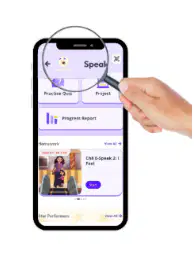
56. What are the correct steps to switch a student profile?
a)
Click on the back arrow next to the student’s name and select the correct profile
b)
Log out completely and re-enter the mobile number
c)
Reset the app settings, clear the cache and it will automatically switch to another student’s profile.
d)
Reinstall the app, go to the dashboard, and switch profile
56.
57. A student in Grade 6 is trying to scan the QR code for Project 1 in Chapter 1, but it shows an "Invalid QR" message. What was the identified issue?
a)
The student was not logged in with the correct credentials
b)
The teacher did not assign the project correctly
c)
The student was using an outdated version of the app
d)
The QR code was printed incorrectly in the book
57.
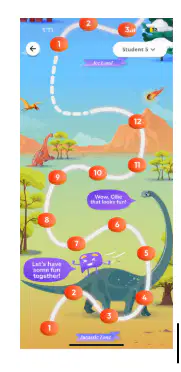
58. The image represents a gamified learning experience in the Uolo Learn app. What activity does this image showcase?
a)
Level-Based Speaking Challenges
b)
Adaptive Math Missions
c)
AI-Powered Reading Comprehension
d)
Practice Quizzes for Skill Mastery
58.
59. Which of the following features allows the students to practice the BIG SKILL at home?
a)
Practice writing test
b)
Projects
c)
Interactive Reading Exercises
d)
AI-Powered Assessments
59.
60. Which of the following options should a student click on if they want to submit their E- Speak projects?
a)
A
b)
B
c)
C
d)
D
e)
60.
61. What is the purpose of QR codes in Speak Express?
a)
Access to quizzes
b)
Access to projects
c)
Access to correct pronunciation
d)
Access to talking book
61.
62. How does Speak’s Digital Product- Classroom App enhance classroom engagement?
a)
By integrating interactive e-books, videos, and quizzes aligned with physical books
b)
By replacing traditional teaching methods with fully digital instruction
c)
By eliminating the need for teacher intervention in classroom activities
d)
By focusing exclusively on assessment tools rather than instructional content
62.
63. How is the compatibility of the Interactive PDF with smart boards and smart TVs beneficial for classroom teaching?
a)
It allows teachers to project digital content onto large screens, making lessons more engaging and accessible to the entire class.
b)
It limits learning to digital-only formats, restricting the use of traditional teaching methods.
c)
It allows students to access the content only on their personal devices, not on shared screens.
d)
It requires a separate device to convert PDF content into a display-friendly format.
63.
64. How does the inclusion of interactive videos and quizzes in the Interactive PDF enhance learning?
a)
It allows students to passively watch content without active participation.
b)
It engages students by integrating multimedia elements and self-assessment opportunities.
c)
It replaces the need for teachers, as students can learn everything independently.
d)
It only includes text-based quizzes without any video explanations.
64.
65. How does the Interactive PDF help in simplifying classroom instruction?
a)
It provides a structured digital format, reducing the need for printed materials and manual content organization.
b)
It requires teachers to manually write notes for every topic before using it in class.
c)
It replaces traditional teaching entirely, making students rely only on digital content.
d)
It allows students to interact with the PDF only during specific classroom hours.
65.
66. A teacher expresses concern that students are struggling to keep up with the SPEAK program, as the pedagogy feels overwhelming. Managing it with a large class is time-consuming and difficult. As an SSM, how would you best address this concern?
a)
The SPEAK program is intensive, and teachers are expected to adjust their schedules to cover all aspects, even if it requires extra class time.
b)
Since managing the program with a large class is challenging, teachers should modify or skip certain elements to fit their teaching style and save time.
c)
The SPEAK program is designed with flexibility in mind, ensuring that teachers can implement it at a manageable pace. It is recommended to introduce it gradually, ideally once a week, to prevent any burden on students and teachers.
d)
The structure of the program requires all components to be covered in every session, regardless of the class size, to achieve the intended learning outcomes.
66.
67. Even after conducting a successful SPEAK class, a teacher notices that students are not submitting their E-SPEAK projects on time, and the overall response rate remains low. As an SSM, what would you suggest to the teacher to encourage timely and quality submissions?
a)
Remind students that project submission is mandatory and impose penalties for late submissions to ensure compliance.
b)
Assign extra homework to students who fail to submit their projects on time, reinforcing the importance of meeting deadlines.
c)
Give verbal appreciation to students who submit their projects, but avoid highlighting them in class to prevent unnecessary competition.
d)
Mark the best responses as ‘Star Performers’ on the app, which will be visible to all students. During the next class, recognize and appreciate students who submitted quality projects, encouraging others to participate actively and improve their submissions.
67.
68. During an academic visit, you observe that a teacher conducts the entire SPEAK session in Hindi. When asked, she explains that her students do not understand English at all. As an SSM, what would be the best way to address this situation?
a)
Ask the teacher to strictly conduct the session in English, as it is essential for language development, even if students struggle initially.
b)
Suggest using a bilingual approach, where the teacher explains key concepts in Hindi but gradually introduces important English keywords to help students adapt over time.
c)
Allow the teacher to continue teaching entirely in Hindi, as forcing English might create resistance among students.
d)
Recommend skipping the SPEAK program for this batch and focusing on other subjects where students are more comfortable.
68.
69. During an academic visit, you notice that a teacher is only reading the TM(Teaching Manual) verbatim without engaging students or taking responses. This suggests a lack of teaching style or concept understanding. As an SSM, what would be the best approach to address this?
a)
Encourage the teacher to rely on self-practice rather than attending external training sessions or webinars.
b)
Advise the teacher to strictly follow the TM as written, ensuring consistency in lesson delivery.
c)
Suggest reducing student interaction to maintain discipline and avoid unnecessary classroom discussions.
d)
Provide a short demo to showcase interactive teaching methods, helping the teacher gain confidence in effective classroom delivery.
69.
70. Students are uncomfortable sharing their mobile numbers to log in, so they were advised to use the U-PIN method. However, they are still unable to log in when they enter their mobile numbers. What could be the possible reason?
a)
Students need to enter the mobile number and U-pin given in the circular first, but they were entering their personal mobile number first, causing the login issue.
b)
The U-PIN method is only functional for select users, and students attempting to log in with their personal mobile numbers first may experience issues.
c)
The app currently has certain restrictions on U-PIN-based login, and only students with pre-verified accounts can access it without mobile number authentication.
d)
Students facing login issues may need assistance from their teachers, as some accounts require teacher-verified credentials before allowing access.
70.
71. A teacher reports that some children are unable to log in to the App. As an SSM, what is the correct sequence of steps to troubleshoot this issue?
1. Request parents to provide a screenshot of the issue and verify if the student is using the correct app for login.
2. Check whether the student is attempting to log in using a mobile number instead of the U-PIN method.
3. Ask the teacher for specific details, such as student names, grades, and class, to identify affected students.
Arrange the steps in the correct order:
a)
2 → 1 → 3
b)
3 → 1 → 2
c)
1 → 2 → 3
d)
2 → 3 → 1
71.
72. A school requests to update the registered mobile number for certain students in the Uolo app. As an SSM, what is the appropriate procedure to handle this request?
a)
Go to the management portal and update the number yourself. If you don’t have the bandwidth, escalate the request to the activation team for support.
b)
Ask the school teachers to update the numbers by themselves and get it sorted.
c)
Request the school to send the number change request directly to the activation team instead of making any changes yourself.
d)
Inform the school that number changes should be handled at their end using available platform settings, and external escalation should only be done in critical cases.
72.
73. A school reports that they cannot find student submissions on the app. What is the correct way to check where the submissions are coming from?
a)
Inform the school that submission tracking is not available on the app and cannot be verified.
b)
Ask students to re-submit their work, assuming a technical issue caused the missing submissions.
c)
Advise the school to restart the app and check again later, as the issue may resolve itself.
d)
Verify the internal dashboard to check if the submissions are recorded and cross-check on the manage portal.
73.
74. A parent is concerned about excessive screen time for their child while using the app. As an SSM, how would you best address this concern?
a)
Advise parents that if they are concerned, they can have their child skip projects and only participate in quizzes.
b)
Explain that digital learning requires screen time, and students should engage with the app as much as possible to maximize learning.
c)
Reassure them that the total screen time is minimal—each project takes only 10 minutes, with only two projects per child, and quizzes are optional. In total, students spend just 15-20 minutes per week on the platform.
d)
Suggest that parents reduce their child’s involvement in the program if they believe screen time is an issue.
74.
75. What are the essential requirements for setting up a SPEAK Lab within the school premises?
a)
A dedicated computer lab with active internet, headsets with a mic, an additional period for sessions, and access to the SPEAK Lab login.
b)
A projector, textbooks, and a quiet classroom for conducting the SPEAK sessions.
c)
Only a working internet connection and headsets, as the lab can be set up in any available space.
d)
A mobile device for each student and a general classroom setup without any additional infrastructure.
75.
76. A school in a remote area reports that parents do not use the app, making it difficult for students to participate. As an SSM, what is the best possible solution?
a)
Advise the school to rely solely on verbal classroom discussions instead of using the SPEAK program.
b)
Recommend pausing the SPEAK program in the school until more parents start using the app.
c)
Suggest that the school set up a SPEAK Lab within the premises so students can complete activities and projects in school itself.
d)
Encourage teachers to personally visit students' homes and guide parents on using the app.
76.
77. Are activities like Plan & Speak, and Speak on the Spot offered in Speak Junior as well?
a)
The same activities are included for both senior and junior students without any modifications.
b)
Instead of these activities, Speak Junior provides Speech Express and Brain Booster, which focus on developing foundational speaking and thinking skills.
c)
These activities are included but in a simplified format tailored specifically for younger students.
d)
Speak Junior primarily focuses on passive learning activities like listening and comprehension exercises.
77.
79. An SSM has pitched the Showcase to a school, and the school has requested the SSM to visit and prepare for the event. What would be the best response?
a)
Agree to visit the school personally and share a structured plan that will help the school conduct the event smoothly.
b)
Inform the school that the showcase is entirely self-managed, and no external support will be provided.
c)
Suggest connecting virtually and share a structured plan that will help the school conduct the event smoothly.
d)
Request the school to postpone the showcase until an in-person visit can be arranged.
78.
80. What is the primary purpose of conducting the Digital Showcase?
a)
To engage parents, provide visibility into student progress, and highlight learning outcomes attained through at-home activities.
b)
To assess students solely based on their digital project submissions for grading purposes.
c)
To replace classroom assessments with at-home activities and digital submissions.
d)
To ensure students spend more time on digital learning instead of physical classroom participation.
79.
81. Many schools have raised concerns that class-cam videos are being stored in mobile galleries, taking up storage space. As an SSM, how would you address this concern?
a)
Inform schools that class-cam videos no longer require mobile storage unless the teacher manually records submissions using their mobile camera.
b)
Advise teachers to frequently delete videos from their gallery to free up storage space.
c)
Suggest that teachers reduce the number of class-cam recordings to minimize storage issues.
d)
Tell schools that class-cam videos are meant to be stored on the device, and they should manage storage accordingly.
80.
82. Teachers feel that recording and uploading class-cam videos increases workload and consumes time. How should an SSM respond to this concern?
a)
Class-cam is optional, not mandatory. It enhances engagement and encourages quality submissions. Recorded videos are automatically shared with parents via the Learn app.
b)
Class-cam is an optional tool to improve engagement, but teachers should record videos regularly to ensure better student participation.
c)
Class-cam is not mandatory but recommended, as recorded videos help in tracking progress and sharing updates with parents.
d)
Class-cam is an additional feature for engagement, and teachers should try to use it whenever possible to involve parents in learning.
81.
83. Teachers are not allowed to use mobile phones, making the class-cam feature difficult to implement. Even when they try, it is not used regularly, leading to missed students and concerns from parents. Additionally, teachers face data limitations for uploading videos. As an SSM, what would be the best response to address this issue?
a)
Advocate for schools to allow mobile use for Class-Cam recordings, emphasizing its AI benefits in showcasing student talent while ensuring minimal data consumption, leveraging teachers' existing WhatsApp usage..
b)
Advise teachers to record videos outside school hours on their personal devices to avoid restrictions on mobile phone use during class.
c)
Inform parents that class-cam recording is optional, and missing students in the videos is not a major issue.
d)
Suggest that teachers limit video uploads to once a week to reduce data consumption, even if it means some students are not featured regularly.
82.
84. Teachers have raised concerns that celebration scripts are too long, making it difficult for parents to record and submit videos. As an SSM, what would be the best way to address this issue?
a)
Inform teachers that scripts are designed to be flexible, and they can shorten them based on their preference.
b)
Advise parents to record videos in multiple parts if they find the script too long.
c)
Suggest that teachers remove certain portions of the script to make recording easier.
d)
Clarify that celebration scripts are already kept short, ranging from 30 seconds to 1 minute, and provide clear guidelines to ensure smooth recording and submission.
83.
86. Schools have reported major challenges in app installation and project submission by students. Even when students install the app, they do not submit projects. The key reasons include lack of parental awareness, minimal teacher follow-ups, and unresolved technical issues. As an SSM, what would be the best way to address this issue?
a)
Encourage students to bypass parental restrictions by submitting projects using their friends’ devices.
b)
Ask teachers to strictly enforce project submission deadlines and penalize students who fail to submit their work on time.
c)
Advise schools to remove project submissions entirely if students are facing difficulties, making the process optional.
d)
Hold a physical or online orientation to educate parents on the app’s benefits and guide teachers to ensure regular student follow-ups.
84.
87. During a school visit, the KDM of ABC School mentioned that out of five teachers, three have never taught communication skills formally. Will these teachers be able to effectively use the SPEAK platform and teach the curriculum? How can they be supported?
i. Teachers can learn and practice the SPEAK methodology through video tutorials aligned with the curriculum.
ii. Teachers will receive doubt-solving sessions to assist them in their learning journey.
iii. Live webinars will be scheduled to help teachers with continuous learning and improvement.
iv. Teachers will have to rely only on books and Teacher Manuals to understand the concepts.
a)
i, ii, and iii
b)
ii, iii, and iv
c)
iii and iv
d)
i, ii, iii, and iv
85.
88. What are the prerequisites for a teacher before attending an online training session for professional development?
a)
Teachers should ensure they have a system with headphones for better engagement, keep their camera on for an interactive session, and freely ask doubts to the SPEAK trainers.
b)
Teachers should complete pre-training reading materials and attend the session without asking any doubts.
c)
Teachers must use only mobile devices for training and keep their microphones muted throughout the session.
d)
Teachers should rely on recorded sessions instead of attending live training to save time.
86.
89. Ms. Suhana joined ABC Public School after the academic year had already begun and has no prior knowledge of the SPEAK program or its pedagogy. What support can be provided to help her adjust?
a)
She will need to learn about the SPEAK program on her own by reviewing the Teacher Manual and student resources.
b)
She should observe other teachers conducting SPEAK sessions and gradually start teaching without formal training.
c)
A refresher training session will be provided to ensure she understands the program and feels confident in delivering it effectively.
d)
She will receive training only in the next academic year, as mid-year training is not available.
100 %

