
 Worksheets
Chem Unit 07_ States of Matter Review Quiz
Total questions: 65
Worksheet time: 47mins
Pure water melts at 0 degrees.
What happen to the water particles when water boils
THEY GAIN ENERGY AND STAY CLOSE TOGETHER
THEY GAIN ENERGY AND MOVE FURTHER APART
THEY LOSE ENERGY AND STAY CLOSE TOGETHER
THEY LOSE ENERGY AND MOVE FURTHER APART
Four processes are listed.
1. brownian motion
2. condensation
3. diffusion
4. evaporation
Which processes not involved in the change of state
1 and 2
1 and 3
2 and 4
3 and 4
All
Which statement explains why isotopes of an element have the same chemical property
they have different number of neutrons
they have the same number of electrons as protons
they have the same number of electrons in the outer shell
they have the same number of protons in the nucleus
Which number is definitely different from isotopes of the different elements
number of electrons
number of protons
number of full shells
number of neutrons
In which substance are the particles close together and slowly moving past each other?
air
steam
water
ice
Boiling and vaporization are alike in that they both:
take place at any point within a liquid
occur only one particular temperature
only occur when liquid is heated
involve a phase change from liquid to gas

The diagram shows a cup of tea.
Which answer describes the water particles in the air above the cup compared with the water particles in the cup
is moving faster but not closer together
moving faster and closer together
not moving faster but is closer together
not moving and not closer together
Which statements are correct about solid and gas
Solid has a high density
Gas has a orderly arrangement
Solid has a high compressibility
Gas has the highest amount of kinetic energy
Solid has the highest forces of attraction while gas has the lowest
In what states of matter does sublimation take place in
Gas and ice
Solid and gas
Gas and liquid
Solid and liquid
Which two physical changes involve heat energy being absorbed?
Condensing and freezing
Freezing and boiling
Melting and boiling
Melting and Condensation
All
State a characteristic of evaporating H2O
(a)
The more -------- liquid, the ----- the boiling point
(a)
Define diffusion
A process in which the particles of a compound get evaporated and is then cooled down later into liquid
A process by which particles mix and spread, through collisions with other particles
A process where particles spread in liquid only
A reaction which occurs when a solid hits with another solid
Which chemistry concept is false?
Temperature is a measure of the average kinetic energy of particles.
Heat transfers from lower to higher temperatures.
Solid particles have less kinetic energy than gaseous particles.
Potential energy is energy stored within particles.
Which chemistry concept about the Kinetic Molecular Theory (for an ideal gas) is false?
There are attractive forces between gas particles.
The particles move in straight-line paths.
The collisions between the particles transfers energy, but the total energy remains the same.
The volume of the gas particles is negligible compared with the total volume of the gas.

Which chemistry concept is false?
During a phase change, potential energy changes.
During a phase change, kinetic energy remains the same.
During a phase change, temperature remains the same.
During a phase change, potential energy remains the same.
Which chemistry concept is false?
Sublimation changes from solid to gas.
Deposition changes from gas to solid.
Condensation changes from liquid to gas.
Freezing changes from liquid to solid.
Which chemistry concept is false?
When 2 gases have the same pressure and temperature, they also have the same volume.
When the pressure of a gas increases, the volume of the gas increases (assuming constant temp).
When the pressure of a gas increases, the temperature of the gas increases (assuming constant volume).
When the temperature of a gas increases, the volume of the gas increases (assuming constant pressure).
Which chemistry concept is false?
Homogeneous mixtures contain 2 different types of particles that are unevenly distributed.
Heterogeneous mixtures contain 2 different types of particles that are unevenly distributed throughout.
An aqueous solution is a homogeneous mixture.
Mixtures are physically combined.
Which chemistry concept is false?
H2 is a diatomic element.
Br2 is a diatomic element.
Cl2 is a diatomic element.
C2 is a diatomic element.
Which chemistry concept is false?
The heat of fusion (Hf) is the amount of heat it takes to melt or freeze 1 gram
The heat of vaporization (Hv) is the amount of heat it takes to evaporate or condense 1 gram
The specific heat (c) is the amount of heat it takes to raise 1 gram of a substance by 1 degree.
The heat of vaporization (Hv) is the amount of heat it takes to melt or freeze 1 gram.
Which chemistry concept is false?
At room temperature the only liquid elements are Hg and Br.
At room temperature, F and Cl are gases.
At room temperature, Fe and Cu are gases.
At room temperature, Zn and Ag are solids.
Which chemistry concept is false?
Distillation separates mixtures based on a difference in boiling points.
Filtration separates mixtures based on a difference in particle size.
Chromatography separates mixtures based on polarity.
Distillation separates mixtures based on a difference in particle size.
Which chemistry concept is false?
Compounds are made of 2 or more different elements chemically bonded.
Elements can be broken down by chemical means.
Mixtures are physically combined.
Elements contain only 1 type of atom.
Which is not Matter?
Ice
Water
Heat
Air
Which of the following is an assumption of the kinetic-molecular theory of gases?
Collisions between gas particles are inelastic.
Gases consist of closely spaced particles.
Gas particles move around in an orderly manner.
The temperature of a gas depends on the average kinetic energy of the gas particles.
Which states of matter are fluid?
gases and liquids
liquids and solids
gases only
liquids only
The kinetic theory states
Particles won't move if you don't apply energy to it.
Particles only move in liquids and gases.
Particles are always in motion.
At the same temperature the object that has the most mass heats quicker.
In an endothermic reaction, heat is ...
taken in
given out
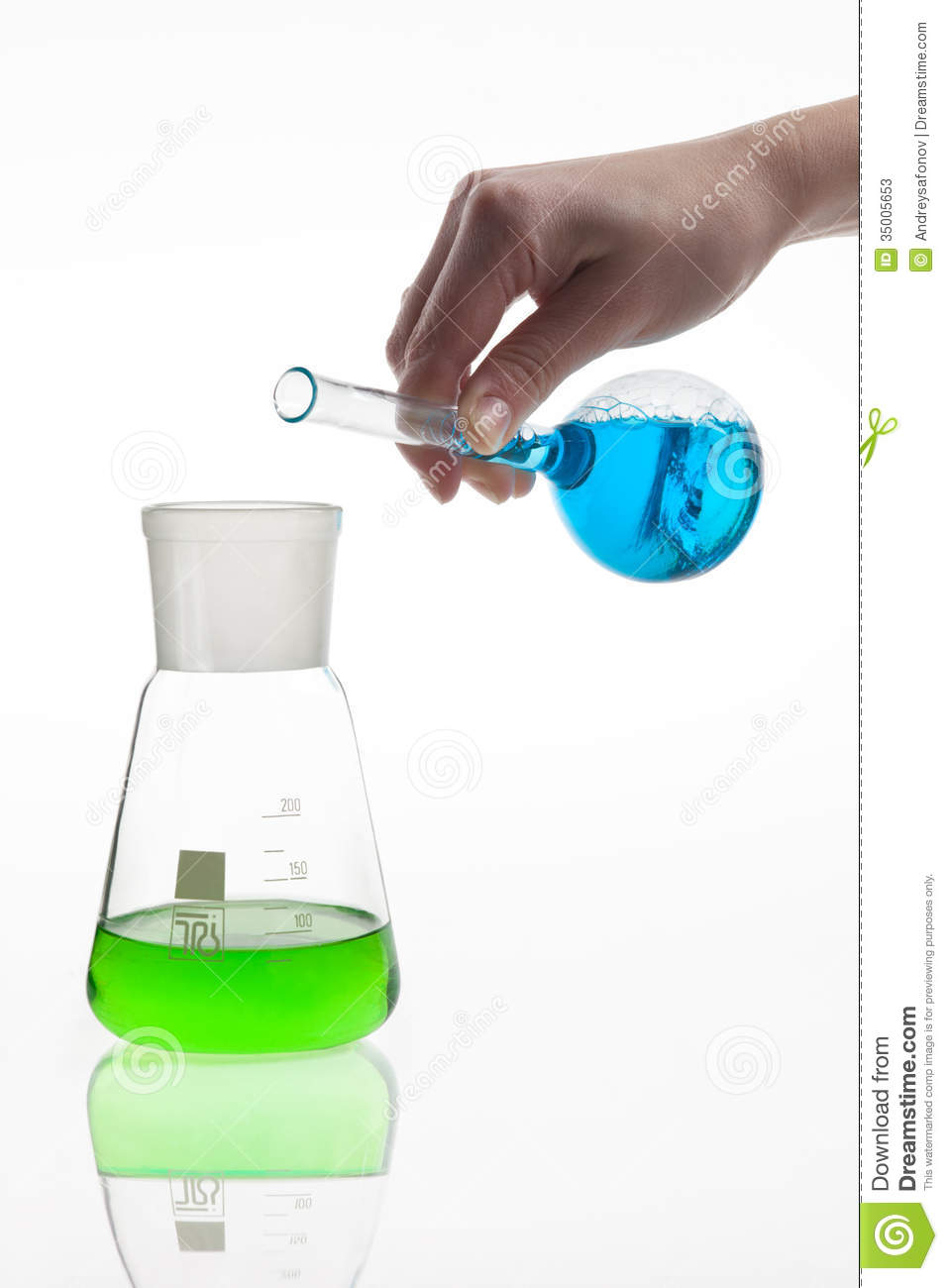
A student mixed two chemicals to allow them to react. The temperature before the reaction was 25 ° C. The temperature after the reaction was 18° C. Which of the following is true?
It is an exothermic reaction
It is an endothermic reaction
This is when heat is absorbed, it is an
Exothermic reaction
endothermic reaction
both
none
When heat is released it is an
exothermic reaction
endothermic reaction
both
none
Serena is mixing a material into a beaker filled with a liquid. She notices that the material seems to disappear into the liquid. What physical property of the material is Serena most likely observing?
solubility
conductivity
magnetism
density
What happens when a substance undergoes a physical change?
Some physical properties change, but the substance keeps its identity.
No physical properties change, and the substance keeps its identity.
Some physical properties change, and the substance changes its identity.
No physical properties change, but the substance changes its identity.
Which can occur in a physical change?
The mass can increase.
The particles can arrange in different ways.
The mass can decrease.
The atoms can bond to different atoms.
When liquid gold becomes a solid, its particles get closer together. Which best describes what happened to the gold?
the conservation of magnetism
the change in solubility in a physical change
the change in melting point in a physical change
the rearrangement of particles in a physical change
The Statue of Liberty is made of copper that has turned green because it has undergone a change. What can be said about this change?
The change is a physical change because the copper in the statue is still there.
The change is a physical change because a new chemical is formed on the outside of the statue.
The change is not a physical change because the color of the statue has changed.
The change is not a physical change because a new chemical is formed on the outside of the statue.
Which scenario is an example of a physical change?
Wood is burned in a campfire and is turned into ash and smoke.
A piece of metal is left in the rain and forms rust.
Lead is melted into a liquid to form pellets.
Yeast turns sugar into energy, water, and carbon dioxide gas.
Which use of iron is due to its chemical properties?
producing colored sparks in fireworks
changing from liquid to gas at 2,862°C
conducting electricity and heat
changing from solid to liquid if heated to 1,538°C

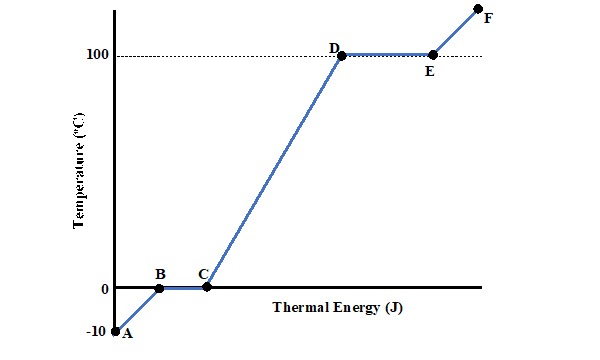
Between which two points is the gas heating up?
A ----> B
B <---- C
C ----> D
D ----> E
E ----> F
The arrows below show you the direction on heat flow. Between which two points is the solid cooling?
A <---- B
B <----> C
C <---- D
D <----> E
E <---- F

In this phase change diagram, as you go from left to right, energy is being released. Determine at what temperature did this substance first become a liquid?
100 degrees C
120 degrees C
140 degrees C
160 degrees C

Is energy being added or removed from the substance in the following phase change diagram as you go from A to C?
energy is being added, (taken in)
energy is being removed; (released)

Letter "C" represents which state of matter on the phase change diagram shown.
Solid
Liquid
Gas

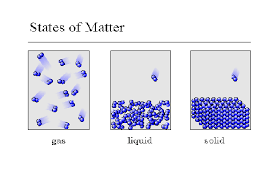
Which phase change is being represented in the particle diagram?
melting
evaporation
condensation
freezing

During a phase change what happens to temperature? Think carefully about the phase change graph!
it increases
it decreases
depends; if being heated it increases, if being cooled it decreases
stays constant

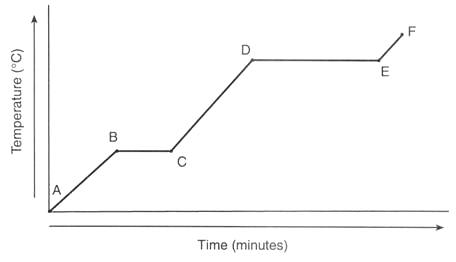
Between which points is the temperature of the substance remaining constant (not changing)?
A-B only.
A-B, C-D, E-F
B-C only.
B-C, D-E

