
Font size
 Worksheets
Quiz #8 - Astronomy
Total questions: 111
Worksheet time: 5hrs 27mins
The Earth has seasons. Which motion of the Earth causes seasons?
roatation
rotate
revolution
rebates
Day and night are caused by which motion of the Earth?
revolution
rotation
revolve
remiss
The Earth _________________________ around the sun.
rotation
rotates
revolves
relation
It takes this long for the Earth to rotate once on its axis.
1 week
1 year
365 days
24 hours

This person is spinning a basket ball on their finger this is an example of....
rotation
release
revolves
revolution

What season would be experienced in the Northern Hemisphere?
Summer
Winter
Spring
Fall
What season would be experienced in the Southern Hemisphere?
Summer
Winter
Spring
Fall


The longest day of the year is which day?
Summer solstice
Winter Solstice
Vernal eqiunox
Autumnal equinox
The shortest day of the year is which day?
Summer solstice
Winter solstice
Vernal equinox
Autumnal equinox


Wha type of tide would this arrangement of earth-moon-sun create?
full moon tide
new moon tide
neap tide
spring tide


The event pictured at number 4, in the northern hemisphere, is the
summer solstice
winter solstice
autumnal equinox
vernal equinox

The events labeled 1 and 3 are called
solstices
equinoxes
On June 21, which of the following areas experiences the longest day?
The equator
The north pole
The tropic of cancer
The south pole
Why is summer warmer than winter?
The hemisphere experiencing summer is tilted more directly toward the sun
During summer, the entire planet is closer to the sum
The sun radiates more energy during the summer
The earth spins slower on its axis during the summer

What is the source of the moon's light?
Earth
the sun
the moon
Mars


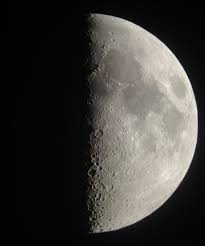


Name the phase of the moon for letter a
First Quarter
Third Quarter
Waxing Gibbous
Waning Gibbous


This image is showing us a.....
solar eclipse
lunar eclipse
phases of the moon
earth eclipse

This model is showing us a...
lunar eclipse
solar eclipse
phases of the moon
earth eclipse


Which of these is the coolest type of star?
k
f
b
o
Which of these is the coolest type of star?
k1
k3
k5
k7
Which of these is the hottest type of star?
m1
m3
m5
m7


Which type of telescope uses convex lenses to bend and focus light rays to produce images of objects in space?
reflector
refractor
Both reflecting and refracting telescopes are designed to _______
break visible light into colors of the spectrum
seperate visible light from UV and radio waves
gather and focus visible light
work better with short-wavelength radiation
The Sun revolves around the center of
Polaris
Aldebaran
Earth
the Milky Way Galaxy
Cosmic background radiation provides direct evidence for the origin of
the universe
our solar system
Earth's ozone layer
Earth's earliest atmosphere
In which sequence are the items listed from least total mass to greatest total mass?
solar system, Milky Way, universe
Milky Way, solar system, universe
universe, Milky Way, solar system
Milky Way, universe, solar system
Which statement best describes the age of our solar system and the universe?
The universe is at least twice as old as our solar system.
Our solar system is at least twice as old as the universe.
Our solar system and the universe are estimated to be 5 billion years old.
Our solar system and the universe are estimated to be 10 billion years old.
The explosion associated with the theory and the formation of the universe inferred to have occurred how many billion ago?
less than 1
4.6
2.5
over 10
The Milky Way galaxy is best described as
a type of solar system
a constellation visible to everyone on Earth
a region in space between the orbits of Mars and Jupiter
a spiral-shaped formation composed of billions of stars
What is the name usually given to the group of objects consisting of a Sun and any planets, comets, and other objects that orbit it?
a solar system
a galaxy
a universe
an ecosystem
The red shift of visible light waves that is observed by astronomers on Earth is used to determine the
sizes of nearby galaxies
relative motions of distant galaxies
densities of the planets
rotation periods of the planets
Evidence that the universe is expanding is best provided by the
red shift in the light from distant galaxies
change in the swing direction of a Foucault pendulum on Earth
parallelism of Earth's axis in orbit
spiral shape of the Milky Way galaxy
Light and other forms of electromagnetic radiation are given off by stars using energy released during
nuclear fusion
conduction
convection
radioactive decay

The reaction represents an energy-producing process.
The reaction represents how energy is produced
in the Sun by fusion
when water condenses in Earth’s atmosphere
from the movement of crustal plates
during nuclear decay
Which star is cooler and less luminous than the Sun?
Proxima Centauri
Pollux
Rigel
40 Eridani B
Which star's surface temperature is closest to the temperature at the boundary between the Earth's mantle and core?
Sirus
the Sun
Rigel
Betelgeuse
Which of the following stars is the least bright?
the Sun
a blue supergiant
a white dwarf
a red giant
Barnard's Star has a surface temperature of about
300 ºC
3000 ºC
5000 ºC
10,000 ºC
Which star has the greatest size?
Sun
Betelgeuse
Alpha Centauri
Procyon
Compared to the terrestrial planets, the Jovian planets have
smaller diameters
slower rates of rotation
greater average densities
longer periods of revolution
The average temperature of the planets
Decreases with greater distance from the Sun
Has no relationship to the distance from the Sun
Depends only on the chemical composition of the atmosphere of each planet
Increases with greater distance from the Sun
Which graph best indicates the densities of the planets in our solar system?


Which event is caused by Earth's revolution?
The apparent shift in the path of the Foucault pendulum
Deflection of planetary winds to the right in the northern hemisphere
The apparent rising and setting of the Sun
Different constellations observed in the night sky throughout the year
As viewed from Earth, most stars appear to move across the night sky because
Earth revolves around the Sun
Earth rotates on its axis
Stars orbit Earth
Stars revolve around the center of the galaxy

The diagram below represents the orbits of three planets (X, Y, and Z) around star A. Star A is located at one focus and point B is the other focus. Numbers 1 through 9 represent different positions of the three planets. The arrows show the direction of revolution.
Which statement about the period of revolution of the planets is correct?
Planet X has a longer period of revolution than planet Y
Planet Z has a longer period of revolution than planet X
The planets have equal periods of revolution.
Planet Y has a longer period of revolution than planet Z.

Base your answer on the diagram below which represents a planet, P, in an elliptical orbit around a star located at F1. The foci of the elliptical orbit are F1 and F2. Orbital locations are represented by P1 through P6.
The gravitational attraction between planet P and the star is greatest when the planet is located at position
P1
P2
P3
P4
Base your answer on the diagram below which represents a planet, P, in an elliptical orbit around a star located at F1. The foci of the elliptical orbit are F1 and F2. Orbital locations are represented by P1 through P6.
When observed from the planet, the star would have its greatest apparent angular diameter when the planet is located at position
P1
P2
P3
P4
Base your answer on the diagram below which represents a planet, P, in an elliptical orbit around a star located at F1. The foci of the elliptical orbit are F1 and F2. Orbital locations are represented by P1 through P6.
If the shaded portions of the orbital plane are equal in area, the time period between P1 and P2 will be equal to the time period between
P2 and P3
P4 and P5
P3 and P4
P6 ad P1
The elliptical share of the Earth's orbit results in
changes in the orbital velocity of the Earth
tilting of the Earth's axis
the oblate spheroid shape of the Earth
the phases of the moon
What change always occurs as the distance between the Earth and the Sun decreases?
The gravitational force between the Earth and the Sun decreases
The Sun's apparent diameter decreases
The Sun's rate of rotation increases
The Earth's orbital speed increases
In our solar system, the orbits of the planets are best described as
circular, with the planet at the center
circular, with the Sun at the center
elliptical, with the planet at one of the foci
elliptical, with the Sun at one of the foci
The Earth reaches its greatest orbital speed when it is
closest to the Moon
farthest from the Moon
closest to the Sun
farthest from the Sun
Which planetary model do scientists accept?
The planets' orbits are circles in a geocentric model
The planets' orbits are ellipses in a geocentric model
The planets' orbits are circles in a heliocentric model
The planets' orbits are ellipses in a heliocentric model
Which planet rotates at the fastest rate?
Mercury
Earth
Jupiter
Neptune

Base your answers on the diagram. The diagram represents four planets, A, B, C, and D, traveling in elliptical orbits around a star. The center of the star and letter f represent the foci for the orbit of planet A. Points 1 through 4 are locations on the orbit of planet A.
Which is the order of the planets from shortest period of revolution to longest?
A, B, C, D
B, A, D, C
C, D, A, B
D, C, B, A
Base your answers on the diagram. The diagram represents four planets, A, B, C, and D, traveling in elliptical orbits around a star. The center of the star and letter f represent the foci for the orbit of planet A. Points 1 through 4 are locations on the orbit of planet A.
If planets A, B, C, and D have the same mass and are located at the positions shown in the diagram, the planet that has the greatest gravitational attraction to the star is
A
B
C
D
Base your answers on the diagram. The diagram represents four planets, A, B, C, and D, traveling in elliptical orbits around a star. The center of the star and letter f represent the foci for the orbit of planet A. Points 1 through 4 are locations on the orbit of planet A.
Planet A travels fastest in its orbit at location
1
2
3
4

The diagram below represents two planets of equal mass, A and B, revolving around a star. The planets are represented at specific positions in their orbits.
When both planets are at the positions represented, planet B
can be seen at night from planet A, and planet B is moving faster in its orbit
can be seen at night from planet A, and planet B is moving slower in its orbit
cannot be seen at night from planet A, and planet B is moving faster in its orbit
cannot be seen at night from planet A, and planet B is moving slower in its orbit
The diagram represents a planet revolving in an elliptical orbit around a star.
As the planet makes one complete revolution around the star, starting at the position shown, the gravitational attraction between the star and the planet will
decrease, then increase
increase, then decrease
continually decrease
remain the same

Which sequence of Moon phases could be observed from Earth during a 2-week period?


What is the main reason that the gravitational attraction between Earth and the Moon changes each day?
Earth’s axis is tilted at 23.5°
Earth’s rotational speed varies with the seasons.
The Moon has an elliptical orbit.
The Moon has a spherical shape.

Diagram 1 shows the Moon in its orbit at four positions labeled A, B, C, and D. Diagram 2 shows a phase of the Moon as viewed from New York State.
At which labeled Moon position would the phase of the Moon shown in diagram 2 be observed from New York State?
A
B
C
D
Which arrangement of the Sun, the Moon, and Earth results in the highest high tides, and the lowest low tides on Earth? (Diagrams are not drawn to scale.)


The same side of the Moon always faces Earth because the
Moon’s period of rotation is longer than its period of revolution around Earth
Moon’s period of rotation is shorter than its period of revolution around Earth
Moon rotates once as it completes one revolution around Earth
Moon does not rotate as it completes one revolution around Earth
Which diagram best represents the size of the Moon, compared to Earth, when drawn to scale?


Base your answer on the diagram below, which shows Earth and the Moon in relation to the Sun. Positions A, B, C, and D show the Moon at specific locations in its orbit. Point X is a location on Earth’s surface.
What is the time of day at point X?
6 a.m.
noon
6 p.m.
midnight
Base your answer on the diagram below, which shows Earth and the Moon in relation to the Sun. Positions A, B, C, and D show the Moon at specific locations in its orbit. Point X is a location on Earth’s surface.
On what date does the line separating day and night pass through Earth’s North Pole, as shown in this diagram?
December 21
January 21
March 21
June 21
Base your answer on the diagram below, which shows Earth and the Moon in relation to the Sun. Positions A, B, C, and D show the Moon at specific locations in its orbit. Point X is a location on Earth’s surface.
A solar eclipse might occur when the Moon is at location
A
B
C
D
Base your answer on the diagram below, which shows Earth and the Moon in relation to the Sun. Positions A, B, C, and D show the Moon at specific locations in its orbit. Point X is a location on Earth’s surface.
Which phase of the Moon would be observed on Earth when the Moon is at location A?


The asteroid Ceres lies at an average distance of 414 million kilometers from the Sun. The period of revolution of Ceres around the Sun is approximately
438 days
687 days
4.6 years
12.6 years

Base your answer on the diagram and on your knowledge of Earth science. The diagram represents two possible sequences in the evolution of stars.
Which property primarily determines whether a giant star or a supergiant star will form?
mass
color
shape
composition
Base your answer on the diagram and on your knowledge of Earth science. The diagram represents two possible sequences in the evolution of stars.
Which table includes data that are characteristic of the surface temperature and luminosity of some white dwarf stars?


The graph shows the varying amount of gravitational attraction between the Sun and an asteroid in our solar system. Letters A, B, C, and D indicate four positions in the asteroid’s orbit.
Which diagram best represents the positions of the asteroid in its orbit around the Sun? [Note: The diagrams are not drawn to scale.]


Since Earth has an elliptical orbit, the
distance between the Sun and Earth varies
distance between the Sun and the other focus varies
length of Earth’s major axis varies
length of Earth’s period of revolution varies
To an observer on Earth, the Sun appears brighter than the star Rigel because the Sun is
hotter than Rigel
closer than Rigel
larger than Rigel
more luminous than Rigel
Which terms describe the motion of most objects in our solar system?
noncyclic and unpredictable
noncyclic and predictable
cyclic and unpredictable
cyclic and predictable
Which planet has completed less than one orbit of the Sun in the last 100 years?
Mars
Mercury
Neptune
Uranus
During which Moon phase could an observer on Earth see a lunar eclipse occur?


How many days are required for the Moon to complete a cycle of phases from the new Moon position represented in the diagram to the new Moon the following month?
2.2 d
27.3 d
29.5 d
365.26 d

The graph shows the change in tide heights of the Hudson River at Newburgh, New York. According to the graph, the time difference between high tide and the next low tide is approximately
2 hours
3 hours
6 hours
12 hours

