Wayground logo

Free Printable Worksheets

Font size

S
M
L
XL
Worksheets

Astronomy Seasons, Moon Phases & Eclipses

Total questions: 62

Worksheet time: 46mins

Name
Class
Date
1.

What angle is Earth's tilt?

a)
23.5 degrees
b)
45.5 degrees
c)
90 degrees
d)
120 degrees
2.

If it is winter in Australia, what season is it in Michigan? 

a)
Fall
b)
Spring
c)
Winter
d)
Summer
3.

In summer, hemispheres have ________.

a)
less direct sunlight
b)
more direct sunlight
c)
equal sunlight
d)
more indirect light
4.

If the Earth didn't have a tilt, what effect would that have on seasons? 

a)
Longer seasons
b)
Longer days
c)
Shorter days
d)

Seasons would be same year round (based on latitude)

5.
Waning is:
a)
Increasing light 
b)
Decreasing light
c)
High Tide
d)
Low tide 
6.

A lunar eclipse occurs when this is the alignment:

a)
Sun -Earth-Moon
b)
Moon, Sun, Earth
c)
Earth-Sun-Moon
d)
Sun-Moon-Earth
7.
The part of the sun that can only be seen during a total eclipse is: 
a)
Core
b)
Chromosphere
c)
Photosphere
d)
Corona
8.
What control does the moon have on Earth? 
a)
It controls waves
b)
It controls Earth's rotation
c)
It controls the speed of revolution
d)
It controls the tides
9.
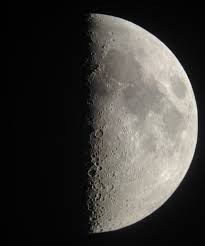
What is the name of the moon phase shown in this picture? 
a)
New Moon
b)
Full moon
c)
1st quarter
d)
3rd quarter
10.

When the visible portion of the moon is increasing, the moon is____.

a)
Waxing
b)
Waning
c)
Full
d)
None of the above
11.

Why does Earth have seasons?

a)
The temperature of the sun changes.
b)
Earth rotates on its axis.
c)
Earth's axis is tilted as it moves around the sun.
d)
The distance between Earth and the sun changes.
12.
When do lunar eclipses occur?
a)
When Earth passes between the moon and sun.
b)
When the moon passes between the Earth and sun.
c)
When the moon makes half of the Earth cold.
d)
When Mars gets too close to the sun and causes an eclipse.
13.
Why do we see moon phases?
a)
We see moon phases because of stars that reflect light off of the moon.
b)
We only see the moon phases due to the location of the moon in relation to the Sun and Earth.
c)
We see moon phases only when Jupiter comes closer to the moon.
d)
We cannot see moon phases from Earth at all.
14.
The date of the Vernal equinox is:
a)
September 23
b)
March 21st
c)
June 21st
d)
December 21st
15.
Why don't we have a solar eclipse every month? 
a)
The Sun is tilted on its axis
b)

The moon's plane of orbit is slightly different than Earth's

c)
The speed of the moon's rotation
d)
The speed of the Earth's rotation
16.

Movement of Earth around the sun.

a)

Rotation

b)

Revolution

17.

Spinning of Earth on its axis.

a)

Rotation

b)

Revolution

18.
Which moon phase is shown in this diagram?
a)
new moon
b)
first quarter
c)
full moon
d)
last quarter/3rd quarter
19.
Tides are caused by ___________
a)
wind
b)
gravitational pull of moon
c)
waves gravitation toward land
d)
rain
20.
During which season is the northern hemisphere tilted toward the Sun?
a)
Summer
b)
Fall
c)
Winter
d)
Spring
21.

During the winter months of the Northern hemisphere the Earth is ______.

a)

tilted toward the Sun

b)

tilted away from the Sun

c)

spinning slower than in Summer

d)

spinning faster than in Summer

22.
During which two seasons is neither hemisphere of Earth tilted toward or away from the Sun?
a)
Summer and Winter
b)
Winter and Spring
c)
Fall and Winter
d)
Fall and Spring
23.

This occurs when Earth is positioned between the moon and the sun and when Earth's shadow crosses the lighted half of the moon.

a)

Solar Eclipse

b)

Eclipse

c)

Lunar Eclipse

d)

Perigee

24.
What part of the moon do we see from Earth?
a)
all of it
b)
the same side
c)
none of it
d)
only one quarter
25.
At position A, which hemisphere would have summer?
a)
Northern hemisphere
b)
Southern hemisphere
26.
The term equinox means....
a)
equal amount of day light and equal amount of night
b)
Equal amount of winter and summer
c)
Equal amounts of hot dogs for everyone
d)
The longest day of the year
27.
What do June 21 and December 21 have in common?
a)
equinox dates
b)
the moon is full
c)
solstice dates
d)
the cold fronts blow in
28.
What is the longest day of the year?
a)
winter solstice
b)
summer solstice
c)
fall equinox
d)
spring equinox
29.
Why is the Equator warmest?
a)
Because it is closest to the sun.
b)
Because it receives the most direct sunlight
c)
Because no clouds form here.
d)
Because it is far from the sun
30.
Which season is taking place in the Southern Hemisphere in Position 1?
a)
Winter
b)
Spring
c)
Summer
d)
Fall
31.
Which season is taking place in the Northern Hemisphere in Position 1?
a)
Winter
b)
Spring
c)
Summer
d)
Fall
32.
Which season is taking place in the Northern Hemisphere in Position 2?
a)
Winter
b)
Spring
c)
Summer
d)
Fall
33.
Which season is taking place in the Northern Hemisphere in Position 3?
a)
Winter
b)
Spring
c)
Summer
d)
Fall
34.
Which season is taking place in the Northern Hemisphere in Position 4?
a)
Winter
b)
Spring
c)
Summer
d)
Fall
35.
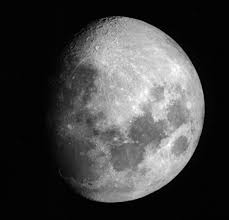
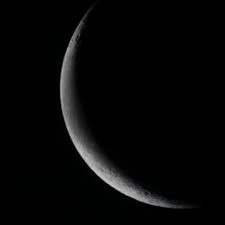
Name the moon phase
a)
waning crescent
b)
waxing crescent
c)
waning gibbous
d)
waxing gibbous
36.
Name the moon phase
a)
waning crescent
b)
waxing crescent
c)
waning gibbous
d)
waxing gibbous
37.
Name the moon phase
a)
waning crescent
b)
waxing crescent
c)
waning gibbous
d)
waxing gibbous
38.
Name the moon phase
a)
waning crescent
b)
waxing crescent
c)
waning gibbous
d)
waxing gibbous
39.
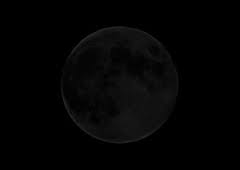
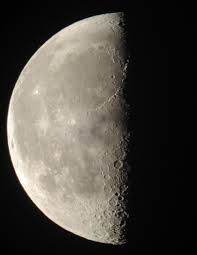
Name the moon phase
a)
First Quarter
b)

Third Quarter

c)
New Moon
d)
Full Moon
40.
Name the moon phase
a)
First Quarter
b)

Third Quarter

c)
New Moon
d)
Full Moon
41.
Name the moon phase
a)
First Quarter
b)

Third Quarter

c)
New Moon
d)
Full Moon
42.
Name the moon phase
a)
First Quarter
b)

Third Quarter

c)
New Moon
d)
Full Moon
43.
How much of the moon is always lit?
a)
can't tell
b)
always changes
c)
half
d)
3/4
44.
Name the moon phase that would come AFTER this moon.
a)
waning crescent
b)
waxing crescent
c)
waning gibbous
d)
waxing gibbous
45.
What moon phase came right BEFORE this one?
a)
First Quarter
b)

Third Quarter

c)
New Moon
d)
Full Moon
46.
What is the difference between a gibbous moon and a crescent moon?
a)
The gibbous shows more than half of the bright side of the moon.
b)
The crescent shows more than half of the bright side of the moon.
c)
The gibbous shows less than half of the bright side of the moon. 
47.
How many phases does the moon go through?
a)
4
b)
8
c)
10
d)
16
48.
As the moon's shape appears to get smaller, we say that the moon is _.
a)
swelling
b)
waxing
c)
waning
d)
disappearing
49.
Phases of the moon in which the moon appears to be getting larger are referred to as _.
a)
waxing
b)
waning
c)
new
d)
eclipse
50.
The cycle of the moon lasts about a _.
a)
day
b)
year
c)
week
d)
month
51.
The moon ____________ around the Earth.
a)

revolves

b)
rotates
c)
up
d)
down
52.

What kind of eclipse is created when the moon blocks the sun casting a shadow on the earth?

a)

Lunar

b)

Geo

c)

Solar

d)

Annual

53.

Why don’t we have a solar eclipse every new moon?

a)

The Earth is too big

b)

The moon is too small

c)

The moon’s orbit is tilted 5 degrees with respect to the earth

d)

The moon only orbits the earth 2 -5 times a year

54.

Why are solar eclipses smaller and shorter when compared to a lunar eclipse?

a)

The earth is closer to the sun than the moon

b)

The moon moves slower than the earth

c)

The moon’s orbit is tilted compared to the earth’s orbit

d)

The moon is much smaller than the earth

55.

Shadow when the sun is partially blocked

a)

umbra

b)

penumbra

c)

overshadow

d)

undershadow

56.

Shadow when the sun is totally blocked

a)

overshadow

b)

ultishadow

c)

penumbra

d)

umbra

57.

This eclipses only last for a maximum of 7-8 minutes

a)

Solar

b)

Umbral

c)

Lunar

d)

Penumbral

58.

This Eclipse can last for up to two hours

a)

Exponential

b)

Transistional

c)

Solar

d)

Lunar

59.

When the moon is farther away it does not block the entire face of the sun

a)

Annual eclipse

b)

Solstice eclipse

c)

Coronal eclipse

d)

Transit eclipse

60.

Which of the following is an Annular eclipse?

a)
b)
c)
d)
61.
a)

Solar eclipse

b)

Lunar eclipse

c)

Transit eclipse

d)

Earth eclipse

62.
a)

Astral eclipse

b)

Lunar eclipse

c)

Solar eclipse

d)

medial eclipse