wayground logo

Free Printable Worksheets

NEW

Font size

S
M
L
XL
Worksheets

8th Astronomy Final

Total questions: 70

Worksheet time: 48mins

Name
Class
Date
1.

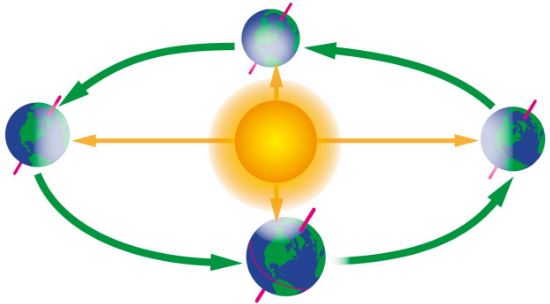
What is the shortest day of the year?

a)

winter solstice

b)

summer solstice

c)

fall equinox

d)

spring equinox

2.
Where is the equator?  
a)
at the North Pole
b)
halfway between the North and South Poles
c)
at the South Pole
d)
in the Western hemisphere
3.

The 3rd Quarter moon is lit on the _________________.

a)

top

b)

right

c)

bottom

d)

left

4.

The 1st Quarter moon is lit on the _________________.

a)

top

b)

right

c)

bottom

d)

left

5.

Define NEW MOON

a)

none of moon is visible from Earth

b)

Moon is ½ visible from Earth

c)

Moon is more than ½ visible from Earth

d)

All of moon visible from Earth

6.

Define FULL MOON

a)

none of moon is visible

b)

complete moon phase is visible

c)

half moon phase is visible

d)

less than half moon phase visible

7.

What is this phase?

a)

waxing crescent

b)

waxing gibbous

c)

waning crescent

d)

waning gibbous

8.

What is this phase?

a)

new moon

b)

1st quarter

c)

last quarter

d)

full moon

9.

What is this phase?

a)

waxing crescent

b)

waxing gibbous

c)

waning crescent

d)

waning gibbous

10.
First day of spring
a)
Autumnal Equinox
b)
Summer Solstice 
c)
Winter Solstice
d)
Vernal Equinox
11.
First day of fall
a)

Autumnal Equinox

b)

Summer Solstice 

c)

Winter Solstice

d)

Vernal Equinox

12.
What does axis mean?
a)

An imaginary line about which a body rotates.

b)

An imaginary line about which a body revolves

c)

An imaginary line about which a body spins.

d)

An imaginary line about which a body tilts

13.
Where on Earth can you experience entire days of darkness?
a)

The equator

b)

The poles

c)

The Tropic of Cancer

d)

The Tropic of Capricorn

14.
What would seasons be like if Earth's axis were straight up and down?
a)
Seasons would be the same.
b)
Seasons would be more extreme.
c)
There would be no seasons.
15.
What effect does the tilt of the earth have?
a)

It changes the angle that the sun strikes the earth in different land areas

b)

It causes the earth to be farther away from the sun at different times of the year

c)

When the earth is tilted away from the sun we have night

d)

When the earth is tilted away from the sun we have day

16.
Why does the area around the equator stay the same temperature all year?
a)

The equator rotates slower than the poles.

b)

The equator remains the same distance from the sun.

c)

The equator always receives direct sunlight.

d)

The equator has 18 hour days.

17.

In spring/fall, the axis of the earth is pointed away or toward the sun?

a)

towards

b)

Neither away or toward

c)

away

18.
What is the longest day of the year?
a)

winter solstice

b)

summer solstice

c)

fall equinox

d)

spring equinox

19.
What happens when the area in which you live tilts away from the sun?
a)

It is summer.

b)

It is spring.

c)

It is winter.

d)

It is fall.

20.
The Earth's axis is tilted _____ degrees.
a)

23.5

b)

25.3

c)

30.2

d)

24

21.

During a SOLAR ECLIPSE, the ______ light is blocked by the _______

a)

Moon; Sun

b)

Sun; Earth

c)

Moon; Earth

d)

Sun; Moon

22.

During a LUNAR ECLIPSE, the _______ passes through the ________ shadow

a)

Earth; Moon's

b)

Earth; Sun's

c)

Moon; Earth's

d)

Sun; Earth's

23.

How many phases of the moon are there?

a)

2

b)

4

c)

6

d)

8

24.

The Moon gets light from ________________.

a)

Earth

b)

planets

c)

stars

d)

Sun

25.

Which of the following choices has the moon phases in the correct order?

a)

full moon, new moon, waxing gibbous, 1st quarter, waxing crescent, waning gibbous, waning crescent, last quarter

b)

new moon, waxing crescent, 1st quarter, waxing gibbous, full moon, waning gibbous, last quarter, waning crescent

c)

waxing gibbous, new moon, 1st quarter, waxing crescent, full moon, waning crescent, last quarter, waning gibbous

d)

new moon, waning crescent, 1st quarter, waning gibbous, full moon, waxing gibbous, last quarter, waxing crescent

26.

Define GIBBOUS

a)

less than half of moon visible

b)

all of moon visible

c)

more than half of moon visible

d)

none of moon visible

27.

Define WANING

a)

Moon is increasing and light part appears to be growing

b)

Dark side is facing Earth

c)

Completely illuminated

d)

Moon is decreasing and light part appears to be shrinking

28.

How long does it take for the moon to complete an orbit around Earth?

a)

7 days (a week)

b)

2 weeks (half a month)

c)

29.5 days (a month)

d)

365 days (a year)

29.
What causes day and night?
a)
revolution of Earth
b)
rotation of Earth
c)
orbit of Earth
d)
The moon blocks the Sun
30.
What is generally true about the inner planets?
a)
They are the larger planets and revolve around the sun at a higher velocity.
b)
They are the smaller planets and are made mostly of rock and metal
c)
They are the smaller planets and are made mostly of gas and dust
d)
They are the larger planets and are made mostly of rock and metal
31.
How does distance affect gravity?
a)
gravity decreases as distance increases.
b)
distance decreases as gravity decreases
c)
distance increases as gravity increases
d)
none of the above
32.

All stars begin their life as a

a)

Main Sequence

b)

Nebula

c)

Protostar

d)

Black Dwarf

33.

The life cycles of stars are determined by their:

a)

mass (size)

b)

color

c)

distance from Earth

d)

how bright they are

34.
Our sun is currently in what star stage?
a)
Protostar
b)
Nebula
c)
Main Sequence
d)
Red Giant
35.
______ is a force that causes dust particles to stick together in a nebula.
a)
nuclear fusion
b)
gravity
c)
hydrogen
d)
friction
36.
A gigantic explosion that causes the death of a large star is called
a)
pulsar
b)
red giant 
c)
supernova
d)
black hole
37.
The core of a Red Giant collapses and becomes a ___________________.
a)
White Dwarf
b)
Blue Supergiant
c)
Red Supergiant
d)
Black Hole
38.

The stage after the main sequence star:

a)

red giant

b)

nebula

c)

white dwarf

d)

black dwarf

39.

Our sun will end its life as a black hole

a)

true

b)

false

40.
A star is born when it begins...
a)
nuclear fusion
b)
nuclear abrasion
c)
chemical reaction
d)
nuclear fission
41.
The fate of our Sun will be to...
a)
stay the same forever.
b)
expand and engulf inner planets.
c)
supernova in our lifetime.
d)
destroy the entire solar system.
42.
In the diagram given, what happens as we move to the left?
a)
Stars Get Larger
b)
Stars get Colder
c)
Stars get hotter
43.
Which of these stars is hottest?
a)
Red Star
b)
Yellow Star
c)
Orange Star
d)
Blue Star
44.
Which star is the coldest?
a)
Yellow Star
b)
Red Star
c)
Orange Star
d)
Blue Star
45.
Compared to the rest of the stars, our sun is considered...
a)
Extremely Large and Cold
b)
Small with a medium temperature
c)
Medium size with medium temperature
46.
As a whole, Giants are considered hotter than White Dwarfs.
a)
True
b)
False
47.
Which planet doesn't have a moon?
a)
Earth
b)
Mars
c)
Mercury
d)
Jupiter
48.
Which of the following is not true?
Planets closer to the sun...
a)
are hotter
b)
revolve slower
c)
have less moons
d)
are smaller
49.
The inner and outer planets are divided by...
a)
The asteroid belt
b)
The oort cloud
c)
The kuiper belt
d)
a fraction
50.
What is the correct order of planets from the sun?
a)
Mercury, Venus, Earth, Mars, Jupiter, Saturn, Uranus, Neptune
b)
Mars, Venus, Earth, Mercury, Jupiter, Saturn, Uranus, Neptune
c)
Mercury, Venus, Earth, Mars, Jupiter, Saturn, Neptune, Uranus
d)
Jupiter, Saturn, Venus, Earth, Pluto, Mars, Mercury, Neptune
51.
Compared to the inner planets, the outer planets are...
a)
larger
b)
warmer
c)
denser
d)
better
52.
How many planets are there?
a)
7
b)
8
c)
9
d)
10
53.
The difference between a moon and a planet is...
a)
A moon is made of rock, a planet is made of gas
b)
Moons can only be seen with a telescope
c)
Moonss revolve around a planet, planets revolve around a sun
d)
That's no moon... ITS A SPACE STATION!
54.
The effect of the lack of gravity to the human body results to
a)
Loss of muscle and bones
b)
Loss of the ability to walk
c)
Loss of speech
d)
Mental deterioration
55.

Who is the first human in space?

a)

Yuri Gagarin

b)

Alexei Leonov

c)

John Glenn

d)

Valentina Tereshkova

56.
What type of galaxy is this?
a)
Spiral
b)
Elliptical
c)
Irregular
d)
Irrational
57.
What type of galaxy is this?
a)
Spiral
b)
Elliptical
c)
Irregular 
d)
Irrational
58.
What type of galaxy has no defined pattern or shape?
a)
Spiral 
b)
Elliptical
c)
Irregular
d)
Constellation
59.
What are galaxies held together by?
a)
Gravitational Attraction
b)
Stars
c)
Other galaxies
d)
Dust and Gas
60.
What are the the 3 types of galaxies?
a)
Spiral Galaxies, Regular Galaxies, and Lliptical Galaxies
b)
Spiral Galaxies, Irregular Galaxies, and Elliptical Galaxies
c)
 Milky Way, Elliptical Galaxies, and Spiral Galaxies
d)
Milky Way, Elliptical Galaxies, and Irregular Galaxies
61.
What type of galaxy is this?
a)
Spiral
b)
Elliptical
c)
Irregular
d)
Irrational
62.
The type of galaxy that is composed of the older stars and low-mass stars.
a)
Spiral
b)
Elliptical
c)
Irregular
d)
Constellation
63.
The closest star to the sun is the...
a)
Sirius A
b)
Barnard's Star
c)
Luhman16
d)
Proxima Centauri
64.
Place these objects in order from smallest to largest.
a)
Planets, solar system, universe, galaxy
b)
Solar system, planets, galaxy, universe
c)
Planets, solar system, galaxy, universe
d)
Galaxy, solar system, planets, universe
65.
How far is the sun from the earth?
a)
4.3 light-minutes
b)
680 light-years
c)
8.4 light-minutes
d)
9 light years
66.
What is 1 Astronomical Unit?
a)
The distance from the center of the earth to the center of the sun.
b)
The distance from the center of Earth to the center of the Moon.
c)
The distance of one entire revolution around the Sun by the Earth.
d)
The distance Light travels in a year.
67.
What is the name of our galaxy? 
a)
Our galaxy is called the Milky Way galaxy 
b)
Our galaxy is called the Andromeda galaxy 
c)
Our galaxy is called the Grand spiral  galaxy. 
d)
Our galaxy is called the Whirlpool galaxy.
68.
Earth is __________ astronomical units from the Sun…
a)
A. 0.5
b)
B. 0.8
c)
C. 1.0
d)
D. 1.5
69.
The Milky Way galaxy is an example of an irregular galaxy
a)
true
b)
false
70.
What are in galaxies?
a)
ice and rock
b)
dust, gas, and stars
c)
stars and ice
d)
water and dust