
 Worksheets
Shoulder Unit Review
Total questions: 64
Worksheet time: 2hrs 5mins
Which muscle originates from the coracoid process?
Pectoralis major
Coracobrachialis
Teres minor
Infraspinatus
What is the normal range of motion for shoulder flexion with the scapula involved?
0-90°
0-120°
0-150°
0-180°
Which position is used to measure shoulder internal rotation?
Prone with arm at 90° abduction
Supine with arm at 90° abduction
Standing with arm at side
Seated with arm at 45° abduction
Match the movement to the collect part of the Apley Scratch Test
Extra
GH adduction
Internal Rotation
Horizontal ADduction
GH abduction
External Rotation
Scapular upward Rotation
Scapular Protraction
Scapular protraction and elevation
GH adduction.
IR
Scapular retraction and downward rotation
What is the normal range of motion for shoulder extension?
0-30°
0-45°
0-60°
0-90°
What does SICK stand for in SICK scapula syndrome?
Scapular malposition, Inferior medial border prominence, Coracoid pain, Kinesis abnormalities
Superior rotation, Instability, Clavicular dysfunction, Kinetic chain disruption
Scapular dyskinesis, Impingement, Clavicular fracture, Kinesiophobia
Shoulder Instability, Clavicular malposition, Kinetic abnormalities, Scapular dyskinesis
The most common location for a clavicle fracture is the _______ third of the bone.
Proximal
Middle
Distal
Lateral
Which of the following is NOT a typical sign of a SICK scapula?
Protracted scapula
Dropped scapula
Inferior medial border prominence
Superior angle prominence
Which direction is the most common for glenohumeral instability?
Anterior
Posterior
Inferior
Superior
The (a) test is used to assess for anterior instability of the glenohumeral joint.
Fill in the blank: The _______ test is used to assess for posterior instability of the glenohumeral joint.
Jerk
Apprehension
Sulcus
Neer
Multiple Choice: What is the most common age group for traumatic shoulder dislocations?
Under 20 years old
20-30 years old
31-40 years old
Over 40 years old
Multiple Choice: Which of the following is NOT a common mechanism of injury for SLAP tears?
Repetitive overhead activity
Direct blow to the shoulder
Falling on an outstretched hand
Lifting heavy objects
Which of the following is a common cause of a SLAP tear?
Fall on an outstretched arm
Repetitive overhead throwing
Direct blow to the lateral shoulder
Sudden traction on the arm
The _______ test is used to assess the integrity of the subscapularis tendon.
Gerber Lift-off test
Drop arm test
Empty can test
Hawkins-Kennedy test
Multiple Choice: What is the most accurate imaging modality for diagnosing rotator cuff tears?
X-ray
Ultrasound
MRI
CT scan
Which part of the biceps tendon is most commonly affected by tendinopathy?
Short head
Long head
Distal tendon
Muscle belly
Which of the following is NOT a common cause of biceps tendinopathy?
Repetitive overhead activities
Acute trauma
Age-related degeneration
FOOSH
Multiple Choice: Which of the following symptoms is LEAST likely to be associated with biceps tendinopathy?
Anterior shoulder pain
Pain with overhead activities
Weakness in elbow flexion
Visible swelling of the entire upper arm
Fill in the blank: The _______ test is used to assess for biceps tendon instability by internally and externally rotating the arm.
Yergason's
Neer's
Hawkins-Kennedy
Drop Arm
Multiple Choice: Which of the following is NOT a stage of frozen shoulder?
Freezing
Frozen
Thawing
Icing
What is the purpose of the Apprehension Test for Anterior Instability?
To assess the integrity of the rotator cuff musculature
To measure the strength of the supraspinatus
To assess the integrity of the inferior glenohumeral ligament
To assess GH instability, subluxation, or dislocation anteriorly
What does a positive result in the Jerk Test indicate?
Subluxation of humeral head
Fracture of the clavicle
Tear in the rotator cuff
Dislocation of the elbow
What test(s) might you pair with the Hawkins-Kennedy Test when examining the shoulder?
Neer Impingement
Yocum
O'Brien's
Sulcus Sign
What can a positive test Empty Can test indicate?
Supraspinatus tear or subscapular nerve pathology
Infraspinatus tear
Supraspinatus weakness only
Supraspinatus tear or suprascapular nerve pathology
During Speed's Test, what is the forearm position?
Supinated with elbow extended
Pronated with elbow extended
Supinated with elbow flexed
Pronated with elbow flexed
What could a positive Speed's Test indicate?
Bicipital tendinitis
SLAP lesion
Coracobrachialis tear
Bankart lesion
Which of the following conditions can the Jerk Test assess for?
Possible subluxation of the humeral head posteriorly
Posteroinferior labral tear
Instability of the posteroinferior glenohumeral joint
Possible subluxation of the humeral head inferiorly
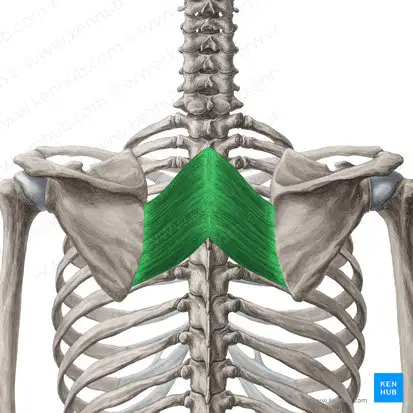
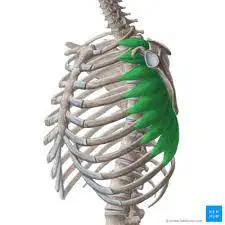
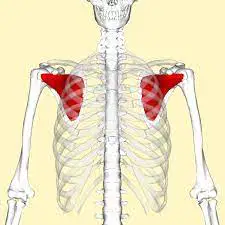
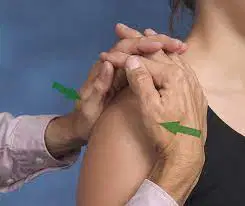
Which muscle is primarily responsible for external rotation of the shoulder?
Supraspinatus
Infraspinatus
Subscapularis
Teres Major
Which of the following is a common cause of shoulder impingement syndrome?
Sleeping on the side
Direct blow to the shoulder
Lifting heavy objects
Repetitive overhead activities
Which 4 muscles make up the rotator cuff?
Deltoid
Infraspinatus
Supraspinatus
Teres Minor
Subscapularis
Name this special test: The clinician palpated the coracoid, AC joint, and Anterolateral subacromial region and ask the patient to rate their pain on a scale of 0-10. A positive test is if pain at the coracoid is rated 3 points higher the score of the other 2 palpation points
(a)
Select all that apply: Implications of the Neer impingement test.
Supraspinatus pathology / impingement
LHBT Pathology
Subscapularis Pathology
Subacromial Bursitis
SLAP Tear
To distinguish between AC joint pathology and labral pathology, clinicians can use the Biceps Load I and Biceps Load II tests to rule out AC joint involvement.
True
False
Name the special test: The patient is sitting with their arm at their side. The AT flexes the involved arm to 90 degrees with the elbow at 90 degrees. The AT then resists the patient horizontally abducting the arm.
(a)
Match the photo of the special test to its positive sign.
Surprise Test
Apprehension or pain
Jerk (Posterior Stress) Test
Clunk
Grind Test
Reproduction of symptoms
Crank Test
Pain or clicking
Rent Test
Depression palpable during rotation
Match the stage of throwing to the GH position
Windup
Neutral
Cocking
90 abduction and max ER
Acceleration
90 abduction IR
Deceleration
GH position does not change
Follow Through
Horizontal adduction and IR
Name this special test: The Examiner places one hand on the posterior aspect of the patient’s humeral head and the other hand proximal to the patient’s elbow along the distal humerus.
They then passively abducts and externally rotates the patient’s arm overhead and applies an anterior force to the humerus and circumducts the humeral head around the glenoid labrum.
(a)
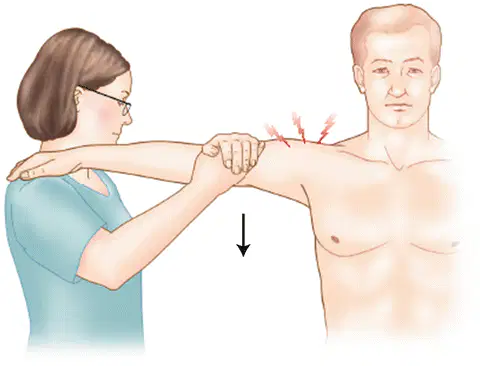
What is the implication of this special test?
Inferior GH instability
Anterior GH Instability
Superior Instability
Posterior Instability
What is a Hill-Sachs lesion?
A bony defect in the anterior humeral head caused by a posterior dislocation
A bony defect in the posterior humeral head caused by an anterior dislocation
A tear in the glenoid labrum resulting from a posterior dislocation
A fracture of the humeral head due to repetitive overhead motion
Which of the following tests can be used to rule in adhesive capsulitis
Shoulder Shrug Sign
Coracoid Pain Test
Pectoralis Major Contracture Test
Bear Hug Sign
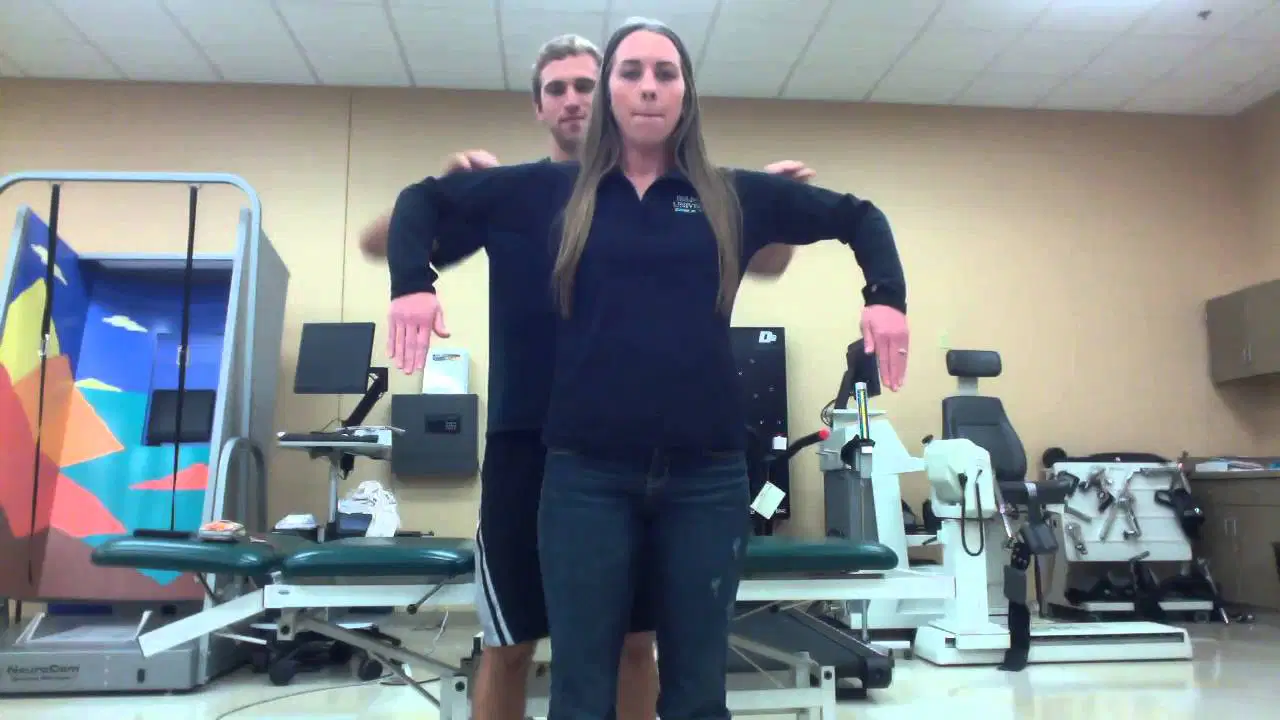
What is the implication of this special test:
This special test is used to test the strength of the supraspinatus tendon. The humerus is ER and forearm is supinated.
(a)
What does Ludington’s Test assess for
Bicep Tear
Tricep Tear
Deltoid Tear
Rotator cuff Tear
Your athlete fell on an outstretched arm and now has a large, painful lump at the end of his collarbone. What is he likely suffering from?
Acromioclavicular Joint Sprain
Sternoclavicular Joint Sprain
Glenohumeral Dislocation
Clavicle Fracture
An empty and full can test tests for what injury?
Rotator cuff tear
Labral tear
Glenohumeral subluxation
SC joint sprain
What is the most common type of shoulder dislocation?
Anterior
Posterior
Lateral
Inferior
Which of the following is NOT a joint in the shoulder complex?
Glenohumeral joint
Sternoclavicular joint
Acromioclavicular joint
Sternothoracic joint

Downward distraction of the humerus to assess the stability, or possibility of a sprain of the glenohumeral joint.
Apprehension test
Neer's test
Hawkins Kennedy Test
Sulcus Test
DDX Rotator Cuff vs C5 Radiculopathy
Freebie #1
Freebie #2
Highest in older populations
Night pain
weakness: AB, ER, IR
Decreased UQS
Weakness AB and ER
Positive Spurlings
SYmtpoms relieved with traction
Which is NOT a sign or symptom of a biceps muscle rupture?
Sudden and intense pain
Audible Pop
Popeye Deformity
Younger Patients
Middle aged patients
During the Painful Arc test if a patient has pain between (a) degrees it is indicative of (b) , however if the patient has pain from (c) to 180 degrees then this is indicative of an (d)
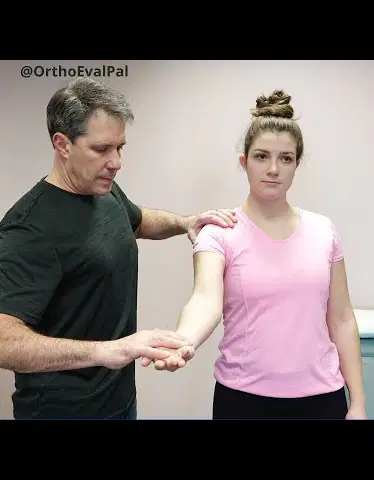
This special test can implies the following pathologies:
LHBT tendinopathy
SLAP Tear
Sub acromial impingement
AC joint pathology
posterior instability
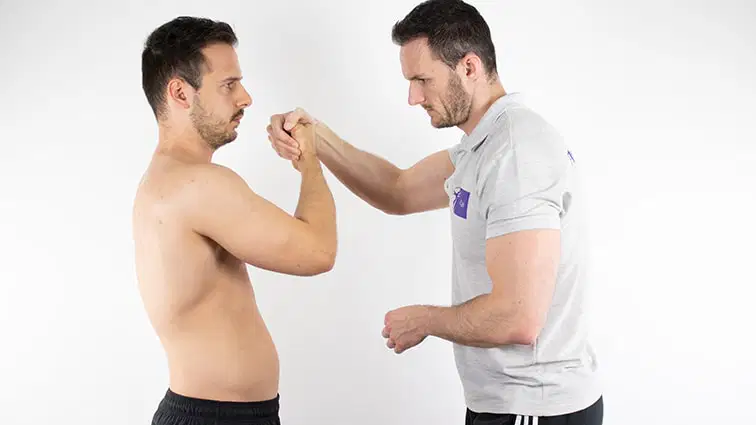
Name the special test: Examiner applies downward resistance and asks patient to resist, as if trying to do a boxer’s upper cut
(a)

