
Font size
 Worksheets
Science Assessment for Grade 8
Total questions: 100
Worksheet time: 1hrs 8mins
The smallest planet is ...
Mercury.
Jupiter.

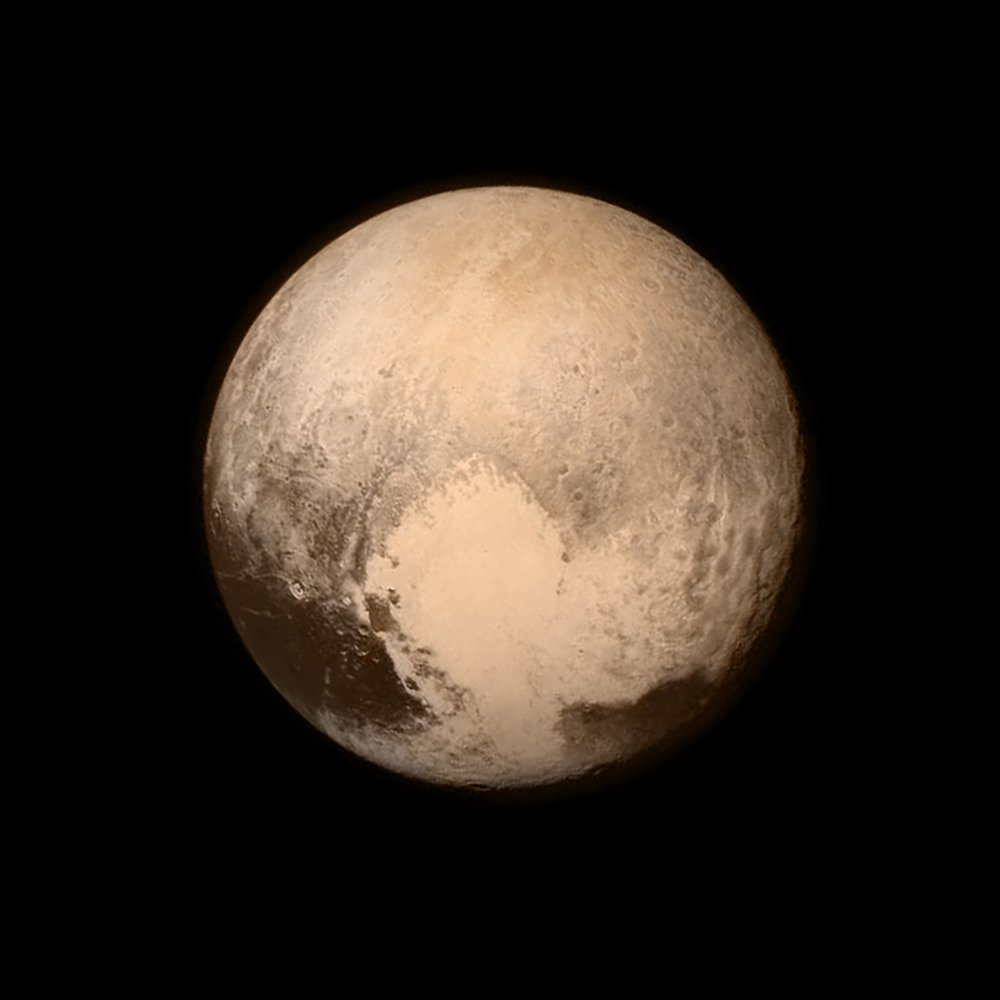
What is this?
Solar System
Orbit
Reflect
True or False
Uranus has rings
True
False
Earth have __________ magnetic Feild
Thick
Rough
Smooth
Powerful
Jupiter is the _________ planet in the solar system
Smallest
Biggest
What is the order of the planets in our solar system?
Earth, Venus, Uranus, Mercury, Saturn, Mars, Neptune, Jupiter
Mercury, Venus, Earth, Mars, Jupiter, Saturn, Uranus, Neptune
Earth's moon, the Sun, Mars, Neptune, Venus
None of the above
Which planet is third from the sun?
Earth
Mars
Jupiter
Mercury

WHAT IS THE HOTTEST PLANET?
EARTH
VENUS
SATURN
MARS

WHAT PLANET DOES HAVE HUMAN LIFE?
MOON
SATURN
VENUS
EARTH

WHAT IS THE CLOSEST PLANET TO THE SUN?
MARS
VENUS
MOON
MERCURY

WHAT IS A BIG BALL OF GAS THAT MAKES LIGHT AND SHINE?
LANTERN
STAR
URANUS
CLOUD
COMPLETE: "IN SPACE WE DON'T HAVE ______________".
ALIENS
GRAVITY
PLANETS
STARS

HOW DO THE ASTRONAUTS GO TO SPACE?
AIRPLANE
FLYING SAUCER
SPACE SHUTTLE
SPACE SUIT


the moon orbiting the earth is an example of:
natural satellite
artificial satellite
Planet X is a jovian planet. It does not have rings and has the most number of moons. According to scientists, it is also the biggest planet. What is the name of planet X?
Jupiter
Saturn
Uranus
Neptune
Flowering plants are called:
pretty
monocotyledons
dicotyledons
angiosperms
Plants that have flowers or fruit are called...
Flowering
Coniferous
Nonvascular
Plants that have cones are called...
Flowering
Coniferous
Nonvascular
Which of the following is a characteristic feature of Mosses?
They produce flowers
They have a well-developed vascular system
They reproduce through seeds
They lack true roots, stems, and leaves
Gymnosperms are characterized by:
Seeds enclosed in fruits.
Naked seeds.
Flowers for reproduction.
No seeds.
Green substance that turn the leaves green
Chlorophyll
Roots
Green Paint
Spore
Which part of the plant supports the plant and holds the leaves up toward the light?
Stem
Leaf
Root
Flower
Which part of the plant is the location where photosynthesis, respiration, and transpiration occurs?
Stem
Root
Leaf
Flower
Which of the following are used in the overall reactions for photosynthesis?
carbon dioxide
water
light
all of the above
Photosynthesis uses sunlight to convert water and carbon dioxide into
oxygen.
high-energy sugars.
ATP and oxygen.
oxygen and high-energy sugars.
Which of the following is released during cellular respiration?
oxygen
air
energy
lactic acid
Which of these is a product of cellular respiration?
oxygen
water
glucose
all of the above
Where do nutrients come from?
soil
water
air
all of these
Where does a plant get energy?
sunlight
water
soil
air
Where do animals get energy?
food
air
water
sunlight
Which organelle does cellular respiration happen in?
Nucleus
Mitochondria
Chlorophyll
Chloroplast
Which muscle is involved in breathing?
diaphragm
biceps
abdominal

The air sacs that are covered with capillaries where gas exchange takes place is _________?
Bronchi
Trachea
Oxygen
Alveoli

The contraction and relaxation of muscles.
Respiration
Breathing
Venti
Ventilation
The movement of air into and out of the lungs.
Respiration
Breathing
Viridescent
Ventilation
Gas particles always flow from an area of ____________ pressure to an area of _____________ pressure until _____________ is achieved.
lower, higher, equation
higher, lower, equity
lower, higher, equilibrium
higher, lower, equilibrium
Which of the following are true about inspiration?
It is another word for inhalation.
It is another word for insanity.
It is the movement of air out of the lungs.
It is the movement of air into the lungs.
A chemical reaction that breaks down glucose to produce energy.
Respiration
Breathing
Veganism
Ventilation
Which of the following are true about expiration?
It is another word for extremism.
It is another word for exhalation.
It is the movement of air out of the lungs.
It is the movement of air into the lungs.

The diagram shows a set up to demonstrate the breathing mechanism in our body. What do the balloons represent in the body?
lungs
bronchiole
trachea
diaphragm
The ultimate goal of respiration is to produce (a) .
When a person inhales... (2 answers)
the chest cavity volume decreases.
the diaphragm contracts.
the air pressure inside the chest cavity decreases.
the rib cage moves down.

When the diaphragm contracts it ____________, when it relaxes it _____________.
flattens, curves upwards
curves upwards, flattens
expands, diffuses
diffuses, expands
When a person exhales... (3 answers)
the chest cavity volume decreases.
the diaphragm relaxes.
the air pressure inside the chest cavity decreases.
the rib cage moves down.
Aerobic Respiration
A + B --> C + D + Energy
A: Oxygen, B: Carbon Dioxide, C: Glucose, D: Water
A: Oxygen, B: Glucose, C: Carbon Dioxide, D: Water
A: Water, B: Carbon Dioxide, C: Oxygen, D: Glucose
A: Carbon Dioxide, B: Glucose, C: Oxygen, D: Water
When we exercise, our cells need more ___________ to produce more energy through ____________. That is why our breathing rate ______________ when we exercise.
carbon dioxide, respiration, increases
oxygen, photosynthesis, decreases
oxygen, respiration, increases
carbon dioxide, photosynthesis, decreases
Cellular Respiration's goal is to
make water
make energy
make glucose
make oxygen
___ is the process that cells use to take energy from glucose.
cellular respiration
photosynthesis
transpiration
excretion
The ___ is the cell part (organelle) inside cells where cellular respiration happens.
mitochondria
chloroplast
nucleus
ribosome
___ is needed for cellular respiration, it is absorbed from the air.
oxygen
glucose
carbon dioxide
water
What two things are needed for cellular respiration to happen in a cell?
glucose & oxygen
water & carbon dioxide
oxygen & carbon dioxide
glucose & water
The primary purpose of cellular respiration is to produce ___.
ATP
sugar
glucose
heat
Both ___ are leftover as waste products after cellular respiration.
water & carbon dioxide
oxygen & glucose
carbon dioxide & oxygen
water & oxygen
Which of the following is the word equation for cellular respiration?
glucose + oxygen ---> ATP + carbon dioxide + water
carbon dioxide + water ---> ATP + glucose + oxygen
glucose + water ---> ATP + carbon dioxide + oxygen
glucose + carbon dioxide ---> ATP + oxygen + water
One molecule needed for cellular respiration is
carbon dioxide
glucose
water
chlorophyll
Aerobic cellular respiration uses 1 molecule of glucose to produce approximately
2 ATP molecules
4 ATP molecules
32-34 ATP molecules
36-38 ATP molecules
How many phosphates are in ATP?
2
3
36
23

The entire region surrounding a magnet is known as the:
Magnetic Domain
Lodestone
A Compass
Magnetic Field
Which poles repel or push apart each other?
north and south
south and north
south and south
Which type of magnet loses magnetism outside of a magnetic field?
a strong magnet
a temporary magnet
a permanent magnet
an electromagnet

Which materials is not magnetic?
plastic
iron
cobalt
nickel
What are two things that the forces of magnetism and gravity have in common?
They both form fields
They are both non-contact forces
They are both contact forces
Both A and B (Option 1 and Option 2)
The biggest magnet on Earth is _______
A Volcano
The Statue of Liberty
Magneto
Earth Itself

The movement of a swing is known as ............
transitional motion
wave motion
oscillatory motion
(a) and (b)
The Motion in which the object travels in a straight line is ______
Rectilinear Motion
Random Motion
Combined Motion
Curvilinear Motion

Motion of a butterfly can be described as
Uniform-linear
Rotational
Periodic
Random
The pace an object travels in a certain amount of time
speed
acceleration
Velocity
motion
An objects speed does no change over its entire distance
Constant speed
acceleration
average speed
velocity
Average speed is an average of all of the speeds during a trip/distance
True
False
The action or process of moving or being moved
motion
speed
distance
going
I am the fastest object in the Universe?
Airplane
Spaceship
Light
Sound
While you are travelling in a car, you are in ______________ with respect to road?
Motion
Rest
No change

